What a batch vacuum fryer is
A batch vacuum fryer processes one batch at a time in a closed vessel. The cycle is straightforward: load the product into a basket, pull a vacuum, fry at low temperature in hot oil (typically 80–100 °C), spin the basket to centrifuge off excess oil, then discharge. Each batch is independent — a different product can run in every cycle simply by changing the recipe parameters, with no mechanical changeover.
The capacity per batch is defined by the model. Our batch vacuum fryer range covers QS-VF100 (100KG per batch), QS-VF150 (150KG per batch), and QS-300 (300KG per batch). Because each machine is a self-contained unit, scaling up means adding machines: two or more fryers can run side by side, in parallel, on the same shift. You can see the current range at vf.freezevacuumfry.com.
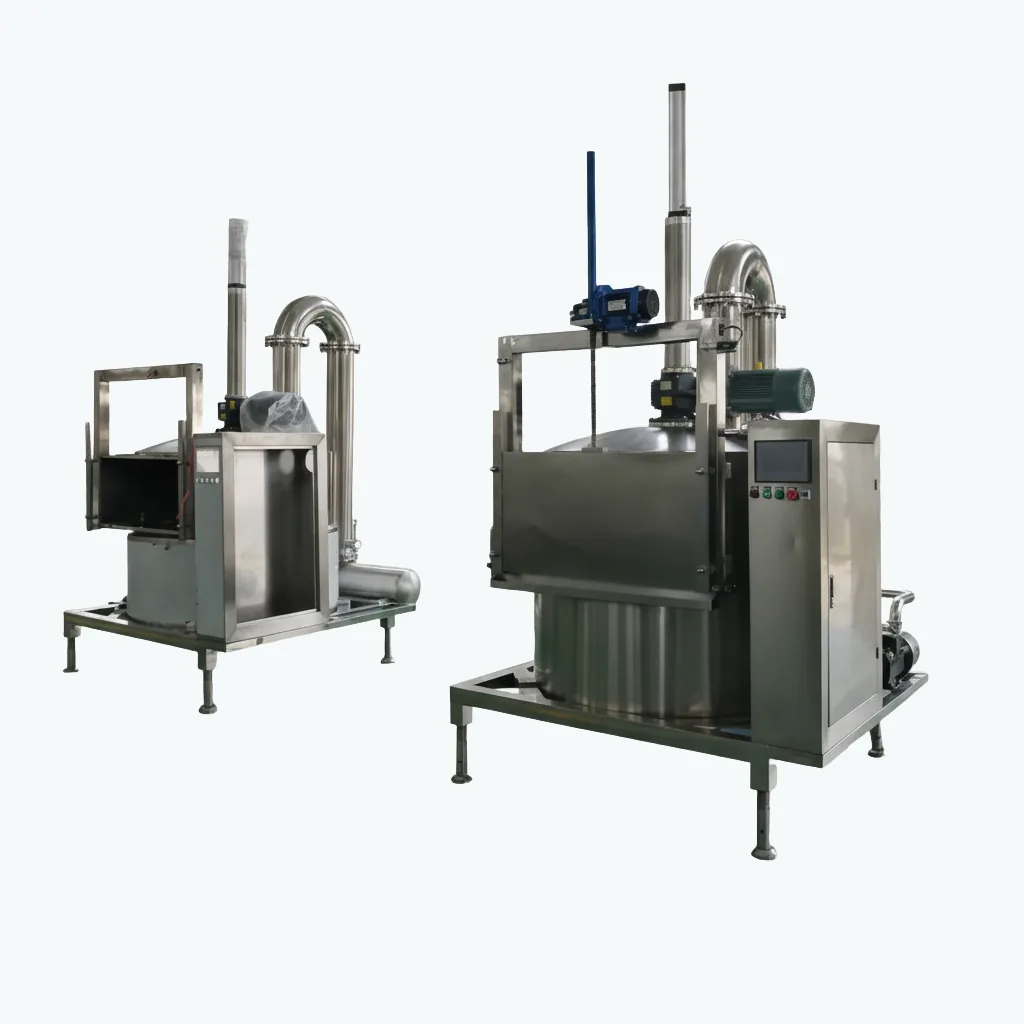
This modularity is the defining trait of the batch route. You buy capacity in steps: one machine to launch the product, a second when demand grows, a third when you add a new SKU. Every machine comes with the standard 1-year warranty and an approx. 3-month lead time, so capacity planning can follow your actual sales rather than a forecast made two years out. Specifications are for reference only and are subject to the final supplied equipment.
How continuous fryers work
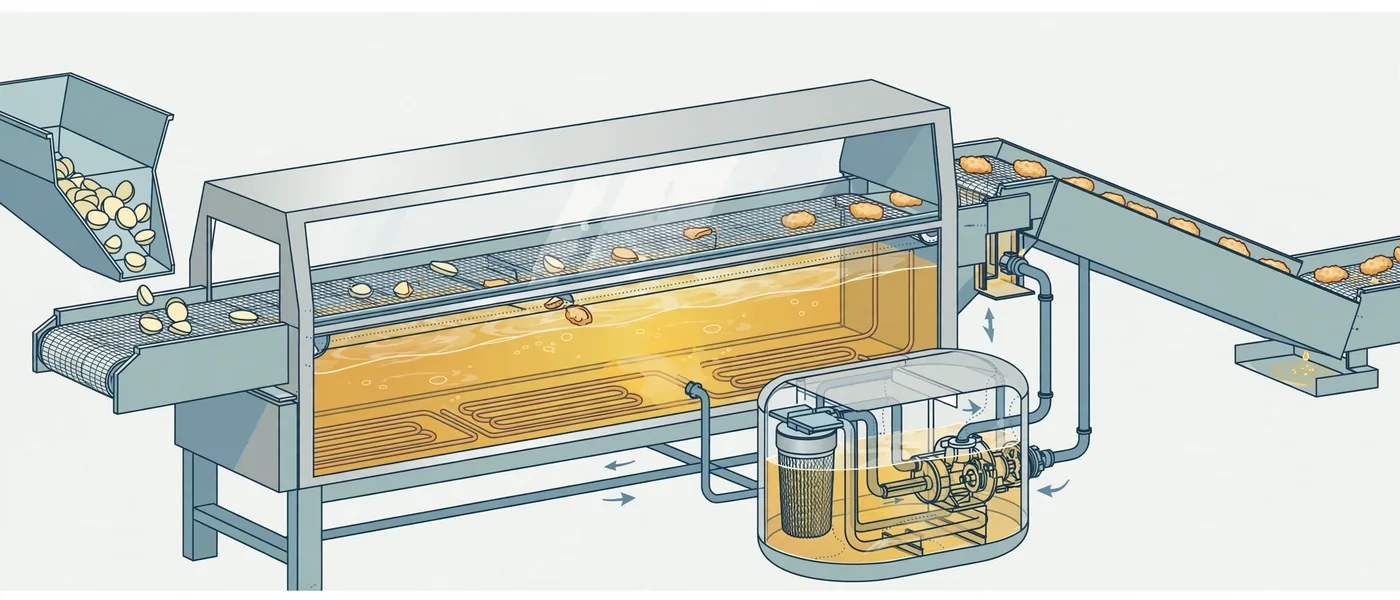
A continuous fryer is built around a different idea: instead of processing batches, product moves steadily through a stream of hot oil on a conveyor belt. Raw product enters at one end, fries while it travels through the oil, and comes out cooked at the other end. The line runs as long as it is fed, which makes the continuous route a flow-throughput machine rather than a per-batch machine.
This design suits one specific situation: very high volumes of a single product with a stable recipe. The classic users are large snack and food plants producing one or two flagship products around the clock, where the line is rarely stopped and the recipe rarely changes. Changeovers on a continuous line mean stopping the flow, draining or holding the oil, cleaning a long belt path, and restarting — so frequent product switching destroys the throughput advantage.
We do not manufacture continuous fryers — our product line is batch vacuum fryers only. The description above is intentionally general: if a continuous line is what you need, any throughput figure, price, certification, or customer reference must come from the line builder, never from us. This guide focuses on helping you decide which route fits your project.
Key differences at a glance
Batch vacuum fryer vs continuous fryer
| Dimension | Batch vacuum fryer | Continuous fryer |
|---|---|---|
| Capacity model | Fixed per batch — QS-VF100 100KG, QS-VF150 150KG, QS-300 300KG per batch; scale by adding units | Steady flow-through; throughput set by belt speed and oil length |
| Product flexibility | High — each batch can be a different product; changeover is a recipe change | Low — built for one or two stable products; changeover means stopping the line |
| Investment pattern | Incremental — start with one machine, add units as demand grows | All-at-once — the full line must be installed and commissioned together |
| Floor space | Compact standalone vessels; units can be placed where space allows | One long footprint: infeed, frying section, and discharge in a single line |
| Frying conditions | Vacuum, low temperature (80–100 °C) — gentle on color, texture, and nutrients | Atmospheric, high temperature — the standard route for conventional fried snacks |
| Product changeover downtime | Short — basket swap and recipe change between batches | Long — line stop, clean-down of the full belt path, restart |
One row deserves emphasis: the frying conditions. Batch vacuum fryers fry under vacuum at low temperature, which is why they are the standard choice for fruit and vegetable snacks — products where color, shape, and nutrient retention matter. Continuous lines fry at atmospheric pressure and high temperature, the traditional method for commodity fried snacks. They are not just different machine layouts; they are different product technologies.
When batch vacuum frying wins
Batch vacuum frying is the stronger route in several common situations:
- Whole fruit and vegetable snacks. Vacuum, low-temperature frying keeps the natural color, shape, and crunch of products like jackfruit, banana, okra, sweet potato, and mushroom. This is the product category batch vacuum frying was made for.
- Multi-SKU and startup brands. If you plan to launch several flavors or products over the first two years, batch machines let each batch be a different product. You are never locked into a line built for a single recipe.
- Growing output, step by step. Small and mid-size processors — the typical profile of snack makers in Southeast Asia — can start with one unit and add machines as orders grow. Each additional machine is a modest, reversible investment.
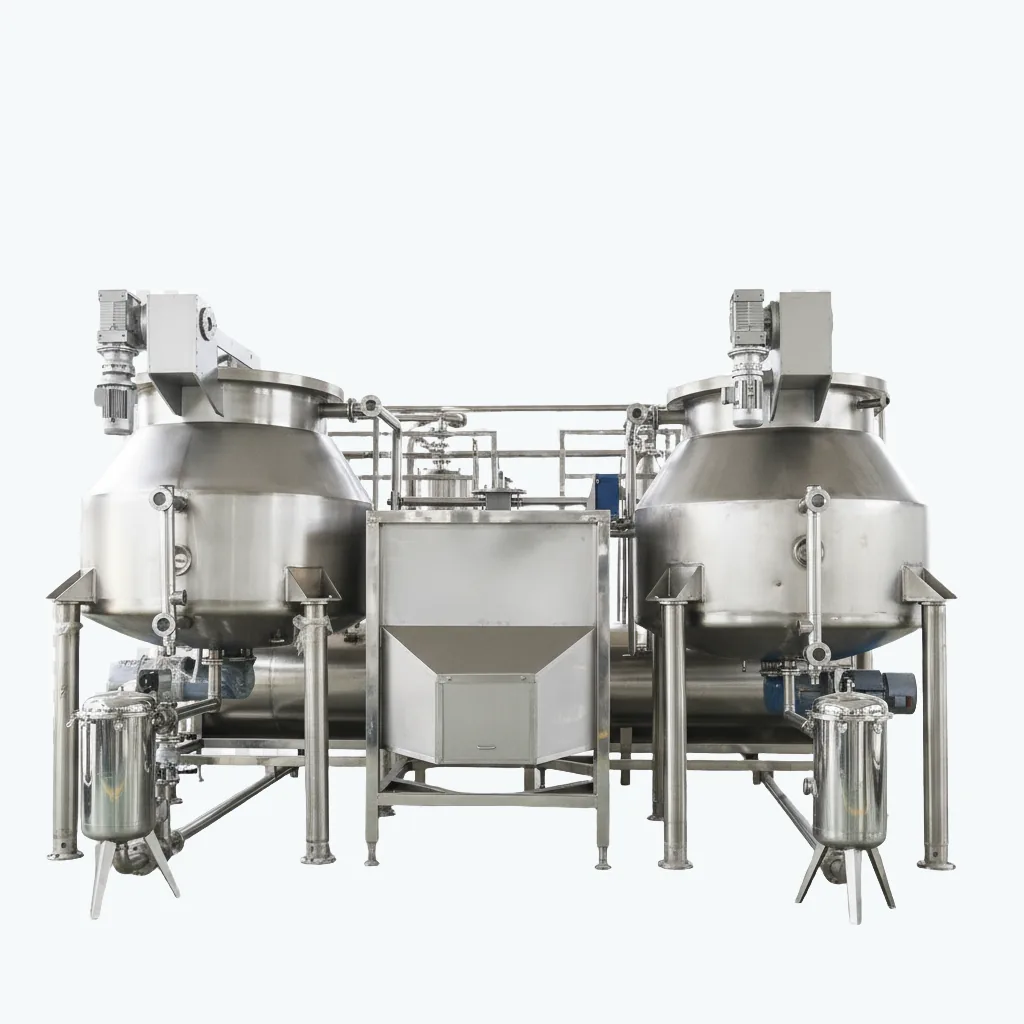
For capacity planning, multiply the per-batch capacity by your units and batches: a QS-VF150 delivers 150KG per batch, so two units running the same number of batches per shift deliver twice the per-shift output of one. Decide the model and the number of units from your target output and your product mix — and share those numbers with us, because every machine ships with a 1-year warranty and an approx. 3-month lead time that belong in your project schedule.
When continuous makes sense
There is no denying the continuous route's strength: when one product sells in enormous volumes and the recipe never changes, a line that never stops beats machines that cycle. If your business is a single high-volume snack running multiple shifts year-round, the continuous model is the one built for exactly that.
Importantly, the two routes can complement each other. Many growing snack companies run a continuous line for their high-volume flagship product and add batch vacuum fryers for premium fruit and vegetable lines — the health-positioned SKUs that command higher margins and need gentle vacuum frying. In that setup the continuous line handles volume, the batch machines handle value. As your portfolio grows, starting with batch vacuum frying and graduating part of the volume to continuous later is a natural, low-risk path.
Frequently asked questions
Can I reach continuous-level volumes with batch vacuum fryers?
Yes, by running multiple units in parallel. Each QS batch vacuum fryer processes 100, 150, or 300 KG per batch (QS-VF100, QS-VF150, QS-300), so capacity grows one machine at a time. That modular route usually matches how snack brands actually grow: proven products first, volume later. You rarely need a full continuous line on day one.
Which needs more floor space: batch or continuous frying?
In general, a continuous frying line needs more continuous floor area — the line, infeed, and discharge sections run in one long footprint with dedicated utilities. Batch vacuum fryers are compact individual vessels; you add units as needed and can spread them across available space. Either way, confirm the actual layout with the equipment supplier before planning the plant.
Is batch vacuum frying cheaper to start with?
Usually yes, because you can begin with a single batch machine and add more later — the capital outlay grows in steps instead of one large commitment. A continuous line is an all-at-once investment in the full line. For a product still proving itself in the market, the batch route carries far less financial risk. Request a quotation for your planned capacity to compare the numbers.
Can a batch vacuum fryer also fry coated or battered products?
Batch vacuum fryers work best with whole or cut fruit and vegetable pieces, root vegetables, and similar natural shapes — the products that need gentle, low-temperature frying to keep color, texture, and nutrients. Heavily coated or battered products are typically associated with continuous frying setups. Tell us the exact product and we will advise whether your product suits batch vacuum frying.
How do I size the number of batch vacuum fryer units I need?
Start from your target output, then divide by the per-batch capacity of the model you choose: 100 KG for the QS-VF100, 150 KG for the QS-VF150, 300 KG for the QS-300. The number of units then depends on your shifts and changeover rhythm — how many batches each machine completes per day and how often you switch products. Share your target output and product mix with us and we will size the configuration together.
Not sure which route fits your project?
Tell us your product, target output, and how many SKUs you plan — we'll help you compare the batch route against your options.
Specifications are for reference only and are subject to the final supplied equipment.