Start here: know the four systems
An industrial freeze dryer is four systems working together: vacuum (chamber, seals, pumps), refrigeration (cold trap / condenser, compressors), heating (shelf heating zones), and controls (PLC, sensors, alarms). Almost every fault you will ever see lives in one of these four. The fastest troubleshooting habit is to ask: which system is misbehaving? — then work that system's short checklist before touching anything else.
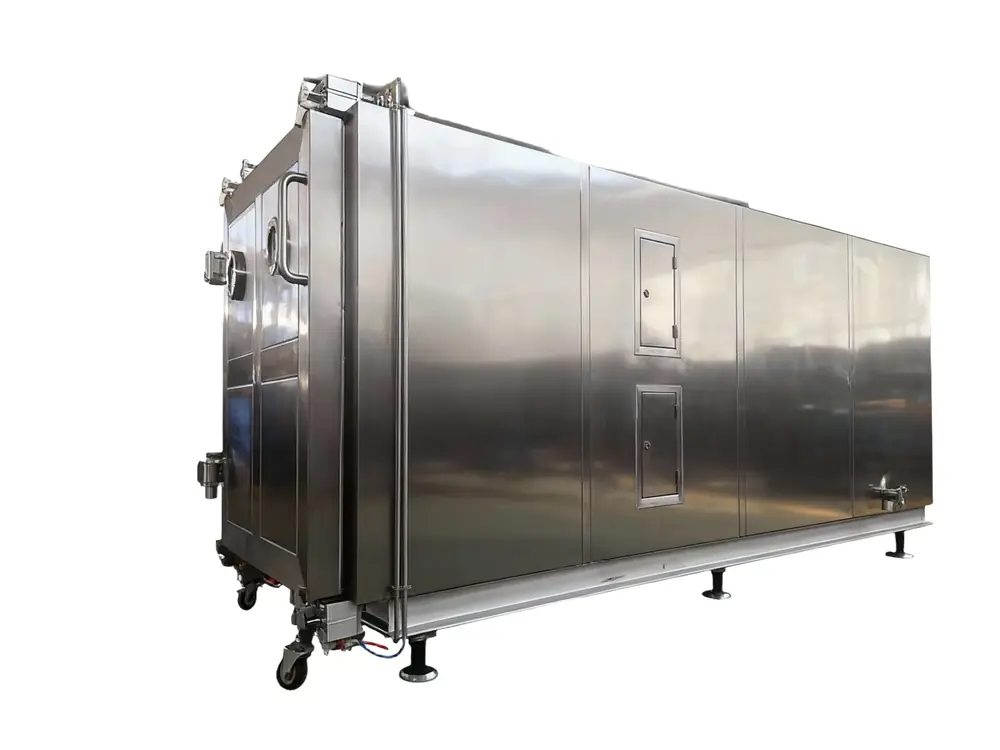
One more habit that saves hours: write down the alarm code, the cycle stage, and the readings (vacuum level, condenser temperature, shelf temperature) before you change anything. That record is what turns a confusing fault into a solvable one — and it is what the manufacturer will ask for first.
Vacuum won't reach or won't hold setpoint
This is the most common freeze dryer complaint, and also one of the most fixable. Work through the checks in order, cheapest first:
- Door seal and gaskets: inspect the door seal for damage, deformation, or trapped product debris. Food-grade silicone seals wear over time — a seal that looks fine can still leak if it has hardened or taken a compression set. Clean the sealing surfaces and the door rim.
- Valves: confirm every valve that should be closed is actually closed — drain, vent, and air-admittance valves are the usual suspects after cleaning or unloading.
- Vacuum pump oil: check the oil level and condition. Dark, milky, or emulsified oil means the pump can't pull its rated vacuum — change the oil and filter per the pump manufacturer's schedule.
- Fittings and connections: loose clamps, aged hoses, and worn quick-connect fittings leak. Work around the chamber methodically; a leak detector or a simple pressure-rise test narrows the search.
- Pump itself: if oil, seals, and fittings check out and the pump still can't reach its rated ultimate vacuum on a blanked-off test, the pump needs service.
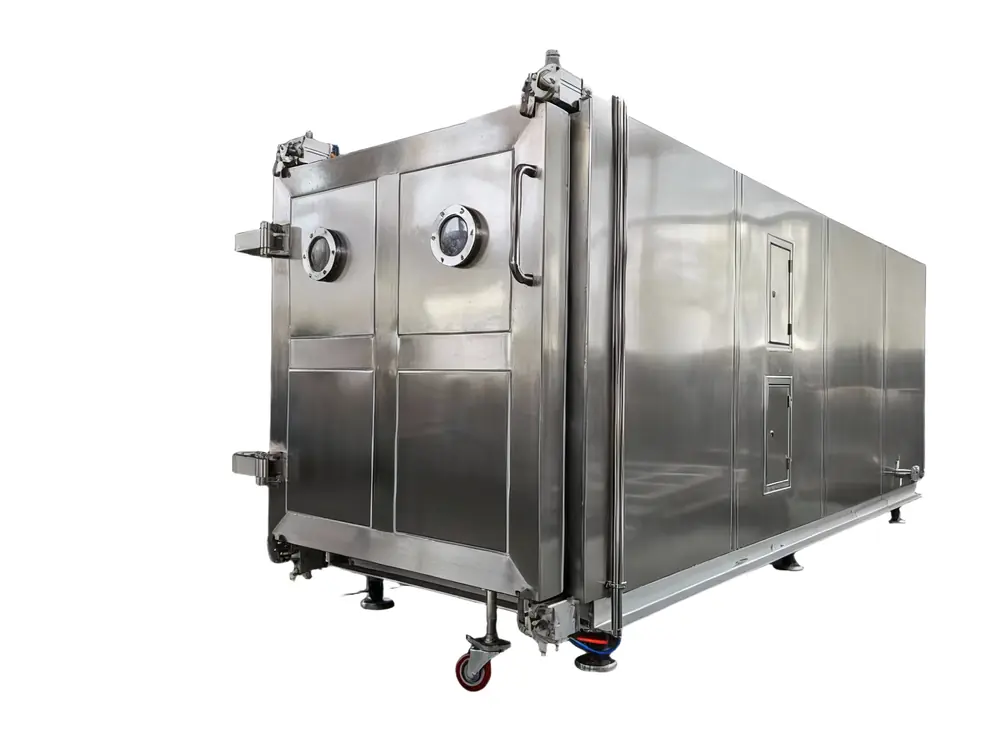
A useful rule: if vacuum degrades slowly during the cycle, suspect a seal or a pump-oil issue; if it never reaches setpoint at all, suspect a valve left open or a large leak.
Batch not drying: wet centers and high residual moisture
The batch finishes, but product comes out with wet or gummy centers — or a moisture meter shows residual moisture above your target. Typical causes:
- Cycle too short for the load: the most common cause. Thicker pieces, denser loading, and higher-moisture products all need longer primary drying. Don't copy a recipe from a different product — extend the cycle in steps and verify.
- Loading too thick: product piled thicker than the validated layer depth dries unevenly — the surface dries while the center stays wet. Spread to the recipe's specified thickness.
- Heating too conservative: if shelf temperature is set too low during primary drying, sublimation crawls and the cycle ends before the centers are done. Raise carefully — but see the next section before pushing heat.
- Vacuum too poor: sublimation needs the right vacuum level; a marginal vacuum slows drying across the whole batch. Fix vacuum first, then re-run.
- Condenser overloaded: if the cold trap can't keep up (see below), chamber pressure rises and drying stalls.
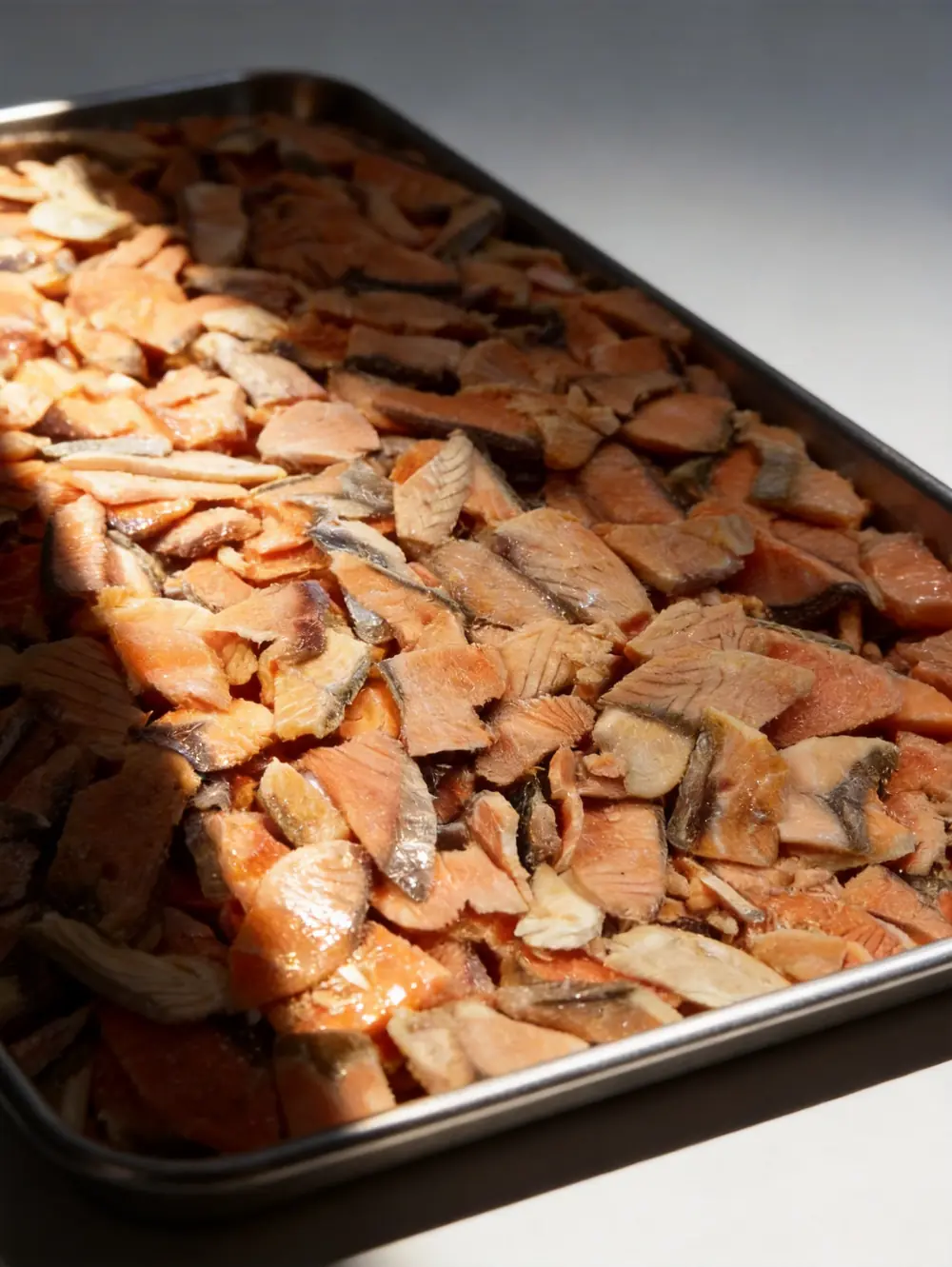
An under-dried batch is not always a lost batch: depending on the product, it can often be re-dried with an adjusted cycle. Confirm with a moisture check rather than by feel — fingers can't measure residual moisture.
Product collapse or meltback
Collapse is the opposite problem: the product dried, but its structure slumped, shrank, or turned gummy instead of holding a porous, crisp structure. This happens when the product temperature exceeds its collapse temperature during primary drying — almost always because the heating profile was too aggressive for that product.
- Back off the heat: lower the shelf temperature or slow the ramp rate during primary drying for that product's recipe.
- Respect the freezing step: incomplete or too-warm freezing leaves the product structure weak before drying even starts — verify the product is fully frozen at the target temperature.
- Don't compensate with vacuum: raising vacuum (lower pressure) doesn't fix a collapse problem; it can make control harder. Fix the heating side.
Finding the safe window is normal recipe work: trial batches at progressively adjusted settings are how every producer dials in a new product. Record what works — that recipe is an asset.
Condenser and ice problems
The cold trap (condenser) catches the water vapor sublimating off the product. When it underperforms, everything slows down:
- Ice buildup beyond capacity: every condenser has an ice-holding limit per cycle. Overloading the chamber beyond that limit lets ice accumulate until the trap can't hold temperature — dry in loads the condenser can handle.
- Condenser not cold enough: verify the trap reaches its rated low temperature before the cycle starts. If it can't, the refrigeration side needs attention (see below).
- Incomplete defrost between cycles: residual ice or water from the previous cycle reduces capacity for the next one. Confirm the defrost-and-drain sequence completes fully.
- Frost on the wrong surfaces: heavy frost on chamber walls rather than the condenser coils can signal airflow or loading issues worth investigating.
Refrigeration problems
Industrial freeze dryers use multi-stage refrigeration (for example, two-stage systems reaching around −60°C) to freeze product and hold the condenser cold. Symptoms and checks:
- Compressor won't start or trips: check power supply, contactors, and overload protection first — then call for service if the compressor itself is suspect.
- Can't reach low temperature: possible refrigerant issue, fouled condenser coils (air-cooled) or cooling-water problems (water-cooled), or a failing expansion valve. Clean heat-exchange surfaces and verify cooling water flow before suspecting refrigerant.
- Noisy or vibrating compressor: mounting, piping stress, or internal wear — don't ignore it; vibration shortens the life of everything it touches.
- Refrigerant work is specialist work: charging, leak repair, and compressor replacement belong to qualified refrigeration technicians, not general operators.
Heating and temperature control problems
Modern machines divide the shelves into independently controlled heating zones (for example, 4-zone control with ±0.1°C accuracy and up to 80°C). When heating misbehaves:
- One zone won't heat: check the zone's heater circuit, contactor/relay, and fuse before suspecting the controller output.
- Temperature overshoot: verify sensor placement and calibration — a sensor that has drifted or come loose reads wrong, and the controller follows the wrong reading.
- Uneven temperatures across zones: compare zone readings under no-load conditions; persistent offsets point to sensor or heater issues in the outlier zone.
- Erratic readings: loose thermocouple or RTD connections and electrical noise are more common causes than failed controllers.
PLC, sensors, and alarm faults
The PLC (for example, a Siemens S7-200 with touchscreen) runs the cycle and watches every sensor. When it complains, listen:
- Read the alarm, don't just reset it: note the exact alarm code and the cycle stage, then look it up in the manual. Resetting without reading turns a diagnostic into a mystery.
- Sensor faults first: most "impossible" readings (vacuum jumping, temperature spiking) are sensor or wiring faults, not process faults. Check connections and recalibrate.
- Repeated unexplained alarms: a pattern of alarms that survive the standard checks is a manufacturer call — bring your notes (codes, stages, readings).
- Never bypass safety interlocks to keep a cycle running. Interlocks protect the machine and the operators; defeating them trades a stopped batch for a damaged machine.
When to call the manufacturer
Handle seals, valves, oil, loading, and recipe settings yourself — that's normal operation. Call the manufacturer when a fault involves:
- The refrigeration circuit (refrigerant, compressor internals, expansion devices).
- The PLC program or control-system hardware failures.
- Persistent alarms that survive the standard checklists above.
- Anything that requires opening sealed vacuum or refrigerant systems.
When you call, have ready: the model, the alarm code, the cycle stage when it appeared, the key readings (vacuum, condenser and shelf temperatures), and what you already checked. That package gets you a useful answer instead of a callback. Typical commercial terms to keep in mind: a 1-year warranty and roughly a 3-month production lead time for new equipment — factor both into any repair-vs-replace decision.
Frequently asked questions
Why won't my freeze dryer reach vacuum?
The most common causes are a door-seal or gasket problem, a valve left open, contaminated or low vacuum-pump oil, or a leak in a fitting or connection. Check the seal and the pump first — these two account for the majority of vacuum faults — then work through valves, fittings, and the pump's oil condition and service state.
Why is my freeze-dried product still wet in the middle?
Wet centers usually mean the cycle was too short for the load, the product was loaded too thick, or the heating was too conservative during primary drying. Thicker pieces and dense loads need longer cycles. Confirm the batch with a moisture check; if residual moisture is too high, the batch can often be re-dried, depending on the product.
What causes freeze-dried product to collapse or melt back?
Collapse happens when the product temperature exceeds its collapse temperature during primary drying — usually because the heating rate was too aggressive for that product. The fix is a more conservative heating profile (lower shelf temperature or slower ramps) for that product's recipe. Trial batches are the normal way to find the safe window.
How often should a freeze dryer vacuum pump be serviced?
Service intervals depend on the pump type and operating hours, not the calendar alone. Monitor pump oil condition regularly — dark, milky, or emulsified oil is a service signal — and follow the pump manufacturer's schedule for oil changes, filter replacement, and major overhauls. A preventive-maintenance routine is the cheapest way to avoid vacuum faults; see a freeze dryer maintenance checklist for a full routine.
When should I call the manufacturer instead of troubleshooting myself?
Call when a fault involves the refrigeration circuit, the PLC program, or anything that requires opening sealed systems — and whenever an alarm or fault code persists after you have worked through the standard checks. Repeated unexplained alarms, compressor faults, and control-system failures are manufacturer territory. Describe the alarm code, the cycle stage, and what you already checked.
Machine acting up?
Describe the symptom and the alarm code — we'll help you narrow it down, and talk through parts and service options.
Specifications are for reference only and are subject to the final supplied equipment.