Why freeze-dried food lasts so long
Spoilage is mostly a water problem: bacteria, yeasts, and molds need available moisture to grow, and enzymes need it to stay active. Freeze drying removes water by sublimation — frozen water turns directly to vapor under vacuum — leaving the food with very low residual moisture while its structure stays intact. With so little available water, microbial growth stalls and enzymatic activity slows to a crawl. That is the entire secret: remove the water thoroughly, keep it out, and the food keeps.
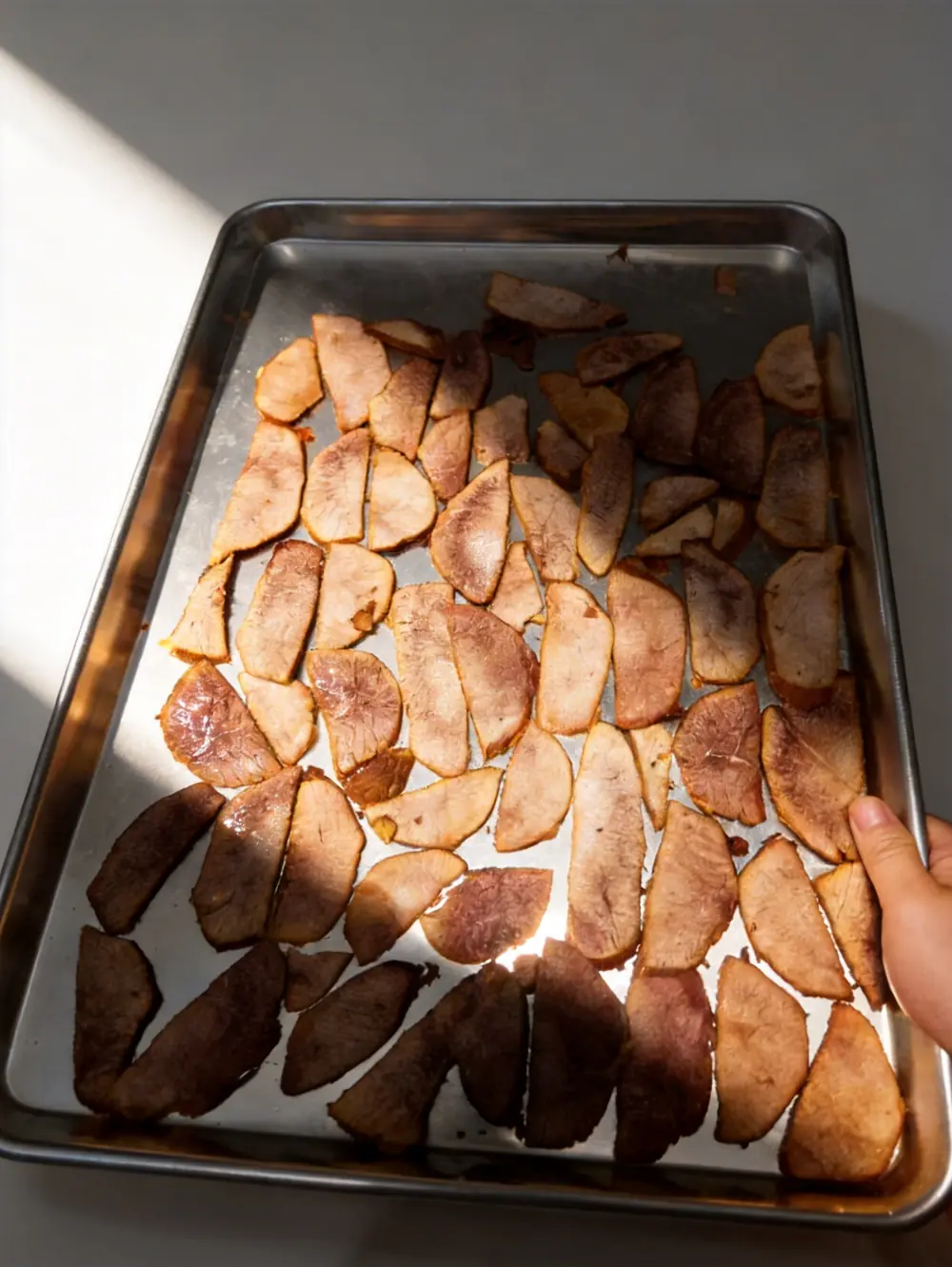
Compare with the alternatives: air-dried or dehydrated foods keep significant moisture and heat damage, so they keep for shorter; frozen foods keep long but need an unbroken cold chain. Freeze-dried food's commercial edge is long shelf life with no refrigeration — lighter to ship, simpler to store, easier to export.
How long does it actually last? What the range depends on
There is no single number — shelf life is a range shaped by several variables:
- The product itself: low-fat fruits and vegetables generally keep longest; high-fat products (fatty meats, oily nuts) are more prone to rancidity over time, so their practical shelf life is shorter.
- Residual moisture: the drier the product, the longer it keeps. Even small differences in final moisture change the outcome — this is why the drying recipe matters as much as the packaging.
- Packaging quality: the dominant variable. The same product can keep months in a basic pouch or years in a proper barrier package with oxygen absorbers.
- Storage temperature: cool storage extends life; sustained heat shortens it. Room temperature in a temperate climate is fine; a hot warehouse is not.
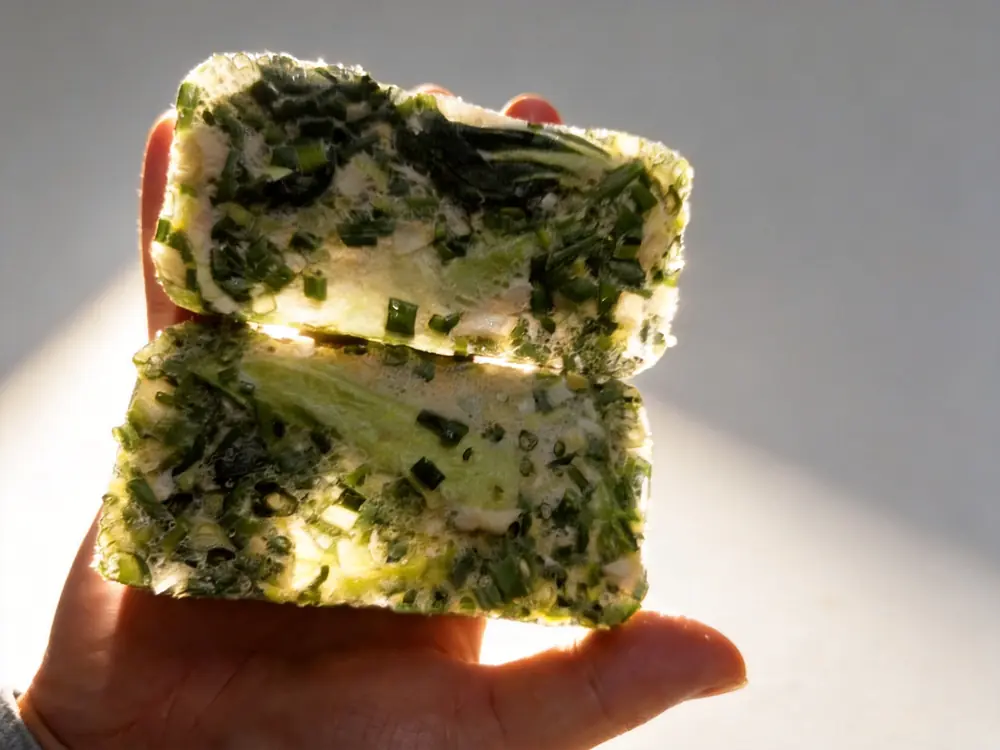
As a rough orientation: well-dried, well-packaged freeze-dried foods are routinely stored for a year or more; with high-barrier packaging, oxygen absorbers, and cool storage, multi-year keeping is normal for suitable products. Treat any specific number as product- and package-dependent — validate yours rather than borrowing someone else's claim.
The four enemies of shelf life
Everything that shortens shelf life is one of these four:
1. Moisture
The biggest killer. Freeze-dried food is hygroscopic — it pulls moisture from the air eagerly. Even brief exposure during packing, a pinhole in the pouch, or a poor seal lets moisture back in, and the clock restarts. Texture goes soft and chewy first; microbial risk follows.
2. Oxygen
Oxygen drives oxidation: rancidity in fats, color fading, flavor loss, and nutrient degradation. This is why oxygen absorbers and nitrogen flushing exist — removing the air from the package removes the problem.
3. Heat
Heat accelerates every degradation reaction. A product that keeps two years at 20°C may keep far less at 35°C. Warehousing and shipping conditions in hot climates deserve real attention.
4. Light
Light — especially UV — degrades color, flavor, and some nutrients. Opaque or metallized packaging handles this automatically; clear windows on a pouch are a trade-off against shelf life.
Packaging: the biggest shelf-life lever
For a producer, packaging choice moves the shelf-life needle more than anything else after drying:
- Barrier films: multi-layer laminates — typically metallized or foil-based — block moisture and oxygen far better than single-layer plastics. This is the standard for long shelf life.
- Oxygen absorbers: small sachets placed inside the package scavenge residual oxygen after sealing. Cheap, effective, and standard practice for premium shelf life.
- Nitrogen flushing: replacing package air with nitrogen before sealing reduces oxygen from the start; often combined with absorbers for the longest targets.
- Heat seals, not zippers: a proper factory heat seal is the only seal that counts for long-term storage. Resealable zippers are for convenience after opening — they don't substitute for the initial seal.
- Portion sizing: single-serve or small packs limit how much product is exposed once a package is opened — the opened-package life is always much shorter than the sealed life.
Storage conditions that matter
- Cool: room temperature or below; avoid heat sources and unventilated hot warehouses.
- Dark: away from direct sunlight; opaque secondary packaging (cartons) adds protection.
- Dry: the outer environment matters less when the inner package is intact — but flooded or condensing storage still risks the seals.
- Undamaged: crushed cartons and punctured pouches are shelf-life failures. Handle and stack with the package integrity in mind, especially for export shipping.
No refrigeration needed — that's the point. But "no refrigeration" is not "no care": the package is doing the work the fridge would do, so protect the package.
Shelf life starts at the dryer
A fact producers sometimes learn the hard way: packaging can't fix under-dried product. If the batch leaves the freeze dryer with wet centers or uneven residual moisture, no pouch or absorber will give it a long shelf life. The drying recipe — complete freezing, adequate primary drying time, correct shelf temperatures — sets the ceiling; packaging only preserves what drying achieved.
Practical consequences:
- Validate residual moisture on every product's recipe before scaling up — don't copy settings between products.
- Check moisture by measurement, not by feel — fingers can't detect the differences that matter.
- Pack promptly after unloading — dried product sitting open in a humid room reabsorbs moisture fast.
How to check and verify shelf life
If you sell freeze-dried food, "it lasts a long time" is not a specification. Verify:
- Accelerated aging tests: storing samples at elevated temperature and humidity to simulate longer real-time storage — standard practice for estimating shelf life.
- Real-time studies: keep retained samples under normal conditions and test periodically — slower, but the ground truth.
- What to test: moisture content, texture, color, flavor, odor, and microbial counts at each checkpoint.
- Package integrity: seal-strength and leak testing on the actual production line — the best film in the world fails with a bad seal.
Document the results per product and per package format. That file is what lets you print a best-before date with confidence — and what buyers and regulators will ask to see.
Frequently asked questions
How long does freeze-dried food last?
Properly freeze-dried and properly packaged food commonly keeps for months to years — the exact figure depends on the product, how dry it is, and above all on the packaging. Sealed in moisture-proof, oxygen-barrier packaging and stored cool and dark, many freeze-dried foods stay good far longer than dehydrated or canned equivalents. Opened or poorly packaged product loses shelf life fast.
Does freeze-dried food need refrigeration?
No — that is one of the main advantages. Correctly dried and sealed freeze-dried food is shelf-stable at room temperature. Refrigeration is unnecessary as long as the package stays sealed and dry; the enemies are moisture, oxygen, heat, and light, not the absence of cold.
What packaging gives freeze-dried food the longest shelf life?
Multi-layer barrier packaging — typically metallized or foil laminates — sealed airtight, often with an oxygen absorber inside. The package must block moisture and oxygen, the two main spoilage drivers. Resealable pouches are convenient for opened product but do not match a factory heat seal for long-term storage.
How can you tell if freeze-dried food has gone bad?
Signs include a soft or chewy texture instead of crisp dryness (moisture has entered), off odors, discoloration, or a damaged/swollen package. Freeze-dried food that has absorbed moisture may still be safe but its texture, flavor, and keeping quality are compromised. When in doubt about a compromised package, do not sell or serve it.
Does the drying process itself affect shelf life?
Yes — decisively. Shelf life starts at the dryer: product that leaves the chamber with uneven or excessive residual moisture will never keep as long as properly dried product, no matter how good the packaging is. Complete, uniform drying to low residual moisture is the foundation every packaging decision builds on.
Planning a freeze-dried product line?
Tell us what you want to dry — we'll talk through capacity, drying recipes, and what it takes to get shelf-stable product.
Specifications are for reference only and are subject to the final supplied equipment.