The process: vacuum, heat, and time
Vacuum frying
Frying inside a sealed vessel held under vacuum, so that the food's water boils off at a low temperature (typically 80–100 °C) instead of the 160–190 °C of atmospheric deep frying. It is the technology behind fruit and vegetable chips that stay green, bright, and crisp without the browning of conventional frying.
Vacuum level
How deep the vacuum inside the frying vessel is — the single most important process parameter. A deeper vacuum lowers the boiling point of water, which is what makes low-temperature frying possible.
Boiling point under vacuum
The temperature at which water boils at the vessel's reduced pressure. At atmospheric pressure water boils at 100 °C; under deep vacuum it boils far lower — low enough that the 80–100 °C oil temperature is hot enough to drive moisture out of the product. Understanding this relationship is the key to reading any vacuum frying recipe.
Frying temperature (80–100 °C under vacuum)
The oil temperature used in vacuum frying — far below the 160–190 °C of conventional deep frying. Because vacuum has lowered the boiling point of water, 80–100 °C is enough to fry. The practical benefits are:
- Color retention: no browning or caramelization, so mango stays yellow and okra stays green.
- Flavor protection: delicate aromas that high heat would destroy survive the cycle.
- Oil longevity: oil degrades far more slowly at 80–100 °C, so it stays usable for many more cycles.
- Nutrient retention: heat-sensitive vitamins survive at a much higher rate than in deep frying.
Pre-treatment
The preparation steps before a product enters the fryer — washing, peeling, slicing, and any recipe-specific steps such as blanching, osmotic dehydration, or coating. Pre-treatment decides more of the final quality than the fryer settings do: uneven slicing means uneven frying, no matter how good the machine is.
Blanching
A brief hot-water or steam treatment of raw slices before frying. Blanching deactivates enzymes that cause discoloration, sets color, and partially softens the product so it fries evenly. It is the most common pre-treatment step in commercial vacuum frying lines for fruits and vegetables.
Basket load / loading density
How much product goes into each frying basket and how thick the layer is. Overloaded baskets trap steam, fry unevenly, and extend cycle time; underloaded baskets waste energy and oil time. Most "slow machine" complaints turn out to be loading problems, not equipment problems.
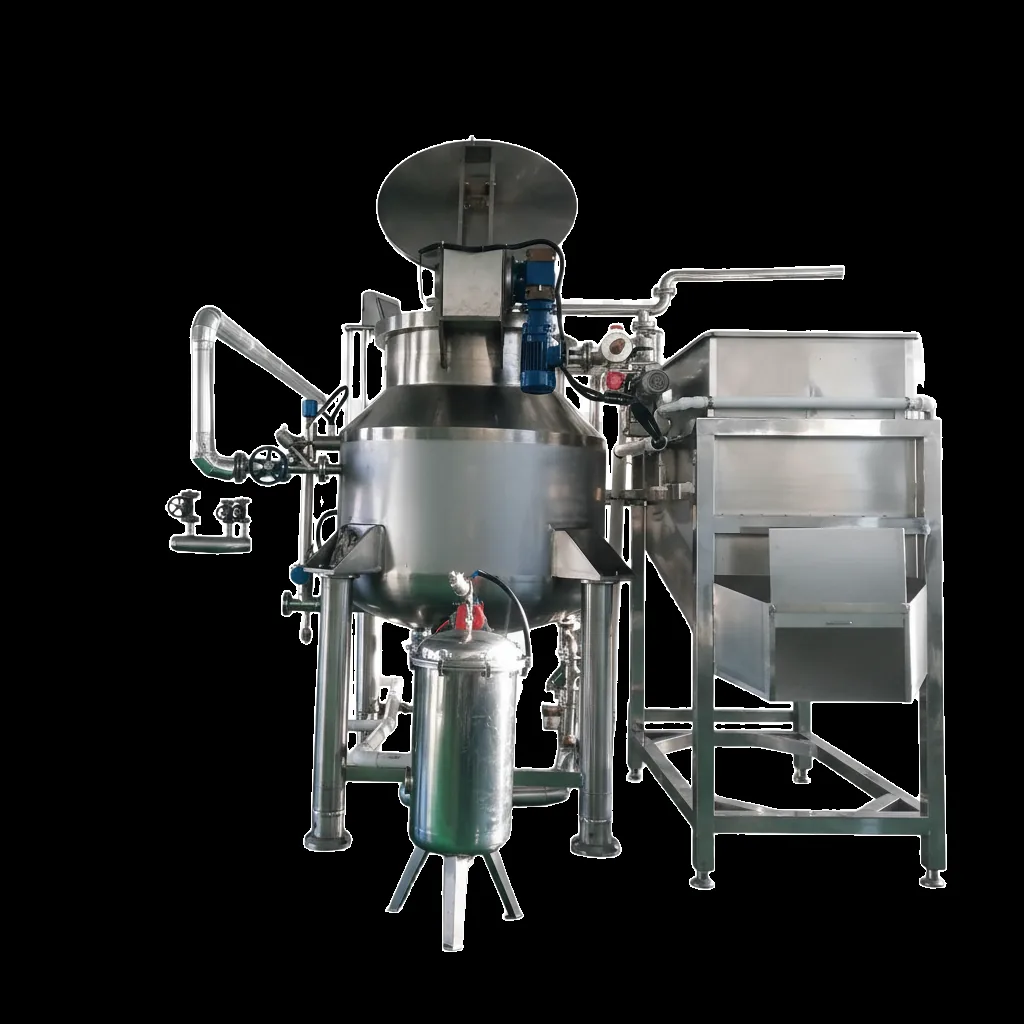
The quality terms: oil, color, and texture
Oil content
The percentage of oil in the finished snack — the headline quality number for vacuum frying. It is set by three things: frying temperature, pre-treatment, and above all the de-oiling step. QS vacuum fryers are engineered to keep oil content below 18% for suitable products — a manufacturing capability confirmed per product during trials, not a blanket lab certificate.
Centrifugal de-oiling
Spinning the product basket at high speed immediately after frying, while still under vacuum, to fling surface oil off before it can soak in. This is the step that makes low oil content possible: without it, the oil clinging to the product's surface absorbs back into the snack as the batch cools. Every quality vacuum fryer integrates a de-oiling centrifuge in the same vessel.
Oil turnover and filtration
How often the frying oil is filtered and topped up during production. At 80–100 °C oil degrades slowly, so vacuum frying oil lasts far longer than deep-frying oil — but it still needs continuous filtration to remove crumbs and fines, which burn, darken the oil, and eventually taint flavor. A machine with built-in oil filtration is a production machine; one without is a sample machine.
Moisture content (finished)
The water left in the snack after frying — typically driven below 3–5% for crisp products. Lower finished moisture means better crispness and longer shelf life, but over-drying darkens color and hardens texture. The recipe balances frying time against moisture target, product by product.
Color retention
How well the product keeps its natural color through frying — the signature visual advantage of vacuum frying. Because 80–100 °C is below the temperature where browning and caramelization reactions accelerate, strawberries stay red and apples stay pale gold. Color retention is the fastest visual check of whether a supplier's machine holds a genuine, stable vacuum.
Crispness / texture
The crunch buyers are paying for. Crispness comes from a rigid, low-moisture structure — the result of driving water out evenly (loading density), frying at the right temperature (vacuum level), and removing surface oil (de-oiling). Soggy, greasy texture almost always traces to one of these three, not to the raw material.
Shelf life
How long the finished snack keeps its quality in sealed packaging. Vacuum-fried products with low oil content and low moisture content keep for months in moisture-proof barrier packaging, because there is little water to drive spoilage and little oil to go rancid. Finished-product shelf life starts with the numbers in this section.
The machine: vessel, vacuum, and controls
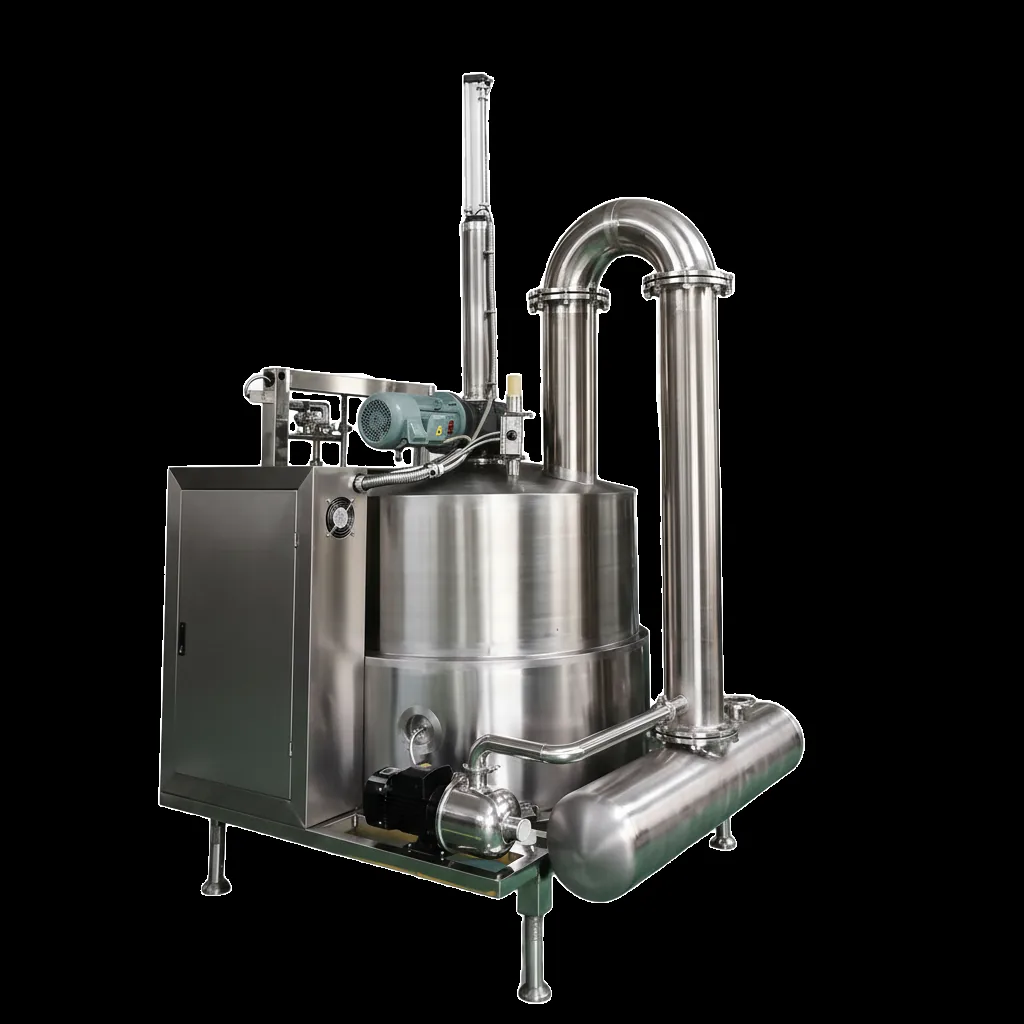
Frying vessel
The sealed stainless steel chamber (304 stainless steel on QS machines) where frying happens. It must hold deep vacuum and hot oil simultaneously, which is why vessel construction — wall thickness, door sealing, and welding quality — is the structural core of the machine. The QS-300 vessel, for example, is built at 2600 mm (H) × 1600 mm (D).
Vacuum pump
The pump that evacuates air from the vessel to create the frying vacuum. Pump speed decides how quickly the vessel reaches its working vacuum level, and pump reliability decides whether that level holds steady through the cycle — a drifting vacuum means a drifting frying temperature, and inconsistent product.
Condenser
The refrigerated surface that captures water vapor leaving the product, freezing it out of the gas stream before it reaches the vacuum pump. The condenser protects the pump from moisture and maintains vacuum integrity; a saturated condenser that is not defrosted on schedule is a common cause of slow vacuum pull-down and wet batches.
Heating system
The elements or coils that hold the oil at its 80–100 °C setpoint. Vacuum frying needs precise, even heating rather than raw power — temperature overshoot at this range ruins color retention just as surely as high heat does. Even heat distribution across the oil bath is what the heating system is judged on.
PLC recipe (Delta PLC + MCGS touchscreen)
The programmed frying cycle stored in the machine's controller: vacuum targets, temperature ramps, frying time, and de-oiling speed. QS vacuum fryers run on a Delta PLC with an MCGS touchscreen — the operator selects a stored recipe per product and the machine executes the cycle automatically. A validated recipe per product is what turns a machine into a production line; running every product on one generic recipe is the fastest route to inconsistent quality.
Batch capacity
The fresh product weight processed in one frying cycle — the capacity class of the machine. QS vacuum fryers come in three classes:
- QS-VF100: 100 KG per batch
- QS-VF150: 150 KG per batch
- QS-300: 300 KG per batch
Batch capacity is quoted as fresh (raw) weight per batch, not finished weight — finished product weighs less because frying drives water out. Specifications are for reference only and are subject to the final supplied equipment.
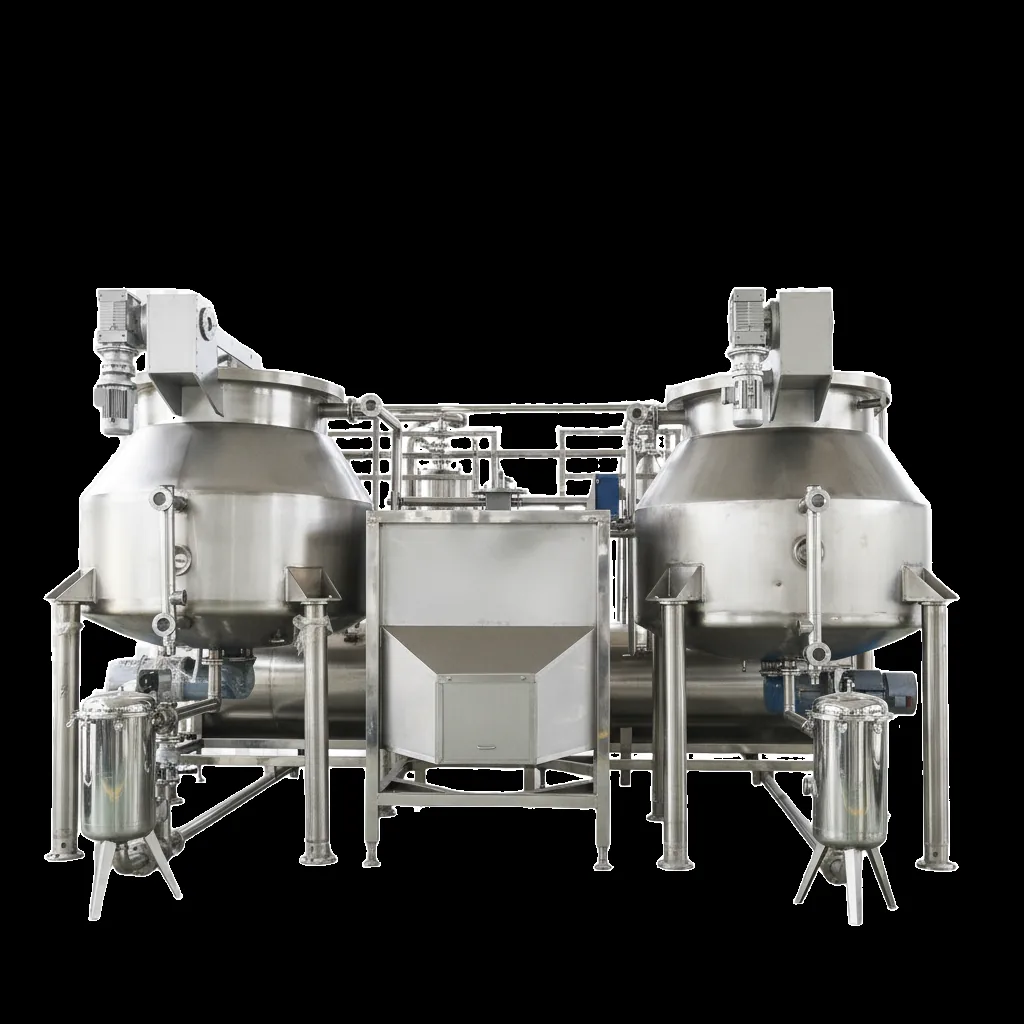
De-oiling centrifuge
The integrated spinning unit that performs centrifugal de-oiling — the basket holding the fried product spins at high speed inside the vessel, still under vacuum, immediately after the frying step. It is a separate mechanism from the frying process but the most quality-critical one: this is the hardware that keeps finished oil content low.
Frequently asked questions
What is the difference between vacuum frying and deep frying?
Deep frying cooks food in hot oil at atmospheric pressure, typically 160–190 °C. Vacuum frying does the same job inside a sealed vessel under vacuum, which lowers the boiling point of water so moisture escapes at only 80–100 °C. The lower temperature protects color, flavor, and nutrients — which is why vacuum frying suits whole fruit and vegetable snacks while deep frying suits fast throughput of coated or battered products.
Why does centrifugal de-oiling matter?
After frying, oil clings to the product's surface and would soak in as the batch cools. Spinning the basket in a centrifuge while still under vacuum flings that surface oil off before absorption happens. De-oiling is the single step that keeps finished oil content low and texture crisp — without it, even a good vacuum fryer produces greasy product.
What oil content can vacuum frying achieve?
Finished oil content depends on the product, the pre-treatment, and the de-oiling step, but vacuum frying with proper centrifugal de-oiling produces snacks far leaner than atmospheric deep frying. QS vacuum fryers are engineered to keep finished oil content below 18% for suitable products — a manufacturing capability confirmed per product during trials rather than a blanket guarantee.
What does batch capacity mean for a vacuum fryer?
Batch capacity is the fresh product weight processed in one frying cycle. QS vacuum fryers are built in three capacity classes: QS-VF100 at 100 KG per batch, QS-VF150 at 150 KG per batch, and QS-300 at 300 KG per batch. It is quoted as fresh (raw) weight per batch, not finished product weight — finished weight is lower because frying drives water out.
Why does vacuum frying happen at only 80–100 °C?
Under vacuum, water boils at a much lower temperature than at atmospheric pressure. Once the vacuum level is deep enough, water inside the product boils off at 80–100 °C, so there is no need for the 160–190 °C that atmospheric deep frying requires. Frying at 80–100 °C avoids browning and caramelization, keeps natural colors and flavors intact, and slows oil degradation — one reason vacuum frying oil lasts longer in production.
Know your product — need a capacity recommendation?
Send us your product and target daily output, and we'll match it to the right capacity class. See the machines in detail on our vacuum fryer page.
Specifications are for reference only and are subject to the final supplied equipment.