The two processes in a nutshell
Side-by-side process summary
| Spray drying | Freeze drying | |
|---|---|---|
| Starting material | Liquid or pumpable slurry | Solid pieces, liquids, or slurries |
| Mechanism | Atomize into hot air; droplets evaporate in seconds | Freeze solid; ice sublimates under vacuum |
| Temperature | High (hot inlet air) | Low (frozen, then gentle heating under vacuum) |
| Typical cycle | Seconds, continuous | Hours, batch |
| Output form | Powder | Whole pieces or granules |
Spray drying is a continuous thermal process: a liquid feed is atomized into a chamber of hot air, the tiny droplets dry almost instantly as they fall, and dry powder is collected at the bottom. It is the workhorse behind milk powder, instant coffee, and countless food flavorings.
Freeze drying is a batch vacuum process in three stages: freezing the product solid, primary drying (sublimation of ice under vacuum), and secondary drying (desorption of bound moisture). The product keeps its original shape and porous structure because the water leaves without the material ever passing through a liquid state at high temperature.
Product form: powder vs pieces
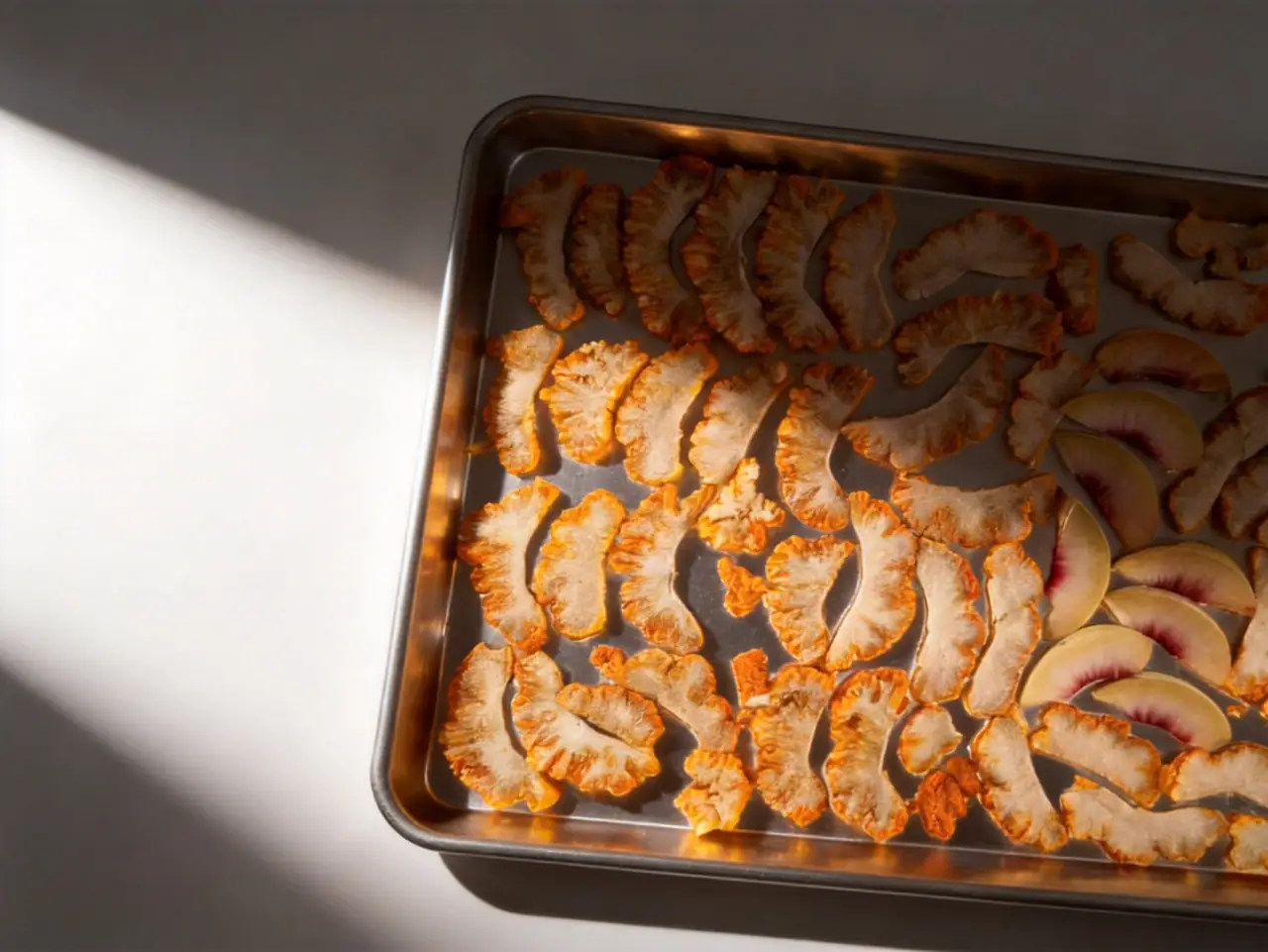
This is the single biggest practical difference. Spray drying only makes powder: the feed must be liquid enough to atomize, and the output is always fine particles. If your business sells whole strawberry pieces, carrot cubes, meat chunks, or yogurt bites, spray drying simply cannot make them — the atomizer destroys any piece structure before drying begins.
Freeze drying keeps the piece. Strawberries come out as strawberries; meat chunks come out as meat chunks, light and porous, with shape and color close to the original. The porous structure also means freeze-dried pieces rehydrate quickly and completely, which is why the technology dominates ready meals, instant soups, and pet treat chunks. If the value of your product lives in the piece — its bite, its look, its rehydration — freeze drying is the candidate.
Heat exposure and sensitive products
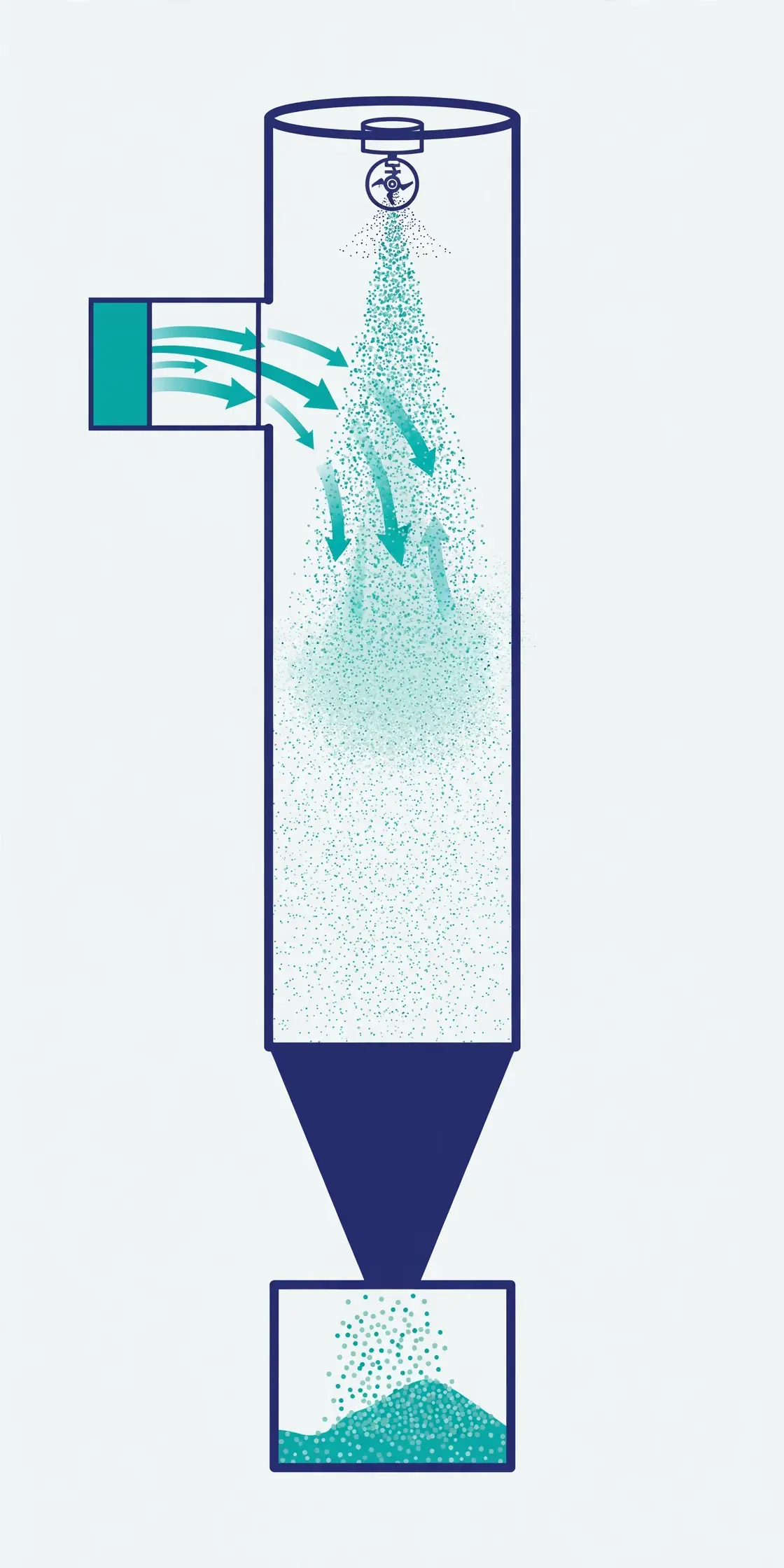
Spray drying is a high-temperature process. The droplets are tiny and the exposure is brief, but the product does meet hot air — flavors, colors, and some nutrients that are sensitive to heat take a hit. Manufacturers compensate with formulation and process design, but the physics is what it is.
Freeze drying operates at low temperature throughout: the product is frozen (commonly to −60°C in industrial equipment), and water is removed by sublimation under vacuum with only gentle warming of the shelves (up to about 80°C in typical configurations). Nothing is ever boiled or scorched. For heat-sensitive products — delicate fruit colors, volatile aromas, probiotic or functional ingredients — that low thermal load is the core reason to choose freeze drying, even at higher cost.
Texture, appearance, and rehydration
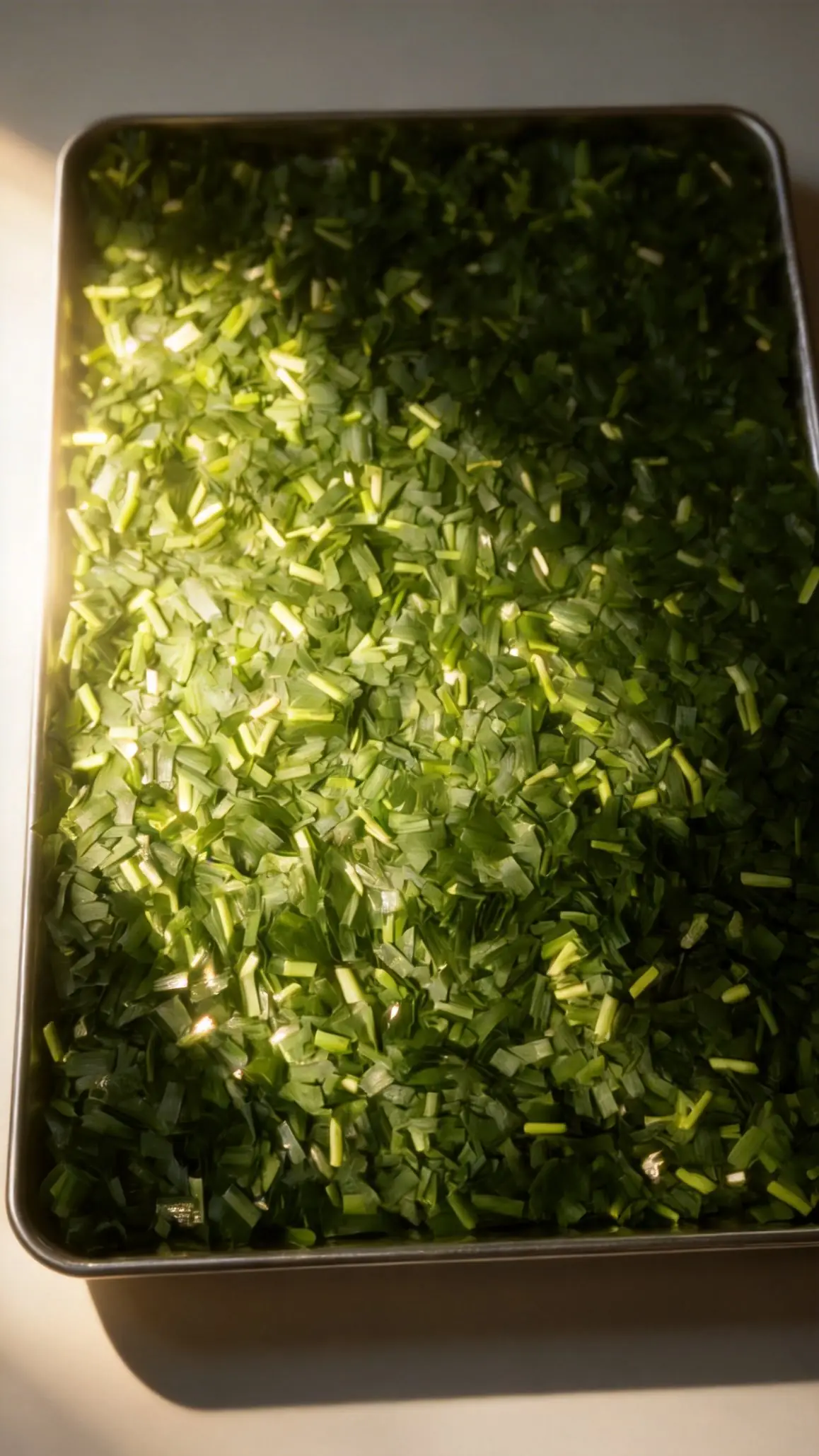
Compare the same starting material side by side and the contrast is immediate:
- Appearance. Freeze-dried pieces look like a light, airy version of the original — color and shape preserved. Spray-dried output is a uniform powder; identity with the original form is gone by design.
- Texture. Freeze-dried pieces are crisp and porous. Powders dissolve or disperse — a different eating experience entirely.
- Rehydration. The porous sponge left by sublimated ice reabsorbs water quickly and returns close to the original piece. Powders are made for instant dissolution, not for returning to a piece form.
Neither is universally "better" — they solve different product problems. The question is always: what does the customer need to see and bite into?
Which products favor spray drying
- Milk and dairy powders — the classic high-volume spray-dried category.
- Instant coffee and drinks — solubility is the product requirement, and powder is the answer.
- Flavorings, seasonings, and colorants — encapsulation of aromas in powder carriers.
- Pharmaceutical and chemical powders — controlled particle size at scale.
The pattern: the product is a powder, volumes are high, and cost per kilo decides. If your market buys on the lowest price per kilo and the powder form is acceptable, spray drying's speed and continuous operation are hard to beat.
Which products favor freeze drying
- Whole fruits and vegetables — strawberry pieces, apple slices, durian, vegetable cubes where color and shape sell the product.
- Meats, seafood, and ready-meal components — whole pieces that must rehydrate convincingly.
- Pet treats — single-ingredient chunks where owners read the ingredient list and look at the piece.
- Yogurt bites, coffee pieces, and premium snacks — products positioned on "nothing added" and natural appearance.
The pattern: the piece is the product, quality positioning carries a premium per kilo, or heat sensitivity rules out thermal drying. Note the technologies can even combine — a freeze-dried fruit can be milled into a premium powder after drying, keeping the low-temperature quality story in powder form.
Equipment and cost considerations
Compared honestly, the two technologies sit at opposite ends of the cost-quality trade-off:
- Throughput. Spray drying is continuous and fast — seconds per droplet, tonnes per day from a modest tower. Freeze drying is batch-based, with cycles measured in hours (commonly 20–40+ hours depending on product and load).
- Capital and operating cost. At comparable throughput, spray drying generally has lower capital cost and lower energy cost per kilo of output. Freeze dryers — with their refrigeration systems (−60°C), vacuum pumps (Roots + screw configurations in industrial units), and precise multi-zone heating control — cost more to build and to run.
- Value per kilo. This is where the comparison flips: freeze-dried whole-piece products typically command much higher prices per kilo than bulk powders. The right comparison is margin per batch, not cost per kilo in isolation.
Industrial freeze dryers are sized by shelf area and batch capacity — for example the QS-FD-20 (20.16㎡, ~200kg/batch), QS-FD-100 (103.68㎡, ~1t/batch), and QS-FD-200 (207.36㎡, ~2t/batch) — sharing core engineering: SUS304 construction, square chamber, −60°C refrigeration, Siemens S7-200 PLC control, and ±0.1°C multi-zone heating. Specifications are for reference only and are subject to the final supplied equipment.
A decision checklist
Five questions to settle the choice
- What form does the customer buy? Powder → spray drying. Whole pieces → freeze drying.
- Is the feed a liquid? Only spray drying can start from a liquid; freeze drying needs the material to hold a shape (or be formed into one).
- How heat-sensitive is it? If color, aroma, or function degrades at high temperature → freeze drying.
- What sells it — price or quality? Commodity price competition → spray drying. Premium whole-piece positioning → freeze drying.
- What are the volumes? Very high daily tonnage of powder → spray drying's continuous operation. Moderate, high-margin batches → freeze drying.
If the answers split — for instance, a heat-sensitive liquid — the workaround is often to form then freeze dry: freeze the liquid into pieces or sheets first, then sublimate. It costs more per kilo than spraying, but it is the only route that keeps both the low temperature and a solid form.
Frequently asked questions
What is the main difference between spray drying and freeze drying?
Spray drying atomizes a liquid into a hot-air chamber, evaporating water in seconds and producing a powder. Freeze drying freezes the product solid, then removes water by sublimation under vacuum — preserving the original shape, color, and structure of pieces rather than turning them into powder.
Which products are better suited to spray drying?
Liquids and pumpable slurries that end up as powders: milk and dairy powders, coffee and instant drinks, flavorings, and pharmaceutical excipients. Spray drying suits high-volume, cost-sensitive powder products where whole-piece texture is not the selling point.
Which products are better suited to freeze drying?
Whole pieces whose shape, texture, and appearance matter: fruit and vegetable pieces, meats and seafood, pet treat chunks, ready-meal components, and premium single-ingredient snacks. Freeze drying is also the choice when heat sensitivity rules out high-temperature drying.
Is spray drying or freeze drying cheaper to run?
Spray drying generally has lower capital and operating cost per kilo of output at comparable throughput — it is fast and continuous. Freeze drying costs more per batch in energy and time, but sells into premium whole-piece products with much higher margins per kilo. The comparison only makes sense against your product's value, not in the abstract.
Can both technologies be used for the same product?
Sometimes, but the end product differs completely: strawberries become a powder in a spray dryer and stay as whole pieces in a freeze dryer. For some ingredients the technologies even combine — for example, a freeze-dried fruit can be milled into a premium powder after drying.
Not sure which drying technology fits your product?
Tell us your raw material and the product form you're after — we'll give you a straight answer on which route makes sense.
Specifications are for reference only and are subject to the final supplied equipment.