Why these products suit vacuum frying
Vacuum frying is deep frying under reduced pressure at roughly 80–100°C, finished with centrifugal de-oiling before the chamber returns to atmospheric pressure. That process favors products where gentle heat is an advantage — foods that scorch, darken, or lose their delicate flavor at the 160–190°C of open frying — and where a less greasy, more natural-looking finish commands a premium. If your snack idea fits that description, it is worth testing. If your product sells purely on the lowest price per kilo, atmospheric lines are usually more economical.
Fruit and vegetable chips: the flagship application
This is the category vacuum frying was built for. High-moisture, delicate-colored produce fries beautifully at low temperature:
- Sweet potato chips and slices — the single most established vacuum-fried product: golden color, glassy crisp, and a cleaner bite than deep-fried equivalents.
- Other root vegetables — taro, cassava, carrot, beetroot, and similar: firm structure and uniform slices fry evenly.
- Leafy and delicate vegetables — products like okra or other high-moisture vegetables where high heat would burn the outside before the inside dries.
- Mushroom chips — a specialty snack where the premium texture and appearance justify the extra process step.
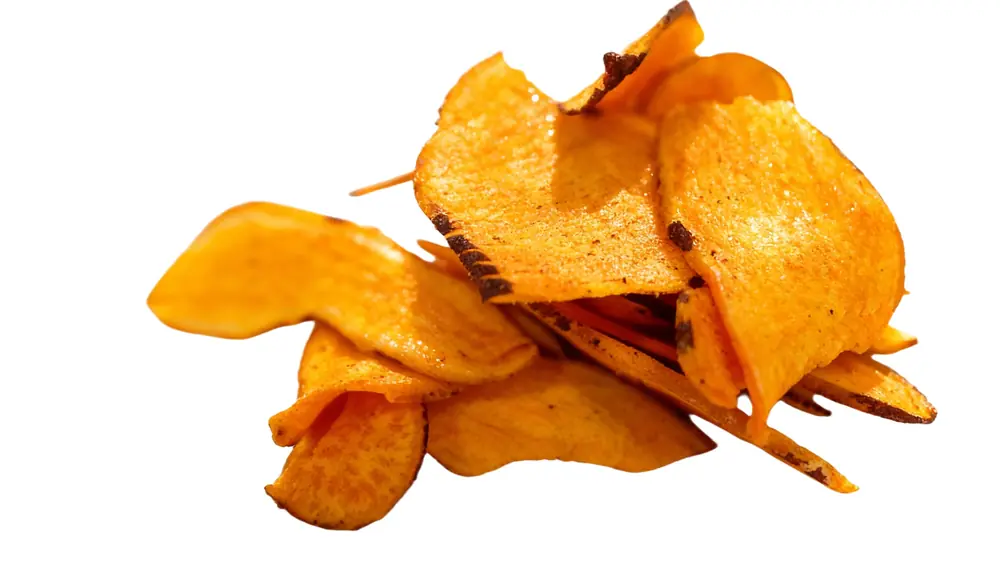
Preparation is half the battle: uniform slice thickness, washing, and sometimes blanching or pre-freezing determine how evenly a batch fries. Freshness and variety of the raw material matter as much as the machine recipe.
Potato products and french fries
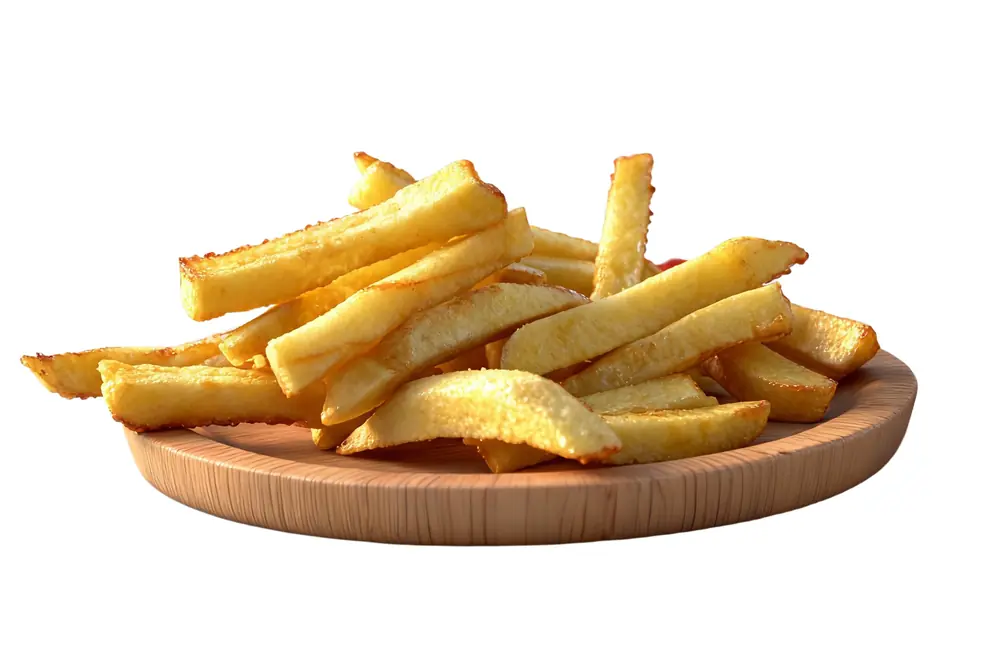
Potato is a natural fit — it is the world's most fried vegetable, and vacuum frying gives it a lighter color and lower oil content than conventional fries:
- French fries — paler, less greasy fries with a crisp exterior.
- Potato chips and wedges — thinner cuts fry faster and come out lighter in color.
- Seasoned potato snacks — the clean surface of vacuum-fried product takes seasoning well after de-oiling.
Sugar content in the raw potato variety affects browning even at low temperature, so variety selection and blanching are standard parts of the recipe work.
Nuts, beans, and legumes
Nuts and legumes fry more evenly at 80–100°C than at high heat, where thin skins and edges scorch easily:
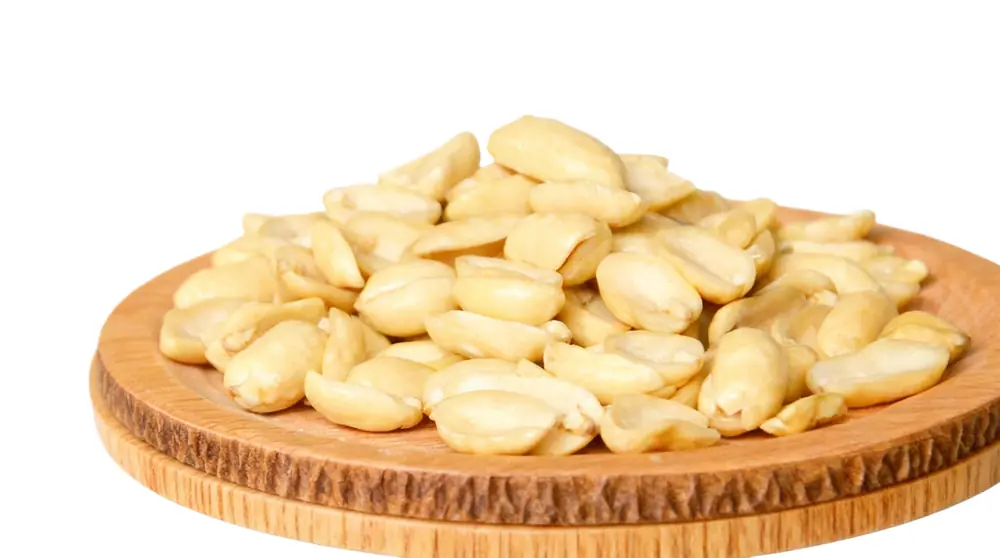
- Peanuts — a well-established vacuum-fried product: even roast color, controlled oil pickup, clean flavor.
- Other nuts — cashews and similar nuts where gentle heat protects delicate oils and flavor.
- Beans and legumes — broad beans, soybeans, and chickpeas fry to a crisp, snackable texture; their low moisture means shorter cycles.
This category suits producers moving from bulk commodity nuts or beans into branded, higher-margin snacks — the process gives a visibly cleaner, more premium product to sell the upgrade.
Seafood snacks: fried fish and eel
Seafood is one of the more demanding — and rewarding — vacuum-frying categories:
- Fried fish — small fish or fish pieces fry to a crisp snack with less oil and better texture than open frying.
- Eel strips — a known vacuum-fried product in Asian snack markets: the low temperature protects the delicate texture and rich flavor.
- Other seafood — shrimp and similar products suit the same gentle approach.
With seafood, raw-material freshness and preparation dominate the result: grading, washing, and sometimes pre-treatment steps matter more than with root vegetables. Work these out during trial frying before committing to capacity.
Other and emerging product ideas
Beyond the established categories, producers are testing vacuum frying on:
- Mixed vegetable medleys — multi-product chip mixes for the premium snack aisle.
- Specialty and regional produce — local fruits, roots, and tubers that don't survive conventional frying with their color intact.
- Better-for-you repositioning — existing fried snacks reformulated as lower-oil, cleaner-label versions of the same product.
The pattern is consistent: wherever color, shape, and a less oily bite are the selling points, vacuum frying is a candidate. Where the selling point is the lowest price, it usually isn't.
What makes a product easy — or difficult — to vacuum fry
Quick suitability checklist
| Factor | Easy to vacuum fry | Difficult |
|---|---|---|
| Moisture | Moderate, evenly distributed | Extremely wet or very uneven |
| Shape | Uniform slices or pieces | Very thin fragile sheets or large irregular chunks |
| Sugar content | Moderate | Very high — can caramelize or stick even at low temp |
| Structure | Firm enough to hold shape in the basket | Falls apart when handled wet |
| Value story | Premium color/texture/low-oil positioning | Pure commodity price competition |
Most "difficult" cases are really preparation problems, not frying problems: adjusting slice thickness, blanching, or pre-freezing often converts a marginal product into a workable one.
From product idea to recipe: trial frying
No catalog can confirm that your specific raw material fries well — trial frying with your own material is the standard step before choosing a machine:
- Send enough of your actual raw material — variety, origin, and season change the result; trials on a different material rarely transfer.
- Lock in slice thickness, temperature, frying time, and de-oiling time — these four define your recipe.
- Evaluate color, crispness, oil content, and taste against your target market, not just against the raw material.
- Use the trial data to pick the capacity class — batch weight depends on product density and loading, so the right model follows the product, not the other way round.
Batch vacuum fryers are classed by charge size — the QS-VF100 (100KG class), QS-VF150 (150KG class, about 30–50 kg per batch), and QS-300 (300KG class, vessel 2600 mm H × 1600 mm D) — all frying at 80–100°C under vacuum with built-in centrifugal de-oiling. Specifications are for reference only and are subject to the final supplied equipment.
Frequently asked questions
What is the most popular vacuum-fried snack?
Fruit and vegetable chips are the flagship application — sweet potato chips and slices lead, followed by other root vegetables, beetroot, and similar products. Their high moisture and delicate color benefit most from frying at 80–100°C under vacuum, and the crisp result sells at a premium over conventional chips.
Can nuts and peanuts be vacuum fried?
Yes. Nuts and peanuts fry gently and evenly in a vacuum fryer, with controlled oil pickup and good color. Peanuts, cashews, and similar nuts are established vacuum-frying products. The lower temperature protects the delicate flavors that high-heat frying can scorch.
Can seafood be vacuum fried?
Yes — fried fish and eel strips are known vacuum-frying products. The low temperature is gentle on delicate seafood texture and flavor, and the finished product comes out crisp with less oil than open frying. Raw-material freshness and preparation matter more with seafood than with root vegetables.
What products are not suitable for vacuum frying?
Very high-sugar or high-starch wet batters, products that need puffing or expansion at high heat, and anything whose appeal depends on a deep-fried flavor profile are poor fits. Also, if your market buys purely on the lowest price per kilo, the extra equipment and batch process of vacuum frying may not pay — it is a technology for quality-positioned snacks.
How do I test whether my product works in a vacuum fryer?
Trial frying with your own raw material is the standard step. Suppliers typically fry sample batches to dial in slice thickness, temperature, time, and de-oiling before you commit to a machine. Bring enough of your actual raw material — lab results from a different variety or origin often do not transfer.
Have a snack idea to test?
Tell us what you want to fry — we'll talk through suitability, preparation, and which capacity class fits your plan.
Specifications are for reference only and are subject to the final supplied equipment.