Why durian is a difficult freeze-drying subject
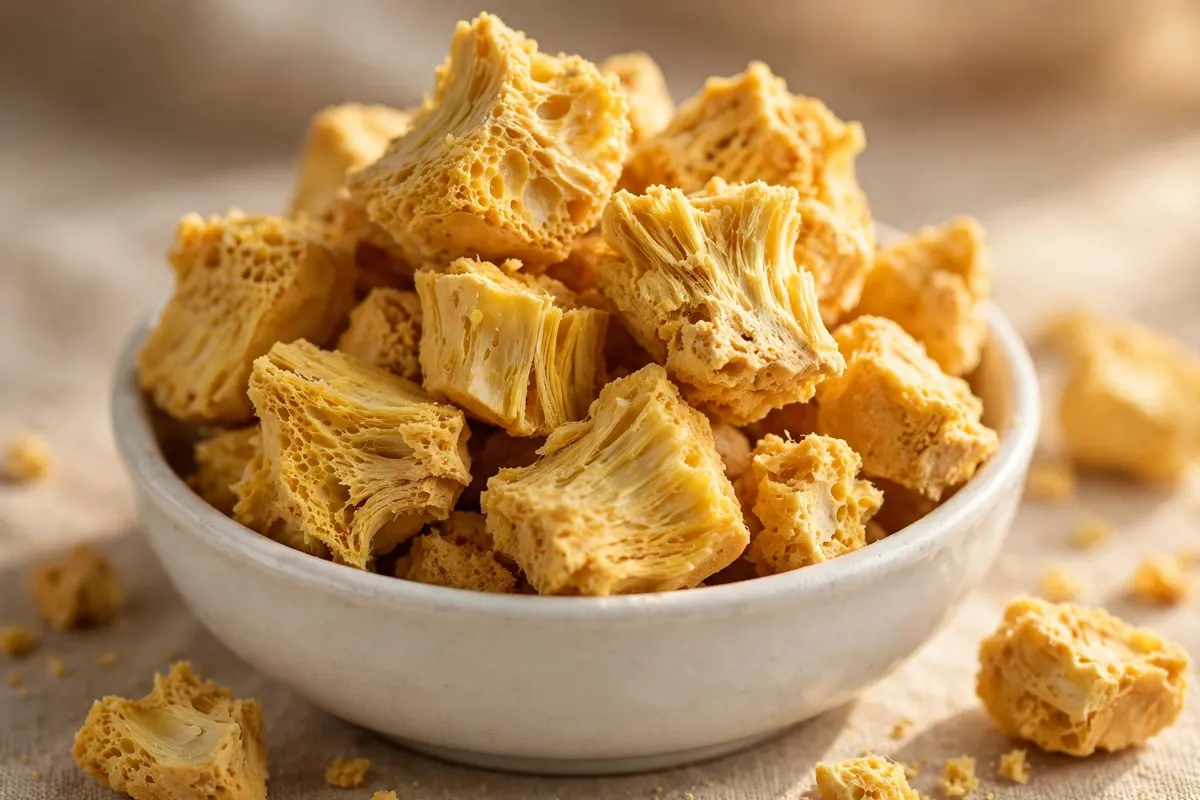
Freeze drying is, by definition, sublimation: ice turns directly into vapor under vacuum, bypassing the liquid phase. The process works beautifully on most fruits. Durian, however, fights it in three specific ways:
- High sugar content. Sugars bind water tightly and soften at relatively low temperatures. As the drying front moves through a sugary piece, the unfrozen fraction becomes sticky, moisture migration slows, and the window between "still wet inside" and "collapsed structure" narrows dramatically.
- High fat content. Durian flesh is unusually rich for a fruit. Fat does not sublimate; it stays behind and can weep to the surface if the shelf temperature climbs too fast, leaving an oily film on the finished piece.
- Dense, thick pulp. Durian is eaten in large, dense chunks rather than thin slices. The sublimation front has a long way to travel from the center of each piece to the surface, which is why durian cycles run far longer than, say, strawberry or apple cycles.
None of this makes durian impossible to freeze dry — it makes it a process-control problem. The difference between a crisp, aromatic piece and a gummy, collapsed one is almost entirely the quality of the drying curve: how deep the initial freeze goes, how low the vacuum holds, and how patiently the shelf temperature climbs.
What industrial freeze drying does differently
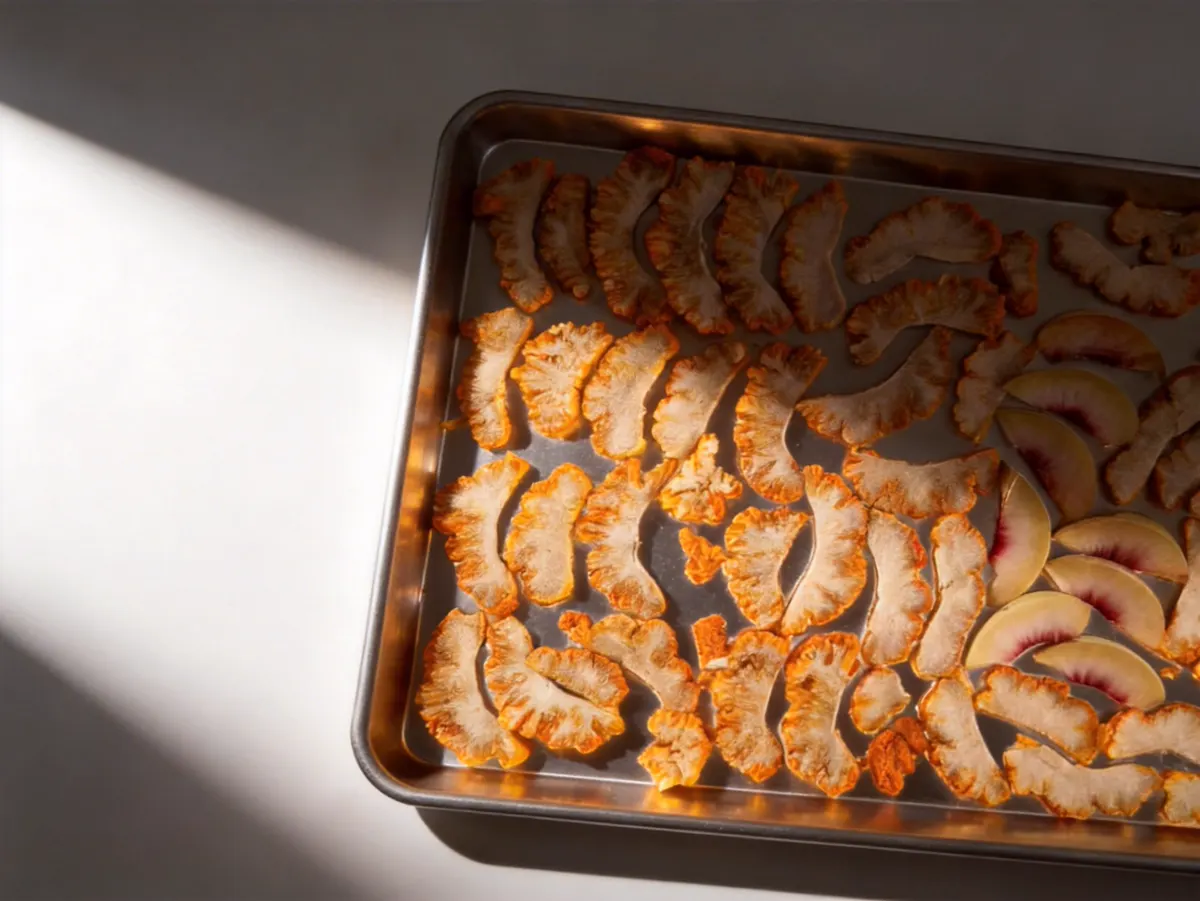
An industrial freeze dryer does not just run "longer." It controls the variables that matter for difficult products. Four capabilities separate industrial machines from everything smaller:
- Deep, fast freezing. Industrial machines freeze to −60 °C using two-stage cascade refrigeration (R404A / R507). A deep freeze locks the product's cellular structure solid before drying begins, so the piece keeps its shape through the long cycle. Shallow or slow freezing grows large ice crystals that tear cell walls — and torn cells mean a collapsed, leathery result.
- Serious vacuum capacity. A Roots plus screw vacuum pump set pulls and holds the deep vacuum that keeps sublimation going through dense, sugary flesh for many hours. Weak or undersized pumps let the vacuum decay as the chamber loads up with vapor, and a decaying vacuum is exactly what stalls a durian cycle.
- Zoned, precise heating. Four-zone independent heating control, accurate to ±0.1 °C with a ceiling of 80 °C, lets the operator shape different temperature curves for different tray zones. For durian, the winning strategy is a long, low primary-drying phase followed by a carefully ramped secondary phase — and that precision is what prevents the sugar fraction from softening and collapsing.
- Programmable recipe control. A Siemens S7-200 PLC with a touchscreen recipe system stores the full cycle — freezing profile, vacuum setpoints, shelf temperatures, and phase timing — so the durian curve that worked last month runs identically this month. Difficult products are unforgiving of batch-to-batch drift, and automation is what removes the operator variable.
The shared platform behind the QS-FD series illustrates the point: SUS304 square chamber, food-grade silicone seals, and front-door loading with wet/dry separation are the hygiene and workflow baseline, but it is the refrigeration, vacuum, and control trio that actually determines whether a difficult fruit succeeds.
Why small and household units fall short
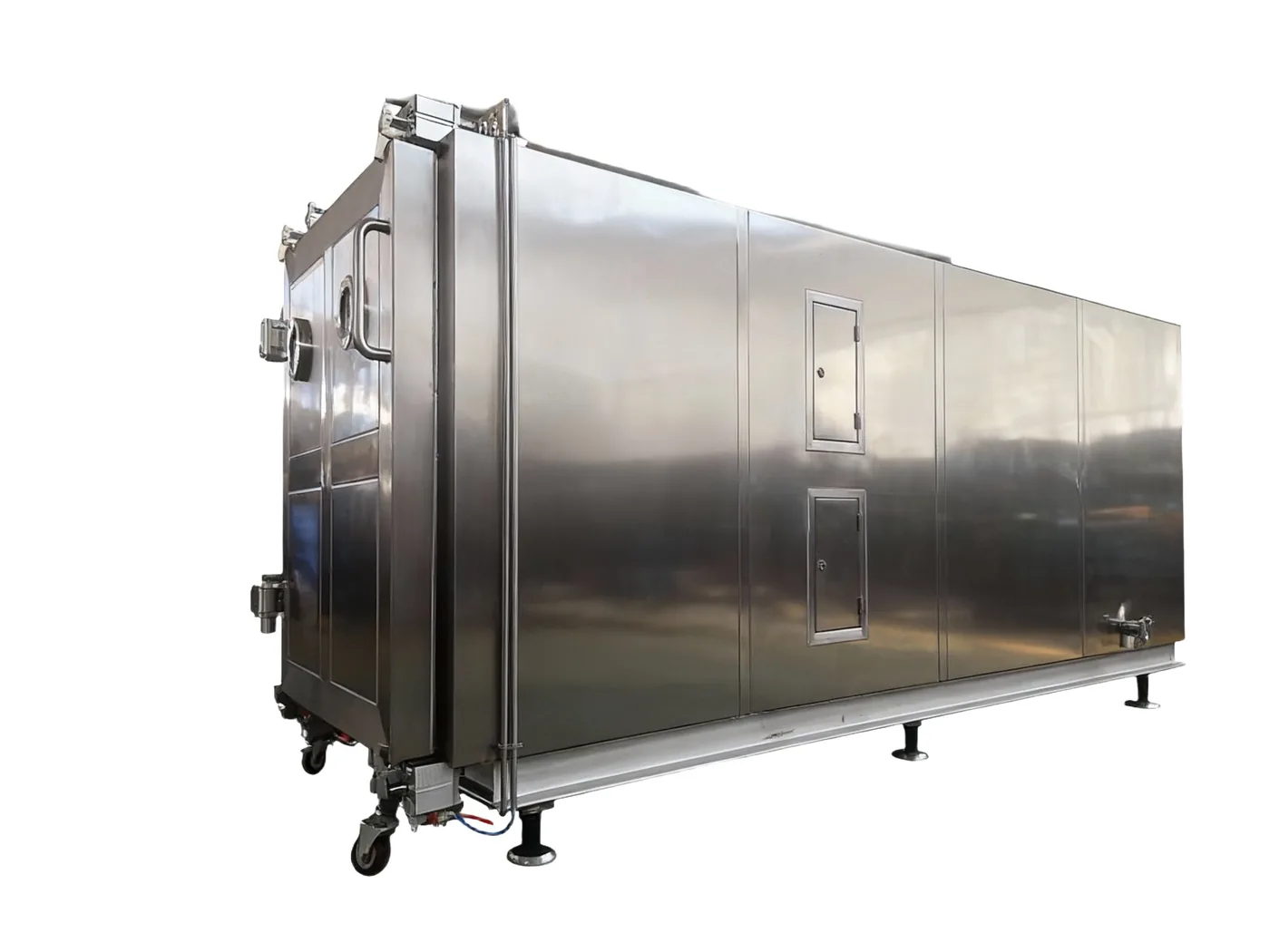
This is an equipment-class difference, not a brand difference. Small and household freeze dryers are designed around forgiving products — berries, herbs, thin slices — and they are honest machines for that job. Durian exposes their limits in predictable ways:
- Freezing depth. Small units typically freeze far shallower than −60 °C. For thin strawberries that is enough; for thick, sugary durian chunks it leaves a soft core that collapses during drying.
- Vacuum and vapor handling. Durian releases a large total volume of vapor over a long cycle. Undersized pumps and small cold traps saturate, the vacuum rises, and the cycle stalls with the center of each piece still wet.
- Control granularity. A single fixed temperature program cannot shape the staged, patient curve durian needs. Without zoned control and programmable recipes, the operator's only lever is "hotter" — and hotter is what ruins the batch.
- Throughput economics. Even if a small machine eventually produced an acceptable piece, its batch size makes commercial durian production impractical. Durian commands a premium price precisely because it is difficult; producing it at craft scale leaves the margin on the table.
The practical takeaway: if durian (or any high-sugar tropical fruit) is in your product plan, evaluate equipment on freezing depth, vacuum capacity, and control precision first — not on chamber size alone.
What to test before committing to equipment
Because durian is unforgiving, it is also the perfect test product. Before ordering any machine for a durian project, run a sample trial on your own raw material and demand the full record:
- The complete cycle data — freezing profile, vacuum level over time, shelf temperature curve, and final moisture reading, not just a bag of finished samples.
- Texture and structure of the result — crisp all the way through, no gummy center, no oily surface, and a clean break rather than a bend.
- Color and aroma — freeze drying should preserve both; dull color or scorched notes indicate the temperature curve ran too hot.
- Model matching — confirm the machine that ran the trial is the same model (or at least the same platform) you intend to buy. A trial on a flagship machine proves nothing about a smaller unit's limits.
Suppliers who work with difficult products regularly will welcome this kind of test — it is also how they calibrate the recipe you will run in production.
Platform specs that matter for difficult fruits
- Two-stage cascade refrigeration to −60 °C (R404A / R507), roughly 60% actual power draw in normal operation
- Roots + screw vacuum pump set for deep, sustained vacuum
- Four-zone independent heating control, ±0.1 °C accuracy, up to 80 °C
- Siemens S7-200 PLC with Chinese/English touchscreen recipe control
- SUS304 square chamber, food-grade silicone seals, front-door loading with wet/dry separation
Specifications are for reference only and are subject to the final supplied equipment.
Frequently asked questions
Can durian be freeze dried at all?
Yes, and freeze dried durian is a well-established premium snack. Durian's high sugar and fat content simply means the cycle has to be engineered carefully: deep freezing, a strong vacuum, and a long, gently controlled drying curve. When those are in place, the result is a crisp, aromatic piece that keeps the fruit's character.
Why does freeze drying durian take so long?
Sugars slow down moisture migration because they bind water and soften at low temperatures. Durian flesh is dense and rich in sugar, so the sublimation front moves slowly through each piece. Rushing the cycle with higher shelf temperatures causes collapse and a gummy center; a properly programmed industrial machine spreads the drying over a longer, staged curve instead.
What is the main equipment difference for difficult fruits like durian?
Three things: freezing capacity deep enough to lock the structure before drying (industrial machines reach −60 °C with two-stage refrigeration), a vacuum system strong enough to keep sublimation going through dense, sugary flesh (a Roots plus screw pump set), and multi-zone heating control (±0.1 °C) so different tray zones can follow different curves without scorching.
Does freeze drying remove durian's strong smell?
Freeze drying concentrates flavor and aroma rather than removing them, because the process happens at low temperature and the volatile compounds are largely preserved. Freeze dried durian still smells and tastes strongly of durian, which is exactly why buyers pay a premium for it.
What should I test before buying equipment for durian?
Ask the supplier for a sample drying trial on your own raw material, with the full cycle record: freezing profile, vacuum level, shelf temperature curve, and final moisture. Compare the result on texture, color, and rehydration behavior, and confirm the machine that ran the trial matches the model you intend to buy.
Planning a durian freeze drying project?
Tell us your raw material and target output — we'll help you match a QS-FD model to the job and run a sample trial plan. See the range on our freeze dryer page.
Specifications are for reference only and are subject to the final supplied equipment.