The three models at a glance
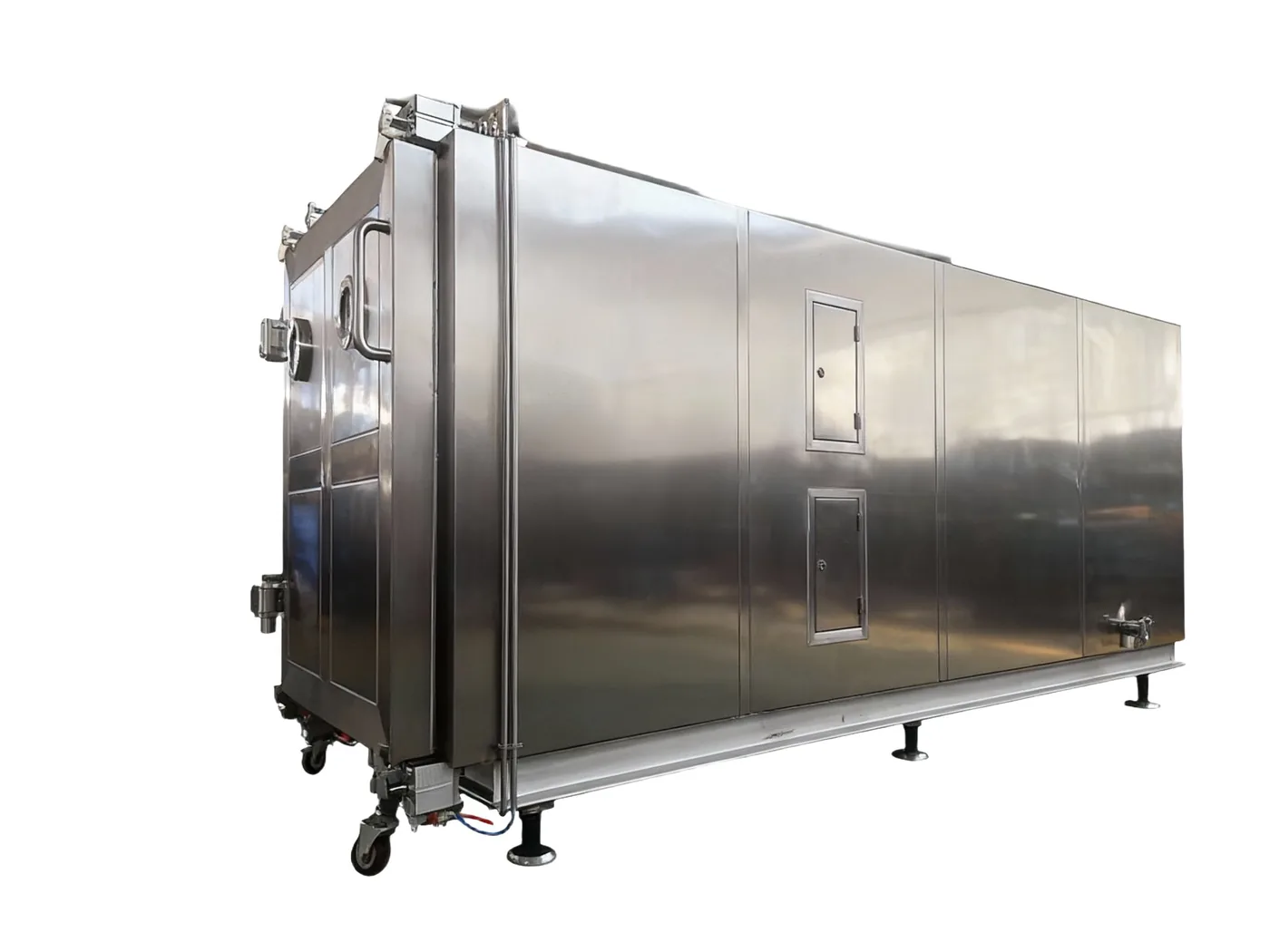
Start with the numbers. These three models form a single product family scaled to three production levels:
QS-FD series comparison
| Model | Drying area | Trays | Batch size | Power | Footprint (L×W×H) |
|---|---|---|---|---|---|
| QS-FD-20 | 20.16 m² | 84 | ~200 kg | 35 kW | 4500 × 1300 × 1400 mm |
| QS-FD-100 | 103.68 m² | 432 | ~1 t | 135 kW | 7000 × 4000 × 2300 mm |
| QS-FD-200 | 207.36 m² | 864 | ~2 t | 135 kW (listed) | 12000 × 4000 × 2300 mm |
Specifications are for reference only and are subject to the final supplied equipment.
Two things stand out immediately. First, drying area scales roughly fivefold from the FD-20 to the FD-100, and doubles again to the FD-200 — capacity grows in big, deliberate steps, not small increments. Second, batch size is the headline number buyers actually plan around: roughly 200 kg, 1 ton, and 2 tons of wet product per cycle. Everything else — trays, power, footprint — follows from that.
QS-FD-20: the entry class
The QS-FD-20 is the smallest of the three: 20.16 m² of drying area, 84 trays (400 × 600 mm), a 35 kW installed power rating, and a footprint of 4500 × 1300 × 1400 mm. It processes about 200 kg of wet product per batch.
Who is it for? Three buyer profiles fit naturally:
- Startups validating a product. If you are launching a freeze-dried snack brand, the FD-20 lets you run real production batches — enough to supply early retail or e-commerce channels — without committing to industrial-scale utilities and floor space.
- R&D and pilot work. Recipe development, drying-curve trials, and new-product testing all happen most economically on the smallest machine that still behaves like production equipment. Because the FD-20 shares the control platform of its bigger siblings, a recipe proven here transfers upward.
- High-value, low-volume products. Premium items — specialty botanicals, high-grade pet treats, small-batch functional foods — where margin per kilogram is high and volume is modest.
The practical advantage of the FD-20 is its modesty: 35 kW and a 4.5-meter footprint fit into facilities that could never host a 12-meter line. Many buyers underestimate how much this matters — the cheapest machine to buy is not always the cheapest machine to house and power.
QS-FD-100: the mid-volume workhorse
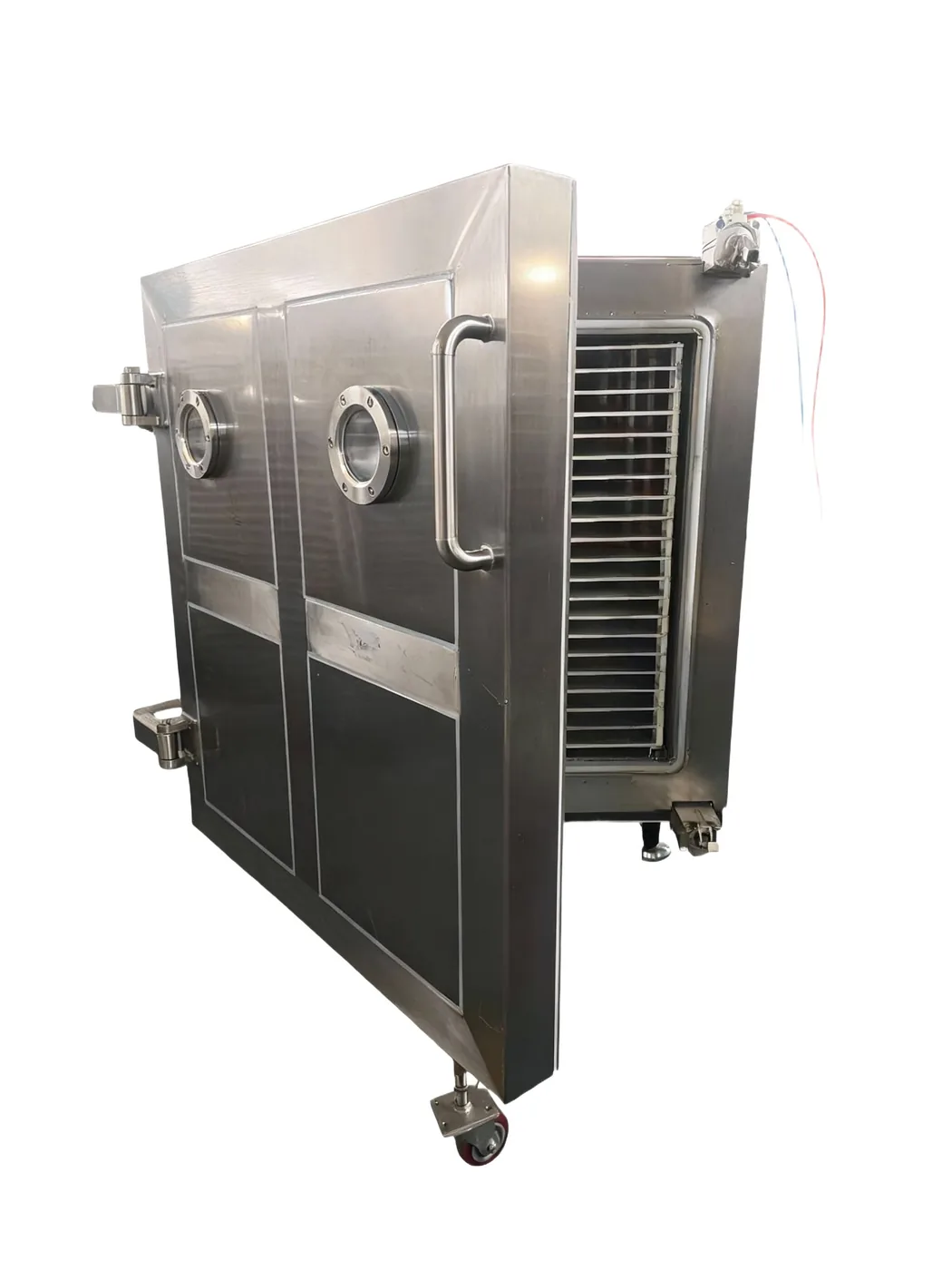
The QS-FD-100 is the middle of the range and the most common choice for established producers: 103.68 m² of drying area, 432 trays, about 1 ton per batch, 135 kW, and a 7000 × 4000 × 2300 mm footprint.
The FD-100 comes in two configurations worth understanding:
- Standard version — round chamber, listed at USD 238,645.
- High-spec version — square chamber with an upgraded electrical configuration, higher intelligence and automation, and an upgraded vacuum pump unit, listed at USD 328,135.
Both prices are indicative only and subject to the final quotation — treat them as budgeting anchors, not as offers. The square-chamber upgrade matters because a square chamber uses floor space more efficiently and suits the tray-loading workflow most food producers run; the automation and vacuum-pump upgrades target buyers who need tighter batch-to-batch consistency, such as contract manufacturers and exporters.
The FD-100 buyer is typically a company with proven demand: a snack brand scaling past startup volumes, a processor adding freeze drying to an existing line, or a regional producer supplying distributors. At roughly 1 ton per batch, a single machine running regular cycles supports serious commercial output without the utility and space commitments of the FD-200.
QS-FD-200: the high-volume line
The QS-FD-200 is the top of the range: 207.36 m² of drying area, 864 trays, about 2 tons per batch, a listed 135 kW power rating, and a 12000 × 4000 × 2300 mm footprint.
This is a different kind of purchase. At 12 meters long, the FD-200 is line equipment, not a standalone machine — buyers plan the building around it, not the other way around. It suits:
- Large snack and ingredient producers running freeze drying as a core process, often across multiple shifts.
- Contract manufacturers whose business model is throughput: the FD-200's economics only work when the chamber stays full.
- Export-oriented operations where container-scale output and consistent quality documentation are the entry ticket.
The key discipline with the FD-200 is utilization. A 2-ton chamber running half-empty dries product no better than a smaller machine — it just costs more per kilogram. Buy the FD-200 when your order book already justifies it, not as a bet on future demand.
What stays the same across all three
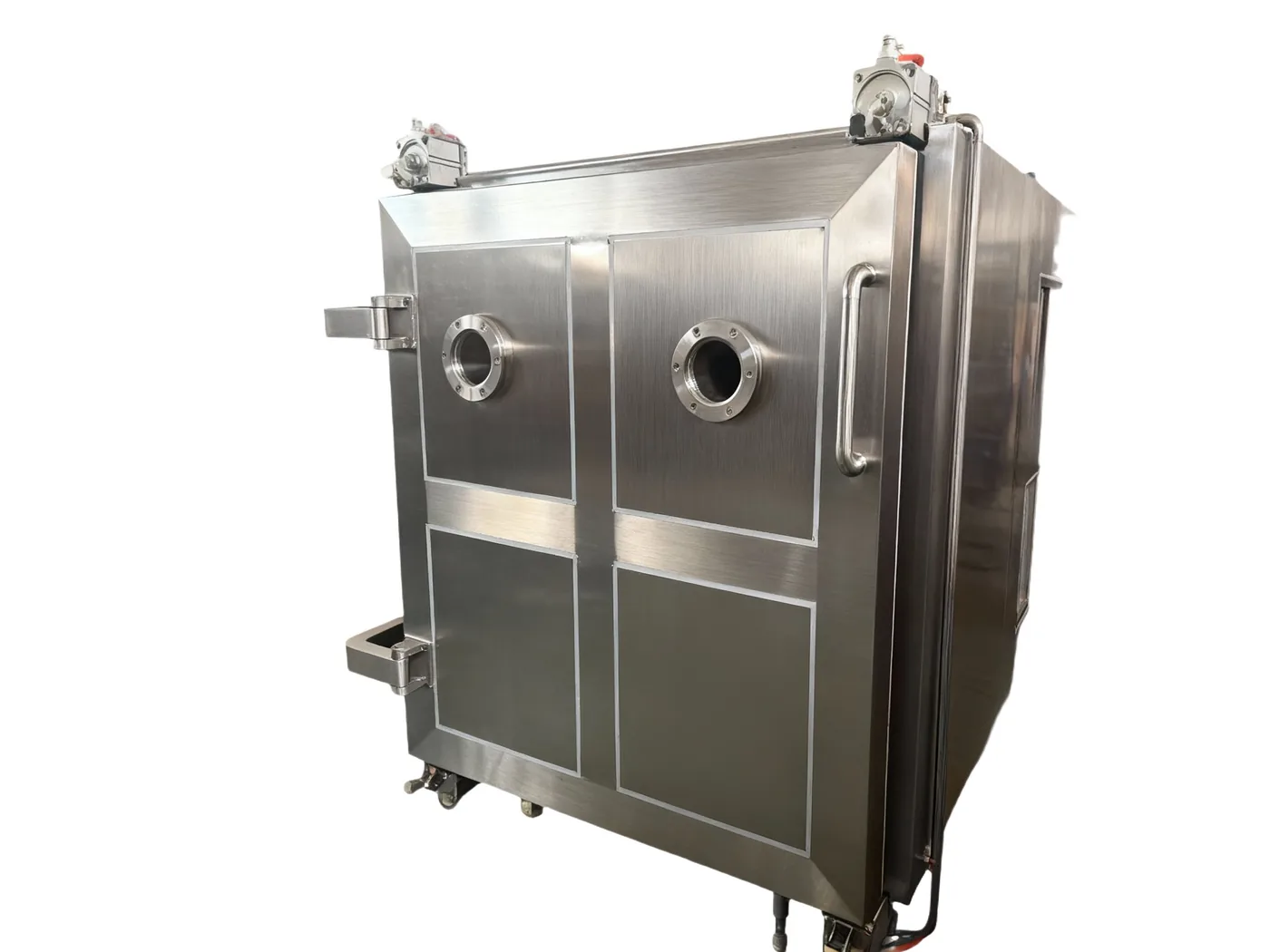
Capacity is what differs; the engineering platform is common. Every model in the QS-FD series carries the same core specification:
- SUS304 stainless-steel chamber — food-grade contact surfaces throughout.
- Square chamber design (high-spec configurations) — efficient tray loading and floor-space use.
- −60 °C two-stage cascade refrigeration (R404A / R507) — deep freezing capacity with roughly 60% actual power draw in normal operation.
- Four-zone independent heating control — ±0.1 °C accuracy, up to 80 °C, so different tray zones can follow different temperature curves.
- Siemens S7-200 PLC with a Chinese/English touchscreen — the same control logic on all three sizes.
- Roots + screw vacuum pump set — ultra-quiet operation for a machine of this class.
- Food-grade silicone seals and front-door loading with wet/dry separation.
This commonality is the practical reason the "start small, scale up" path works: operators trained on the FD-20 already know the FD-100, and drying recipes developed on one size transfer to the others without relearning the control system.
How to choose: match the machine to your output
Forget the spec sheet for a moment and answer three questions:
- How much wet product must you dry per day? Divide your target daily output by the number of cycles you can realistically run per day. If the answer is under ~200 kg, the FD-20 is your machine. Around a ton, look at the FD-100. Approaching two tons per cycle, the FD-200 earns its footprint.
- What are your utilities and space? The FD-20 runs on 35 kW and fits in 4.5 meters. The FD-100 and FD-200 both list 135 kW and need serious three-phase supply, ventilation, and — for the FD-200 — a 12-meter bay. Confirm power availability before falling in love with a bigger chamber.
- Are you buying for today or for growth? Honest answer: buy for the demand you can see. The shared platform means upgrading later costs you little in retraining — but an oversized chamber running half-full costs you every single batch.
A final note on quoting: freeze dryer pricing depends on configuration, and the FD-100's two listed prices illustrate the range a single model can span. When you request a quotation, specify your product, target batch size, and required options — that is what turns an indicative price into a real one. Expect approximately three months of lead time for machines of this class.
Frequently asked questions
What is the main difference between the QS-FD-20, QS-FD-100 and QS-FD-200?
Batch capacity. The QS-FD-20 handles about 200 kg per batch with 20.16 m² of drying area and 84 trays; the QS-FD-100 handles about 1 ton per batch with 103.68 m² and 432 trays; the QS-FD-200 handles about 2 tons per batch with 207.36 m² and 864 trays. All three share the same core platform — SUS304 square chamber, −60 °C two-stage refrigeration, and Siemens S7-200 controls.
Can I start with a smaller freeze dryer and scale up later?
Yes, and it is a common path. Many producers validate recipes and build distribution with a QS-FD-20, then add a QS-FD-100 or QS-FD-200 when volume justifies it. Because all three models share the same control platform and tray logic, recipes and operating know-how transfer directly to the larger machine.
What is the difference between the standard and high-spec QS-FD-100?
The standard QS-FD-100 uses a round chamber and is listed at USD 238,645, while the high-spec version uses a square chamber with an upgraded electrical configuration, higher intelligence and automation, and an upgraded vacuum pump unit, listed at USD 328,135. Prices are indicative only and subject to the final quotation.
How much floor space does each model need?
Nameplate footprints are 4500 × 1300 × 1400 mm for the QS-FD-20, 7000 × 4000 × 2300 mm for the QS-FD-100, and 12000 × 4000 × 2300 mm for the QS-FD-200. Allow extra clearance around the machine for tray loading, maintenance access, and ventilation.
Do all three models use the same control system?
Yes. All three run on a Siemens S7-200 PLC with a Chinese/English touchscreen, four-zone independent heating control accurate to ±0.1 °C, and a Roots plus screw vacuum pump set. A recipe developed on one model runs the same way on the others.
What lead time should I expect when ordering?
Expect approximately three months of lead time for industrial freeze dryers of this class, covering manufacturing, testing, and export preparation. Confirm the exact schedule when requesting a quotation, since configuration choices can shift it.
Match your output to the right size
Tell us your product and target daily output — we'll help you choose between the QS-FD-20, QS-FD-100 and QS-FD-200, and quote the configuration that fits. See the full range on our freeze dryer page.
Specifications are for reference only and are subject to the final supplied equipment.