How freeze drying works
Freeze drying (lyophilization) is a three-stage dehydration process that removes water while the product stays frozen:
- Freezing: the product is frozen solid — typically well below −30 °C — so all free water becomes ice before drying begins.
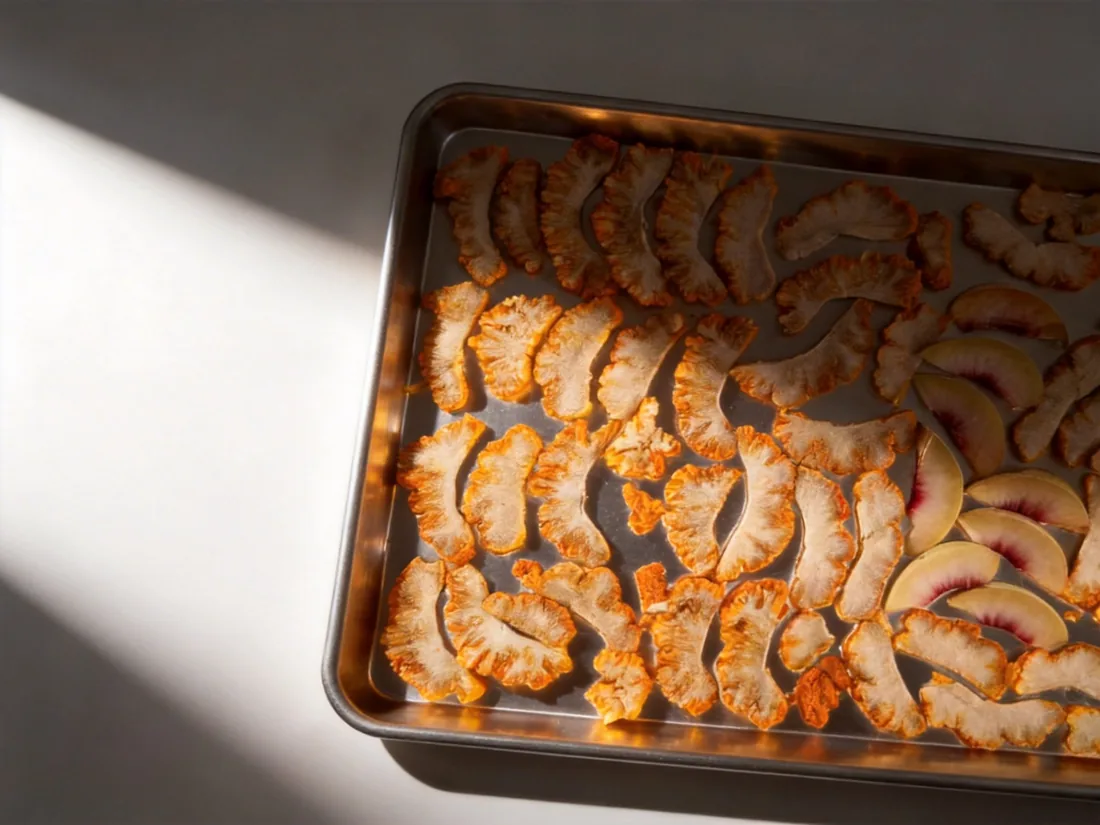
- Primary drying (sublimation under vacuum): under deep vacuum, ice turns directly into water vapor, skipping the liquid phase. With no liquid water moving through the product, the shape, color, and cell structure stay intact — freeze-dried strawberries still look like strawberries.
- Secondary drying (desorption): gentle heat — shelf temperatures up to around 80 °C on industrial machines — drives off bound water that never froze, setting the final moisture content.
- No oil at any stage. Freeze drying is oil-free by definition — nothing is added, nothing needs removing.
- Maximum quality retention. Low-temperature drying preserves the natural color, shape, flavor compounds, and nutrients far better than any heat-based method.
- Long cycles are the trade-off. Full cycles typically run 20–40+ hours depending on product, thickness, and loading — this is the technology's main cost.
How vacuum frying works
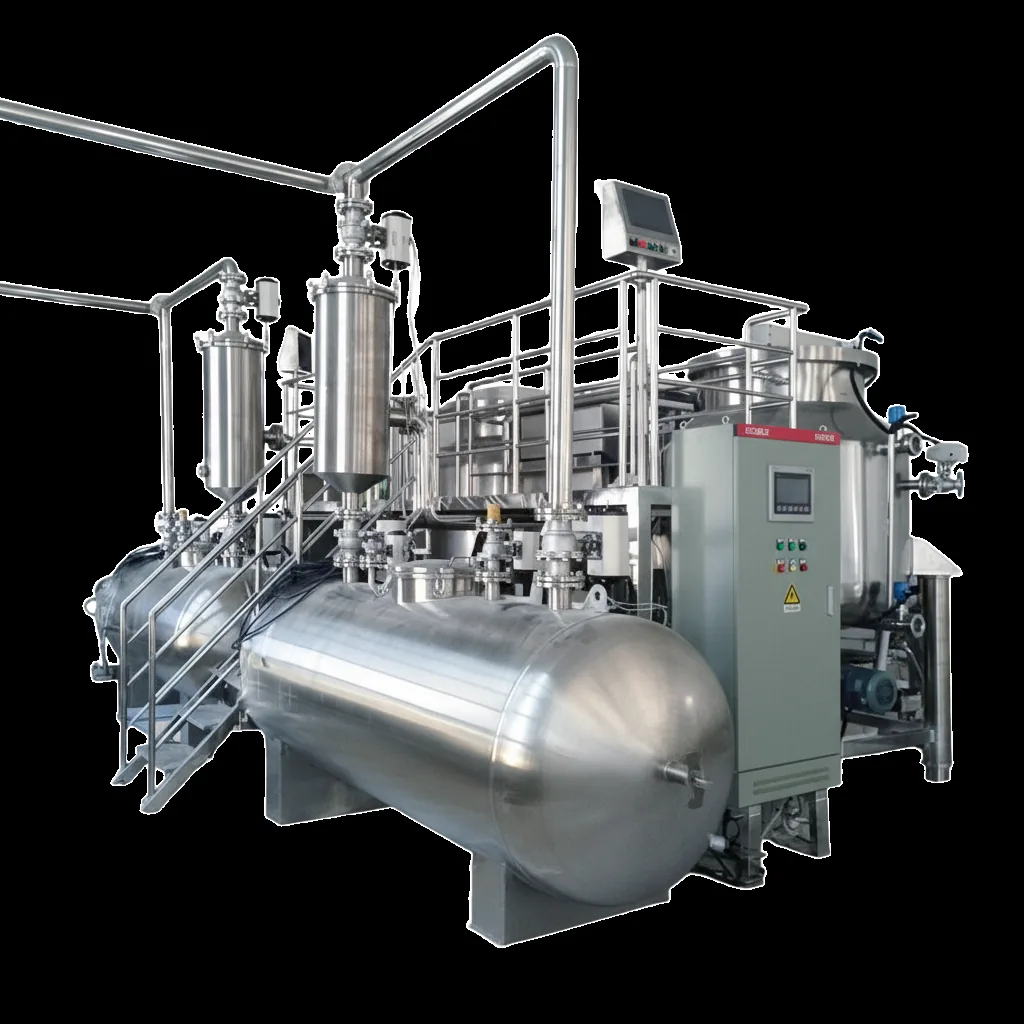
Vacuum frying is low-temperature frying under reduced pressure: water boils off the product at roughly 80–100 °C instead of the 160–180 °C of atmospheric frying:
- Low-temperature frying under vacuum: product fries at roughly 80–100 °C, so heat damage, color darkening, and nutrient loss are far lower than in conventional frying.
- Vacuum de-oiling: after frying, the basket spins at high speed while still under vacuum (centrifugal de-oiling), pulling surface oil off before the product meets air.
- Engineered oil content below 18%. The combination of low-temperature frying and centrifugal de-oiling keeps finished oil content below 18% — a company-confirmed capability of the QS vacuum frying line.
- Fast batches. A full fry-and-de-oil batch takes roughly 1–2 hours, so one machine runs multiple batches per shift.
- Crispy, snack-style texture. The product comes out light and crunchy — the eating experience consumers expect from chips and snacks.
- Oil is part of the process. Frying oil is a consumable: it must be filtered, topped up, and periodically replaced — oil management is the main operational discipline.
Product fit: what each technology is best for
The two technologies largely serve different product families:
- Freeze drying is best for:
- Fruits: strawberries, mango, durian, banana — sold as premium natural snacks or ingredients.
- Yogurt bites: freeze-dried yogurt cubes are a signature product of the process; no frying method can make them.
- Pet treats: meat, liver, and fish treats marketed on natural, additive-free nutrition.
- Premium ingredients: freeze-dried powders and pieces for infant food, instant meals, and functional foods, where color and nutrient retention command a price premium.
- Vacuum frying is best for:
- Fruit and vegetable chips: apple, banana, jackfruit, sweet potato, okra — crispy snack chips with wide retail appeal.
- Nuts and beans: broad beans, chickpeas, peanuts — savory snacks with a light crunch.
- Meat and seafood snacks: fish skin, shrimp, chicken — high-protein snacks where a satisfying crunch matters more than zero-oil claims.
The dividing line is simple: if the selling point is natural premium quality with zero oil, freeze drying wins. If the selling point is crispy, affordable snacking, vacuum frying wins.
Quality comparison
- Nutrition retention: freeze drying retains the most — the product never sees frying temperatures. Vacuum frying retains significantly more than atmospheric frying because it fries at roughly 80–100 °C instead of 160–180 °C, though some heat exposure is unavoidable.
- Color: freeze-dried products keep their natural color almost perfectly. Vacuum-fried products keep much better color than conventionally fried ones, with mild golden tones typical of fried snacks.
- Texture: freeze-dried pieces are light, porous, and crisp — they rehydrate readily when water is added. Vacuum-fried pieces are dense and crunchy in the way consumers expect from chips.
- Oil content: freeze drying adds no oil at all — zero. Vacuum frying adds oil by design, kept low through vacuum de-oiling (engineered below 18% on the QS line, a company-confirmed capability).
- Shelf life: both can deliver 12+ months when dried to a low, validated final moisture and packed immediately in moisture-proof barrier packaging. Freeze-dried products have a slight edge: with no oil in the product, there is nothing to oxidize.
Throughput and batch sizes
Throughput decides how many machines you need — and it is where the two technologies differ most.
Industrial freeze dryers (QS class)
- QS-FD-20: 20.16 m² shelf area, 84 trays, ~200 kg per batch
- QS-FD-100: 103.68 m² shelf area, 432 trays, ~1 t per batch
- QS-FD-200: 207.36 m² shelf area, 864 trays, ~2 t per batch
- Full cycles typically run 20–40+ hours depending on product, thickness, and loading.
Industrial vacuum fryers (QS class)
- QS-VF100: 100 kg per batch
- QS-VF150: 150 kg per batch
- QS-300: 300 kg per batch (vessel 2600 mm H × 1600 mm D)
- A full fry-and-de-oil batch takes roughly 1–2 hours — multiple batches per shift.
Specifications are for reference only and are subject to the final supplied equipment.
Investment and operating cost drivers
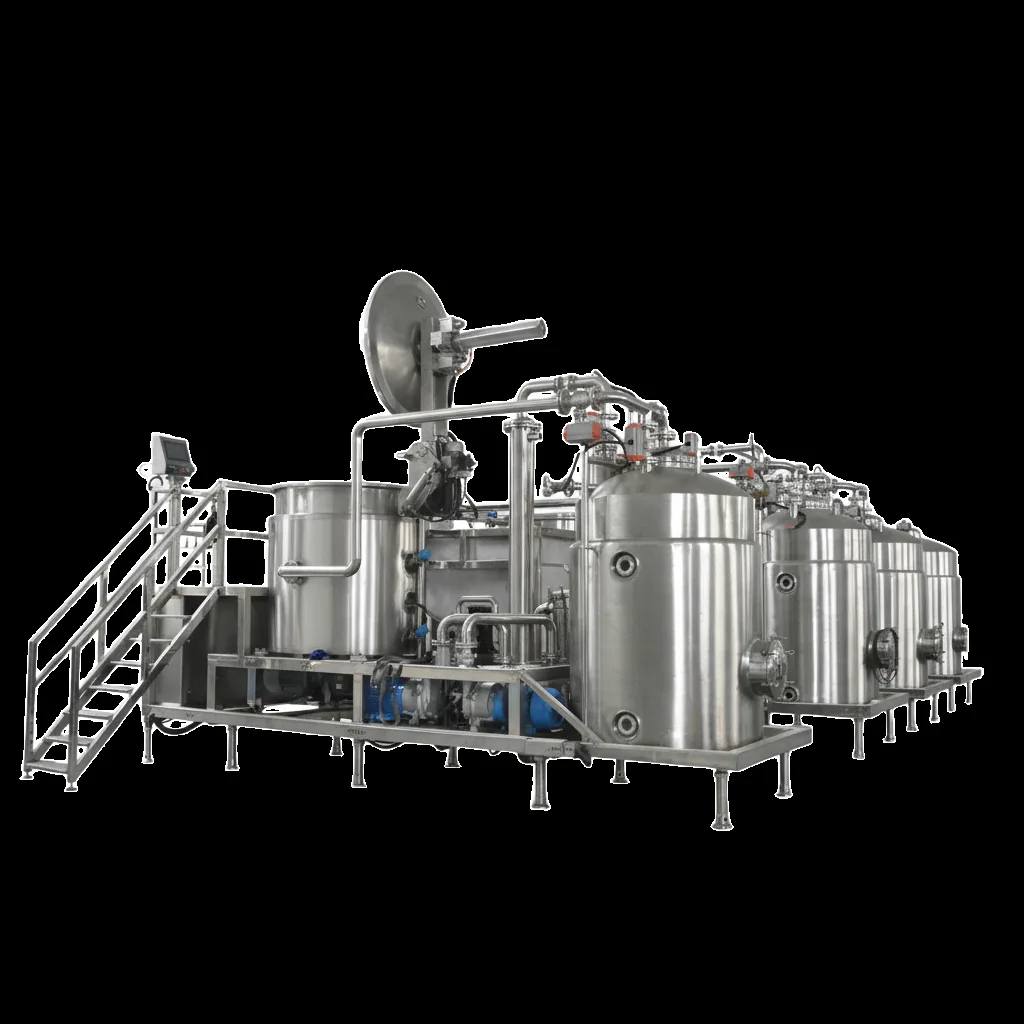
Equipment cost depends on configuration, automation level, and destination — so at the planning stage, focus on the cost drivers:
- Capacity class: the biggest driver. A larger shelf area (freeze dryer) or larger batch vessel (vacuum fryer) costs more but lowers the cost per kilogram of output.
- Automation level: PLC recipe control, automatic loading/unloading, and data logging raise the upfront price while reducing labor and improving batch consistency.
- Energy: freeze dryers run long cycles (refrigeration + vacuum pumps); vacuum fryers run short cycles (heating + vacuum). Compare energy per kilogram of finished product.
- Oil management (vacuum frying only): filtration, top-ups, and periodic replacement are a recurring cost line unique to frying.
- Product value: freeze-dried products typically sell at a premium — the higher-cost-per-batch technology also produces higher-value output.
- Commercial terms: machines are typically supplied with a 1-year warranty and an approximate 3-month lead time — factor both into project planning.
Decision matrix: which fits your product?
| Your product | Recommended technology | Why |
|---|---|---|
| Premium fruit pieces, durian, berries | Freeze drying | Zero oil, best color and nutrition retention — sells on premium natural quality. |
| Yogurt bites, pet treats, infant-food ingredients | Freeze drying | These products need porosity and clean labels that only freeze drying delivers. |
| Fruit and vegetable chips for retail snack aisles | Vacuum frying | Crispy texture consumers expect, fast batches, competitive cost per pack. |
| Nuts, beans, savory snacks | Vacuum frying | Low-oil crunch at snack prices; high batch turnover. |
| Meat and seafood snacks | Vacuum frying | Satisfying fried crunch with low oil — freeze drying cannot produce this texture. |
| Mango (both markets) | Either — pick by positioning | Premium dried mango → freeze drying; crispy mango chips → vacuum frying. Many brands run both. |
Can one factory run both?
Yes — and many growing food companies do. Freeze dryers and vacuum fryers are complementary, not competing equipment:
- Different portfolios: a premium freeze-dried line (fruits, yogurt bites, pet treats) alongside a vacuum-fried snack line (chips, nuts, meat snacks) serves two market segments from one factory.
- Different utilities, no conflicts: the two lines use separate preprocessing, separate drying/frying halls, and separate packaging — they share only the factory shell, the quality team, and the export operation.
- Phased investment: start with one technology for your core product, add the second line when volume justifies it — the factory layout can be planned for expansion from day one.
Frequently asked questions
Which technology is better for making dried mango and fruit products?
It depends on product positioning. Freeze drying suits premium dried mango: no oil, intact shape and color, maximum flavor retention. Vacuum frying suits crispy mango chips: faster, lower-cost batches with a light, crunchy texture. Many brands carry both.
Which technology has lower running cost?
Per batch, vacuum frying generally costs less to run — a batch takes roughly 1–2 hours versus 20–40+ hours for freeze drying, so energy per kilogram is lower. But freeze drying produces a higher-value product that typically sells at a premium. Compare cost per kilogram of finished product against the price you can sell it for, not per batch.
Can I run both technologies in one factory?
Yes. Freeze dryers and vacuum fryers are complementary: different preprocessing lines, different utility needs, different product portfolios. A common setup is a premium freeze-drying line plus a vacuum-frying snack line sharing one factory, one quality team, and one export operation.
Which technology is easier to operate and maintain?
Vacuum frying is the easier entry point — shorter cycles mean faster operator learning, and maintenance centers on oil management, filtration, and pump care. Freeze drying demands more during recipe development, but Siemens S7-200-class PLC control with CN/EN touchscreen on QS machines stores validated programs, so routine production runs on tested settings.
Which technology gives the longer shelf life?
Both deliver 12+ months when dried to a low, validated final moisture and packed immediately in moisture-proof barrier packaging. Freeze-dried products have a slight edge — no oil to oxidize. Vacuum-fried snacks rely on low oil content (below 18% on the QS line) plus barrier packaging.
Still choosing between freeze drying and vacuum frying?
Tell us your product and target output — we build both lines: industrial freeze dryers for premium quality and vacuum fryers for crispy snacks. We'll recommend the capacity class that fits.
Specifications are for reference only and are subject to the final supplied equipment.