Why herbs and edible flowers are aroma-fragile
A basil leaf, a sprig of thyme, a fresh pansy — their value lives in smell and appearance, and both are fragile. A herb's aroma comes from volatile organic compounds held in tiny glands on or inside the leaf. These compounds evaporate readily even at room temperature, and heat accelerates the loss dramatically. That is the fundamental problem with conventional drying: the energy that removes the water also strips out the compounds the buyer pays for.
Edible flowers are more vulnerable still: thin display petals collapse as liquid water leaves, and their pigments brown. Premium markets — gourmet garnishes, botanical teas, patisserie decoration — judge first by eye, and a shriveled, browned petal fails that test.
Three facts make this category special:
- Heat is the enemy of aroma: hot-air drying runs far above the temperatures at which volatile oils escape, and every extra degree is an aroma tax.
- Structure and aroma travel together: collapsed cell walls leak their volatile contents, while an intact structure holds them.
- Color is a quality signal. Buyers read color as freshness, and pigments survive cold processes far better than hot ones — which is why low-temperature drying produces a greener herb and a brighter flower.
Freeze drying is the only mainstream drying method that removes water without ever warming the product — and for aroma products, that difference is the whole business case.
How freeze drying protects aroma, stage by stage
1. Freezing — lock the structure first
Before any water is removed, the product is frozen solid. Freezing locks the structure: ice holds the cell walls apart, and frozen water cannot carry volatile compounds anywhere. Rapid freezing is the goal — small ice crystals do less damage to delicate cell walls than the large crystals of a slow freeze. The herb enters the dryer with its aroma sealed inside an intact frozen structure, and the process removes the water without breaking that seal.
2. Primary drying (sublimation) — water leaves without heat
In the chamber, under deep vacuum, the product is held below freezing while ice turns directly into vapor — sublimation. There is no liquid water phase and no warm air sweeping across the product, so the volatile oils are never given a warm ride out of the leaf. The machine's role here is control, not force: vacuum depth, shelf temperature, and timing must keep the product below freezing. Precise zone-level regulation (±0.1 °C across four heating zones) keeps every tray on the intended curve; a tray that runs warm loses aroma like a hot-air dryer would.
3. Secondary drying — stabilise for storage
Once the free ice is gone, gentle warming drives off the remaining bound moisture so the product is shelf-stable. The word that matters is gentle: the product is no longer frozen, so temperature discipline decides how much of the volatile fraction survives. The result: a dried herb that still smells like itself, petals that kept their form and color, and aroma released the moment hot water hits them. That instant release is exactly what tea blenders and food manufacturers buy.
Leaf thickness, oil content, and variety all shift drying behavior, so treat this sequence as the logic, not a fixed recipe. Develop the timing on pilot batches with your own product, and let the machine's stored program repeat it at production scale.
Harvest, handling, and tray loading
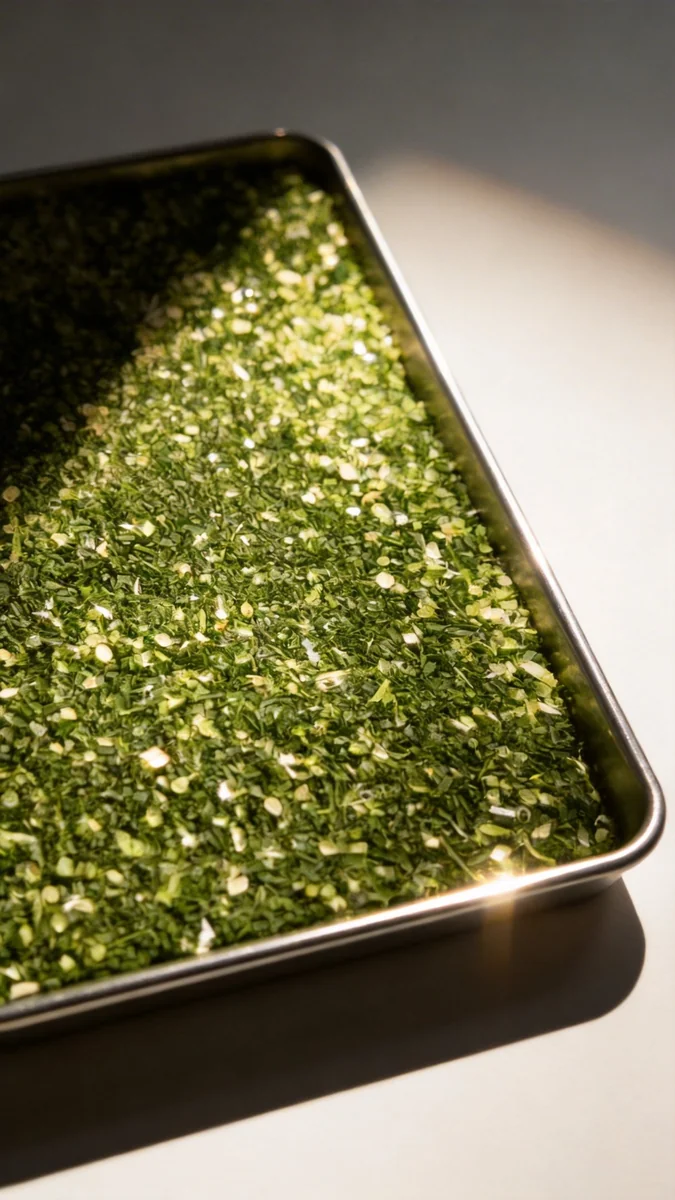
The dryer preserves what arrives — it cannot restore what handling destroyed.
- Harvest at the right moment. The general practice is to harvest in the cool of the morning, after dew has lifted but before midday heat — and to process the same day. Pick when the plant's volatile content is highest and the sun has had the least chance to drive it off; confirm the timing for your own varieties.
- Handle gently — bruising is aroma leaking. Essential oils live in fragile surface glands. Rough handling, compression in deep bins, and warm transport rupture those glands before drying starts. Keep batches shallow, cool, and moving quickly from field to processing — for flowers this is even more critical, since a bruised petal shows in the finished pack.
- Wash only when needed. If your supply chain requires washing, do it gently and remove surface water before freezing. Standing water adds drying load and can freeze into sheets that dry unevenly.
- Pick flowers at the right bloom stage. Harvest flowers fully open but not over-mature — spent blooms have lost volatile content and color. Dry quickly after picking; a wilting flower never recovers.
- Load trays in a single, even layer. Do not stack petals or pile leaves deep — even loading lets vapor escape freely so every piece finishes together, while crowded trays dry unevenly.
Packaging: moisture, light, and oxygen
The dryer finishes the job; the pack protects it. Three enemies threaten freeze-dried herbs and flowers after drying:
- Moisture. Freeze-dried plant material is hygroscopic — it pulls water from the air fast. Reabsorbed moisture dulls aroma, softens texture, and can invite microbial growth. Pack promptly after the batch leaves the chamber, and run the transfer as a low-humidity operation.
- Light. Chlorophyll and petal pigments fade under prolonged light, which also accelerates the breakdown of volatile oils. Opaque packaging keeps the green in the herb and the color in the flower.
- Oxygen. Oxidation degrades aroma compounds and pigments over time, so use oxygen absorbers or nitrogen flushing where the product specification calls for it.
Moisture-barrier pouches with reliable seals are the baseline; everything else scales with price point and shelf-life requirement. Seal fast, seal tight, keep the light out.
Applications: teas, seasonings, garnishes, cocktails
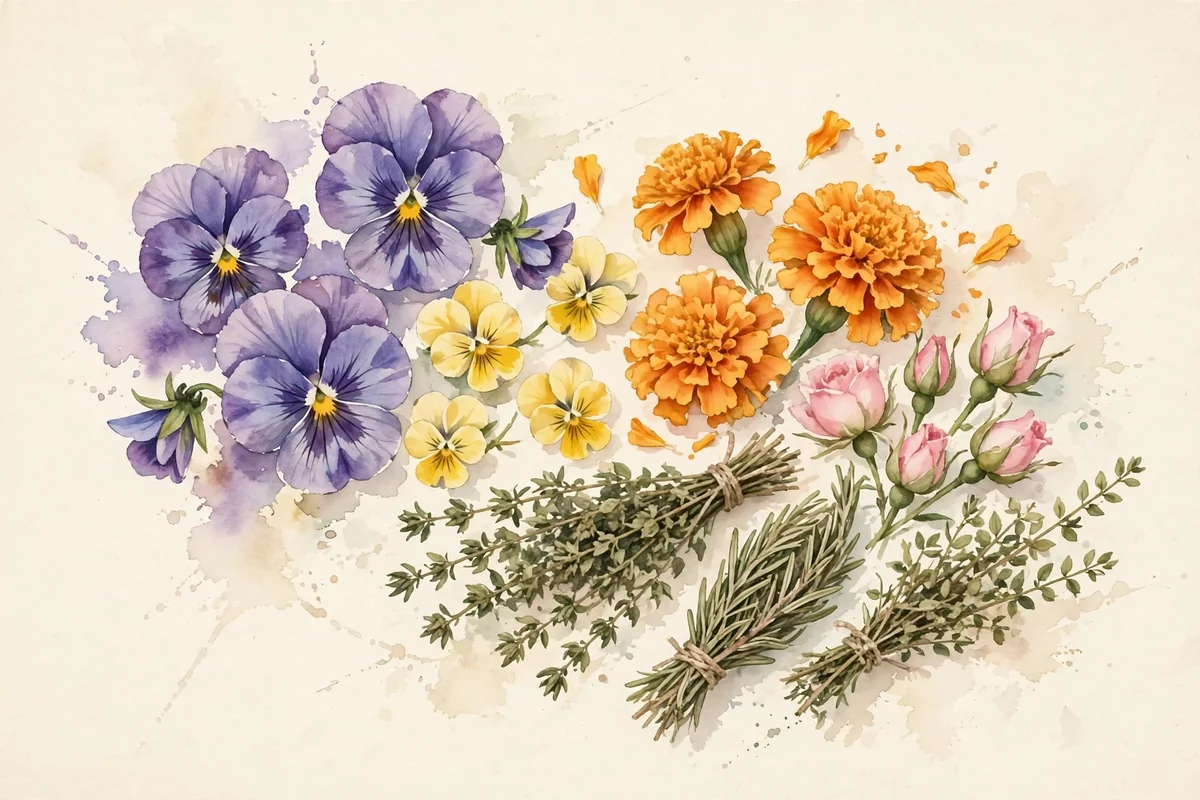
- Herbal teas and botanical blends. Whole freeze-dried leaves and flowers steep beautifully — rehydrating in the cup and releasing aroma like fresh material, which is exactly what tea blenders pay for.
- Seasoning blends and rubs. Dried herbs are the backbone of seasoning lines. Freeze-dried basil, oregano, thyme, and rosemary bring a fresher, stronger flavor note than hot-air-dried equivalents — letting blenders use less and charge more. Aromatic alliums like garlic are dried alongside herbs for the same applications.
- Culinary garnishes, cocktails, and patisserie. Restaurants finish plates — and bartenders and patissiers finish drinks and desserts — with dried herbs and whole edible flowers such as pansies, violas, marigold petals, and rosebuds. Intact shape and true color are non-negotiable here and command premium pricing per gram, and freeze-dried pieces are shelf-stable at room temperature.
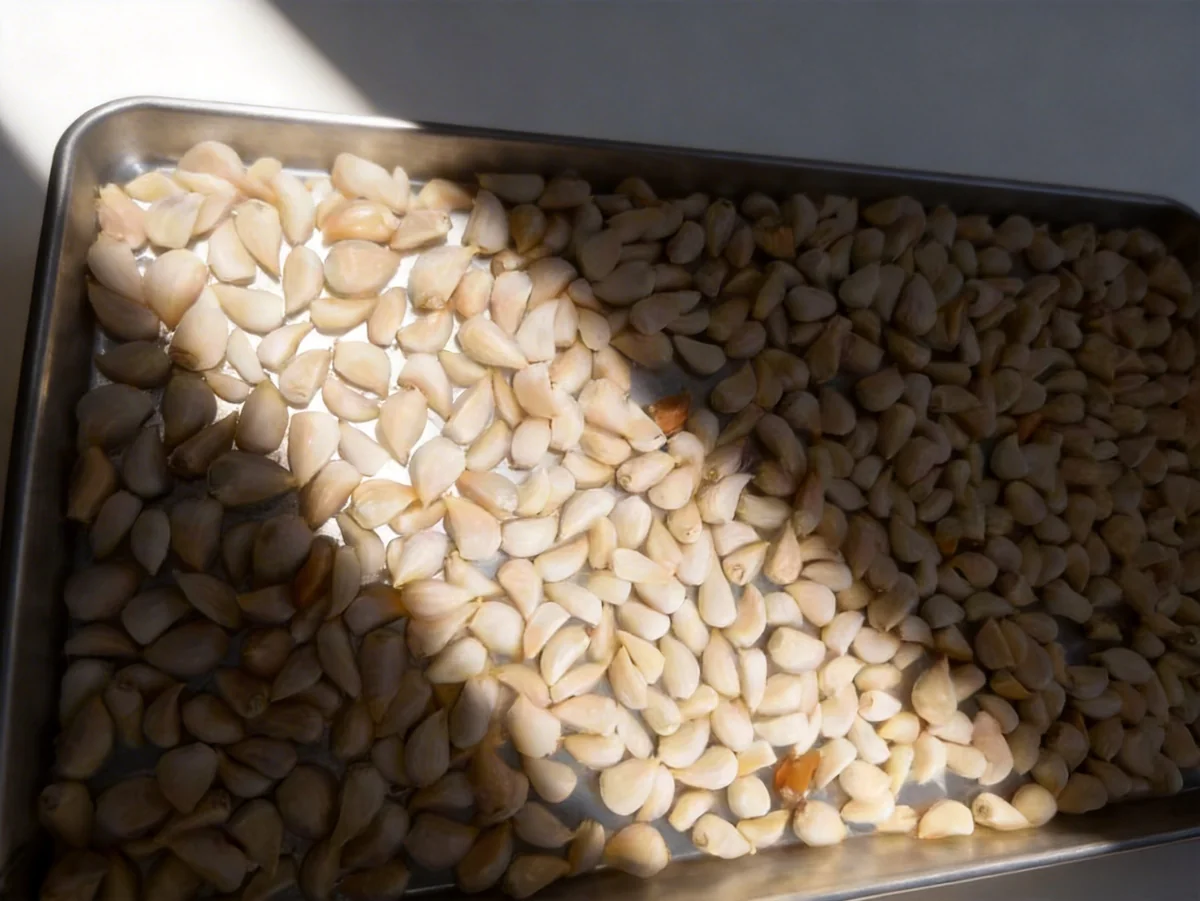
The common thread is that the customer buys aroma and appearance, not weight — precisely the pair of qualities freeze drying protects best. That is why herbs and flowers, small and light as they are, are among the most commercially attractive products to run through a freeze dryer.
Equipment considerations for herbs and flowers
A batch freeze dryer with a programmable recipe is the right tool; the QS-FD series covers the range most herb and flower producers need:
QS-FD series — batch freeze dryers
- QS-FD-20 (~200 kg per batch, 20.16 m², 84 trays) — startups and pilot production.
- QS-FD-100 (~1 ton per batch, 103.68 m², 432 trays) — established producers.
- QS-FD-200 (~2 tons per batch, 207.36 m², 864 trays) — high-volume operations.
All three share one platform — SUS304 square chamber, −60 °C two-stage refrigeration (R404A/507), ±0.1 °C four-zone heating (max 80 °C), Siemens S7-200 PLC with Chinese/English touchscreen, Roots plus screw vacuum pumps, food-grade silicone seals — so a recipe developed on the smallest machine transfers to the larger ones as volume grows. Standard terms: 1-year warranty, approximately 3-month lead time.
Specifications are for reference only and are subject to the final supplied equipment.
Frequently asked questions
Do freeze-dried edible flowers keep their shape and color?
Yes — shape retention is a key advantage of freeze drying for flowers. Because ice sublimates directly to vapor without a liquid phase, petals do not collapse or shrivel the way they do in air drying, and colors stay closer to fresh since no heat browning occurs. Protect dried flowers from light in storage — pigments still fade with prolonged exposure.
Should herbs be washed before freeze drying?
Wash only if your supply requires it, and handle the step gently. Rough washing bruises leaves and ruptures the glands that hold the aroma. If you wash, remove surface water before freezing — standing water adds drying load and can freeze into sheets that dry unevenly.
How should freeze-dried herbs and edible flowers be packaged?
Treat the dryer-to-packer transfer as part of the process. Freeze-dried herbs are hygroscopic — they pull moisture from the air, which dulls aroma and softens texture. Pack promptly into moisture-barrier packaging, block light to protect color and volatile oils, and use oxygen absorbers or nitrogen flushing where your product specification calls for it.
Which dryer size fits a herbs and flowers line?
It depends on target output and growth plans. A QS-FD-20 (about 200 kg per batch) suits startups and pilot production; a QS-FD-100 (about 1 ton per batch) fits established producers; a QS-FD-200 (about 2 tons per batch) serves high-volume operations. All three run the same Siemens S7-200 platform, so recipes developed on the smallest unit transfer directly to the larger ones.
Plan your herbs and flowers line
Tell us your target output and which herbs or flowers you process — we'll help you size the freeze dryer and plan the line from receiving to packing. Explore the range on our freeze dryer page.
Specifications are for reference only and are subject to the final supplied equipment.