Why prefreezing decides the outcome
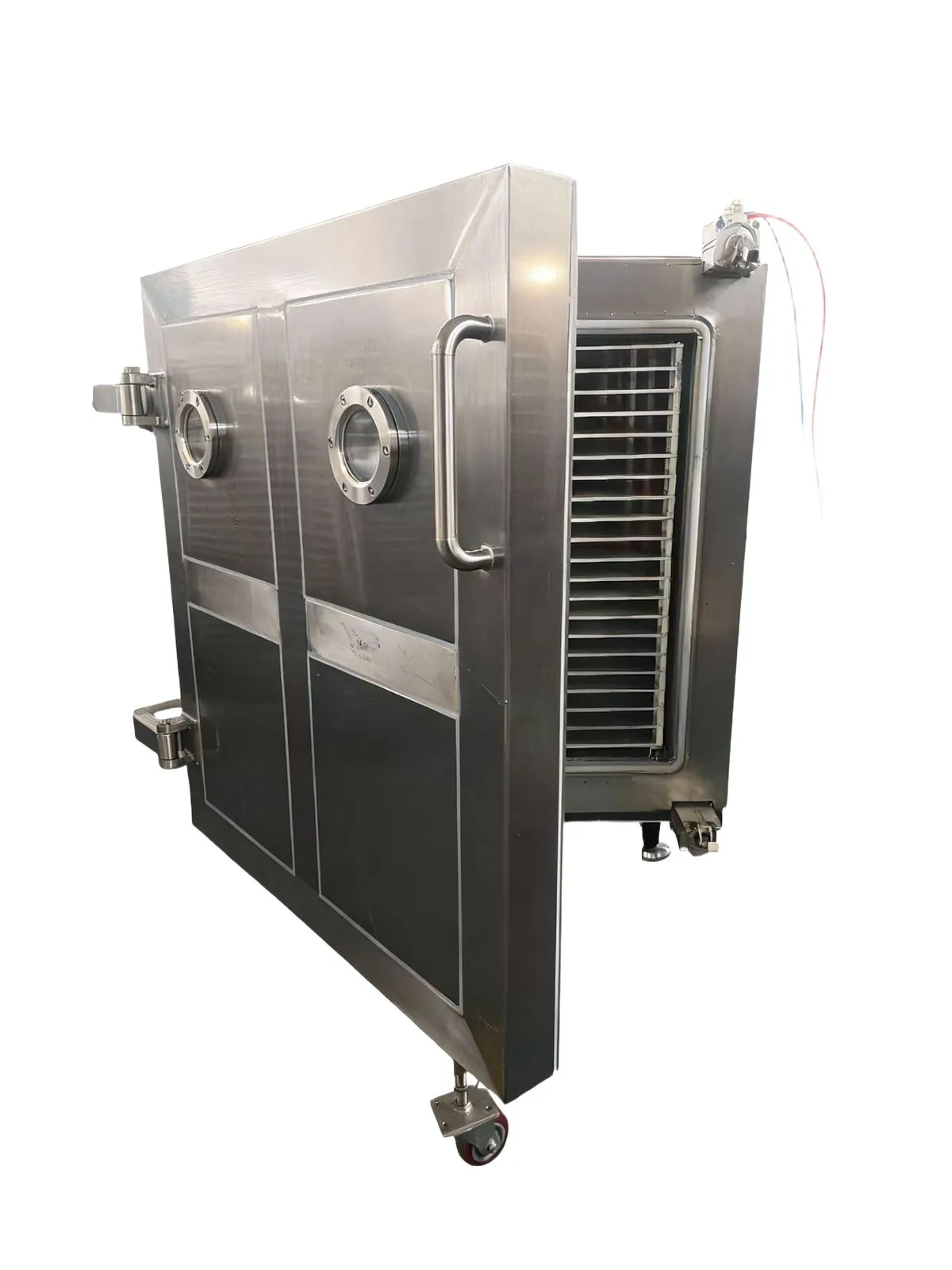
Freeze drying has three stages — freezing, primary drying, secondary drying — and the first one is the least glamorous and the most underestimated. Prefreezing does two jobs: it locks the product's structure so nothing shifts or collapses once vacuum is applied, and it builds the ice-crystal network that sublimation will later carve into pores.
The central principle is simple: freezing rate decides crystal size, and crystal size decides almost everything else.
- Fast freezing → many small ice crystals → fine, uniform pores → excellent structure preservation and rehydration, but slower vapor escape during primary drying.
- Slow freezing → fewer, larger ice crystals → wide pores that let vapor escape quickly → shorter drying cycles, but large crystals can rupture delicate cell walls and soften texture.
There is no universally "best" rate — only the rate that matches what the product needs most. A premium strawberry slice wants small crystals and perfect shape; a bulk vegetable dice for soup mix wants throughput. The four methods below are the practical ways to get there, from fastest to slowest.
Contact plate freezing
Contact (plate) freezing presses product trays between refrigerated metal plates, freezing by direct conduction. Heat transfers through solid contact far more efficiently than through air, so this is the fastest tray-based method.
- Best for: flat, uniform products loaded on trays — fruit slices, vegetable pieces, portioned products.
- Strengths: fast, uniform freezing; small, even ice crystals; excellent shape preservation; compact footprint.
- Limitations: needs trays that make good plate contact; less flexible for irregular or bulky shapes; a separate piece of equipment to buy and house.
For manufacturers already loading product on trays for the dryer, a plate freezer slots naturally into the line: trays go from plate freezer to dryer shelves with minimal handling.
Blast (air) freezing
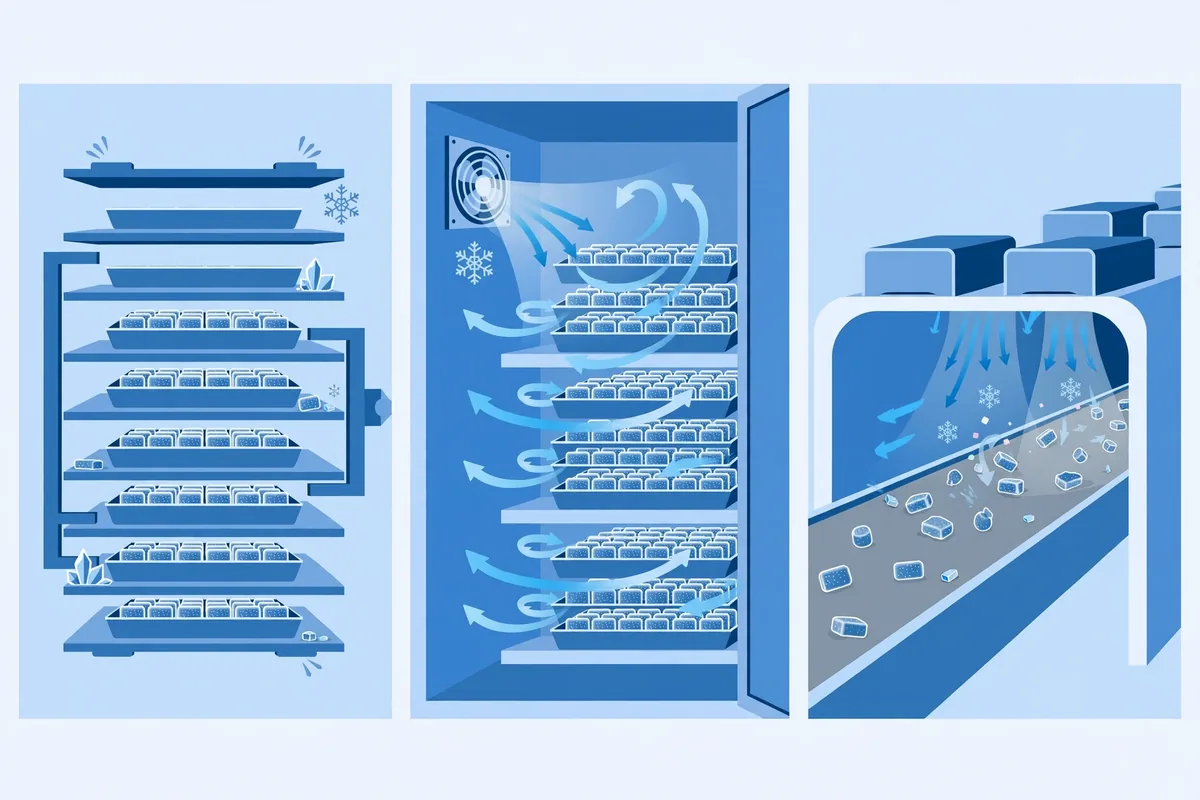
Blast freezing circulates very cold air at high velocity around the product — the same principle as a strong wind chill, engineered. It is the most flexible method: trays of almost any product go in, frozen trays come out.
- Best for: mixed product lines, irregular shapes, operations that freeze many different products.
- Strengths: no special trays needed; handles varied loads; well-understood, widely available equipment.
- Limitations: slower than contact freezing for flat products; air circulation can dry exposed surfaces slightly if products sit too long; needs floor space for the cabinet or room.
Blast freezing is the default choice for operations that value flexibility over raw speed — one freezer serves the whole product range.
IQF: individual quick freezing
IQF (individual quick freezing) freezes small pieces one by one — typically on a belt passing through a freezing tunnel — so each piece freezes separately instead of fusing into a block. Think diced carrots, peas, berries, shrimp: products that must stay free-flowing.
- Best for: small, free-flowing pieces where separation matters through drying and packing.
- Strengths: very fast, very uniform freezing piece by piece; pieces stay distinct; ideal feed for continuous handling.
- Limitations: a tunnel freezer is a significant investment justified only at volume; overkill for products that are dried and packed on trays anyway.
If your product is diced, granular or naturally individual — and your volumes justify the tunnel — IQF gives the most uniform freezing quality achievable at scale.
Freezing on the dryer's shelves
The fourth method needs no separate freezer at all: load the trays into the freeze dryer and let the machine's own refrigeration freeze the product in place. QS dryers reach -60 °C with two-stage refrigeration, so the capability is there.
- Best for: startups, pilot runs, and operations that want the simplest possible line.
- Strengths: zero extra equipment; no transfer step between freezer and dryer; gentle on delicate products that dislike handling.
- Limitations: the slowest option, especially for deep loads — still air inside a loaded chamber freezes far slower than a blast of moving air; and the dryer is occupied (not drying) during the freezing step, which stretches the total batch time.
Many operations start with shelf freezing and add a dedicated freezer when volumes grow — it is a legitimate production method, not a compromise, as long as the slower freezing rate suits the product.
Matching the method to the product
Choose by working backwards from what the product must deliver:
Prefreezing decision guide
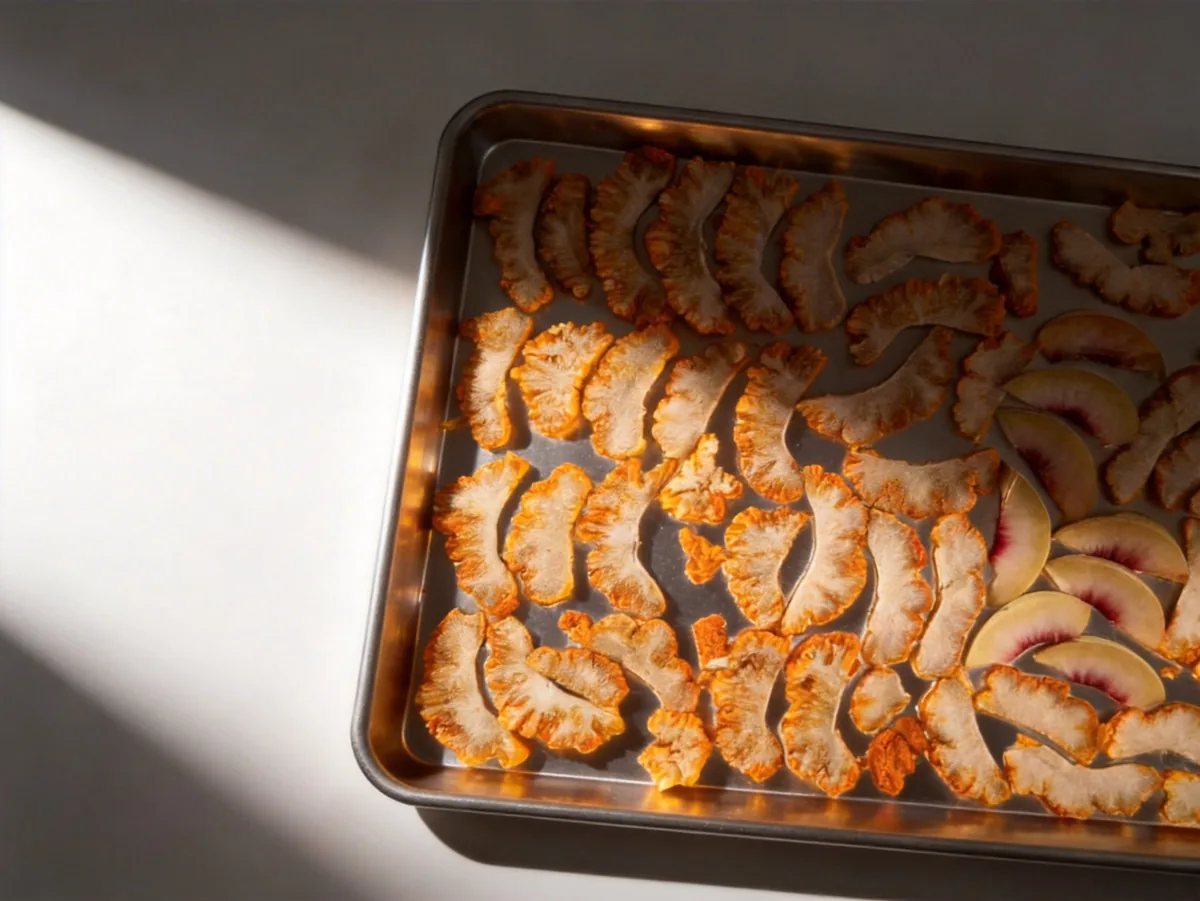
- Premium whole pieces (strawberry slices, yogurt bites, durian) → fastest freezing you can afford: contact plates or IQF for small pieces. Shape is the selling point.
- Bulk diced vegetables for instant foods → IQF at volume, blast freezing for mixed lines. Separation and throughput matter most.
- Mixed, changing product range → blast freezing. One freezer handles everything while you learn what sells.
- Startup / pilot scale → shelf freezing in the dryer. Add a dedicated freezer when the freezing step becomes the bottleneck.
- Thick or dense products → favor faster methods; slow freezing leaves the center unfrozen long after the surface, and partially frozen centers collapse under vacuum.
Whatever method you choose, verify one thing before committing: freeze a sample fully through, then cut it open. An unfrozen core is invisible from the outside and catastrophic under vacuum. When in doubt, freeze longer — the cost of extra freezing time is trivial next to a collapsed batch.
Prefreezing connects directly to the rest of the process: our how freeze dryers work guide covers the drying stages that follow, cycle time factors explains how freezing rate feeds into total batch time, and freeze dried vegetables for instant foods shows the method choice in a real product context.
Frequently asked questions
Why does prefreezing matter in freeze drying?
Prefreezing locks the product's structure and creates the ice-crystal network that later becomes the pore structure. The freezing rate decides crystal size: it influences how fast sublimation proceeds and how the final texture and rehydration behave. Skipping or rushing this step shows up as collapse, long cycles or poor rehydration.
Is fast freezing or slow freezing better before freeze drying?
It depends on the product. Fast freezing forms small ice crystals that preserve fine structure and rehydrate well, but the small pores slow vapor escape during drying. Slow freezing forms large crystals that dry faster but can damage delicate cell structure. Match the freezing rate to what the product needs most.
Can I freeze the product inside the freeze dryer itself?
Yes — shelf freezing inside the dryer is the simplest method: load the trays, and the machine's refrigeration (down to -60 °C on QS dryers) freezes the product in place. It needs no separate freezer, but it is the slowest option for large loads and ties up the dryer during the freezing step.
What is the difference between blast freezing and contact plate freezing?
Blast freezing circulates very cold air around the product on trays — flexible for mixed products and irregular shapes. Contact plate freezing presses trays between refrigerated plates, freezing by direct conduction — faster and more uniform for flat, tray-loaded products, but it needs compatible trays and loading.
When should I use IQF before freeze drying?
IQF (individual quick freezing) suits small free-flowing pieces — diced vegetables, berries, shrimp — that must stay separate rather than freezing into a block. It gives fast, uniform freezing piece by piece, which keeps the pieces distinct through drying and packing.
Sizing a freeze drying line?
Tell us your product and target output — we'll help you match the dryer and talk through the freezing-to-drying chain. See the full range on our freeze dryer page.
Specifications are for reference only and are subject to the final supplied equipment.