Why freeze drying suits vegetables
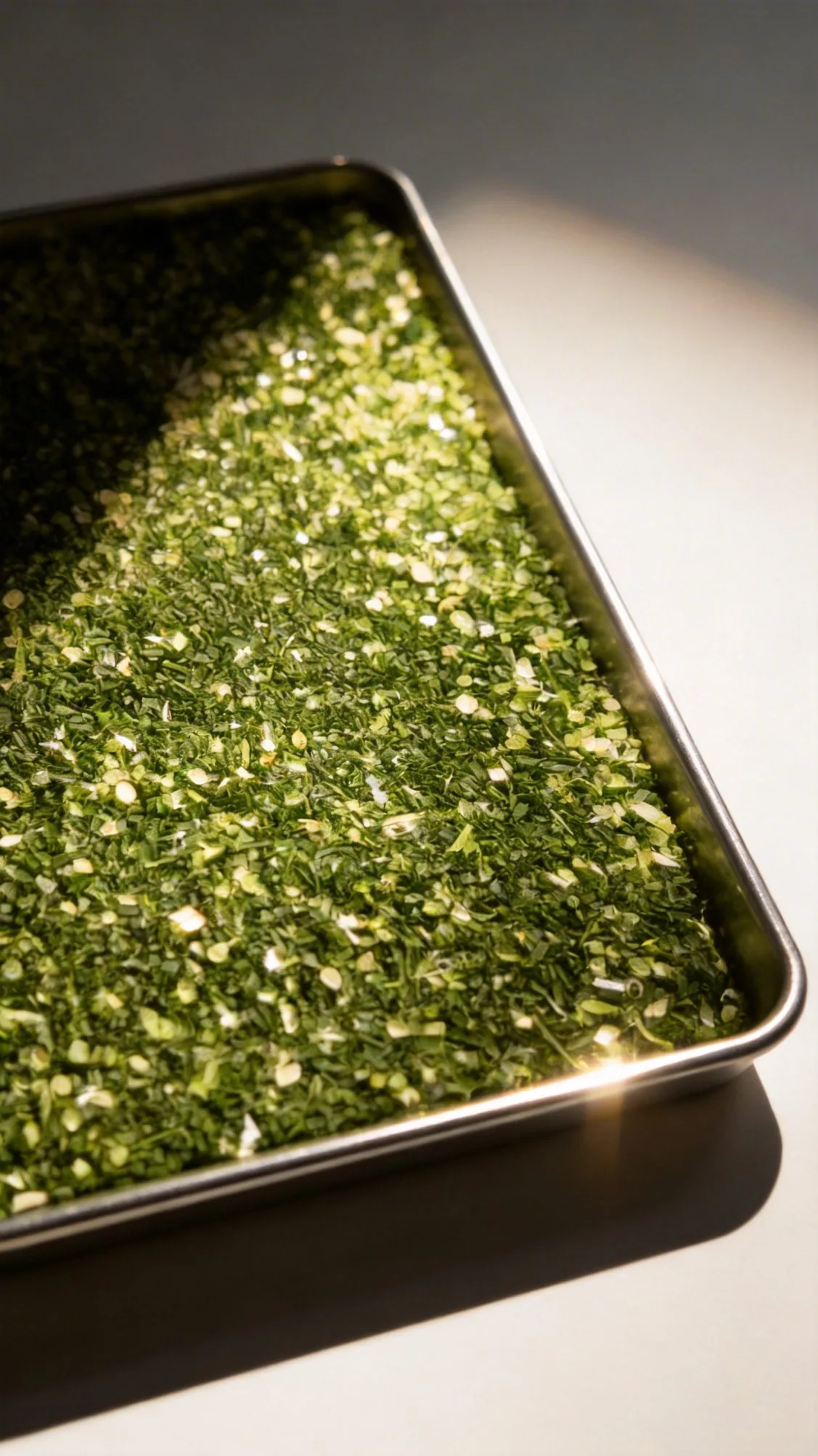
Freeze drying is water removal without the collapse. Because the water leaves as vapor directly from ice — never passing through a liquid phase — the vegetable's cellular structure stays largely intact. What remains is a light, porous piece that looks like the original vegetable and, crucially, drinks water back in fast. That single property explains the whole instant-food connection: when a consumer pours hot water over noodles, the vegetable pieces need to be ready in the same few minutes.
Compare the alternatives and the advantage sharpens:
- Air-dried vegetables shrink, darken and rehydrate slowly — fine for long-simmered stocks, wrong for a three-minute noodle cup.
- Frozen vegetables rehydrate beautifully but demand an unbroken cold chain, which instant dry products are specifically designed to avoid.
- Freeze dried vegetables sit at ambient temperature for long periods, weigh a fraction of the fresh product, and spring back in hot water. For dry instant products, there is no closer substitute.
The porous structure is also why freeze dried vegetables work as flavor carriers: the same pores that absorb water absorb broth, so the pieces taste seasoned rather than bland after rehydration.
The instant-food applications
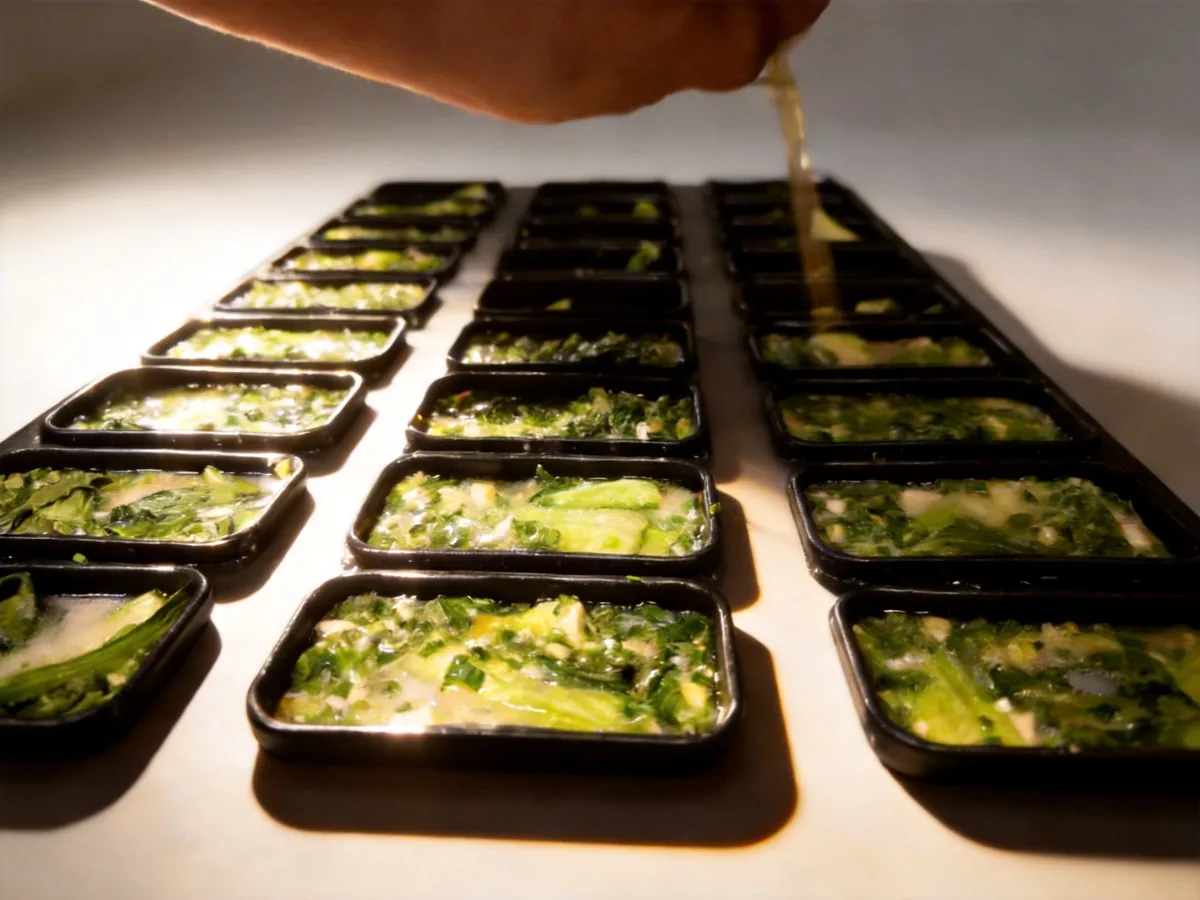
Where do freeze dried vegetables actually end up? The applications cluster around products where hot water is the only preparation step:
- Instant noodles. The classic. Dried vegetable sachets — greens, corn, carrot, mushroom — are standard in premium noodle cups, where the vegetable mix is part of what justifies the price tier.
- Instant soups. Cream and clear soups built on freeze dried vegetable pieces rehydrate into a convincing bowl, far closer to fresh-cooked than powder-only mixes.
- Compressed vegetable blocks. Freeze dried vegetables pressed into compact blocks for camping, emergency and military rations — maximum nutrition per gram, minimum pack volume, hot water only.
- Meal kits and ready meals. Freeze dried vegetable components extend the ambient shelf life of kit boxes without refrigeration, simplifying logistics.
- Seasoning and garnish packs. Freeze dried scallion, garlic and herbs as finishing garnishes — they rehydrate on contact with hot food and look fresh.
For a manufacturer, the pattern is clear: wherever the product brief says "just add hot water," freeze dried vegetables are the default vegetable format.
Which vegetables freeze dry well
Most common vegetables freeze dry successfully, but they do not all behave the same. A practical shortlist:
- Excellent: leafy greens (spinach, bok choy), carrots, corn, peas, green beans, mushrooms, onions. Uniform pieces, reliable rehydration, stable color.
- Very good with care: garlic, ginger, scallions, peppers. Strong flavors concentrate during drying — dose accordingly in the final blend.
- Needs attention: very watery vegetables (cucumber, lettuce) and high-sugar ones. They dry fine but need correct piece size, loading density and drying curves — validate with trials before committing a product line.
Three rules cut across all of them. Cut uniformly — mixed piece sizes dry unevenly, and the thick pieces decide when the batch is done. Match the piece to the application — small dice for noodle cups where every piece must rehydrate in minutes; larger cuts where visual presence matters. And think in blends — instant products rarely use one vegetable, so dry each component to its own best curve rather than forcing one curve on a mixed tray.
Process steps that decide quality
The dryer gets the credit, but quality is decided across the whole chain. Each step below is a lever a manufacturer controls:
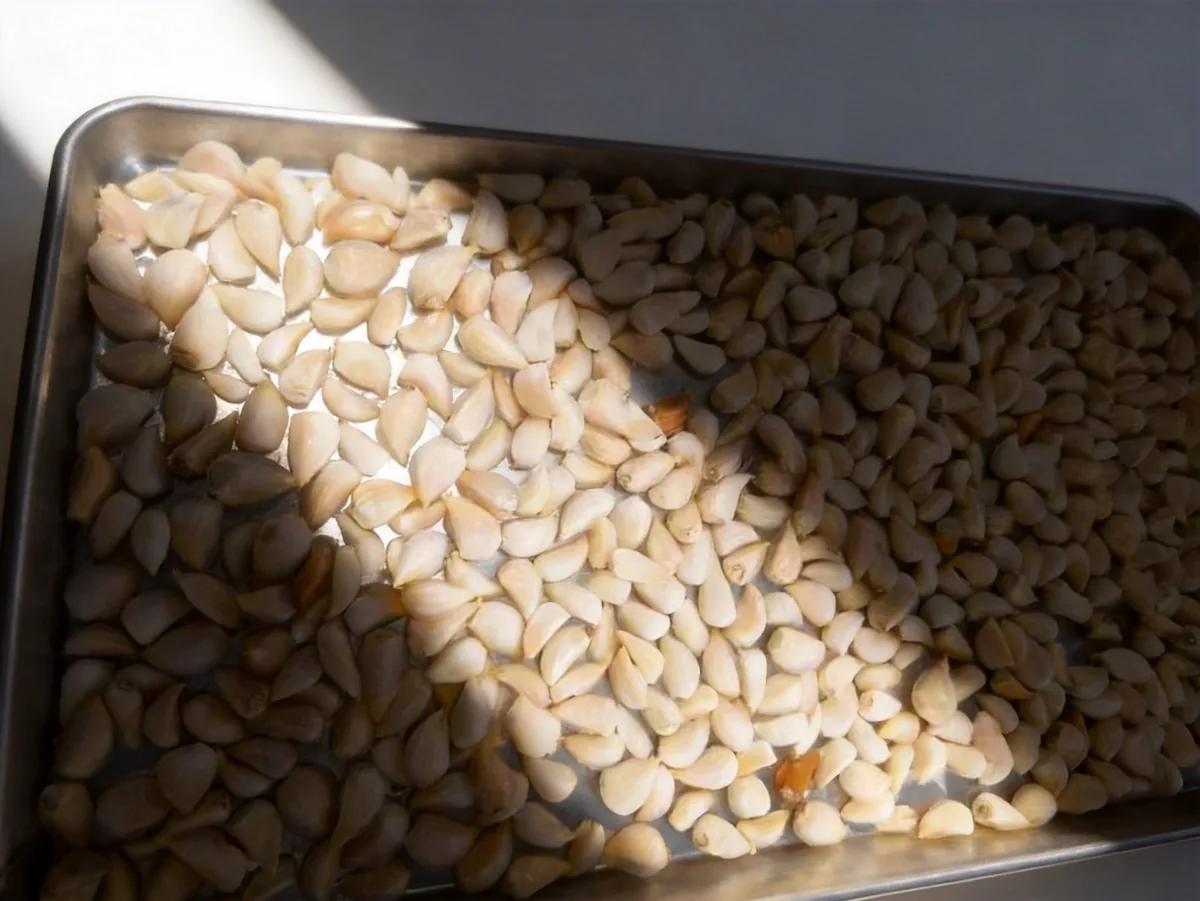
- Washing and cutting. Clean raw material, uniform pieces. Inconsistent cutting is the most common root cause of uneven batches — fix it here, not in the drying curve.
- Blanching. Most vegetables benefit from a brief heat treatment before freezing. Blanching inactivates the enzymes that cause off-flavors and color loss in storage, and it shortens rehydration time. Time and temperature depend on the vegetable and piece size — validate per product.
- Prefreezing. Freeze the pieces solid before drying begins. The freezing method shapes the ice-crystal structure, which decides both drying speed and final texture — our prefreezing methods guide covers the options in detail.
- Loading density. Spread pieces in a single, even layer with space between them. Overloaded trays trap vapor, stretch the cycle and produce damp centers.
- The drying curve. Primary drying (sublimation) removes the frozen water; secondary drying drives off the bound moisture that decides storage stability. A four-zone independently controlled heating system — ±0.1 °C on QS dryers — lets each stage run at its right temperature.
- Rehydration testing. Make it a routine QC step: weigh, soak in hot water per the product's instructions, drain, weigh again. Track the rehydration ratio batch to batch — it is the most honest single number for vegetable drying quality.
Vegetable line process checklist
- Uniform cutting matched to the application (dice for noodle cups, larger cuts for visual presence)
- Blanching validated per vegetable for enzyme inactivation and color
- Prefreezing method chosen for the target texture and throughput
- Single even tray layer — no piling, no bare spots
- Drying curve with distinct primary and secondary stages
- Rehydration ratio tested and logged every batch
- Dry packing room: pack promptly into moisture-barrier packs after unloading
Sizing the dryer for a vegetable line
Vegetables are mostly water, so the gap between fresh input and dried output is large — size the dryer from your target finished output backwards, not from the fresh tonnage you can buy. As a reference, the QS freeze dryer range covers:
- QS-FD-20 — about 200 kg per batch. The pilot and specialty-vegetable choice: recipe development, premium blends, private-label runs.
- QS-FD-100 — about 1 ton per batch, 103.68 m² of shelf area. The workhorse for dedicated instant-food vegetable lines.
- QS-FD-200 — about 2 tons per batch, 207.36 m². For high-volume contract and export production.
All three share the industrial configuration: SUS304 square chamber, -60 °C two-stage refrigeration, four-zone independent heating control (±0.1 °C, max 80 °C), Siemens S7-200 PLC with Chinese/English touchscreen, and Roots plus screw vacuum pumps. Our model comparison and snack line mapping guide go deeper on the sizing math.
Frequently asked questions
Why are freeze dried vegetables used in instant foods?
Freeze drying removes water while preserving the vegetable's shape and porous structure, so the pieces rehydrate quickly in hot water and look like the original vegetable in the bowl. That combination — fast rehydration plus recognizable appearance — is exactly what instant noodle, soup and meal-kit makers need.
Which vegetables freeze dry best for instant food applications?
Leafy greens, carrots, corn, peas, mushrooms, onions, garlic and ginger all freeze dry well. Vegetables with very high water content or delicate skins need more careful pre-treatment and loading. Match the vegetable to your product: small uniform pieces rehydrate fastest in instant applications.
Do vegetables need blanching before freeze drying?
Most vegetables benefit from blanching — a brief heat treatment that inactivates the enzymes responsible for off-flavors and color loss during storage. Blanching also shortens rehydration time. The exact time and temperature depend on the vegetable and piece size, so validate with your process trials.
How fast do freeze dried vegetables rehydrate?
Properly freeze dried vegetable pieces typically rehydrate in minutes in hot water, much faster than air-dried equivalents, because the porous structure left by sublimation absorbs water readily. Piece size, porosity and the drying curve all influence the exact time — test with your own product.
What freeze dryer size fits a vegetable instant-food line?
It depends on your daily output of finished product. As a reference, the QS-FD-20 handles about 200 kg per batch (pilot and specialty lines), the QS-FD-100 about 1 ton per batch, and the QS-FD-200 about 2 tons per batch. Size from your target output backwards, allowing for the vegetable's water content and your batch schedule.
Planning a freeze dried vegetable line?
Tell us your vegetables and target output — we'll help you size the dryer and talk through the process chain. See the full range on our freeze dryer page.
Specifications are for reference only and are subject to the final supplied equipment.