Why time alone is not proof
Every freeze drying cycle is planned around a time — but time is a plan, not a proof. Raw material varies: one harvest is wetter than the last, one batch is cut thicker, one load is heavier. The same cycle time that finished last week's batch perfectly can leave this week's batch still damp in the center.
The risk of trusting the clock is asymmetric. Stopping too late costs a few hours of machine time. Stopping too early costs the batch: damp product packed into a sealed pouch softens, loses crunch, and invites spoilage — and the failure shows up weeks later, in the customer's hands, not on your factory floor. That is why completion must be confirmed on the product itself, with more than one check, before the dryer door opens for packing.
The five checks below work as a set. No single check is decisive on its own, but together they give a verdict you can stand behind — and a record you can repeat.
Check 1: sample weighing
Sample weighing is the most direct check available, because it measures the very thing drying removes: water.
- Mark sample trays. Before the cycle starts, mark a few sample trays — ideally from different positions in the chamber, including the spots that usually lag — and record their starting weight.
- Weigh during drying. At planned points in the cycle, weigh the samples again. While water is still leaving, the weight keeps falling; the curve flattens as the product approaches dryness.
- Confirm with a final comparison. After the planned cycle time, weigh the samples once more, then give the batch additional drying time and weigh again. When the sample weight stops falling between two weighings, no more water is leaving the product — the strongest single evidence the batch is done.
- Weigh the slow spots, not just the fast ones. A sample from the center of the load means more than one from the edge. If the slowest sample is still losing weight, the batch is not done, whatever the fastest sample says.
Weighing needs no laboratory: a reliable scale, marked trays, and a notebook. It is the check that turns "about done" into "proven done."
Check 2: touch and appearance
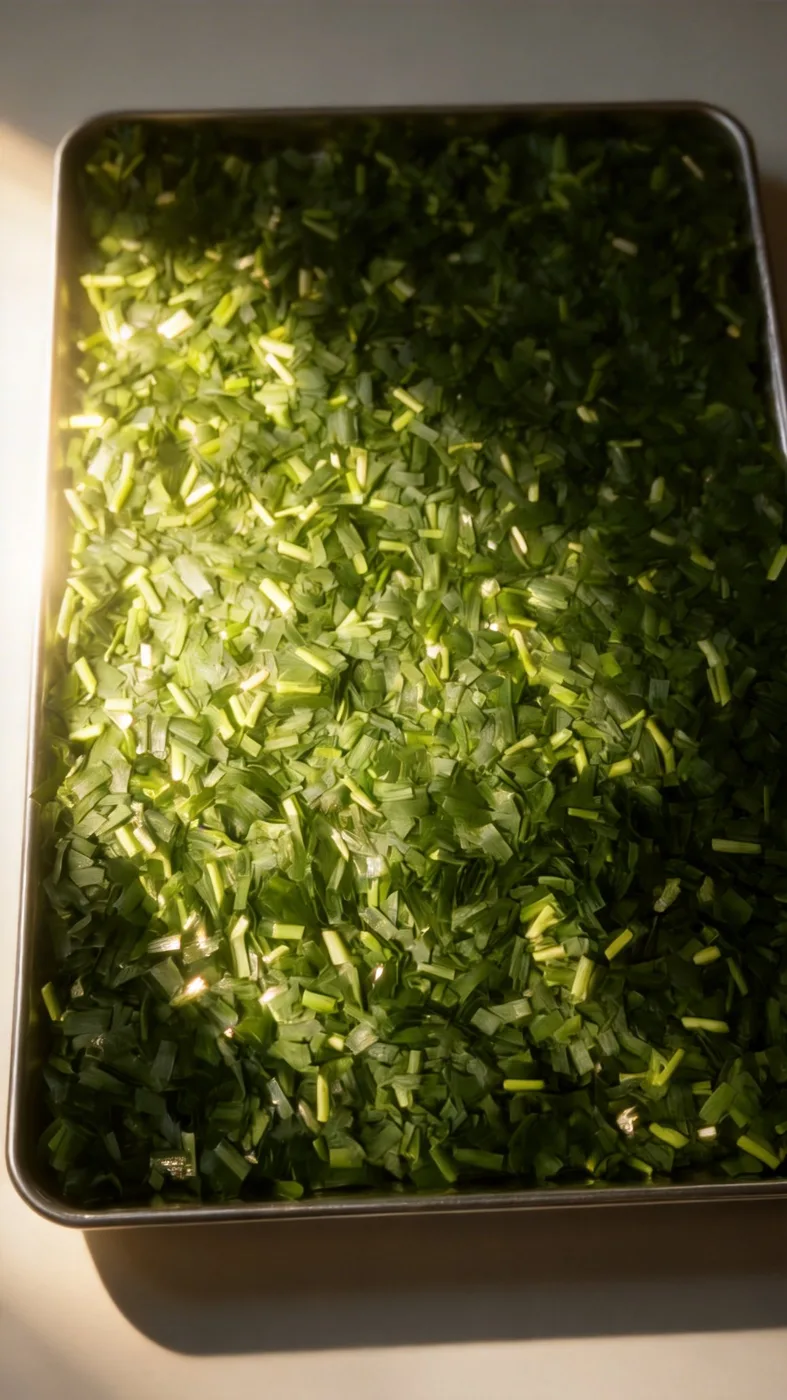
An experienced operator can read a great deal from touch and appearance — as a complement to weighing, not a replacement for it:
- Crispness. A finished piece snaps or crumbles cleanly. A piece that bends, feels leathery, or yields softly in the center is still holding water.
- Uniform color. Damp spots often show as darker or more translucent patches against the dry, matte remainder. Check the thickest pieces and the centers, not just the edges.
- Cold spots. A piece that still feels cool to the touch may still be sublimating — evaporation cools the surface. Warm, room-temperature pieces are consistent with a finished batch; cold pieces deserve a second look.
- No condensation. When a sample is exposed to room air, condensation or softening within minutes is a warning sign: the product is pulling moisture, which means it still has capacity to hold water — or was not dry to begin with.
Train operators on known-good and known-damp samples side by side. Touch is a skill, and it improves fastest when the comparison is physical, not verbal.
Check 3: temperature and pressure signals
The machine itself reports on the cycle. On a QS-FD freeze dryer, the Siemens S7-200 PLC with touchscreen shows the signals that matter, and two patterns tell the story:
- Shelf temperature approaching its setpoint. While ice is still sublimating, the product stays cold and holds the shelf temperature down. As the last ice leaves, the shelf temperature rises toward its setpoint and settles there. A shelf that has reached and held its setpoint is consistent with a finished primary drying stage.
- Chamber pressure settling. While vapor is pouring off the product, the chamber pressure stays elevated under the vacuum system's control. As vapor flow falls away, the pressure settles to its low, stable level. A stable pressure reading, held over time, supports the same conclusion as a stable sample weight.
- Agreement across zones. With 4-zone heating controlled to within ±0.1°C, the zones should tell the same story. A zone that lags the others points to the trays in that zone — check those trays first.
Read the signals together with the product checks, never instead of them. The machine reports conditions; only the product proves dryness.
Check 4: moisture verification
For a new product, and periodically for established ones, verify the result with moisture measurement — the check that ties your routine to a number:
- Set the standard on a new product. When a product is first produced, measure its moisture by laboratory testing and record the result alongside the weighing curve and the cycle settings. That record becomes the product's standard.
- Verify periodically. For routine batches, laboratory testing of samples at intervals confirms the routine checks are still telling the truth. If routine batches start drifting from the standard, the process — loading, preparation, or cycle — has changed somewhere.
- Know your target. Different products carry different moisture expectations; see our guide on target moisture content in freeze dried foods for the typical ranges and why they matter. Whatever your target, it should come from your own product testing, not from a rule of thumb borrowed from another product.
Routine batches do not need a laboratory result every time. They need a routine — weighing, touch, appearance, machine signals — that was validated against laboratory results when the product was established.
Check 5: the rehydration spot test
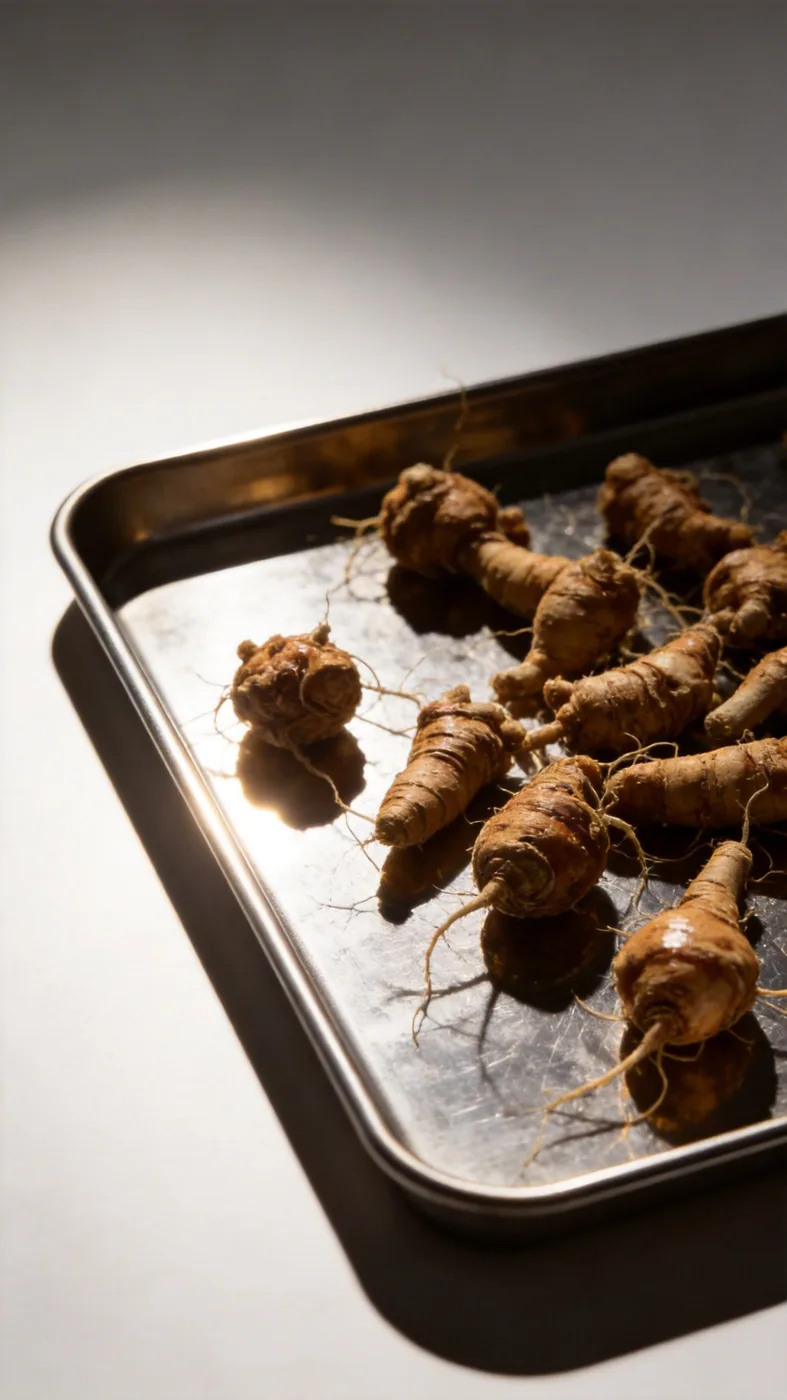
The rehydration spot test is the customer's-eye check: take a sample, add water, and watch what happens.
- Speed. A properly dried, porous product takes up water quickly and evenly. Slow, patchy, or incomplete rehydration suggests the structure collapsed or the product was not fully dry.
- Texture after rehydration. The rehydrated piece should resemble the original product in texture and appearance — not mushy, not rubbery, not gritty.
- Use it as a spot test, not the verdict. Rehydration confirms the eating quality of a finished batch; it does not measure moisture precisely. It belongs at the end of the check sequence, confirming what weighing and moisture testing already said.
A pre-packing QC routine
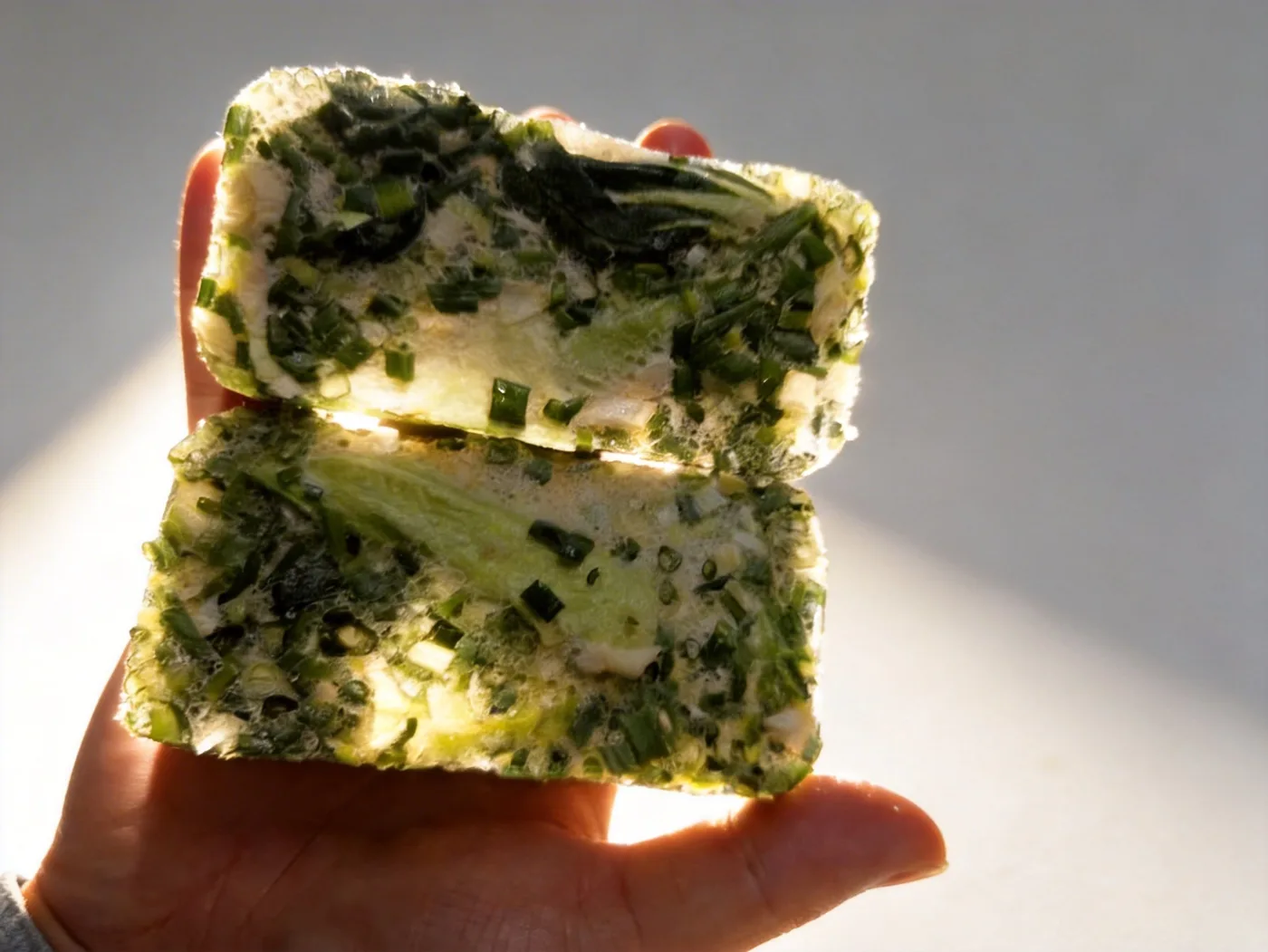
Put the checks in order, and run them the same way every batch:
- Read the machine. Shelf temperatures at setpoint, chamber pressure settled and stable, zones in agreement.
- Weigh the samples. Sample weight stable between the last two weighings, including the slowest sample.
- Inspect by hand. Crispness, uniform color, no cold spots, no damp centers — across trays, not just one tray.
- Spot-test rehydration. A sample rehydrates quickly and evenly, with the expected texture.
- Verify moisture on schedule. Laboratory testing for new products and at planned intervals for established ones.
- Record the verdict. Batch, product, cycle, checks, and the operator's name — so a good batch can be repeated and a problem batch can be traced.
Only when the routine passes does the batch move to packing. Packing is the point of no return: once the product is sealed, the remaining water is sealed with it.
If the batch is not done
A failed check is not a failed batch — it is a batch that needs more time. Extend secondary drying, then re-run the checks. The cost of extra drying time is small; the cost of packing a damp batch is the batch itself, plus the customer who finds out.
- Do not pack damp product "to check later." Packed moisture does not improve with time — it redistributes, softens texture, and shortens shelf life.
- Look for the cause. A batch that repeatedly needs extension has a reason: thicker loading, wetter raw material, a changed recipe, or a maintenance need. Find it, record it, and fix the standard — see our freeze dryer maintenance checklist for the machine side.
- Never shorten the next batch to "make up time." The next batch gets the full routine too. Time pressure is how damp batches get packed.
Completion is a verdict, not a moment. The batches that earn the best reputation are not the fastest ones — they are the ones whose dryness was proven, every time, before the pack was sealed.
Frequently asked questions
Can a freeze drying cycle be judged complete by time alone?
No. Time is a plan, not a proof. Raw material, loading, and piece size vary from batch to batch, so the same time can leave one batch finished and the next still damp. Completion must be confirmed by checks on the product itself, not by the clock.
What is the most reliable check that a batch is dry?
Sample weighing is the most direct check: weigh marked sample trays during drying and compare them after further drying time. When the sample weight stops falling, no more water is leaving the product. Combine it with touch, appearance, and moisture verification for a complete verdict.
What should I do if a batch is not fully dry?
Extend secondary drying and re-check — do not pack a damp batch. Packing damp product traps the remaining water inside the pack, where it softens texture, invites spoilage, and shortens shelf life. A few more hours in the dryer cost far less than a failed batch in the market.
Do I need laboratory testing for every batch?
Not for every batch. Routine batches are confirmed with weighing, touch, and appearance checks plus the machine's temperature and pressure signals. Laboratory moisture testing is for setting the standard for a new product and for periodic verification — your own QC routine covers the day-to-day batches.
Plan your freeze drying line
Tell us your target output and which products you process — we'll help you size the freeze dryer and set the QC routine. Explore the range on our freeze dryer page.
Specifications are for reference only and are subject to the final supplied equipment.