What freeze dried candy is
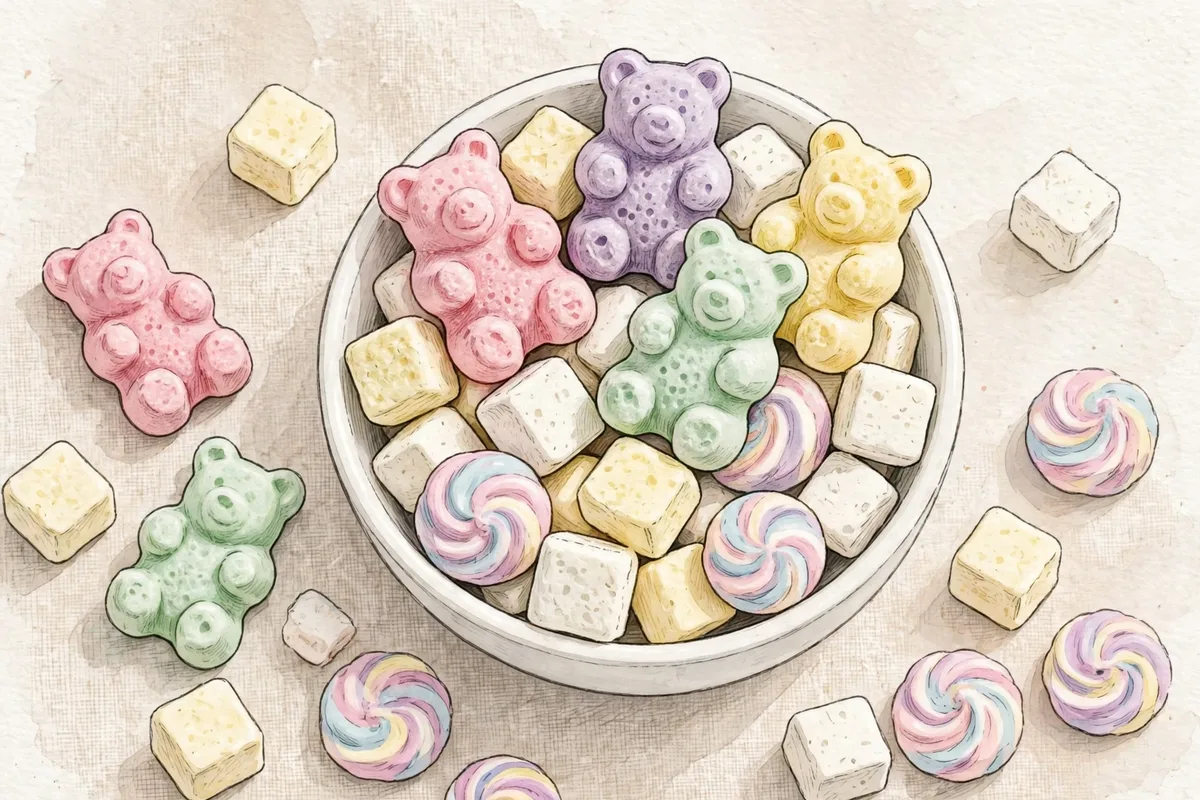
Freeze dried candy starts as ordinary candy. Gummy bears, marshmallows, and taffy go into a freeze dryer and come out light, airy, and crunchy, where the original was chewy or soft. The flavour stays recognisable, but the texture is transformed.
Candy holds water inside its structure, and water is what makes a gummy chewy or a marshmallow soft. Freeze drying removes that water without melting or cooking the candy. The water leaves as vapour from a frozen state, so the piece keeps its shape and colour, weighs far less, and crunches when bitten.
How freeze drying changes candy
Freeze drying works in three stages: freezing, primary drying, and secondary drying. The key idea is sublimation — water passing directly from solid ice to vapour, without becoming liquid first. That only happens under vacuum at low temperature, and it is what protects the candy's shape.
Stage 1: Freezing
First, the candy is frozen solid. The water inside turns to ice, and the structure locks in place. A QS freeze dryer freezes down to -60°C, cold enough to freeze candy through before drying begins.
Stage 2: Primary drying — sublimation
Next, the chamber is put under vacuum and gentle heat is applied. Under low pressure, the ice sublimates: it turns straight into water vapour and is drawn out of the chamber. Because the water leaves from a solid, the candy does not collapse the way it would in hot-air drying — it stays open and porous, which is why it feels so light and crunches so easily. The heat is gentle, with a maximum of 80°C and control accurate to ±0.1°C, so the candy is never cooked and its colour survives.
Stage 3: Secondary drying
Once the ice is gone, a small amount of water remains bound inside the candy. Secondary drying removes it under vacuum, leaving a dry, stable piece. Verify the moisture of your finished candy against your own standard.
Which candies suit freeze drying
Not every candy changes in the same way. The result depends on how much water the candy holds and how its structure responds to freezing and vacuum. Soft, water-rich candies change the most, while hard, dry candies change the least.
Gummies
Gummies show the most dramatic change: a chewy, dense gummy puffs up into a light, crunchy piece that dissolves quickly in the mouth. The gel structure holds water well, and when that water sublimates, the gel framework stays behind as a crisp, airy shell.
Marshmallows
Marshmallows expand strongly and come out very light and crisp. A marshmallow is mostly air and sugar held in a soft foam, so once its water is removed it becomes a fragile piece that melts on the tongue. Handle them gently — they crush easily.
Taffy-type candies
Taffy-type and other pulled or chewy candies can work, but results vary more with the recipe than with gummies or marshmallows. Some pieces puff and crisp nicely; others stay dense or turn sticky. Run your own taffy through a trial cycle first.
Hard candy
Hard candy changes the least. It holds very little water, so there is little for sublimation to remove, and the piece comes out looking and eating much as it went in. If removing the water changes how the candy eats, freeze drying is worth testing; if the candy is already dry and hard, the dryer has nothing to work with.
The process steps for manufacturers
Making freeze dried candy at production scale is a repeatable sequence. Record the settings that work and keep them fixed from batch to batch.
- Select and inspect: check the candy is fresh and undamaged, and sort pieces by size so they dry evenly.
- Arrange on trays: spread pieces in a single layer with space between them, so vapour can escape and pieces do not stick together.
- Load the chamber: slide the trays in and close the door. Check the food-grade silicone door seal first.
- Freeze: bring the chamber down to freezing temperature so the candy freezes through before drying begins.
- Primary drying: pull the vacuum and apply gentle, controlled heat so the ice sublimates out of the candy.
- Secondary drying: continue under vacuum to remove the remaining bound moisture, until the pieces reach your own dryness standard.
- Unload and check: break the vacuum, inspect the batch for colour, shape, and crunch, and taste-test against your reference sample.
- Pack promptly: move the finished candy into its pack without delay and seal it against moisture.
Consistency is the real product of this sequence. The same candy, the same tray loading, and the same cycle settings should give the same result every time. Keep a record of each batch.
Equipment and capacity
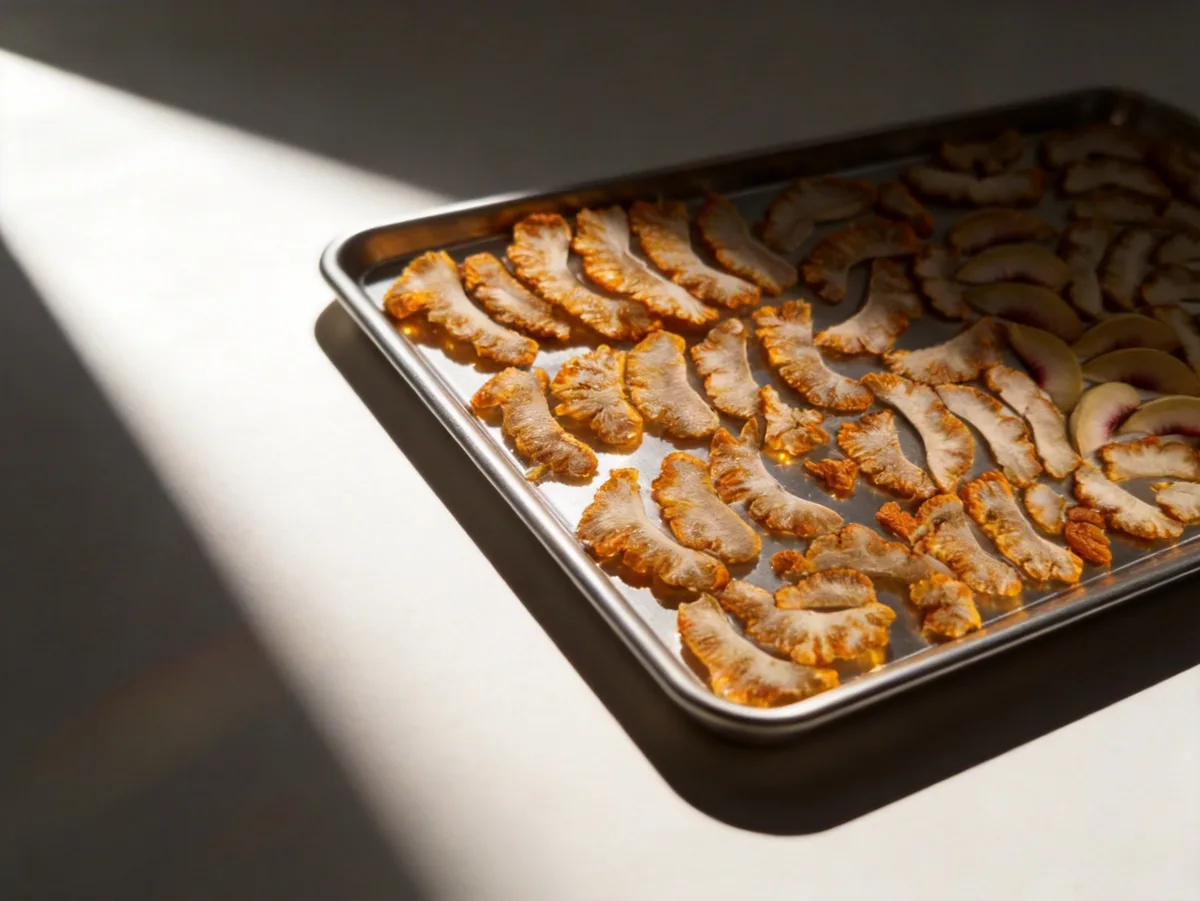
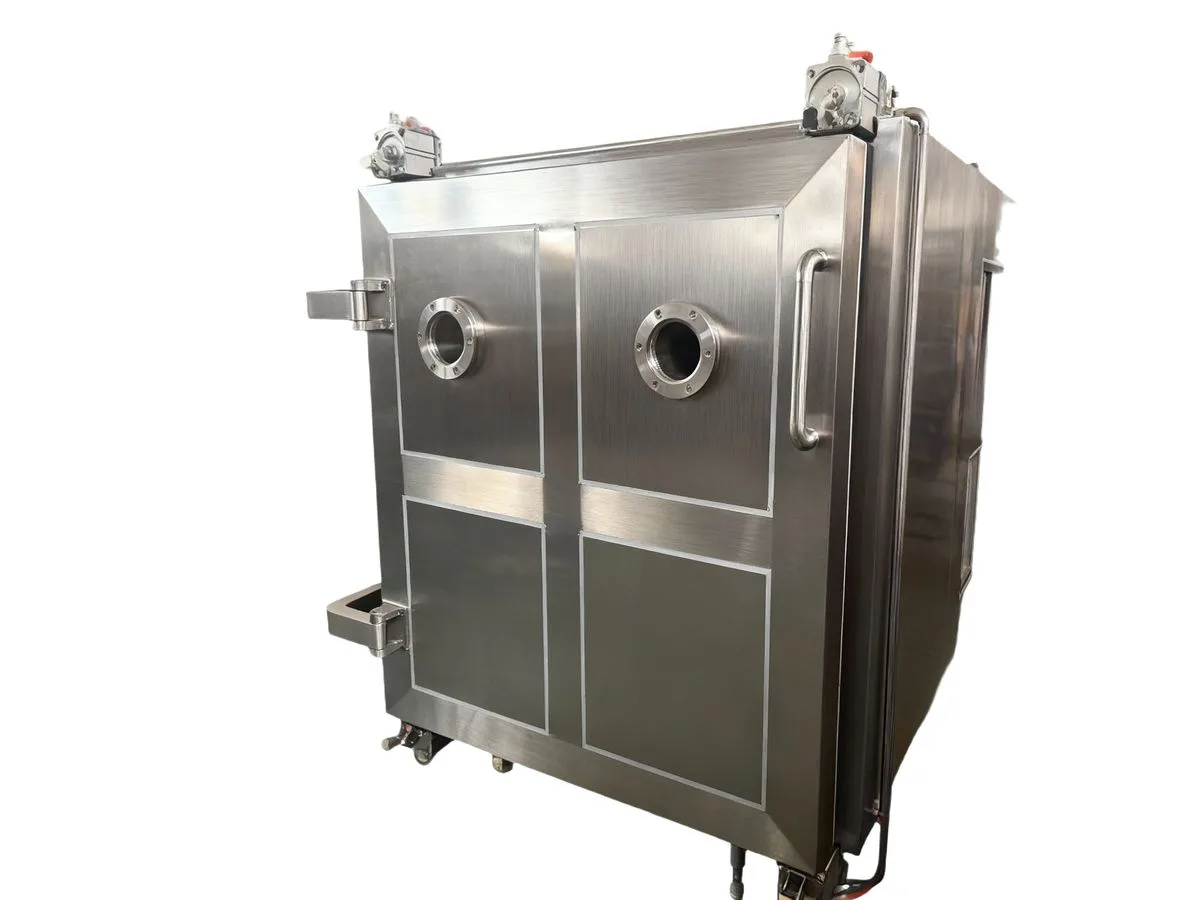
Freeze dried candy is made on an industrial freeze dryer: a vacuum chamber with trays, a freezing system, a vacuum pump set, and a controlled heating system run by a PLC. The same machine also freeze dries fruit, vegetables, and yogurt bites — only the input and cycle settings change.
QS freeze dryers come in three sizes, chosen mainly by batch weight.
QS freeze dryer models
| Model | Drying area | Trays | Power | Batch capacity |
|---|---|---|---|---|
| QS-FD-20 | 20.16㎡ | 84 | 35kW | ~200kg/batch |
| QS-FD-100 | 103.68㎡ | 432 | 135kW | ~1t/batch |
| QS-FD-200 | 207.36㎡ | 864 | 135kW | ~2t/batch |
- Chamber: SUS304 stainless steel, square chamber design.
- Freezing: down to -60°C, two-stage refrigeration with R404A/507.
- Heating: four-zone heating, accurate to ±0.1°C, maximum 80°C.
- Control: Siemens S7-200 PLC with a Chinese/English touchscreen.
- Vacuum: Roots pump plus screw pump, built for quiet operation.
- Sealing: food-grade silicone seals on the front door.
When you size a dryer, think in batches per week, not only kilograms per batch. A QS-FD-20 at about 200kg per batch suits a producer starting out or testing a new line; a QS-FD-100 at about 1 tonne per batch suits regular orders; a QS-FD-200 at about 2 tonnes per batch is for volume production. Check dimensions too — QS-FD-20 4500x1300x1400mm, QS-FD-100 7000x4000x2300mm, QS-FD-200 12000x4000x2300mm — and confirm floor space and power supply before you order.
QS freeze dryers carry a 1-year warranty and have an approximate 3-month lead time. Order the machine first, then finalise recipes and packaging while it is being built and shipped.
Packaging and moisture control
Freeze dried candy is dry, light, and porous — and that is exactly why packaging matters. A piece that leaves the dryer perfectly crisp can turn soft again if it sits in humid air, because the open structure that makes it crunchy also takes moisture back in easily.
Pack the candy as soon as it leaves the dryer, and seal the pack against moisture. Choose a pack material with a good moisture barrier, and close it properly — a weak seal is the same as no seal. Keep the time between dryer and sealed pack as short as your line allows.
Verify the moisture of your own finished product against your own standard, and test how it holds up in storage: pack a few samples, store them as your customers will, and open them later to check the crunch. Do not print a shelf-life figure on your pack unless you have tested it yourself. The candy is fragile too, so cushion the packs and mark cartons as fragile.
Business considerations for sellers
Freeze dried candy sells on novelty and texture: a familiar sweet that eats in an unfamiliar way. Customers buy the first pack out of curiosity, and they buy the second because the product was good. Plan on the second purchase, not the first.
Start small and prove the product before you scale. Run trial batches, taste-test them, pack them the way you plan to sell them, and put them in front of real buyers. Their reaction tells you which candies to lead with and which to drop.
Be careful with claims. Do not print a nutritional claim, a health benefit, or a shelf-life figure you have not verified for your own product, and check the labelling rules of every market you sell into. Supreme Beast manufactures freeze drying equipment, not finished candy — we can help with the equipment and the production know-how, while the recipes, brand, and sales are yours.
Frequently asked questions
What is freeze dried candy?
Freeze dried candy is ordinary candy — gummies, marshmallows, or taffy-type sweets — that has been put through a freeze drying cycle. The candy is frozen, then placed under vacuum so its frozen water turns directly into vapour. The result is a light, airy, crunchy piece that keeps much of its original shape and colour.
Which candies work best for freeze drying?
Gummies and marshmallows usually show the biggest change: gummies puff up and turn crunchy, while marshmallows expand into very light, crisp pieces. Taffy-type candies can work too, though results vary with the recipe. Hard candy changes the least, because it holds little water to remove. Test your own product in small batches first.
Does freeze drying change the flavour of candy?
The flavour compounds of candy largely remain, because freeze drying runs at low temperature instead of cooking the product. What changes most is texture: chewy becomes crunchy, soft becomes airy. The concentrated, dry texture can make the flavour feel stronger in the mouth.
What equipment do I need to make freeze dried candy?
You need an industrial freeze dryer with a vacuum chamber, a freezing system, and a controlled heating system. Supreme Beast QS freeze dryers come in three sizes: QS-FD-20 at about 200kg per batch, QS-FD-100 at about 1 tonne per batch, and QS-FD-200 at about 2 tonnes per batch. All three use a SUS304 square chamber, reach -60°C, and run on a Siemens S7-200 PLC. They carry a 1-year warranty with an approximate 3-month lead time.
Plan your freeze dried candy line
Tell us your candies and target output — we will help you size the dryer. Explore the range on our freeze dryer page.
Specifications are for reference only and are subject to the final supplied equipment.