Which meats suit freeze drying
Almost any meat can be freeze dried, but lean meats give the best results. Fat does not freeze dry well: it stays soft, it can turn rancid during storage, and it slows drying around it. Start with lean cuts and trim the visible fat away first.
Poultry is the most common starting point. Chicken breast is lean, widely available and easy to slice evenly, and cooked chicken keeps a pleasant texture after drying and rehydration. Turkey works in much the same way. Beef is the second main choice: lean cuts such as round or sirloin dry well and rehydrate into a firm, meaty bite, popular for outdoor meals and emergency food. Pork can also be freeze dried, but only the lean cuts.
Seafood behaves differently: fish and shrimp dry quickly but are more delicate and pick up off-flavours easily, so they need their own process settings. This guide focuses on land meats; if seafood is your main product, verify with your own product testing and confirm with your supplier.
Freeze dried meat serves three main markets: human food such as snack strips, camping meals and soup ingredients; pet treats, sold as a single-ingredient chew or reward; and ingredients such as diced meat for instant noodles and ready meals. Each market has its own food safety and labelling rules, so check them before planning a production run.
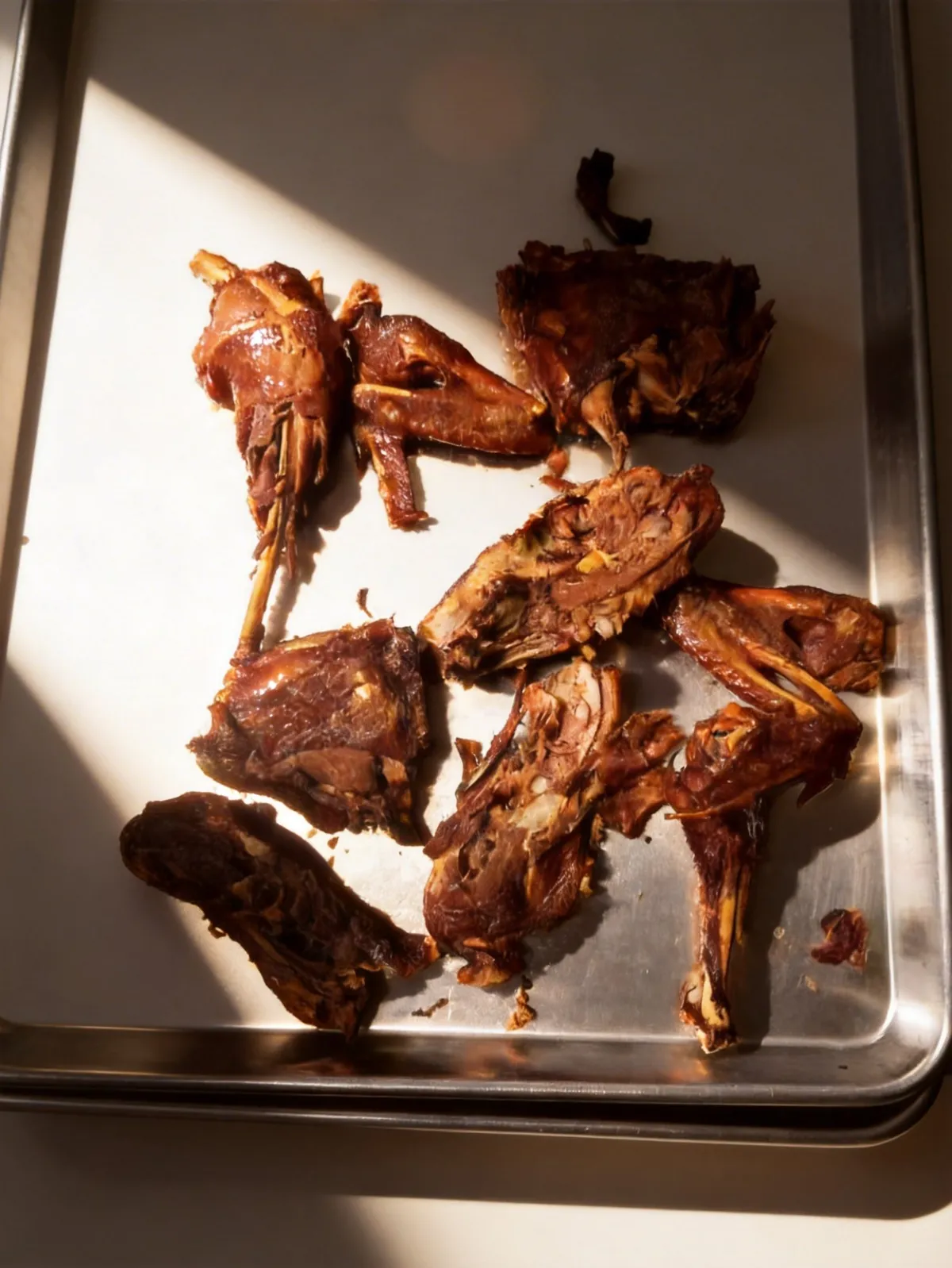
What freeze dried meat looks like
Good freeze dried meat keeps the shape of the piece that went into the dryer: a slice stays a slice, a cube stays a cube, and the surface looks dry and slightly porous. The colour is usually a little paler than the cooked meat it came from, and the pieces feel very light. With the water gone, the meat weighs far less and needs no cold chain.
The texture tells you whether the batch dried properly. A well-dried piece is crisp or brittle and snaps rather than bends. If a piece bends or feels leathery or cool, it may still hold moisture inside and should not be packed. Check pieces from different trays, including the middle of a tray, where drying is slowest.
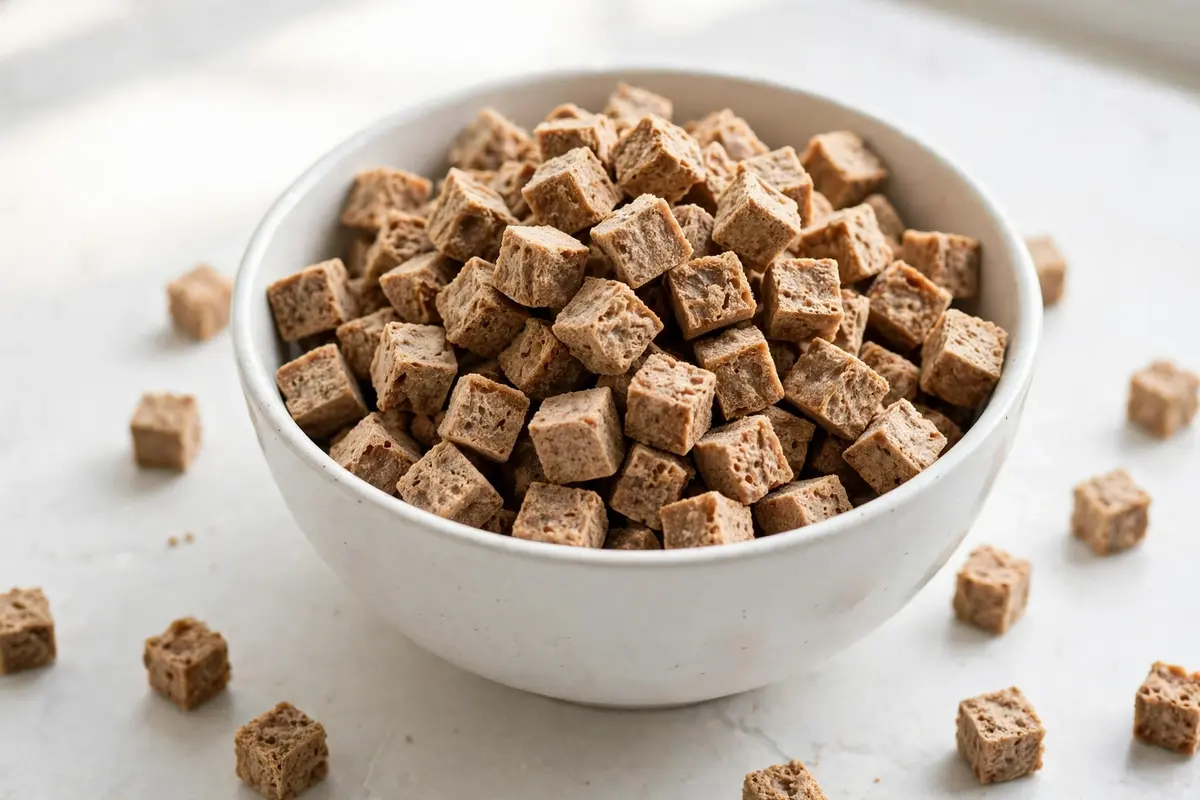
Preparation: slicing, trimming fat and seasoning
Preparation decides more of the final quality than the dryer settings do: meat that goes in uneven comes out uneven.
Trim the fat first
Cut away visible fat, skin and sinew before cooking. Fat does not dry, so any fat left on the piece stays soft and can turn rancid while the rest is already dry. Trimming is the cheapest quality step in the process, and skipping it is the most common reason a batch spoils.
Cook before drying
Most producers cook the meat before it is freeze dried. Cooking makes the meat safe to handle, improves flavour and texture after rehydration, and lets you season the meat while it is still moist. Raw meat can be freeze dried too, but then it must be cooked after rehydration, and the hygiene rules are stricter. If you are unsure, verify with your own product testing and confirm with your supplier.
Slice evenly, season early
Cut the cooked meat into pieces of even size and thickness: thin slices for snacks, small cubes for soups and pet treats, strips for camping meals. Even pieces dry at the same rate, so the whole tray finishes together. Season before drying, not after: salt, spices and marinades applied to the cooked meat lock flavour in as the water leaves. Keep it simple at first, and let the meat cool before loading it in a single even layer with small gaps between pieces.
The freeze drying process for meat
Freeze drying works in three stages.
Loading the trays
Spread the prepared meat in a single layer on trays, with no pieces overlapping. Overlap traps moisture between pieces and leaves damp spots. Keep the load even across trays, and do not overload a tray to save a cycle.
Freezing
The loaded trays are frozen until the meat is solid all the way through, which locks the shape of each piece in place. The chamber of a QS freeze dryer reaches down to -60°C; what matters is that the pieces are frozen evenly and completely before drying begins.
Drying under vacuum
Once frozen, the chamber is put under vacuum and gentle heat is applied. The ice inside the meat turns straight into vapour without melting, and the vacuum pump carries that vapour away. The heating plates warm the trays in zones; the QS models hold the heating to within ±0.1°C, with a maximum of 80°C. The batch is finished when the pieces are dry all the way through: break a few open and feel for any cool or soft centre. Do not rush the end of a cycle, because a batch that looks dry on the outside can still hold moisture in the middle of the thickest pieces.
Rehydration: bringing meat back to life
Rehydration is where the buyer judges your product, so test it as carefully as the drying itself. A piece that comes back close to the cooked meat it came from is a product the buyer will buy again; a piece that stays hard or turns to mush is not.
The simplest method is to add clean water and let the pieces soak until they soften. Thin slices and small cubes take up water faster than thick chunks, which is another reason even slicing matters. For soups, stews and sauces, the pieces can go straight into the cooking liquid.
Test rehydration with your own product before writing any instructions for the pack, using the same method the buyer will use. The right amount of water and soaking time depend on the meat, the cut and the piece size, so verify with your own product testing and confirm with your supplier.
Packaging and storage
Pack freeze dried meat as soon as it leaves the dryer. The pieces start absorbing moisture from the air the moment they are exposed to it, and even a short wait on an open bench can soften the batch. Move the trays to the packing area and seal them promptly.
The pack must block moisture and oxygen. A pouch with a good moisture barrier and a clean, firm seal is the usual choice for retail packs; bulk buyers may take larger bags inside cartons. The seal is where most failures happen, so check it: a test seal should hold firmly and tear the film rather than peel open, and the seal area must be free of crumbs and powder before it is closed.
Store sealed packs in a cool, dry place, away from direct sunlight and strong smells, since dried meat can pick up odours through a weak pack. Label each pack with the product name, the ingredients, the storage instructions and the date marking the destination market requires. Rules differ by market, so check them before you print.
Choosing a freeze dryer for meat
The right dryer depends on how much meat you plan to produce. A small producer making snacks or pet treats can start with a compact model and add capacity later; a factory supplying ready meals or export packs needs a larger chamber and more trays.
Compare models on drying area and tray count, not only on batch weight, because the same weight of meat can take up very different tray space depending on how it is sliced. Check the chamber material, the freezing temperature, the heating control and the vacuum system, and ask how the machine is cleaned between batches, since meat leaves fat and seasoning residue to wash out.
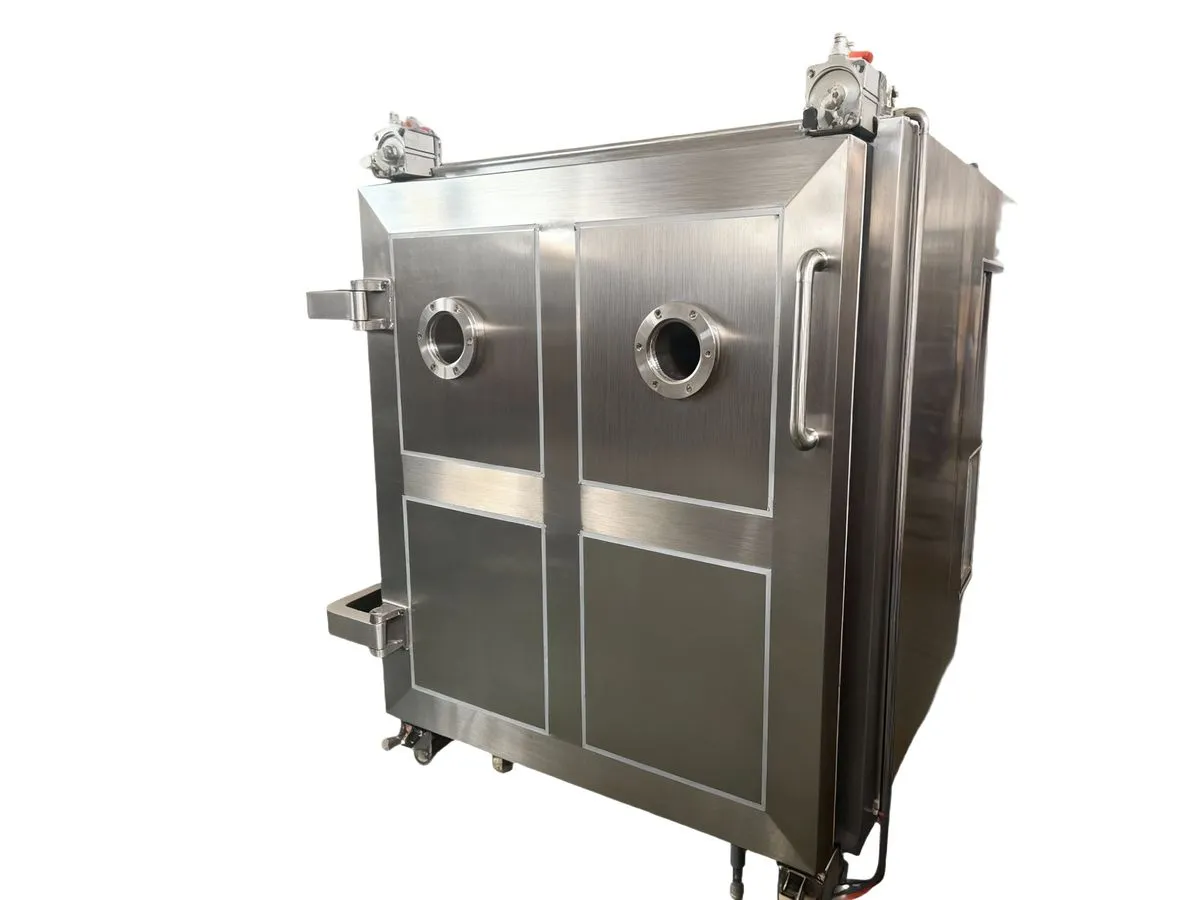
QS freeze dryer models
| Model | Drying area | Trays | Power | Dimensions | Batch capacity |
|---|---|---|---|---|---|
| QS-FD-20 | 20.16㎡ | 84 | 35kW | 4500x1300x1400mm | ~200kg/batch |
| QS-FD-100 | 103.68㎡ | 432 | 135kW | 7000x4000x2300mm | ~1t/batch |
| QS-FD-200 | 207.36㎡ | 864 | 135kW | 12000x4000x2300mm | ~2t/batch |
- Trays: 400x600mm each.
- Chamber: SUS304 stainless steel, square chamber design.
- Freezing: down to -60°C, two-stage refrigeration with R404A/507.
- Heating: four-zone heating, accurate to ±0.1°C, maximum 80°C.
- Control: Siemens S7-200 PLC, Chinese/English touchscreen.
- Vacuum: Roots pump plus screw pump.
- Sealing: food-grade silicone seals on the front door.
Common mistakes to avoid
Most failed batches come from the same few oversights.
- Leaving fat on the meat, which stays soft and can turn rancid in storage.
- Mixing thick and thin pieces on one tray, so the batch finishes unevenly.
- Overlapping pieces on the tray, trapping moisture between them.
- Overloading trays to save a cycle, which slows drying and leaves damp centres.
- Packing a batch that is still damp in the middle, because the outside looked dry.
- Leaving dried meat open in a humid room while waiting for packing.
- Sealing over crumbs or powder on the seal line, which leaves a gap for air and moisture.
- Copying drying settings from another product without testing them on your own meat first.
Frequently asked questions
Which meats are best for freeze drying?
Lean, well-trimmed meats work best, because fat does not freeze dry well and can turn rancid during storage. Chicken breast, lean beef and lean pork are common choices. Cooked and seasoned meat also works well, as long as the fat is trimmed away.
Do I cook meat before freeze drying it?
Most producers cook the meat first. Cooking makes the meat safe to handle, improves flavour and texture, and lets you season it before drying. Raw meat can also be freeze dried, but then it must be cooked after rehydration, and the handling rules are stricter.
How do I rehydrate freeze dried meat?
Add clean water and let the pieces soak until they soften, or add them directly to a soup, stew or sauce and let them absorb liquid while the dish cooks. Thin slices and small cubes rehydrate faster than thick chunks. Check the texture before serving, and adjust the water and soaking time for your own product.
How should I store freeze dried meat?
Pack it as soon as it leaves the dryer, in a pack that blocks moisture and oxygen, and keep it sealed, cool and dry. Freeze dried meat absorbs moisture quickly, so any delay between drying and packing can soften the pieces. Follow the storage and labelling rules of your market.
Talk to us about your freeze drying line
Tell us your product and target output — we will help you size the dryer. Explore the range on our freeze dryer page.
Specifications are for reference only and are subject to the final supplied equipment.