What freeze dried seafood is
Freeze drying is a drying method that removes water from a product while it stays frozen. The product is first frozen solid, then placed under vacuum so the ice inside it turns directly into vapour and leaves, without passing through the liquid stage. What remains is a dry product that keeps the shape of the original, weighs far less, and can be stored without refrigeration when it is packed correctly.
Freeze dried seafood is fresh seafood treated this way: shrimp, fish, salmon, scallops or squid that have been cleaned, portioned, frozen and dried until almost all of their water is gone. Seafood is a natural fit for this method: it is mostly water, and it is highly perishable. Removing the water removes the main reason the product spoils quickly,
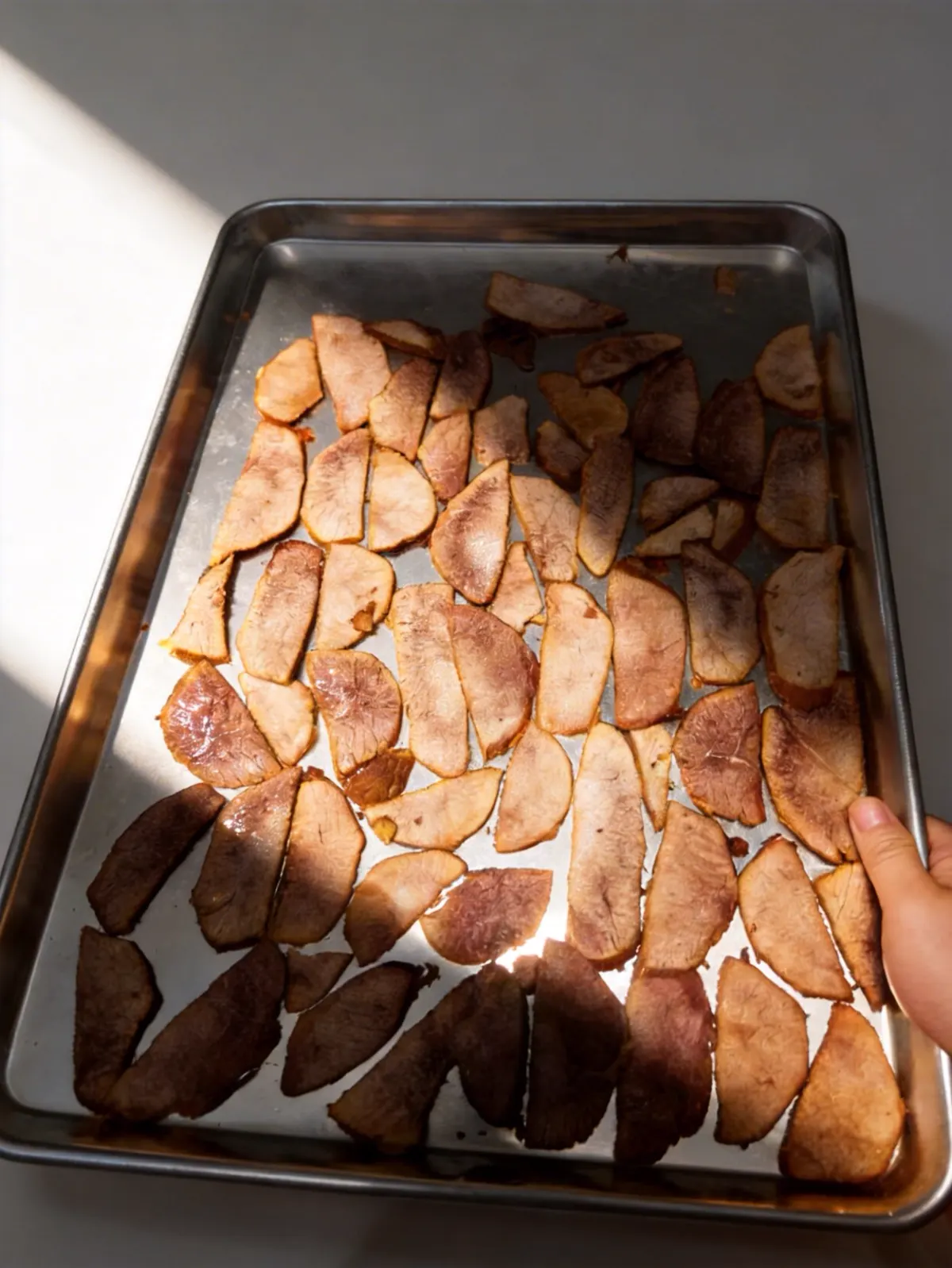
Why freeze drying suits seafood
Seafood is delicate. Its texture, colour and flavour change easily under heat, and that sensitivity is exactly what freeze drying is designed to handle. Because the water leaves the product while it is frozen, the process runs at low temperature throughout. The fibres are not cooked, the shape is not collapsed by heat, and the colour stays close to the original.
Removing the water also cuts shipping weight dramatically, so a producer can ship far more finished product in the same container. The third advantage is storage: without water, the conditions that allow rapid spoilage are largely removed, so freeze dried seafood can be kept in a cool, dry place. That simplifies the supply chain and opens markets where cold chain infrastructure is limited.
Which seafood works well
The species below are the most common choices:
- Shrimp. Peeled shrimp hold their curved shape well, rehydrate quickly, and suit snacks, instant noodles, soups and ready meals.
- Salmon. Salmon slices and cubes are valued for their colour and rich flavour, and are used in premium snacks, pet treats, and as an ingredient in soups and rice dishes.
- White fish fillets. Cod, pollock, haddock and similar white fish freeze dry into light, flaky pieces that rehydrate well in soups and stews.
- Scallops. Scallops have a firm, dense texture that survives drying well and a sweet flavour that comes through after rehydration.
- Squid. Squid rings and strips dry into chewy, flavourful pieces for snacks, stir-fries and noodle dishes.
Species with very delicate flesh or a high fat content need more care. Delicate flesh can break during handling, so loading should be gentle, and oily fish needs good packaging to protect it from air.
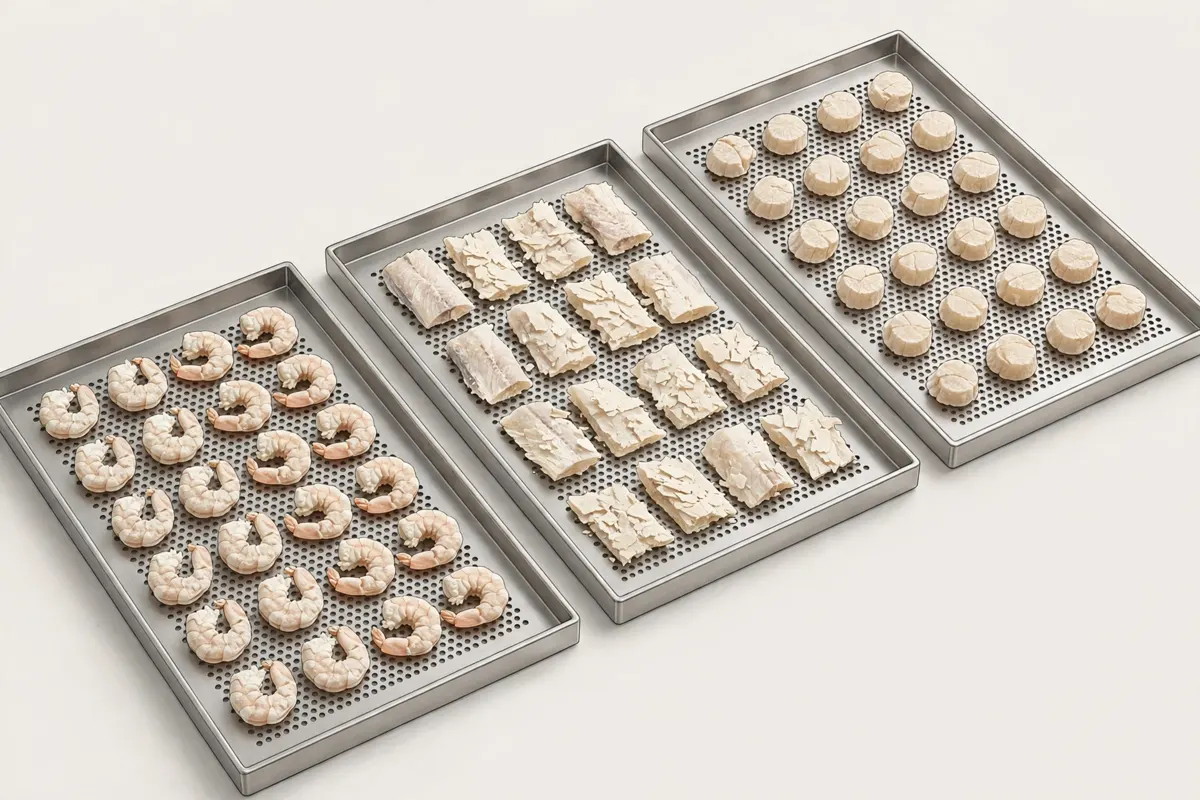
Pre-treatment before freeze drying
Pre-treatment prepares the raw material so that it dries evenly:
- Cleaning. The seafood is washed and cleaned, with shells, heads, guts and inedible parts removed as the product requires.
- Portioning. The seafood is cut into uniform pieces — slices, cubes, rings or whole peeled shrimp. Uniform size is the most important factor for even drying, because pieces of the same thickness finish at the same time.
- Optional seasoning or blanching. Some products are lightly seasoned or briefly blanched before drying, following the recipe for the finished product.
- Arranging on trays. Pieces are spread in a single layer with space between them so vapour can escape freely.
- Pre-freezing. Pre-freezing is a standard stage of freeze drying: the loaded trays are frozen solid before the vacuum stage begins, locking the shape of each piece while the water leaves as vapour.
A written standard for piece size, tray loading and pre-freezing gives repeatable results that a buyer can order again with confidence.
The three stages of freeze drying
Freeze drying runs in three stages, and each one has a clear job.
Stage 1: Freezing
The loaded trays are cooled until the product is frozen solid. This locks the shape and structure of each piece and turns the water inside into ice. The ice structure formed here shapes the tiny channels through which vapour will later escape.
Stage 2: Primary drying (sublimation)
Once frozen, the chamber is put under vacuum and gentle heat is applied to the shelves. Under vacuum, the ice inside the product turns directly into vapour — a change called sublimation — and leaves without melting. This is the longest stage and removes most of the water. The cold trap condenses the vapour into ice before it can reach the pump.
Stage 3: Secondary drying (desorption)
After the ice is gone, a small amount of water remains bound inside the product. In secondary drying, the shelf temperature is raised slightly and the vacuum is held, so this remaining water is driven off. On the QS-FD range, a Siemens S7-200 PLC with touchscreen control runs the cycle, with heating controlled to within ±0.1°C and a maximum shelf temperature of 80°C.
Packaging and storage
Freeze dried seafood is only as good as its packaging. Once the water is gone, the product will take moisture back from the air if it is left exposed, and moisture is what undoes all the work of drying.
- Moisture-proof packaging. Use bags or pouches with a good moisture barrier, and seal them promptly after the batch leaves the dryer.
- Protection from oxygen and light. Oxygen and light affect flavour and colour during storage, particularly for oily species such as salmon. Opaque or foil-lined packaging helps.
- Cool, dry storage. Store sealed packs in a cool, dry place away from direct sunlight and heat. The product does not need refrigeration, but it does need to stay dry.
- Handle with care. Freeze dried pieces are light and can be brittle. Rough handling breaks them into crumbs.
- Label clearly. Every pack should state the species, the net weight, the packing date and the storage instructions.
Once a pack is opened, use the product promptly or reseal it. Rehydrated seafood should be treated like fresh seafood and used promptly.
Using freeze dried seafood
Freeze dried seafood is used in two ways: eaten dry as a snack, or rehydrated and cooked like fresh seafood. Thin slices rehydrate fast and suit soups and noodles; larger pieces suit dishes where the seafood is the main feature. To rehydrate, soak the pieces in clean water until they soften. For manufacturers it is a practical ingredient: already portioned and stable, ready to add without thawing.
What buyers should ask a supplier
A buyer choosing freeze dried seafood, or choosing a freeze dryer to produce it, should ask questions that go beyond the sample. A good sample shows what a supplier can do once; these answers show whether they can do it again at volume:
- What is the batch capacity?
- How much tray area does the dryer have? Tray area and tray count set the real throughput of a machine.
- How accurate is the temperature control? Seafood is sensitive to heat, so ask how tightly the machine holds its set temperature through the cycle.
- What vacuum system does it use? The vacuum pumps and the cold trap decide how well the dryer holds vacuum through a long cycle.
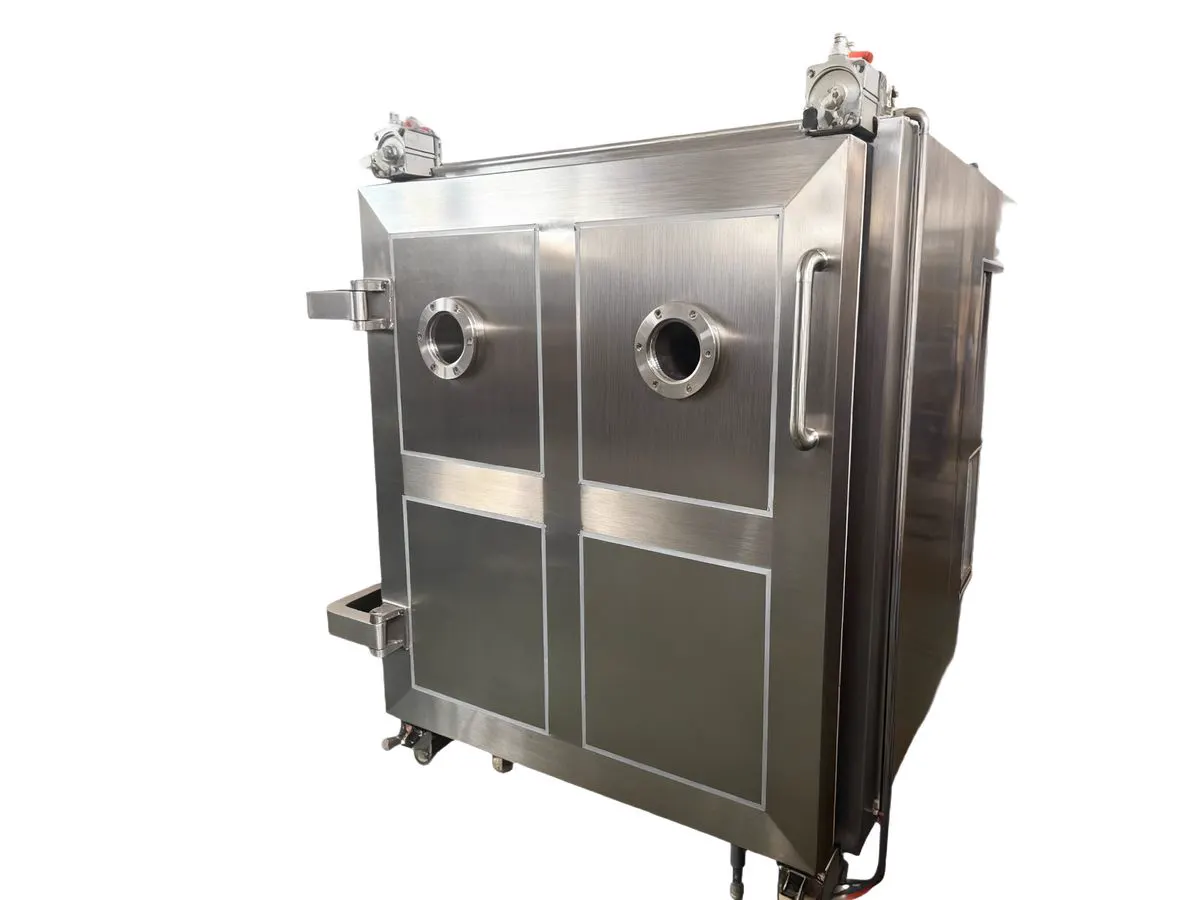
- What is the chamber made of? Ask for a SUS304 stainless steel square chamber, the standard for food production.
- What are the warranty and lead time? Confirm both in writing before ordering. For the QS-FD range, the standard terms are a 1-year warranty and an approximate 3-month lead time.
QS-FD freeze dryer range (reference)
| Model | Tray area | Trays | Power | Dimensions | Batch |
|---|---|---|---|---|---|
| QS-FD-20 | 20.16㎡ | 84 | 35kW | 4500x1300x1400mm | ~200kg/batch |
| QS-FD-100 | 103.68㎡ | 432 | 135kW | 7000x4000x2300mm | ~1t/batch |
| QS-FD-200 | 207.36㎡ | 864 | 135kW | 12000x4000x2300mm | ~2t/batch |
Shared: SUS304 square chamber, -60°C, R404A/507, ±0.1°C heating control, max 80°C, Siemens S7-200 PLC, Roots + screw vacuum pumps, food-grade silicone seals.
Specifications are for reference only and are subject to the final supplied equipment. A smaller machine such as the QS-FD-20 suits trial production and small product lines, while the QS-FD-100 and QS-FD-200 are sized for established volumes. Starting small lets you test the product and the market before committing to a larger line.
Frequently asked questions
Which seafood is best for freeze drying?
Shrimp, salmon, white fish fillets, scallops and squid are among the most common choices, because they have a firm texture and a clear, recognisable flavour. Species with a delicate structure need gentler handling and portioning, and the right choice depends on the finished product you plan to sell, whether that is a snack, an ingredient or a ready meal component.
Does freeze dried seafood need refrigeration?
No, when it is packed in moisture-proof packaging and stored in a cool, dry place, freeze dried seafood does not need refrigeration. The key is keeping moisture and oxygen out after drying. Once a pack is opened, it should be used promptly or resealed, and rehydrated seafood should be treated like fresh seafood.
How is freeze dried seafood used after rehydration?
It is soaked in clean water until it softens and returns close to its original size and texture, then used in the same way as fresh seafood: in soups, stir-fries, salads, instant meals or snack mixes. Small pieces and thin slices rehydrate faster than thick fillets, so portion size is part of the product design.
What should I ask a freeze dryer supplier before buying?
Ask about batch capacity, tray area and tray count, temperature control accuracy, the vacuum pump system, and the chamber material. Compare these figures across models, and confirm the warranty and lead time in writing. Specifications are for reference only and are subject to the final supplied equipment.
Can a small producer start with a small freeze dryer?
Yes. A smaller machine such as the QS-FD-20, with 20.16 square metres of tray area, 84 trays and a batch size of around 200 kilograms, suits trial production and small product lines. Larger models, the QS-FD-100 and QS-FD-200, are sized for established volumes. Starting small lets you test the product and the market before scaling up.
Plan your freeze dried seafood line
Tell us your target species and output — we will help you size the freeze dryer and plan your production line. Explore the range on our freeze dryer page.
Specifications are for reference only and are subject to the final supplied equipment.