Why seafood is the hardest snack to fry well
Vegetable chips forgive small process mistakes. Seafood does not. The difficulty comes from three properties of the raw material:
- Heat-sensitive protein. Shrimp and fish flesh toughen rapidly at high temperature. Ordinary deep frying burns the surface before the interior moisture has finished leaving — which is why conventionally fried seafood snacks are either greasy or leathery, and often both.
- High and uneven moisture. Seafood carries more water than most vegetables, and its thickness varies (a shrimp tail is not a shrimp body). Uneven pieces fry unevenly unless sizing is strict.
- Oxidizable oils. Seafood contains its own oils and fats, which are more prone to off-flavors than the frying medium itself. This raises the stakes on oil freshness and on export packing later.
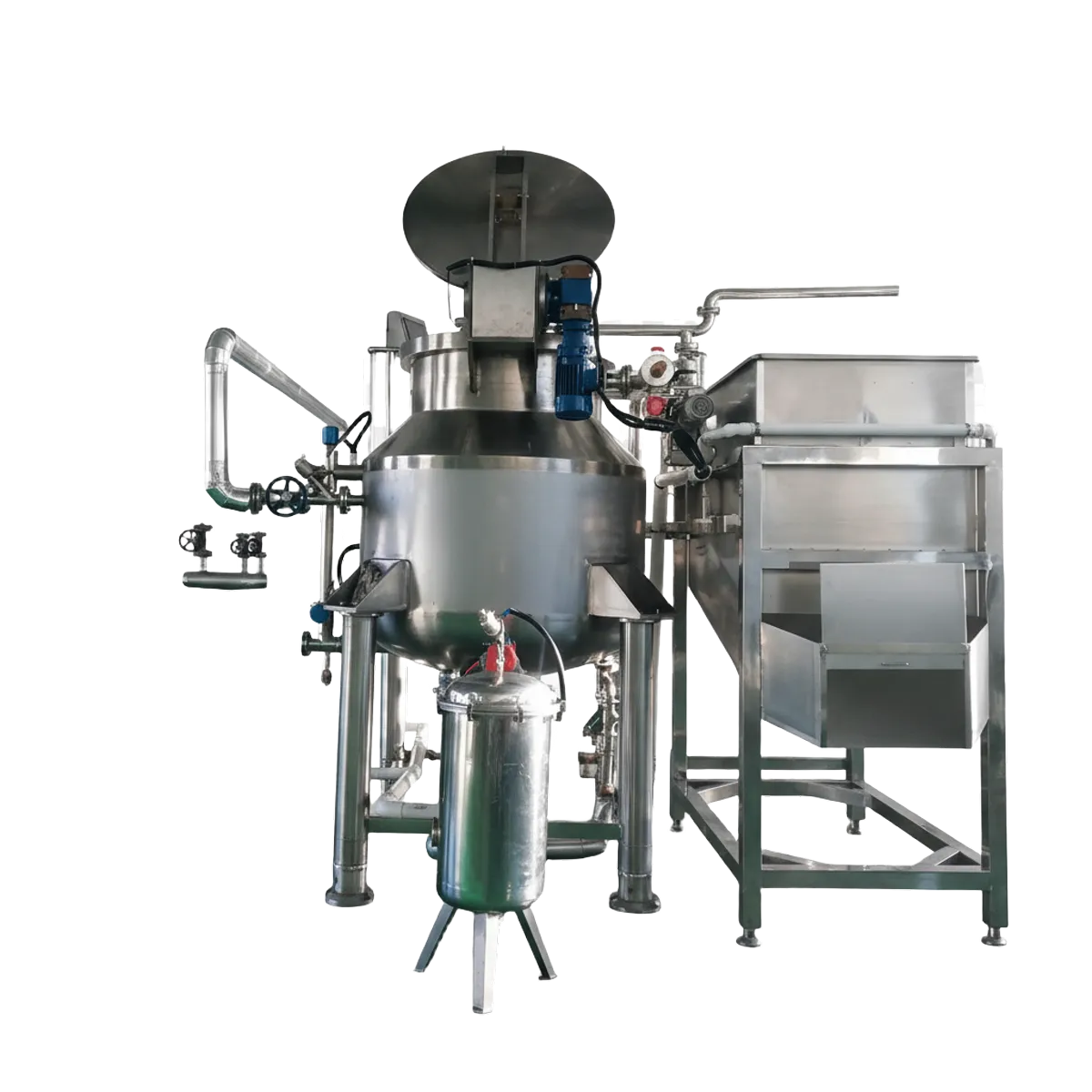
Vacuum frying answers all three: low temperature under vacuum drives water out gently without shocking the protein, batch control handles the sizing variation, and the sealed vacuum environment limits the oxygen exposure that drives off-flavors.
Vacuum fried shrimp: tender inside, crisp outside
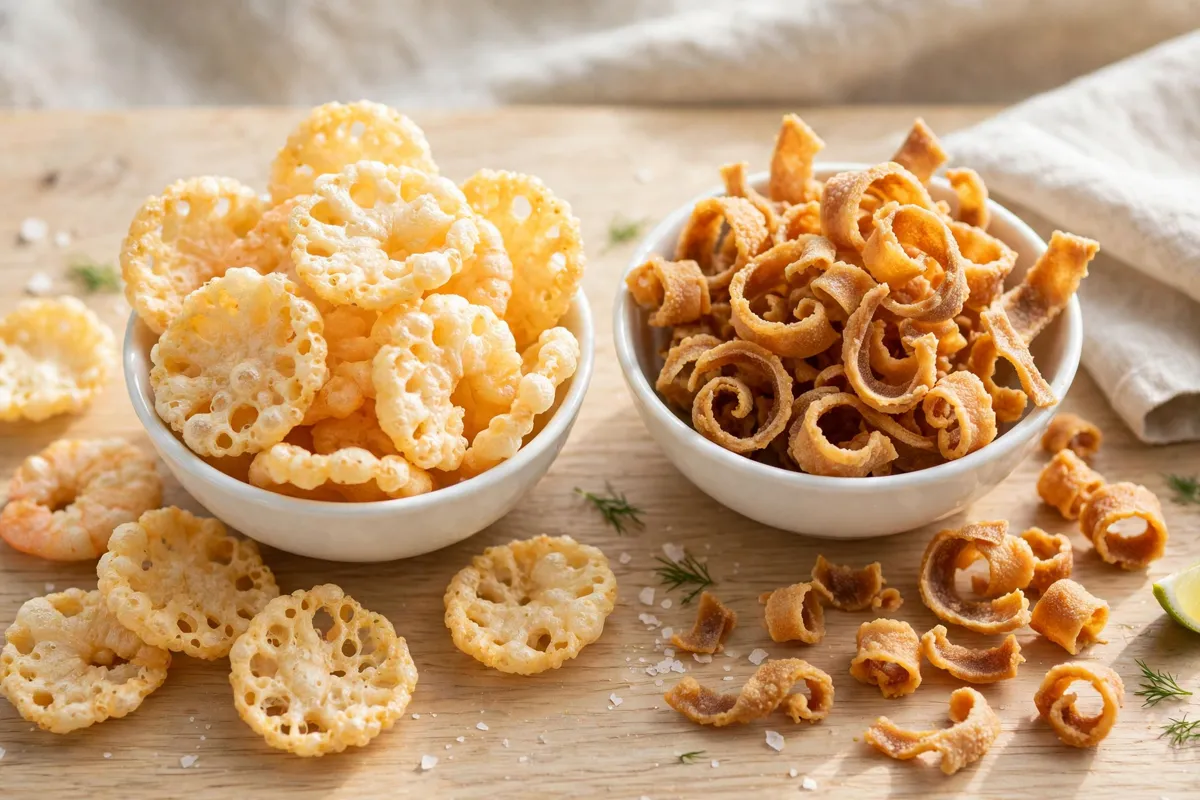
The signature of a good vacuum fried shrimp chip is a contrast that ordinary frying cannot produce: a crisp, glassy exterior with a tender — not rubbery — bite inside. Getting there depends almost entirely on what happens before the fryer:
- Grade by size. Shrimp must be sorted into uniform sizes before anything else. Mixed sizes in one batch mean small shrimp over-fry while large ones stay damp in the middle.
- Clean and devein properly. Residual shell fragments, vein contents and gut material contaminate the frying oil and show up as dark specks on the finished chip. Seafood residue shortens oil life faster than vegetable residue — cleaning is an oil-management step, not just a quality step.
- Light seasoning, if any. A salt dust or a single spice is usually enough; shrimp's own flavor is the product. Heavy coatings defeat the purpose of choosing a premium raw material.
Fish skin crisps: the premium by-product
Fish skin is the snack industry's favorite arbitrage: a processing by-product that vacuum frying turns into a premium product. Salmon skin, tilapia skin and similar skins become light, curled, glass-crisp snacks that retail at a multiple of the raw material cost.
- Trim the fat. Skin must be trimmed of adhering fat and flesh. Leftover fat fries into greasy patches and accelerates oil degradation; leftover flesh sticks and tears.
- Cut to uniform pieces. Skins from different fish vary in thickness — sort and cut so each batch is consistent. Thin skins crisp faster; mixing thicknesses mixes results.
- Expect curl. Fish skin curls as it fries — this is normal and part of the product's appeal. Overloading the basket restricts the curl and produces uneven pieces; batch size should respect the skin's behavior, not just the vessel's volume.
Pre-treatment: cleaning, sizing and seasoning
The seafood pre-treatment line is longer than the vegetable one, and skipping steps is the fastest route to a failed batch:
- Wash thoroughly. Field-to-plant for vegetables; catch-to-plant for seafood — same principle, higher stakes. Marine residue and ice glaze must be fully removed.
- Size-grade mechanically. For shrimp this means grading machines; for skin it means sorting by thickness and cutting to uniform pieces. Uniformity is the prerequisite for every downstream step.
- Remove surface water. Spinning or air-drying after washing shortens the frying cycle and protects oil life. Water carried into hot oil causes foaming, splatter and faster oil breakdown — with seafood the effect is worse because of the higher water load.
- Season at the right stage. Dry seasonings go on after frying and de-oiling, never before — seasoning in the fryer fouls the oil and seasoning under vacuum behaves unpredictably. Salt and spice dusting happen on the cooling/seasoning drum.
Seafood pre-treatment checklist
- Grade shrimp by size; sort skins by thickness
- Clean and devein shrimp fully — residue shortens oil life
- Trim skins of all adhering fat and flesh
- Remove surface water before loading the fryer
- Season after frying and de-oiling, on the cooling drum
- Run shrimp batches before fish skin batches to limit flavor transfer
The vacuum frying process for seafood
The cycle follows the standard sequence — load → vacuum pull-down → low-temperature frying under vacuum → centrifugal de-oiling → discharge → cooling — but seafood batches run on their own stored recipes in the control system, separate from vegetable SKUs:
- Separate recipes per SKU. Shrimp and fish skin get different frying profiles and de-oiling settings, stored in the control panel's recipe memory. Operators select the recipe; the PLC runs the cycle.
- De-oiling is decisive. Centrifugal de-oiling strips surface oil while the product is still under vacuum or immediately after, keeping oil content below 18%. For seafood this matters doubly: residual oil on seafood snacks oxidizes faster and turns rancid sooner than on vegetable chips.
- Cool fully before packing. Product must reach ambient temperature before it meets a pouch — residual heat sealed inside becomes condensation, and condensation is the end of crispness.
Oil management is stricter for seafood
If vegetable chips are forgiving on oil, seafood is the opposite. Seafood residue — protein fines, salt, moisture — loads the oil faster, so the oil routine needs to be tighter:
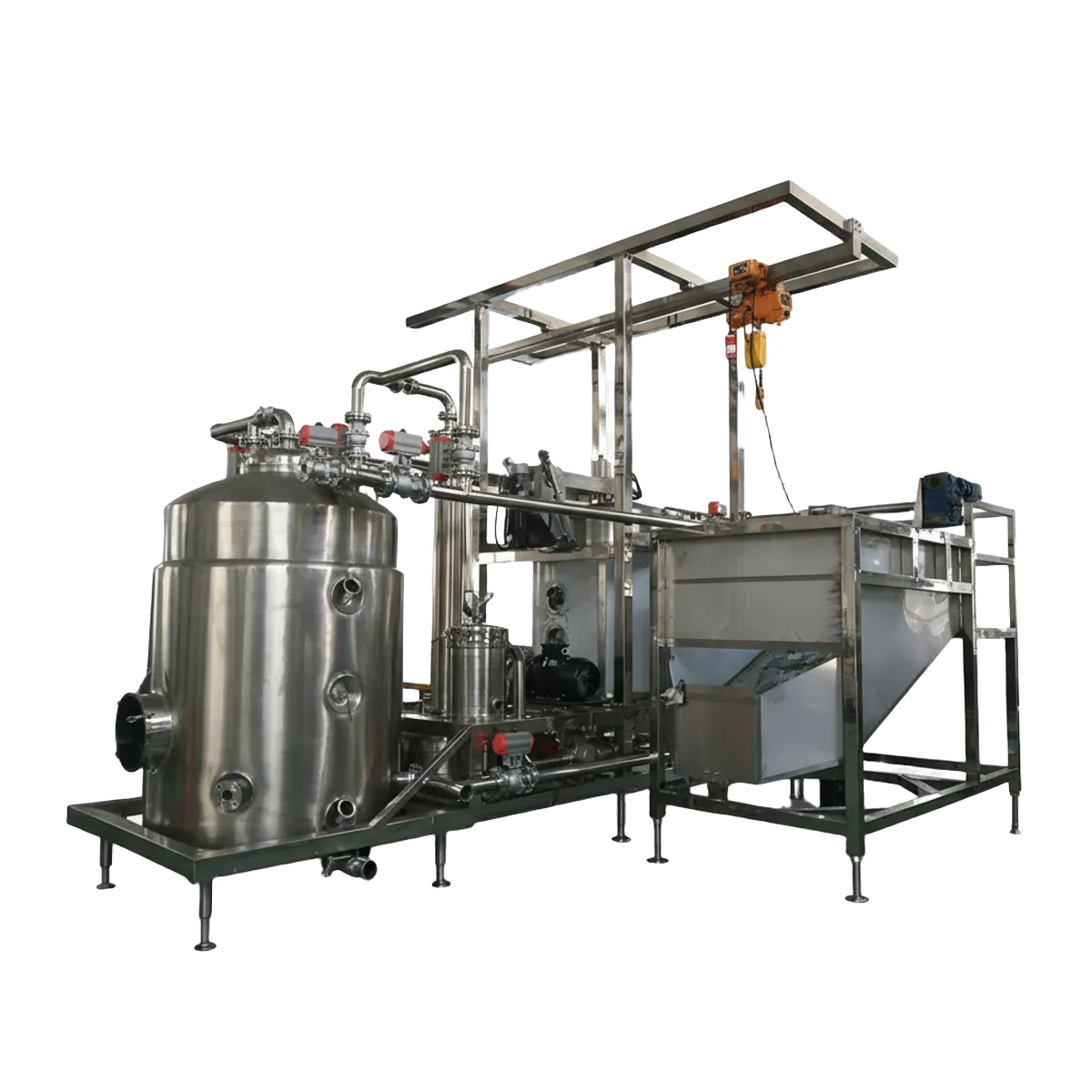
- Filter after every seafood batch. Do not let seafood fines sit in the oil between batches. Fine filtration keeps the frying medium clean and extends the turnover interval.
- Watch oil turnover. Track how much fresh oil is added relative to the oil absorbed by product — this turnover ratio is the real measure of oil freshness. Our oil management guide and oil turnover guide explain the mechanics.
- Separate oil for seafood lines at volume. At serious seafood volumes, many producers dedicate a fryer — or at least an oil circuit — to seafood, because flavor transfer and residue load make mixed oil a compromise. Discuss this with your supplier when you size the line.
Packing and export considerations
Seafood snacks punish weak packing faster than vegetable chips: their oils oxidize sooner, so barrier film, nitrogen flushing and seal integrity are not optional for export. The full checklist is in our export packing guide — for seafood, treat every item on it as mandatory rather than advisory.
QS vacuum fryers — the QS-VF100 (100 kg per batch), QS-VF150 (150 kg per batch) and QS-300 (300 kg per batch) — run seafood and vegetable SKUs as separate stored recipes, with centrifugal de-oiling that keeps oil content below 18%. Each carries a 1-year warranty and ships with roughly a 3-month lead time.
Frequently asked questions
Why does seafood need vacuum frying instead of ordinary frying?
Seafood proteins are heat-sensitive: ordinary deep frying at high temperature toughens shrimp and burns fish skin before the moisture is fully driven out. Vacuum frying at low temperature removes water gently, so shrimp keep their tender bite and fish skin crisps without charring — producing a crunch that conventional frying cannot reach without overcooking.
How is fish skin prepared before vacuum frying?
Fish skin must be cleaned thoroughly, trimmed of adhering fat and flesh, and often lightly salted or seasoned before frying. Consistent skin pieces — uniform size and thickness — fry evenly, and removing surface water before the skin enters the fryer protects oil life and chip texture. Confirm the exact preparation sequence with your fryer supplier for your specific fish species.
Can shrimp and fish skin run on the same vacuum fryer?
Yes, as separate batches. A batch vacuum fryer stores a recipe for each product — loading, frying profile and de-oiling setting per SKU. The practical concern is flavor transfer and cleaning: fish skin leaves more oil residue than shrimp, so schedule shrimp batches first and clean the vessel between seafood and non-seafood products.
Does vacuum fried seafood have a long shelf life?
There is no single number — it depends on moisture level, oil content, pouch barrier properties, nitrogen flushing and storage climate. Seafood snacks are especially sensitive to rancidity because of their oils, so export packing with proper barrier film and nitrogen flushing matters even more than for vegetable chips. Run shelf-life validation on your actual product in its final pack.
What should I ask a vacuum fryer supplier about seafood snacks?
Ask for a trial run on your actual raw material (species matters), the recommended cleaning and pre-treatment sequence, how oil filtration handles seafood residue, batch capacity options for your output target, and the lead time and warranty. Supreme Beast QS vacuum fryers come in 100, 150 and 300 kg per batch, carry a 1-year warranty, and ship with roughly a 3-month lead time.
Planning a seafood snack line?
Tell us your species and daily output target — we'll help you size the fryer and talk through pre-treatment and oil routines. See the full range on our vacuum fryer page.
Specifications are for reference only and are subject to the final supplied equipment.