Why cleaning matters
Freeze dried food is usually eaten as it is, with no cooking step to kill anything left behind. That makes the dryer a food-contact surface: residue in the chamber can end up in the next batch. Cleaning is therefore not housekeeping — it is how a manufacturer controls cross-contamination and protects product quality.
The risks are threefold. Cross-contamination: strawberries leave juice, meat leaves fat, herbs leave strong flavour, and the next product can pick up colour, flavour, or allergens. Hygiene: a cold, vacuum chamber slows microbes but does not sterilise them. And the machine: residue wears seals and blocks drains.
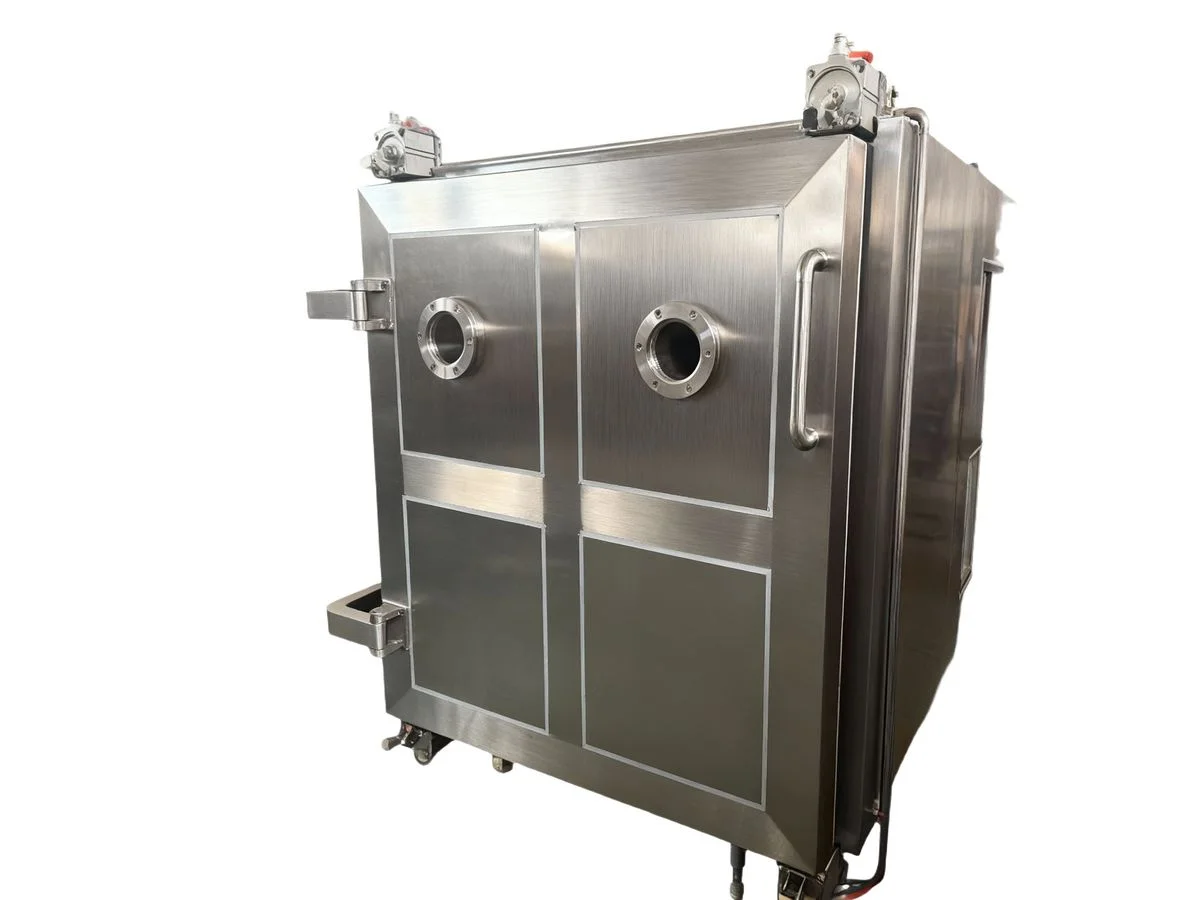
Cleaning between batches
Between-batch cleaning runs after every cycle — build it into unloading, because residue gets harder to remove the longer it sits.
- Unload and inspect. Take out the trays and note crumbs and spills while fresh.
- Remove loose residue. Brush crumbs from shelves and floor, working top down.
- Wipe shelves and walls. Use a clean cloth and only agents the manual allows.
- Clean the trays. Wash per the manual and dry fully before reuse.
- Wipe the seal groove and check the drain. Confirm the drain is clear.
- Leave the chamber to dry. Do not close the door on a damp chamber.
When the product changes — fruit to meat, plain to flavoured, one customer's material to another's — treat it as a full clean, and follow your hygiene plan for changeovers. Keep cleaning tools at the machine, separate from production tools.
Periodic deep cleaning
Between-batch cleaning handles what you can see. Deep cleaning handles what you cannot: film built up over weeks, residue in corners, and drain and condenser surfaces a quick wipe never reaches. It stops production while it happens, so it needs a fixed schedule — done "when we have time" means never done.
Set the schedule in your hygiene plan: weekly, or after a set number of batches. Review the interval when the product mix changes. Follow the manual for the steps: which parts can be removed and which agents are allowed. A deep clean covers the chamber interior, shelves and trays, door and seal, drain, and accessible condenser surfaces.
Chamber, trays and shelves
The chamber is a square SUS304 stainless steel box, and its smooth walls wipe clean easily — but only if residue is not left to dry hard. Sugary juice and protein films set hard, so wiping promptly matters more than the strength of any cleaner. Wipe in one direction.
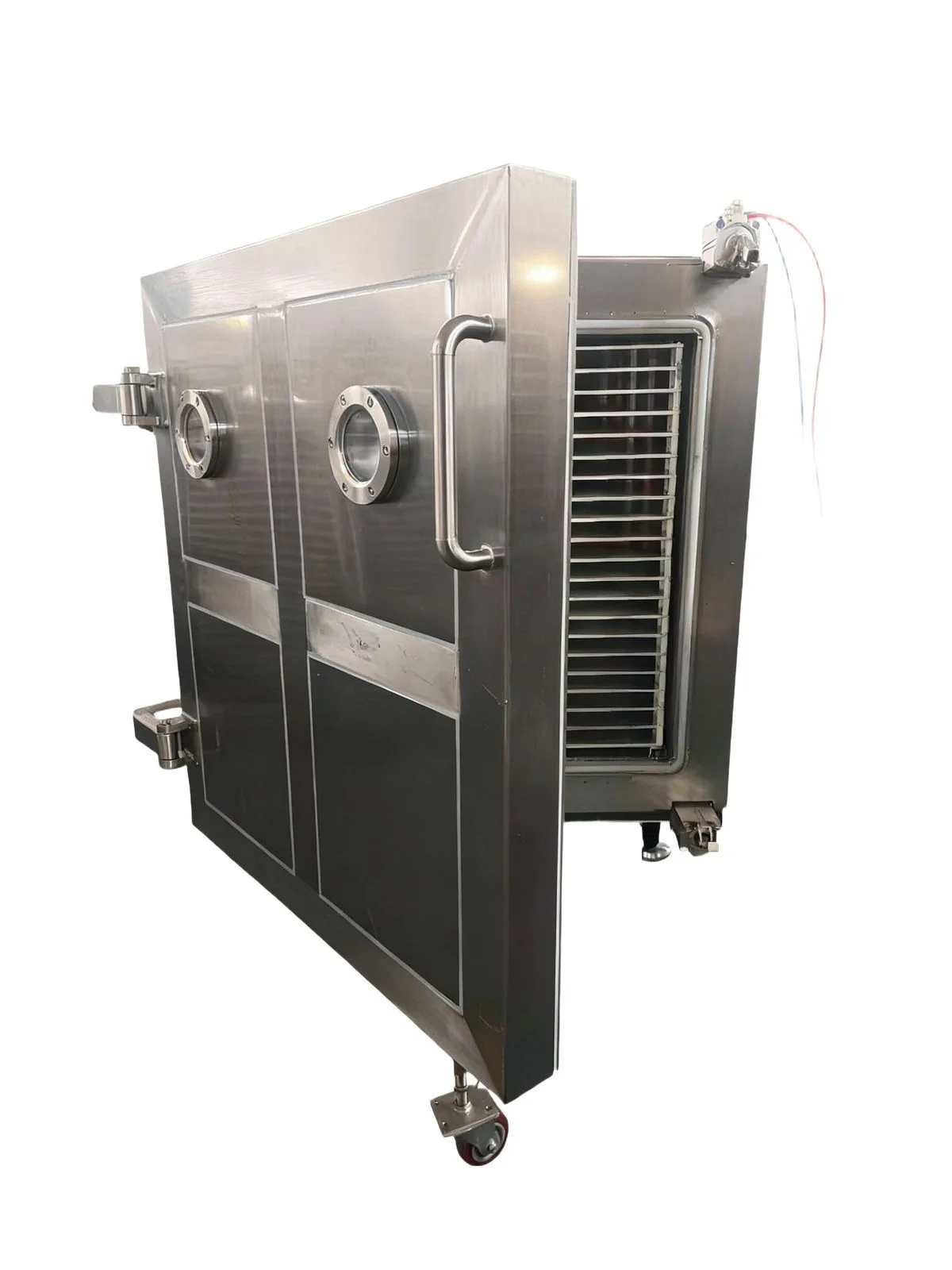
Shelves need the same treatment, plus attention to edges and undersides. On a QS-FD dryer the shelves carry the heating system, so never scrape them with metal tools or spray them with water in a way the manual does not allow. A scratched shelf holds residue, and the residue holds microbes. Trays are the surface the food sits on, so inspect them for dents and bent corners and set damaged trays aside.
Door seals and gaskets
The door seal is a food-grade silicone gasket with two jobs: it keeps the chamber hygienic and it keeps the vacuum in. Both jobs fail when the seal is dirty or damaged, so it gets its own step in every routine.
Wipe the seal's full length, including the groove it sits in, where juice and crumbs collect. Lift the seal gently where the design allows and wipe underneath. Check its condition while you clean: cracks, hardening, and dents where the door presses. A seal that has lost its spring leaks vacuum, which shows up as a longer cycle. Never use sharp tools, wire brushes, or harsh solvents on silicone — follow the manual. If a seal still smells after proper cleaning, replace it, and keep a spare on site.
Condenser and drain
The condenser collects the water removed from the product as ice, and the drain carries the meltwater away when the machine defrosts. Both sit out of sight — and both cause real problems when neglected.
After each cycle, check that the drain is clear. A blocked drain leaves standing water — a hygiene risk and a slipping hazard. During a deep clean, clean the drain and collection tray, and check the drain line for damage. If water drains slowly, find the cause: a slow drain is usually a partial blockage. Clean the condenser per the manual. Do not chip ice off with metal tools, and do not spray water where the manual does not allow.
What to avoid
Most cleaning damage is done with good intentions and the wrong method:
- Pressure washers and steam cleaners. They force water into seals, sensors, and electrical parts not designed for it.
- Abrasive pads and metal scrapers. They scratch steel and silicone.
- Unapproved cleaners. Only use agents the manual allows; others can corrode steel, attack seals, or leave residue in the next batch. Never mix cleaning agents.
- Spraying water at control panels, motors, or the vacuum pump. Wipe the exterior with a damp cloth, not a hose.
- Closing a damp chamber. A closed, damp chamber is a warm, dark place for microbes to grow.
- Cleaning while the machine is running or still cold. Follow the manual on lockout and safe temperatures.
When in doubt, the equipment manual decides — not habit or a video seen online. If the manual is silent, ask the equipment supplier first.
Drying the chamber before the next load
Cleaning ends with drying, and drying is a step of its own. A wet chamber freezes that water onto cold surfaces as soon as the next cycle starts, adding moisture to the next batch.
After wiping, leave the door open with air moving until every surface is dry. Check by sight and touch — no water beads, no damp patches. If the manual provides a defrost or drying function, use it. Do not load trays into a damp chamber. Drying also protects the machine: standing water stains steel and corrodes fittings, and water in the seal groove shortens the life of the silicone.
Keeping cleaning records
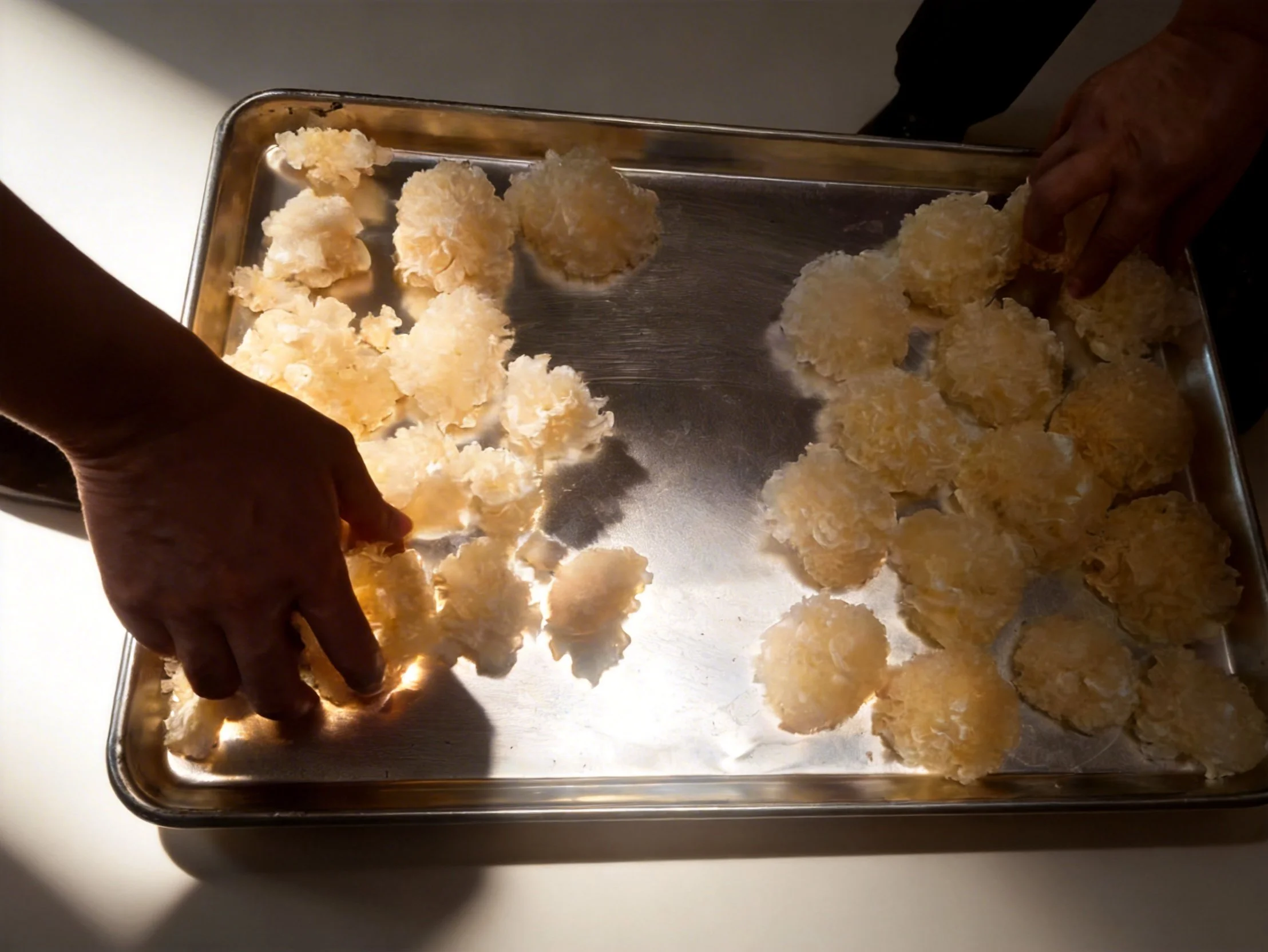
A cleaning that is not recorded cannot be proved. Buyers and auditors will ask when the machine was last cleaned, who did it, and what was found. "It looked clean" is not an answer. A record is.
Keep the record simple so it gets filled in: date and time, machine, batch, person, and whether it was a between-batch clean or a deep clean. Add a line for anything found — a damaged seal, a slow drain, a tray set aside — and what was done. Records also make problems visible: a drain that keeps blocking shows a pattern before it becomes a failure. And when a customer complains, the record lets you trace back — machine, clean, operator, raw material lot.
How equipment design relates to cleaning
Cleaning is easier on a machine designed for it. A square SUS304 chamber with smooth walls wipes clean quickly and resists corrosion; food-grade silicone seals can be wiped and inspected without special tools; and shelves accessible from the open door can be cleaned properly. When comparing dryers, ask how the chamber is cleaned — which parts come out and which surfaces can be reached — because that decides how much time cleaning takes every day for years. Vacuum performance is part of the story too: a Roots + screw pump set and a tight, well-kept seal hold the vacuum that makes freeze drying work.
QS-FD freeze dryer range (reference)
| Model | Tray area | Trays | Power | Dimensions | Batch |
|---|---|---|---|---|---|
| QS-FD-20 | 20.16㎡ | 84 | 35kW | 4500x1300x1400mm | ~200kg/batch |
| QS-FD-100 | 103.68㎡ | 432 | 135kW | 7000x4000x2300mm | ~1t/batch |
| QS-FD-200 | 207.36㎡ | 864 | 135kW | 12000x4000x2300mm | ~2t/batch |
Shared: SUS304 square chamber, -60°C, R404A/507, ±0.1°C heating control, max 80°C, Siemens S7-200 PLC, Roots + screw vacuum pumps, food-grade silicone seals.
Choosing between the three models is a question of batch size: the QS-FD-20 suits runs of around 200kg per batch, the QS-FD-100 around one tonne, and the QS-FD-200 around two tonnes. Standard terms are a 1-year warranty and an approximate 3-month lead time. Specifications are for reference only and are subject to the final supplied equipment.
If cleaning matters to your operation, ask for a sample run on your own raw material and watch the cleaning routine that follows it.
Frequently asked questions
How often should an industrial freeze dryer be cleaned?
Clean the chamber and trays between every batch, and deep clean on a fixed schedule in your hygiene plan — weekly, or after a set number of batches. Change the product and clean first, even if the machine is not due. Follow the manual for the steps and the agents it allows.
Can I use a pressure washer or steam cleaner inside the chamber?
No. High-pressure water and steam can force water into seals, sensors, and electrical parts not designed for it, and can damage chamber surfaces and door seals. Clean with the methods the manual allows — usually manual wiping — and keep water away from control panels, motors, and the vacuum pump.
What should I do if a door seal still smells or shows residue after cleaning?
Clean the seal again and inspect it closely: look for cracks, hardening, or deformation. A seal that stays odorous after proper cleaning is often worn or damaged, and a damaged seal will also leak vacuum. Replace it following the manual, and do not run production with a seal you suspect is damaged.
How do I know the chamber is dry enough for the next batch?
All surfaces, tray corners, and the seal groove should be visibly dry, with no water beads or damp patches. Leave the chamber open with air moving until fully dry, and use the defrost or drying function if the manual provides one. Loading trays into a damp chamber lets moisture freeze onto cold surfaces and adds unwanted water to the next batch.
Do cleaning records really matter if the dryer looks clean?
Yes. A clean look today does not prove the machine was cleaned yesterday, and buyers, auditors, and your quality team need that proof. Records tie each cleaning to a batch, a person, and a date, so a problem can be traced to its cause. They also show whether the schedule is being followed — the first thing a hygiene audit asks to see.
Plan your freeze drying line
Tell us your target output and products — we will help you size the dryer and plan the cleaning routine for your line.
Specifications are for reference only and are subject to the final supplied equipment.