What a cold trap does
Freeze drying removes water from a product by turning its ice directly into vapour under vacuum. That vapour has to go somewhere, and the cold trap is where it is caught. Inside the dryer, vapour travels from the product chamber to a cold surface, where it condenses and freezes as ice. The water therefore leaves the product as vapour and ends up as solid ice on the trap, instead of travelling onward into the vacuum pump.
This matters because vacuum pumps are built to move gas, not to swallow a steady stream of water vapour. Vapour that reaches the pump mixes with pump oil, thins it, and degrades its ability to seal and lubricate. Over time that shows up as weaker vacuum, more frequent oil changes, and shorter pump life. The cold trap stands between the product and the pump and takes that load, which is why it is treated as a protective component rather than an accessory.
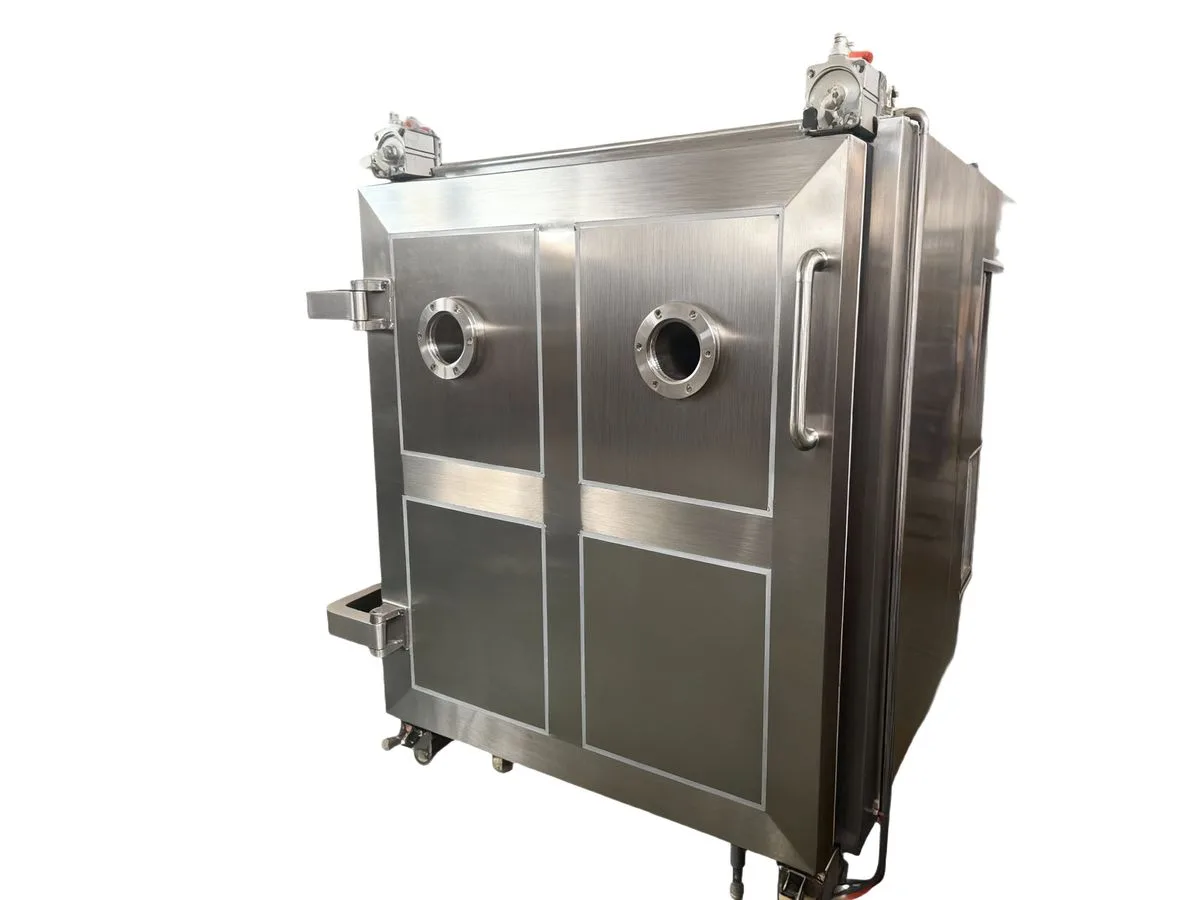
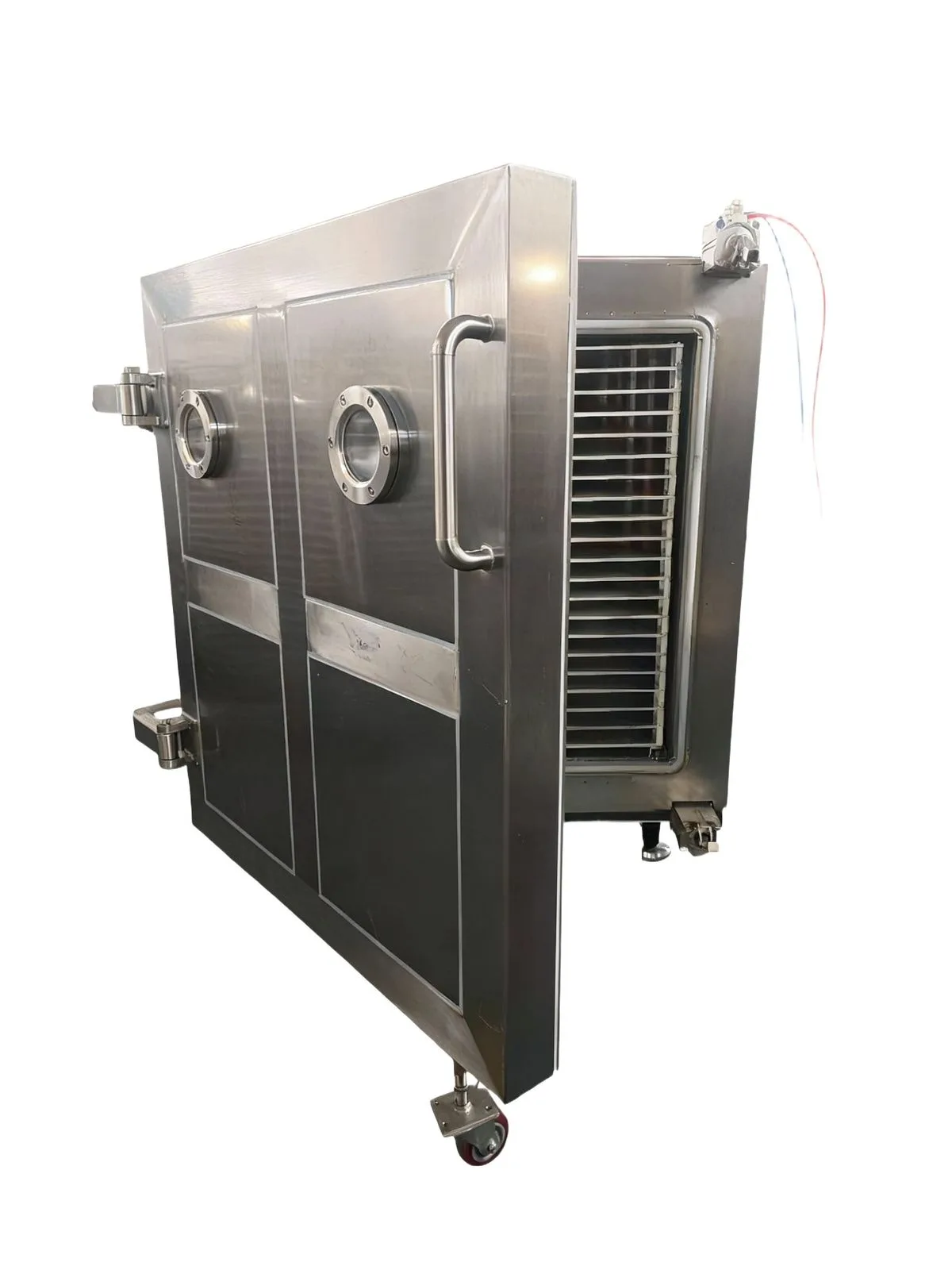
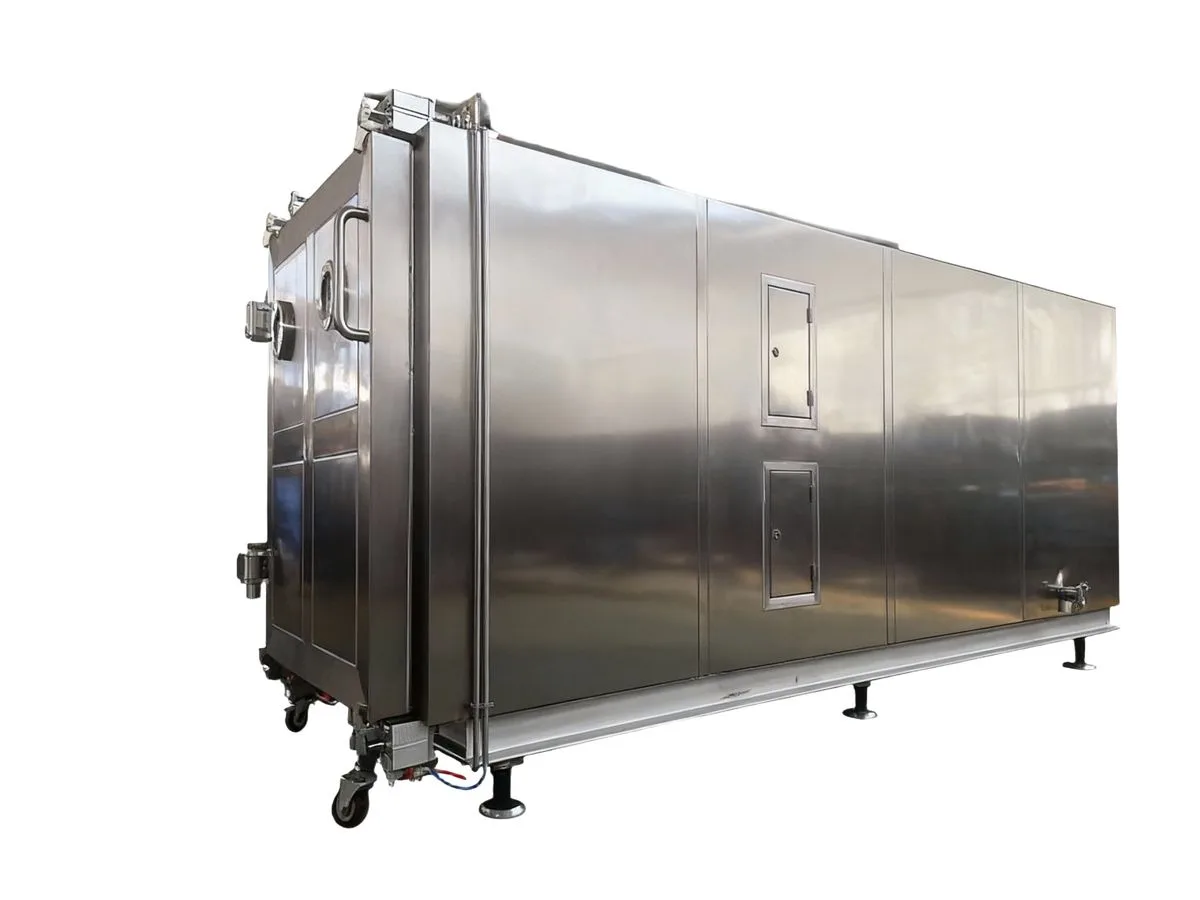
On a QS-FD freeze dryer, the trap works alongside the other shared systems: a SUS304 square chamber, Roots and screw vacuum pumps, food-grade silicone seals, and a Siemens S7-200 PLC with touchscreen control. The operator does not manage the trap as a separate machine. It is managed as part of the drying cycle: load the product, run the cycle, watch the trap load, and defrost before the next batch. Understanding that rhythm is most of what cold trap care involves.
How ice builds up during a batch
Ice does not build up evenly, and it does not build up at a steady rate. Early in a cycle, when the product still holds most of its water, vapour flows fast and ice accumulates quickly. As the product dries, vapour flow falls away and accumulation slows. A wet, heavy load therefore puts far more ice on the trap than a light, thin load, even when both loads use the same cycle settings.
Where the ice collects
Ice forms first on the coldest surfaces the vapour meets, and thickens from there. The distribution is rarely perfectly even: vapour enters from one side, so the surfaces nearest the inlet tend to load first. That unevenness is normal, but it means a visual check should look across the whole trap surface, not at one convenient spot. A trap that looks clear on one side can be heavily loaded on the other.
Why thick ice is a problem
A layer of ice is insulation. As it thickens, it covers the cold surface and slows further condensation, so vapour is captured less efficiently. The chamber vacuum then takes longer to settle, drying slows, and the pump ends up handling vapour the trap should have caught. Left long enough, a heavily loaded trap can become the bottleneck of the whole cycle: the product, the shelves, and the controls may all be working correctly, yet the batch still runs long because the trap has no capacity left.
Warning signs of excess ice
Most trap problems announce themselves before they become failures. The signs to watch for are:
- Drying runs longer than usual. When a familiar product on a familiar cycle starts needing extra time, and nothing about the product or loading has changed, excess ice on the trap is a leading suspect.
- The vacuum settles slowly. A chamber vacuum that takes noticeably longer to reach its stable level suggests vapour is not being captured as efficiently as before.
- Heavy visible ice. Thick, uneven ice on the trap surfaces at the end of a batch means the trap was working near its limit. Note it, and do not carry that load into the next batch.
- Pump strain. A pump that sounds different, runs hotter than usual, or needs oil attention sooner than expected may be handling vapour that the trap failed to catch.
- Uneven drying. Trays that finish at different rates can point to several causes, but a loaded trap that captures vapour unevenly belongs on the checklist alongside loading and shelf performance.
None of these signs proves the trap is the cause on its own. They are prompts to inspect it, and a quick inspection after the batch often prevents a slow batch from becoming a lost one.
Defrosting between batches
Defrosting is the routine that resets the trap. It should be treated as part of the batch changeover, not as an optional extra when time allows:
- Finish and unload. Complete the cycle, confirm the batch is dry, and unload the product before touching the trap. Never defrost around a loaded batch.
- Allow the ice to melt fully. Give the trap time to release all of its ice. Rushing this step leaves a partial load behind, which is worse than it looks: the next batch starts with capacity already used up.
- Drain all melt water. Check that every drain path is clear and that no water pools in the trap housing or pipework. Standing water left behind will freeze again at the start of the next cycle and add to its load.
- Dry and inspect the surfaces. Once drained, check the trap surfaces for residue, damage, or anything that would block vapour flow. Wipe down as needed and confirm the surfaces are clean before closing up.
- Close, seal, and verify. Close the trap housing, check the seals seat correctly, and confirm the system holds vacuum before loading the next batch. A seal disturbed during defrosting is a common cause of a poor vacuum on the following run.
Record defrosting in the batch log alongside the product, the load, and the cycle result. Over time that record shows which products load the trap hardest, and it turns defrosting from a guess into a planned step with a known place in the changeover.
Cold trap maintenance checks
Beyond defrosting, a short maintenance routine keeps the trap reliable:
- Seals and gaskets. Inspect the seals around the trap housing for cracks, flattening, or product residue. A seal that no longer seats cleanly lets air in, and air in the system works against the vacuum the trap is protecting.
- Drain valves and pipework. Check that drain valves open and close fully and that pipework is clear. A valve that sticks half-open, or a drain that runs slowly, will leave water behind after defrosting.
- Trap surfaces. Look for dents, corrosion, or built-up residue that would reduce the surface available for condensation. Damaged surfaces should be reported and repaired rather than worked around.
- Connections to the vacuum line. Check the joints between the trap and the vacuum system for leaks or loose fittings. A leak here defeats the purpose of the trap, because it lets vapour and air bypass it toward the pump.
- Pump oil as a downstream signal. If pump oil needs changing sooner than expected, or looks milky or degraded, treat it as information about the trap as well as the pump. Vapour reaching the pump is often the first sign that trap capacity or sealing needs attention.
QS-FD freeze dryer range (reference)
| Model | Tray area | Trays | Power | Dimensions | Batch |
|---|---|---|---|---|---|
| QS-FD-20 | 20.16㎡ | 84 | 35kW | 4500x1300x1400mm | ~200kg/batch |
| QS-FD-100 | 103.68㎡ | 432 | 135kW | 7000x4000x2300mm | ~1t/batch |
| QS-FD-200 | 207.36㎡ | 864 | 135kW | 12000x4000x2300mm | ~2t/batch |
Shared: SUS304 square chamber, -60°C, R404A/507, ±0.1°C heating control, max 80°C, Siemens S7-200 PLC, Roots + screw vacuum pumps, food-grade silicone seals.
Larger models process larger loads, and larger loads put more ice on the trap. The defrosting routine does not change with size, but the discipline around it matters more as batch size grows, because the ice load grows with it.
The cold trap and the rest of the vacuum system
The trap is one part of a chain: product chamber, trap, vacuum pumps, seals, and controls. A weakness anywhere in the chain shows up everywhere else, so trap care should sit inside the wider vacuum system routine rather than beside it. When the vacuum behaves unexpectedly, check the trap, the seals, and the pump together, and compare the result with your guide on freeze dryer vacuum system basics. The maintenance checklist for the whole machine, including the trap, is covered in our freeze dryer maintenance checklist.
Frequently asked questions
What does a freeze dryer cold trap do?
It condenses water vapour leaving the product into ice on a cold surface, before that vapour can reach the vacuum pump. Without it, vapour would travel into the pump, degrade the pump oil, and shorten pump life. The trap therefore protects the pump and helps hold the vacuum steady through the cycle.
How do I know the cold trap needs defrosting?
Watch for slower drying, a vacuum that takes longer than usual to settle, and visibly heavy ice on the trap surfaces. If a batch that normally finishes on schedule starts running long, or the pump sounds strained, excess ice is one of the first things to check before assuming a deeper fault.
Can I run another batch without defrosting the cold trap?
Only if the ice load from the previous batch was light and your own routine allows it. As a rule, defrost between batches: a trap that starts a batch already loaded with ice has less capacity left for the new batch, and the penalty shows up as slower drying or an incomplete cycle.
Does the cold trap need maintenance beyond defrosting?
Yes. Defrosting clears the ice, but the routine should also cover draining melt water fully, checking seals and drain valves for leaks or wear, and inspecting the trap surfaces for damage or residue. A trap that is defrosted but left wet or poorly sealed will cause the same problems as a trap that was never defrosted.
Plan your freeze drying line
Tell us your target output and products — we will help you size the dryer and plan its maintenance routine. Explore the range on our freeze dryer page.
Specifications are for reference only and are subject to the final supplied equipment.