What the vacuum system does
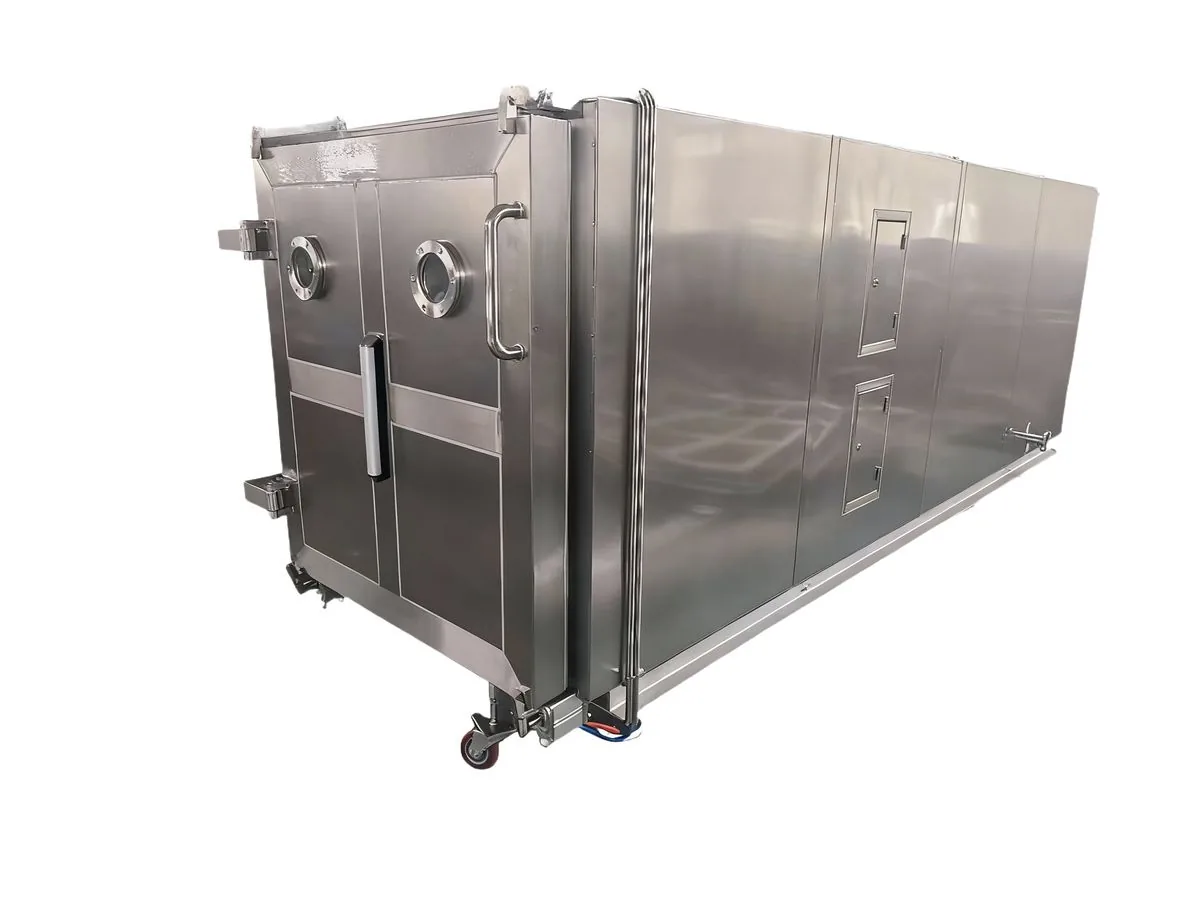
The vacuum system is the set of pumps, piping, valves and gauges that evacuates the drying chamber and holds it at the deep vacuum where sublimation happens.
- Pumps. The Roots booster + screw backing pump set removes air and gases — both the initial pull-down and the continuous clearing of gases released during drying.
- Piping and valves. Vacuum piping connects chamber, cold trap and pumps; valves isolate sections, e.g. sealing the chamber while the cold trap defrosts.
- Gauges. Vacuum gauges, read by operator and PLC, report actual chamber pressure — the foundation of repeatable recipes.
- Seals. Food-grade silicone door seals and valve seats contain the vacuum. A perfect pump set cannot compensate for a damaged door seal.
Why freeze drying needs deep vacuum
Freeze drying needs deep vacuum because sublimation — ice turning directly into vapor without melting — only happens when the surrounding pressure is low enough. That single fact is why the dryer has a pump set at all.
- Vacuum lowers the sublimation point. The lower the pressure, the lower the temperature at which ice converts to vapor — so water leaves while the product stays frozen, with no heat damage.
- Structure survives. Ice vacates the spaces it occupied, leaving the product porous. That is why freeze dried fruit rehydrates crisply and instant coffee dissolves in seconds.
- Weak vacuum stretches cycles. A larger pressure difference between ice surface and chamber drives vapor away faster — poor vacuum lengthens cycles and raises energy use as well as risking quality.
When vacuum is not deep enough, ice melts instead of sublimating and the product collapses into a dense mass. Most "mysterious" quality failures trace back to vacuum weaker than the recipe assumed.
The Roots + screw pump combination
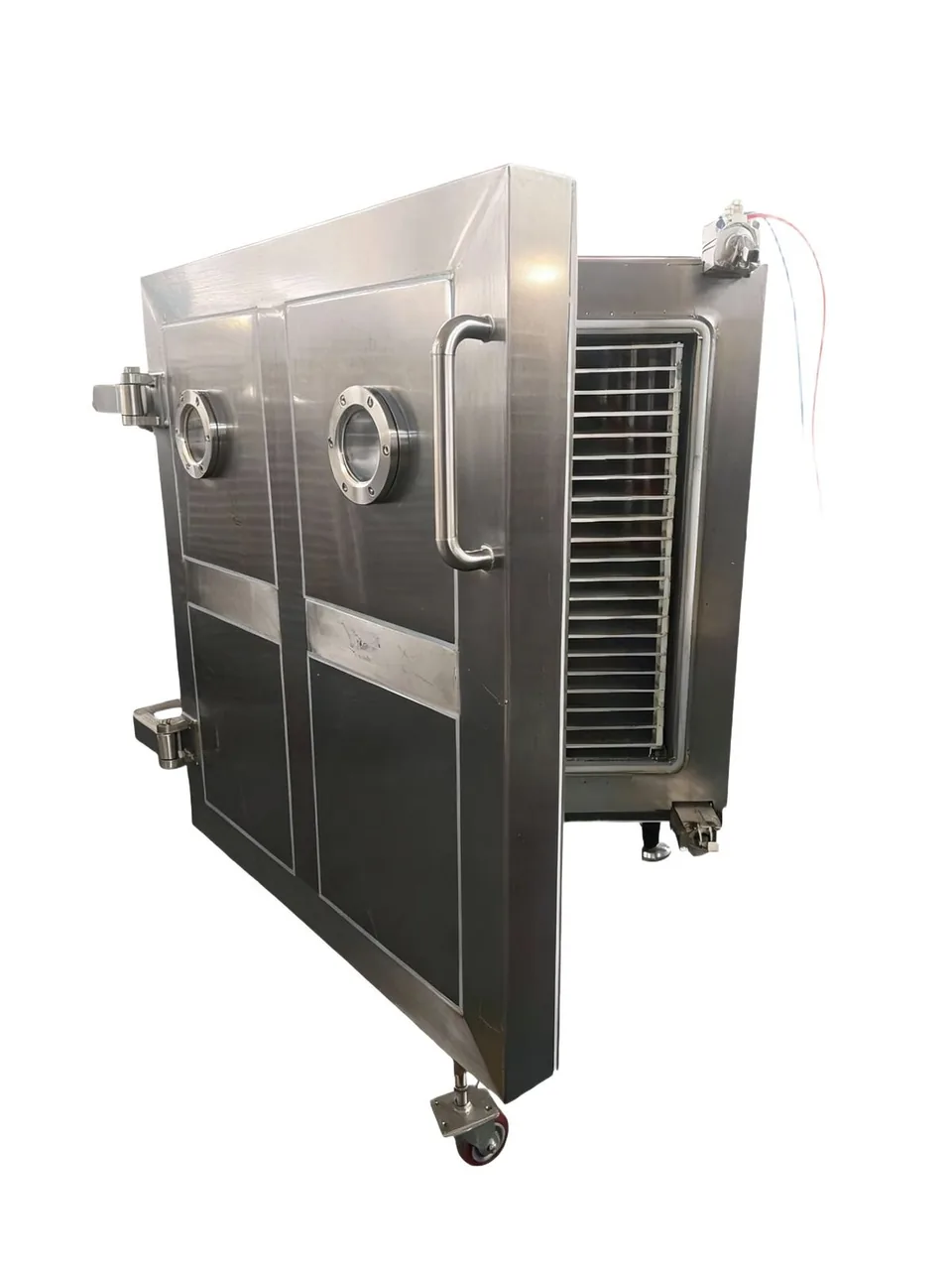
QS freeze dryers pair a Roots booster with a screw backing pump, because no single pump covers the whole range from atmospheric pressure down to deep vacuum efficiently. The two divide the labor:
- The screw pump does the rough work. It pulls the chamber down from atmospheric pressure through the rough-vacuum range — the heavy lifting at the start of every cycle.
- The Roots booster takes over at lower pressures. A Roots pump cannot start against full atmospheric pressure alone; once the backing pump has pulled pressure down, the booster accelerates evacuation and holds the deep, steady vacuum sublimation needs for hours.
- The value is in holding, not just reaching. Holding deep vacuum through an entire primary-drying phase is the real performance test.
- Ultra-quiet by specification. The QS Roots + screw combination is specified as ultra-quiet, which matters where operators work beside the equipment all shift.
How the system behaves across the three drying stages
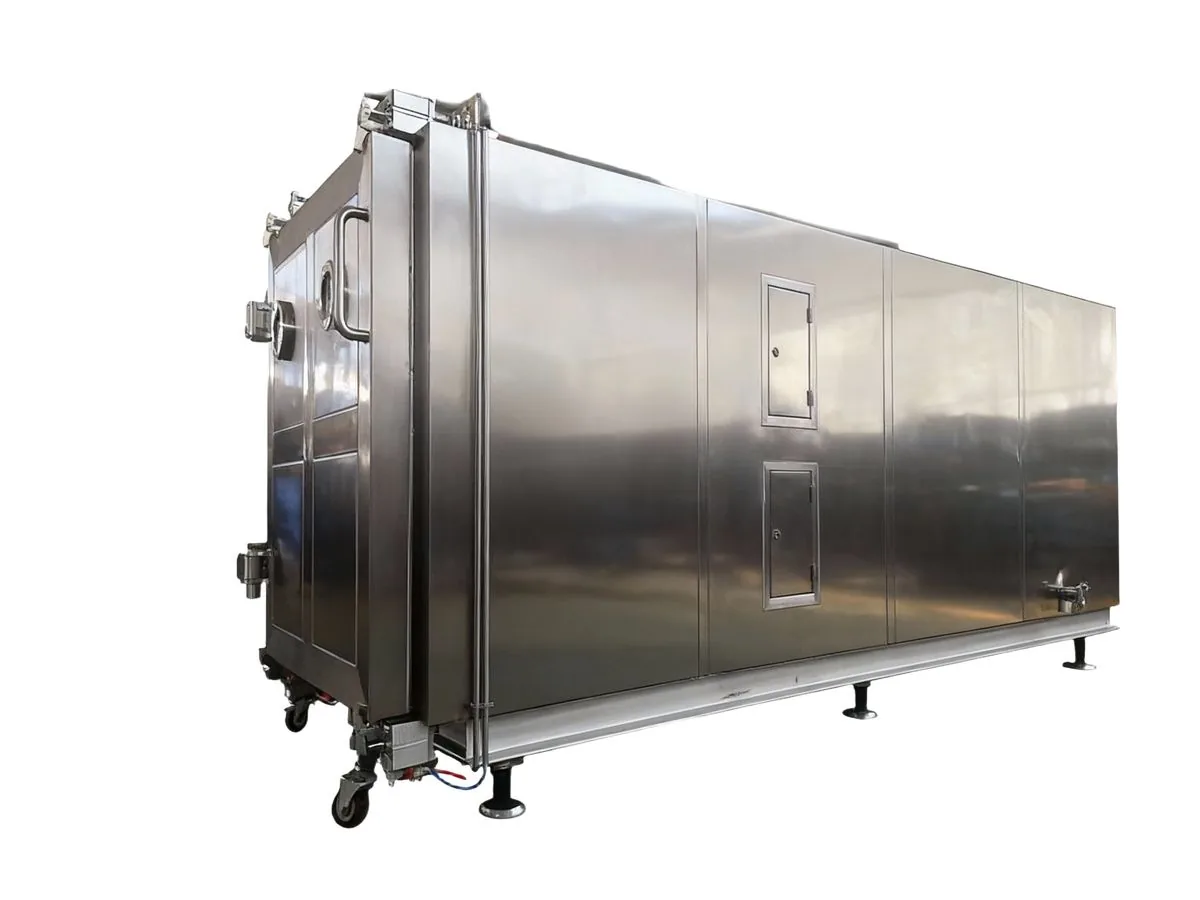
The vacuum system's role changes across pre-freezing, primary drying and secondary drying. The pumps are sequenced against what each stage needs:
- Pre-freezing: preparation. The product freezes on the trays (on QS machines at −60 °C via two-stage refrigeration) while the chamber is near atmospheric pressure. Verify valves, seals and gauges now — a leak found later costs a batch.
- Primary drying: maximum load. Ice sublimates at full rate and vapor load peaks; the pumps clear gases and hold pressure steady. A marginal pump set shows up here first: pressure drifts up, the cycle stretches.
- Secondary drying: holding steady. Most ice is gone; bound moisture leaves slowly. Vacuum must stay deep and stable — this stage decides final moisture and shelf life. A system that cannot hold deep vacuum produces inconsistent batches.
On QS machines the Siemens S7-200 PLC sequences valves and monitors gauges through all three stages.
Cold trap vs vacuum pump: different jobs
The cold trap and the vacuum pump do different jobs: the trap captures water vapor by freezing it out; the pumps maintain vacuum by removing gases. Confusing the two leads to blaming the pumps for trap problems and vice versa.
- The cold trap is a vapor condenser. Held at −60 °C by the two-stage R404A/507 refrigeration system, its coils freeze out sublimated vapor — most of a batch's water ends up on the trap, not in the pump oil.
- The pumps handle what the trap cannot. Air entering through seals, gases released by the product, vapor escaping the trap — the Roots + screw set removes these continuously. Without the pumps, pressure would climb within minutes.
- They protect each other. The trap shields the pumps from water vapor that would contaminate pump oil; the pumps give the trap the deep vacuum in which sublimation happens.
- Defrost between batches. Skipping trap defrost shrinks its capacity for the next batch — another "pump problem" that is really a trap problem.
Rule of thumb: weak vacuum from the start points to the pump set, seals or valves; vacuum that degrades mid-batch points to the cold trap.
Vacuum leaks: what they look like in production
A vacuum leak is any unintended path for air to enter — and it shows up as pressure that will not behave, cycles that stretch, and product that softens. Leaks rarely trigger alarms; they show up in the batch record:
- Pressure rises when it should fall. The gauge climbs back during pump-down, or drifts above setpoint during drying while the pumps run normally.
- Cycles keep getting longer for the same product on the same recipe — operators extend cycles, masking the leak while energy cost climbs.
- Product goes soft. Partial melting from weak vacuum: soft spots, collapsed texture, poor rehydration — "the recipe didn't change but the product did."
Check in order: door seals (worn by every open/close cycle), valve seats, and gauge connections (a classic post-maintenance leak). The isolation test — isolate the pumps and watch whether pressure holds — is the simplest operator check. Fix the mechanical cause before ordering a pump overhaul for a seal problem.
Routine care of the pump set
Vacuum pumps need scheduled, routine attention — not constant tinkering. The pump set is the hardest-working subsystem in the dryer; fit-and-forget is the fastest route to weak vacuum.
- Follow the manufacturer's schedule. Oil changes, filter checks and seal inspections have specified intervals in the manual — use those, do not stretch them because the pumps "sound fine."
- Change pump oil as specified. Oil absorbs moisture and contaminants; degraded oil degrades vacuum directly. The schedule, not the oil's appearance, should trigger the change.
- Inspect seals and connections at every service.
- Listen for change. A new rattle, whine or pitch change is an early warning — log it and investigate before it becomes a failure.
- Log vacuum performance. Record pump-down time and holding pressure per batch. A trend of slightly longer pump-downs is the earliest measurable sign of a pump set drifting out of condition.
Questions to ask your supplier
The vacuum system is where cheap dryers cut corners invisibly. Before you buy, ask:
- What pump configuration is installed? Ask for the pump types by name — QS machines use Roots booster + screw backing pump. A supplier who cannot name them has not engineered the system.
- How is the pump set sequenced and protected? How do booster and backing pump start and shut down, and what protects them if the cold trap ices over?
- What is the noise level? The QS combination is specified ultra-quiet — ask competing suppliers for their pump set's noise specification and how it is measured.
- What maintenance and support come with it? Get the schedule in writing, ask about spare parts availability, and confirm service support in your region.
- Is vacuum performance part of commissioning? The supplier should demonstrate pump-down and holding performance on your installation.
- Commercial terms. QS freeze dryers carry a 1-year warranty with roughly a 3-month lead time — align facility preparation and operator training to the same schedule.
QS vacuum system reference
- Roots booster + screw backing vacuum pumps, specified ultra-quiet
- Cold trap at −60 °C via two-stage R404A/507 refrigeration
- SUS304 square chamber, food-grade silicone seals
- Four-zone heating control ±0.1 °C, max 80 °C
- Siemens S7-200 PLC with CN/EN touchscreen, recipe storage
- QS-FD-20 (~200 kg/batch) · QS-FD-100 (~1 t/batch) · QS-FD-200 (~2 t/batch)
- 1-year warranty, approx. 3-month lead time
Frequently asked questions
Why does a freeze dryer need two types of pumps?
No single pump covers the full pressure range efficiently. The screw backing pump pulls the chamber down from atmospheric pressure, and the Roots booster then speeds evacuation and holds the deep vacuum sublimation needs. On QS machines this Roots + screw combination is specified as ultra-quiet.
What happens if the vacuum is not deep enough?
Ice in the product melts instead of sublimating: collapsed, dense product with poor rehydration, longer and inconsistent cycles, and in bad cases an unsellable batch. Weak vacuum is one of the first things to check when drying quality degrades.
Do vacuum pumps need a lot of maintenance?
They need regular, scheduled attention: follow the manufacturer's maintenance schedule, change pump oil as specified, inspect seals and connections, and note any change in sound or vibration. Logged vacuum performance is the best early warning.
How do I know there is a vacuum leak?
Typical signs are pressure rising when it should be falling, cycles that keep getting longer, soft or melted spots in the product, and a gauge that will not hold with the product valve closed. Check door seals, valve seats and gauge connections first.
Is the pump noise a problem in a food factory?
It can be if the pump set is loud. QS freeze dryers use a Roots + screw combination specified as ultra-quiet. When comparing machines, ask the supplier for the pump set's noise specification and how it is measured.
Sizing a freeze dryer for your product?
Send us your product and target output — we'll size the right QS model. See the range on our freeze dryer page.
Specifications are for reference only and are subject to the final supplied equipment.