The payback formula, in one paragraph
A freeze dryer pays for itself when the margin it earns adds up to what you spent to buy it. That is the whole idea, and it fits in one line: payback in months equals total investment divided by margin per month. Margin per month is margin per batch multiplied by batches per month. Margin per batch is revenue per batch minus cost per batch. If you can fill in those three lines honestly, you have your answer. If you cannot, the missing figures are the problem.
Notice what the formula leaves out. It does not ask how good the machine is in general. It asks how much margin your product earns, batch after batch, in your factory, with your labour and your power tariff. Two buyers with the same dryer can get very different answers. A supplier who quotes a payback figure without asking about your product is guessing — run the maths on your own figures.
Total investment means everything you pay before the first batch sells, not just the machine price on the quotation. Freight, installation, the room it stands in — if you pay for it to get the dryer running, it goes in the top line. Leave a chunk out and payback will look shorter than it is.
The five numbers you need before the maths works
Five figures feed the formula. Collect them in this order.
- Total investment. The machine price on the quotation, plus freight, installation, and any room preparation. Ask the supplier what the quotation covers and what it leaves out.
- Revenue per batch. How much dried product one batch gives you, multiplied by the price you can actually sell it for. The output comes from a trial batch of your own product. The price comes from your buyers, not from a brochure.
- Cost per batch. Raw material, power, labour, packaging, and anything else one batch consumes. The next section breaks this down bucket by bucket.
- Batches per month. How many batches you can really run, after loading, unloading, cleaning, and changeovers. Count the hours your team actually has, and the hours each batch takes, including the time the door is open.
- Margin per batch. Revenue minus cost, per batch. The number everything else hangs on: margin per batch times batches per month gives margin per month, and total investment divided by that gives payback in months.
Where do the figures come from? Your quotation, your power bill, your raw-material invoices, your buyers, and a trial batch. If a figure is missing, leave it blank and go and get it, rather than borrowing a number from a sales sheet. And the trial batch is the cheapest honest number here: one tray of your own product shows the output per batch, the colour, the shape, and how much breaks.
Where the money goes
Cost per batch has four buckets. Miss one and your margin per batch comes out too high, which makes payback look shorter than it is. Walk through them one at a time and write a figure beside each, even if the figure is rough at first.
Power
Power is the running cost buyers ask about first, and the one they most often get wrong. Rated power is on the specification sheet — 35kW on the QS-FD-20, 135kW on the QS-FD-100 and the QS-FD-200 — but rated power is not the power a batch uses. Ask the supplier for the power draw across a full cycle, then multiply by your own tariff from your power bill.
Labour
Somebody loads the trays, unloads them, packs the product, and cleans the chamber, and that somebody is paid. Count the hours per batch, including loading and cleaning, and multiply by your own labour rate. Hand loading takes longer than buyers expect, and it never shows up on a specification sheet.
Raw material
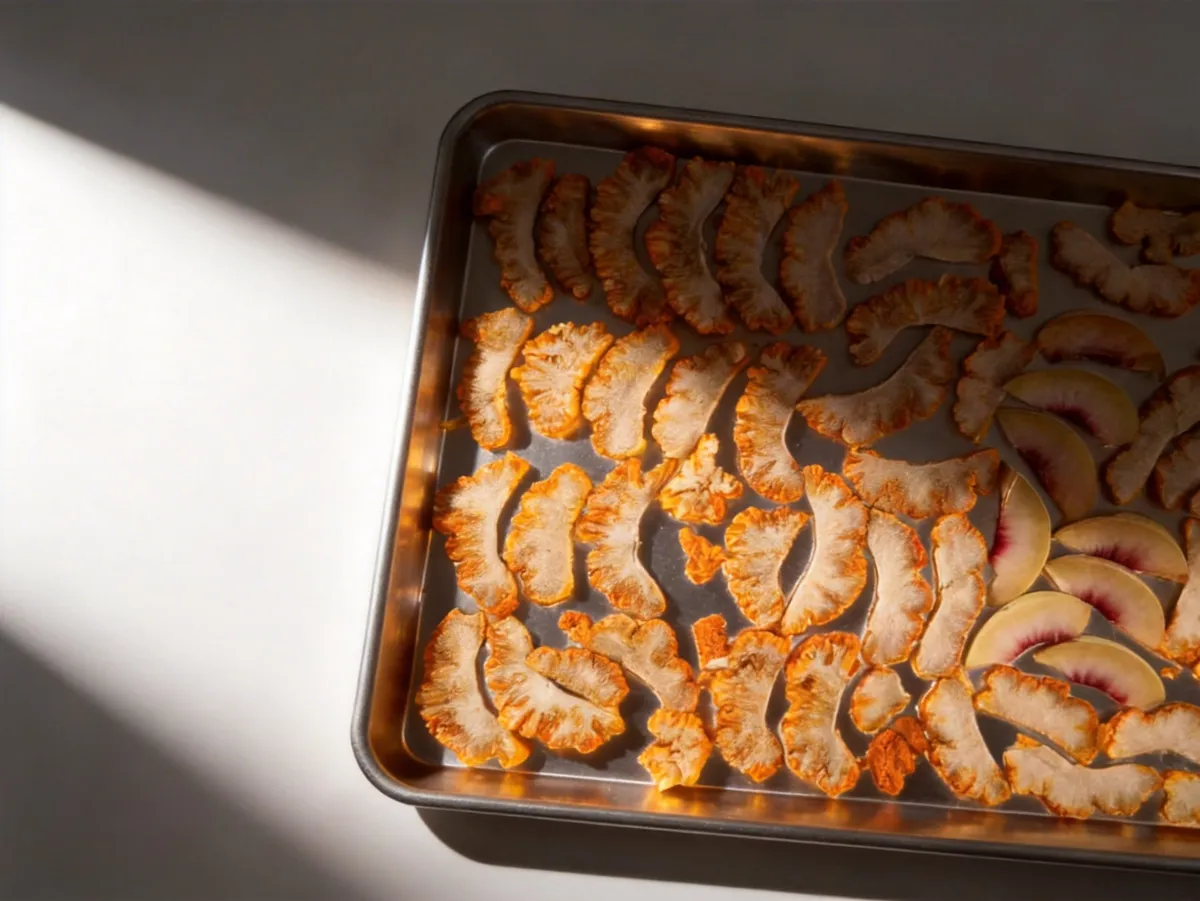
Raw material is usually the largest cost inside a batch. You need the price of the fresh product from your own supplier invoices, and how much fresh product goes into one batch. Weigh what goes in and weigh what comes out of a trial batch — that pair of weights is the honest basis for your revenue per batch.
Packaging
Bags, pouches, labels, cartons. Packaging is a small cost per pack, so it is easy to wave away — and it is charged on every pack you sell. Count the cost per pack, multiply by the packs per batch, and put the result in the bucket. Freeze-dried product needs a sealed pouch that keeps moisture out, so price the pouch you actually plan to use.
What stretches or shortens payback
Product value. A high-value product earns margin faster than a low-value one on the same machine, because the margin per batch is bigger while the cost per batch stays close to the same. That is why two buyers with identical dryers can reach payback at very different speeds. The machine does not decide this. Your product and your buyers do.
Tray loading. Trays loaded evenly and well filled earn more per batch than trays run half empty. Tray area decides how much you can load: the QS-FD-20 offers 20.16 sqm across 84 trays, the QS-FD-100 offers 103.68 sqm across 432 trays, and the QS-FD-200 offers 207.36 sqm across 864 trays. Bigger tray area only helps if you have the product to fill it and the buyers to take it.
Changeovers. Every change of product costs time: unloading, cleaning, loading the next product. Fewer changeovers mean more batches per month, and more batches mean more margin per month. Long runs of one product are kinder to payback than many short runs.
Lead time. The time between signing and the first sale earns nothing. Lead time is approx. 3 months, and that gap belongs in your plan. Put the order date, the delivery date, and the first selling date on one timeline before you sign, and check that the timeline still makes sense.
Mistakes that make the maths lie
Most payback figures that turn out wrong were calculated from the wrong inputs.
- Sizing from a catalogue figure alone. Batch capacity on a specification sheet — about 200 kg per batch on the QS-FD-20, about 1 tonne on the QS-FD-100, about 2 tonnes on the QS-FD-200 — describes the machine, not your product. Run a trial batch and size from that.
- Forgetting packaging and labour. Both are charged on every batch, and neither appears on the machine quotation. Add them in, or your margin per batch will be too high.
- Ignoring the lead time in planning. Approx. 3 months pass between order and delivery, and the payback clock starts when batches start selling, not when you sign.
- Using someone else's selling price. Revenue per batch needs the price your buyers will actually pay, for your product, in your market.
- Believing a payback figure quoted without questions. If a supplier gives you a payback period before asking what you dry, what you pay for it, and who buys it, they are guessing.
Which dryer fits your batch size
Size follows the trial batch, not the other way round. A small producer starting with one product can begin with the QS-FD-20. A factory supplying retail chains will need the larger tray area of the QS-FD-100 or QS-FD-200. Either way, the right size is the one your trial batch points to.
QS freeze dryer models
| Model | Tray area | Trays | Power | Dimensions (mm) | Batch capacity |
|---|---|---|---|---|---|
| QS-FD-20 | 20.16 sqm | 84 | 35kW | 4500x1300x1400 | ~200kg/batch |
| QS-FD-100 | 103.68 sqm | 432 | 135kW | 7000x4000x2300 | ~1t/batch |
| QS-FD-200 | 207.36 sqm | 864 | 135kW | 12000x4000x2300 | ~2t/batch |
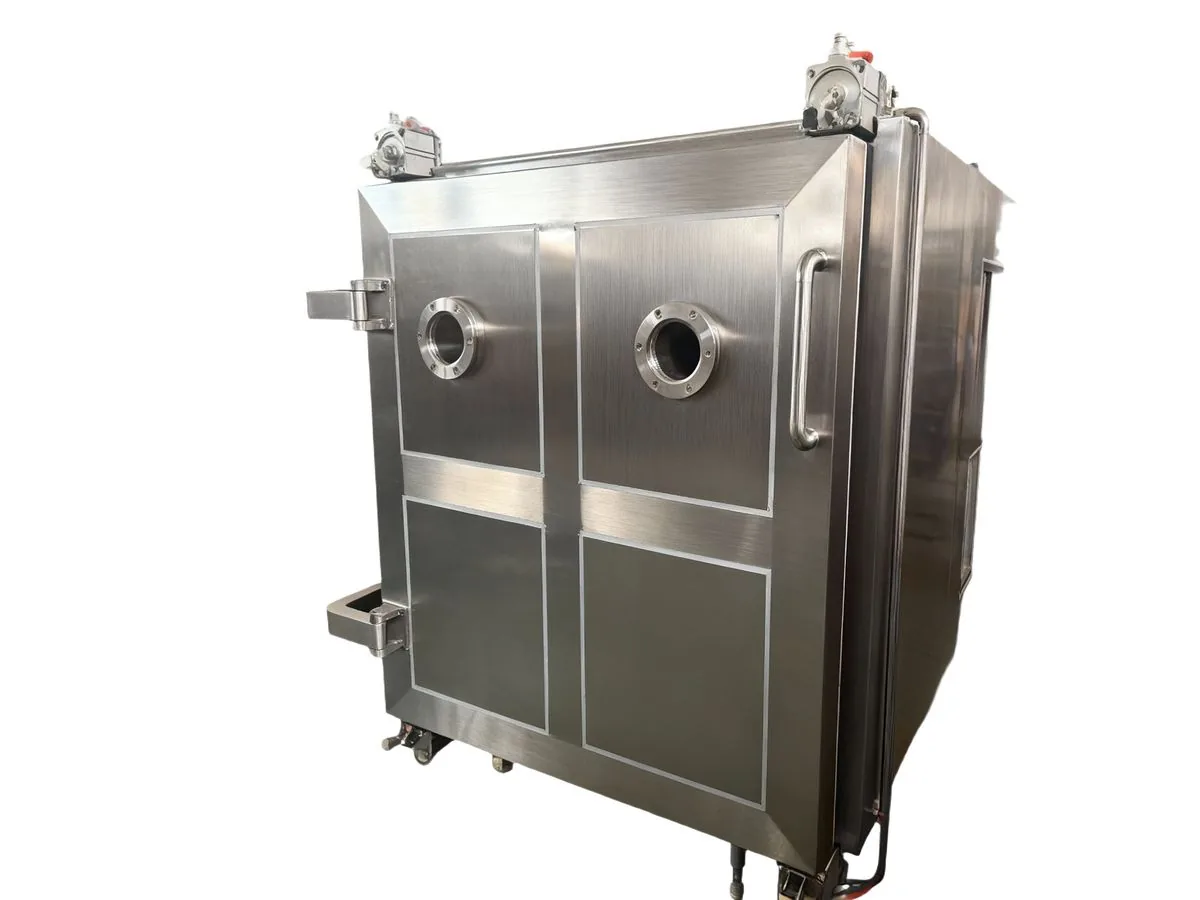
- Chamber: SUS304 stainless steel, square chamber.
- Cold trap: -60°C, R404A/507 refrigerant.
- Heating: ±0.1°C control, max 80°C.
- Control: Siemens S7-200 PLC with touchscreen.
- Vacuum pumps: Roots + screw vacuum pumps.
- Seals: food-grade silicone seals.
- Warranty: 1-year warranty; lead time approx. 3 months.
Before you sign anything, ask the supplier for two numbers in writing: the rated power of the machine, and its tray area. Then sit down with your own figures — your raw-material invoice, your power bill, your buyer price — and run the batch maths yourself. If the answer still looks good with honest numbers in it, you have a dryer worth buying.
Frequently asked questions
How long does it take for a freeze dryer to pay for itself?
There is no standard answer: it depends on your product, your selling price, and how many batches you run. Work it out with the formula in this guide — total investment divided by margin per month — using your own figures.
What costs do buyers usually forget?
Packaging and labour, most often. Bags, pouches and labels cost money on every pack, and loading, unloading and cleaning take paid hours on every batch. Freight and installation are easy to leave out too, so check what the quotation covers.
Does a bigger dryer always pay back faster?
No. A bigger dryer earns more per batch only if you can fill its trays and sell what comes out. A half-empty large dryer earns less margin per batch than a well-filled small one, so size the machine from a trial batch of your own product.
What should I ask the supplier before I sign?
Ask for the rated power and the tray area in writing, and ask what the quotation covers — freight, installation, and any room preparation. Then run the batch maths with your own figures before you commit.
Can I work out ROI before I have a buyer for the dried product?
You can work out the cost side, but not the revenue side. Revenue per batch needs a real selling price, so line up at least one buyer and a price you can rely on first.
Talk to us about your freeze drying line
Tell us your product and target output — we will help you size the dryer. Explore the range on our freeze dryer page.
Specifications are for reference only and are subject to the final supplied equipment.