What the vacuum system does
A freeze dryer works by freezing the product and then drying it under vacuum. Once the product is frozen solid, the pressure inside the chamber is lowered so the ice inside it turns directly into vapour, without melting first. The vacuum pump system carries that vapour away from the chamber.
On a QS freeze dryer, the vacuum system uses two pumps working together: a Roots pump and a screw pump. One pulls the chamber down from normal air pressure, and the other holds it at the low pressure needed while drying goes on.
The pump system works alongside the cold trap, which catches most of the water vapour before it reaches the pumps. The door seals, the pipework, the cold trap and the pump oil all shape how well the system holds vacuum.
Before every run: quick checks that take minutes
A short check before loading the chamber costs only a few minutes and catches most problems that spoil a batch.
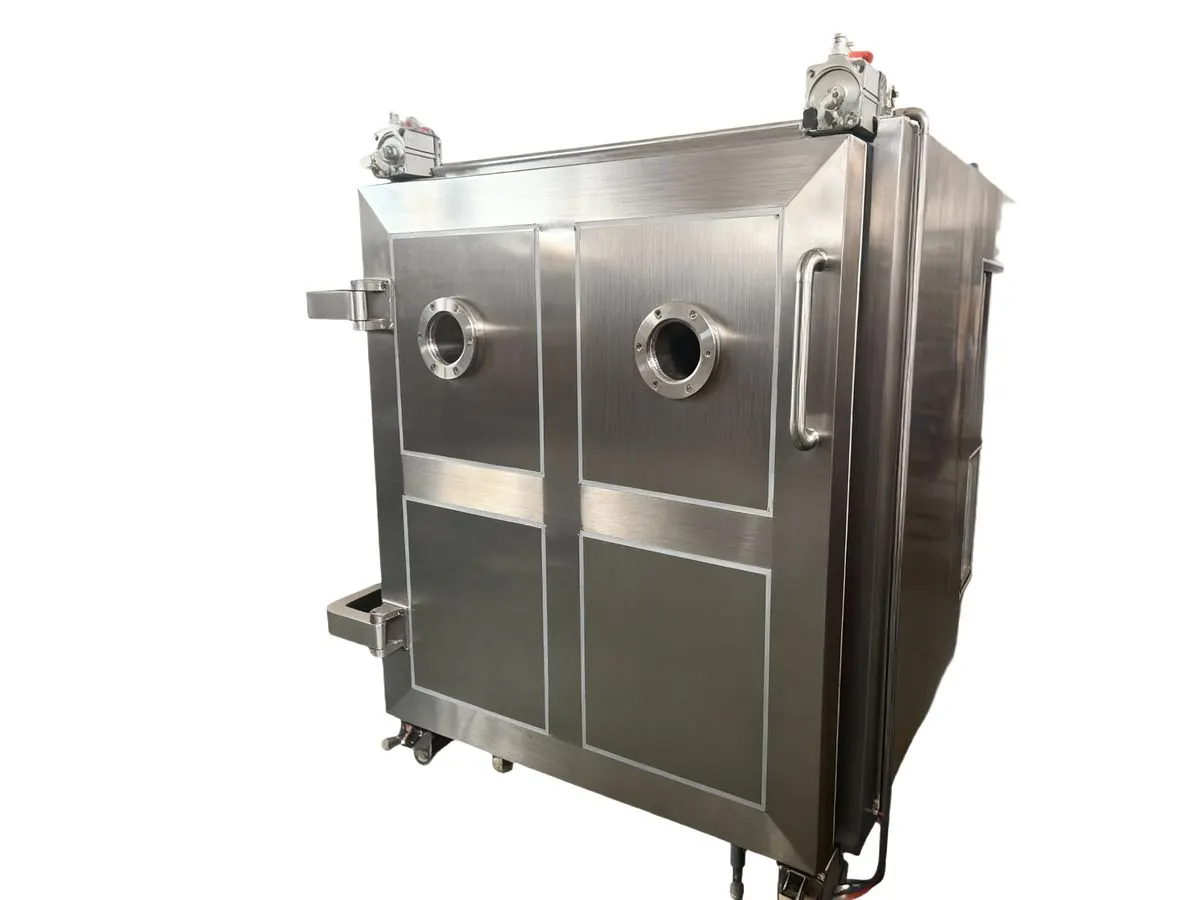
Look at the chamber door and seals
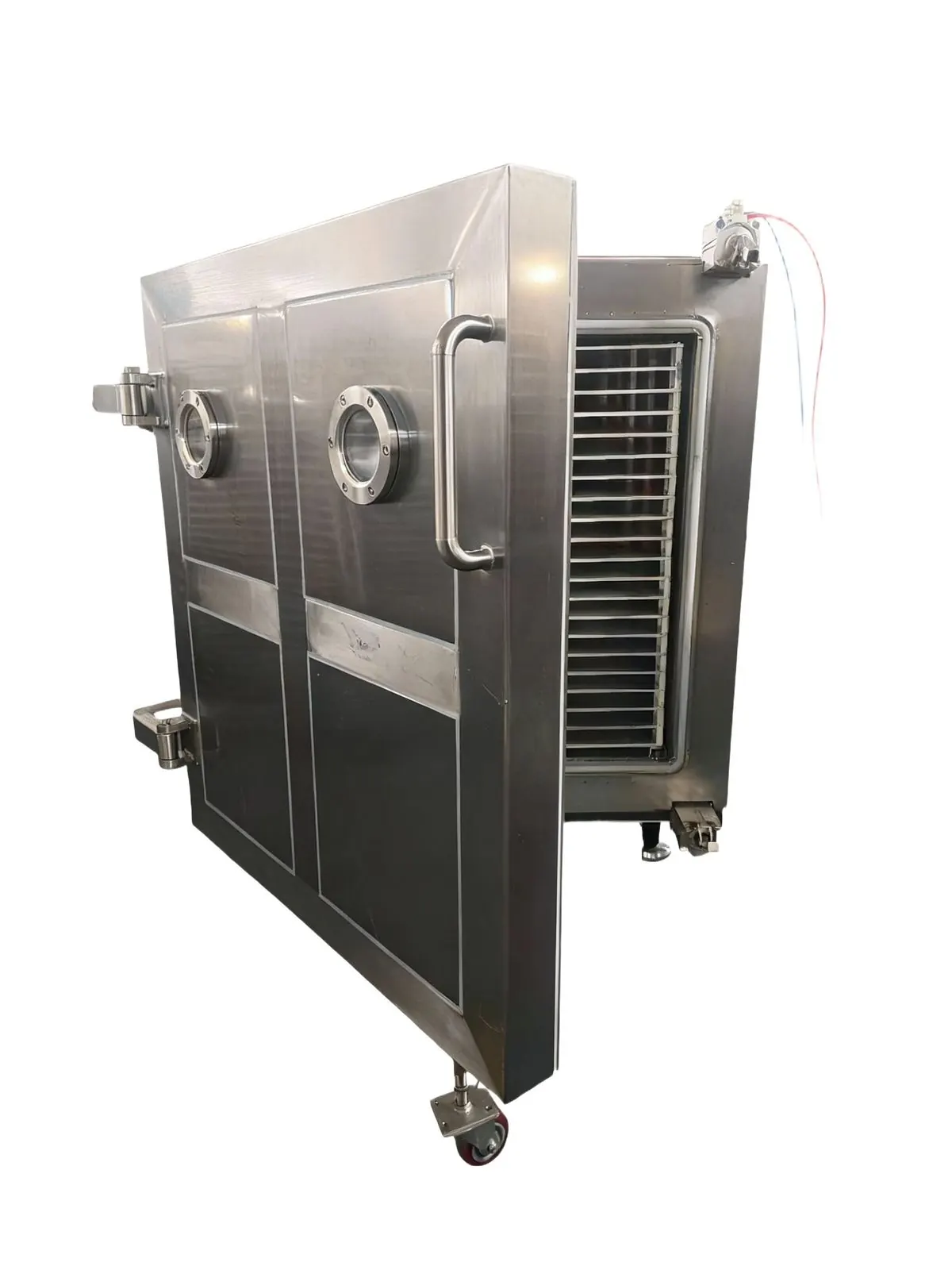
Look at the sealing surface and the food-grade silicone seal around the door. It should sit evenly in its groove, with no cracks or product stuck to it. Wipe it clean with a soft, dry cloth: a crumb in the seal can let air leak in.
Check the trays and the chamber
Look inside for spilled product or liquid left from the last batch, which can be drawn toward the vacuum line or give off vapour that slows the pump-down. Load trays evenly, with space between pieces, and confirm no tray stops the door closing fully.
Check the pump oil sight glass
Look at the oil sight glass and note the level and colour. The level should sit where the manual says it should, and the oil should look clear rather than milky or dark. If the level is low or the oil looks cloudy, do not start the run.
A daily routine: listen, look and feel
Most vacuum pump problems announce themselves early, and the operator next to the machine is the first to notice.
Listen for changes in sound
Every pump has a normal working sound, which the daily operator learns quickly. A new rattling, grinding or knocking sound, or a pump that suddenly runs louder than usual, is a reason to stop and look. Note what you heard and when it started.
Look for oil, water and dust
Walk around the pump and look at the floor and the pump body. A fresh oil stain, oil mist, or water dripping from a connection all deserve attention. Dust builds up on cooling fins and can hold heat in, so keep the area clean and clear.
Feel for heat and vibration
With the machine running, sense the heat near the pump body and feel for vibration through the floor or frame. A pump that vibrates more than usual, or feels much hotter than last week, is telling you something has changed. Never touch moving parts or open a guard while the machine is running.
Keep the system clean
After every batch, remove spilled product and wipe the trays and chamber floor. Clean the cold trap as the manual directs, so trapped water and frost are cleared before the next run: a full cold trap cannot catch vapour properly. Never hose the pumps down or spray water near electrical parts.
Oil care: the simplest job with the biggest payoff
Pump oil does more than lubricate: it seals, cools and carries away the small amounts of water vapour and fine particles that reach the pump. When the oil is worn, contaminated or low, the pump has to work harder.
Check the oil level and appearance before every run, using the sight glass. Milky oil has taken up water, dark or burnt-smelling oil has been overheated or used too long, and oil with visible particles has picked up contamination. Any of these signs means the oil needs attention, as set out in the manual.
Oil-change timing is not a number to guess: it depends on the pump model, the product and the hours run, so follow the equipment manual and record every change with the date. If oil needs changing far more often than the manual suggests, ask your supplier why. Only use the oil type the manual specifies.
Finding leaks before they cost you a batch
A leak lets air into the chamber while the pump is trying to pull air out. The pump runs longer, the chamber may never reach the pressure it should, and the batch dries slowly or unevenly.
Where leaks usually appear
The most common leak points are the ones that move or are opened often: the chamber door seal, the drain valve and the vacuum line connections. Seals harden with age, valves wear, and a hand-tightened connection can work loose. Check these points first whenever a run behaves differently from usual.
How to narrow a leak down
Start with what you can see. With the machine off, run a finger along the door seal and look for cracks or gaps. Close the door and check that it sits evenly, look at every visible connection for looseness, and check that valves are fully closed. If the problem continues, follow the leak-checking steps in the manual. Do not use a flame or any improvised test near the machine.
A cracked or flattened seal needs replacing, not patching, and a valve that no longer closes fully needs repair. If a leak keeps coming back, stop and call your supplier: running the pumps hard against a leak wears them out faster.
Keeping a maintenance log
A maintenance log turns scattered observations into a record that shows patterns. Without it, a pump that slowly gets worse looks like a sudden failure; with it, the same decline shows up weeks earlier, while there is still time to act.
Keep the log simple enough that it is actually filled in: a paper sheet on the machine or a shared spreadsheet. Record the date, the oil level and colour, any unusual sound or vibration, any leak found and fixed, and any part changed.
The log also helps when something goes wrong: it lets you tell your supplier exactly when a sound started and what has already been checked. Review it together at least once a month to spot trends before they become breakdowns.
Warning signs and when to call your supplier
Some signs mean the machine needs attention soon, and others mean it should be stopped now.
- Pump-down takes much longer than usual, or the chamber never reaches the pressure the manual describes. Check the door seal, valves and connections first.
- New or louder noise, grinding, rattling or knocking from either pump. Stop the machine and do not restart it until the cause is known.
- Oil that turns milky, dark or gritty soon after a change, or oil that keeps dropping in level. Ask your supplier what is causing it.
- Strong vibration or unusual heat from the pump. Stop the machine and confirm with your supplier.
Call your supplier when a problem repeats, when a repair needs parts or tools you do not have, or when the manual points to a job marked for a technician. Do not open a pump or adjust settings the manual does not cover: a wrong repair can cause more damage, and it can affect the 1-year warranty.
QS freeze dryer models
| Model | Drying area | Trays | Power | Dimensions | Batch capacity |
|---|---|---|---|---|---|
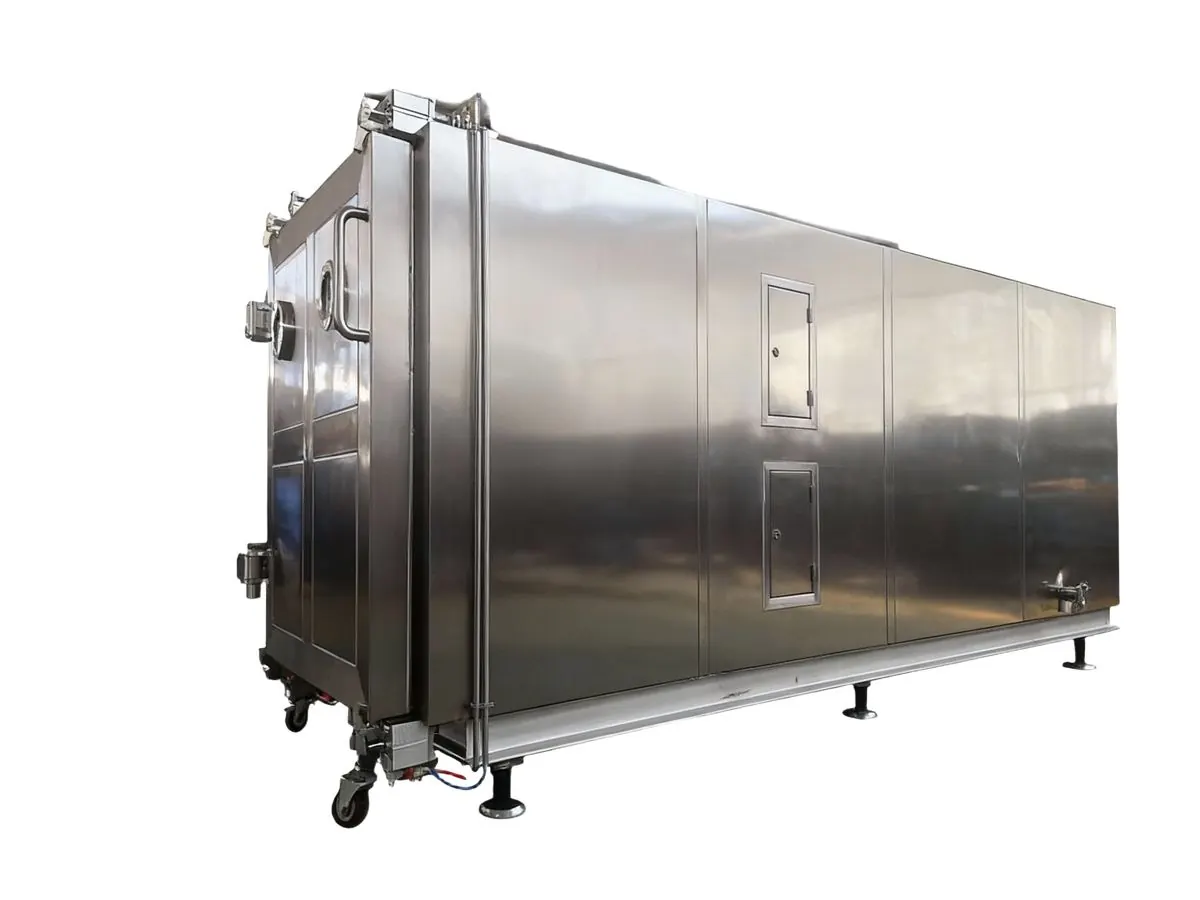
| QS-FD-20 | 20.16㎡ | 84 | 35kW | 4500x1300x1400mm | ~200kg/batch |
| QS-FD-100 | 103.68㎡ | 432 | 135kW | 7000x4000x2300mm | ~1t/batch |
| QS-FD-200 | 207.36㎡ | 864 | 135kW | 12000x4000x2300mm | ~2t/batch |
- Trays: 400x600mm each.
- Chamber: SUS304 stainless steel, square chamber design.
- Freezing: down to -60°C, two-stage refrigeration with R404A/507.
- Heating: four-zone heating, accurate to ±0.1°C, maximum 80°C.
- Control: Siemens S7-200 PLC, Chinese/English touchscreen.
- Vacuum: Roots pump plus screw pump.
- Sealing: food-grade silicone seals on the front door.
Common mistakes to avoid
Most vacuum pump trouble comes from the same few oversights.
- Skipping the pre-run check, so a low oil level or a dirty seal is only found after the batch is spoiled.
- Running with dirty or low oil because the sight glass was never looked at.
- Leaving the cold trap full between batches, so vapour reaches the pumps.
- Patching a cracked door seal instead of replacing it.
- Guessing an oil-change interval instead of following the equipment manual.
- Keeping no maintenance log, so a slow decline looks like a sudden failure.
Frequently asked questions
How often should I check the vacuum pump oil?
Check the oil level and appearance before every run, using the sight glass. For how often the oil itself should be changed, follow the equipment manual, since the interval depends on the pump model and the hours run.
What does milky pump oil mean?
Milky oil has taken up water, usually vapour that reached the pump instead of being caught by the cold trap. Do not start a run with milky oil: follow the manual for changing it, and confirm with your supplier if the problem keeps coming back.
Why is my freeze dryer taking longer to reach vacuum?
The most common causes are a leak at the door seal, a valve left open, a loose vacuum line connection, or a cold trap that has not been cleared. Check those points first, then the oil. If the problem continues, follow the leak-checking steps in the manual and call your supplier.
Can I repair the vacuum pump myself?
Routine care such as checking the oil and replacing a door seal can be done by a trained operator following the manual. Internal pump repairs and any adjustment the manual does not cover should be left to the supplier.
Talk to us about your freeze drying line
Tell us your product and target output. Explore the range on our freeze dryer page.
Specifications are for reference only and are subject to the final supplied equipment.