What PLC automation means on a freeze dryer
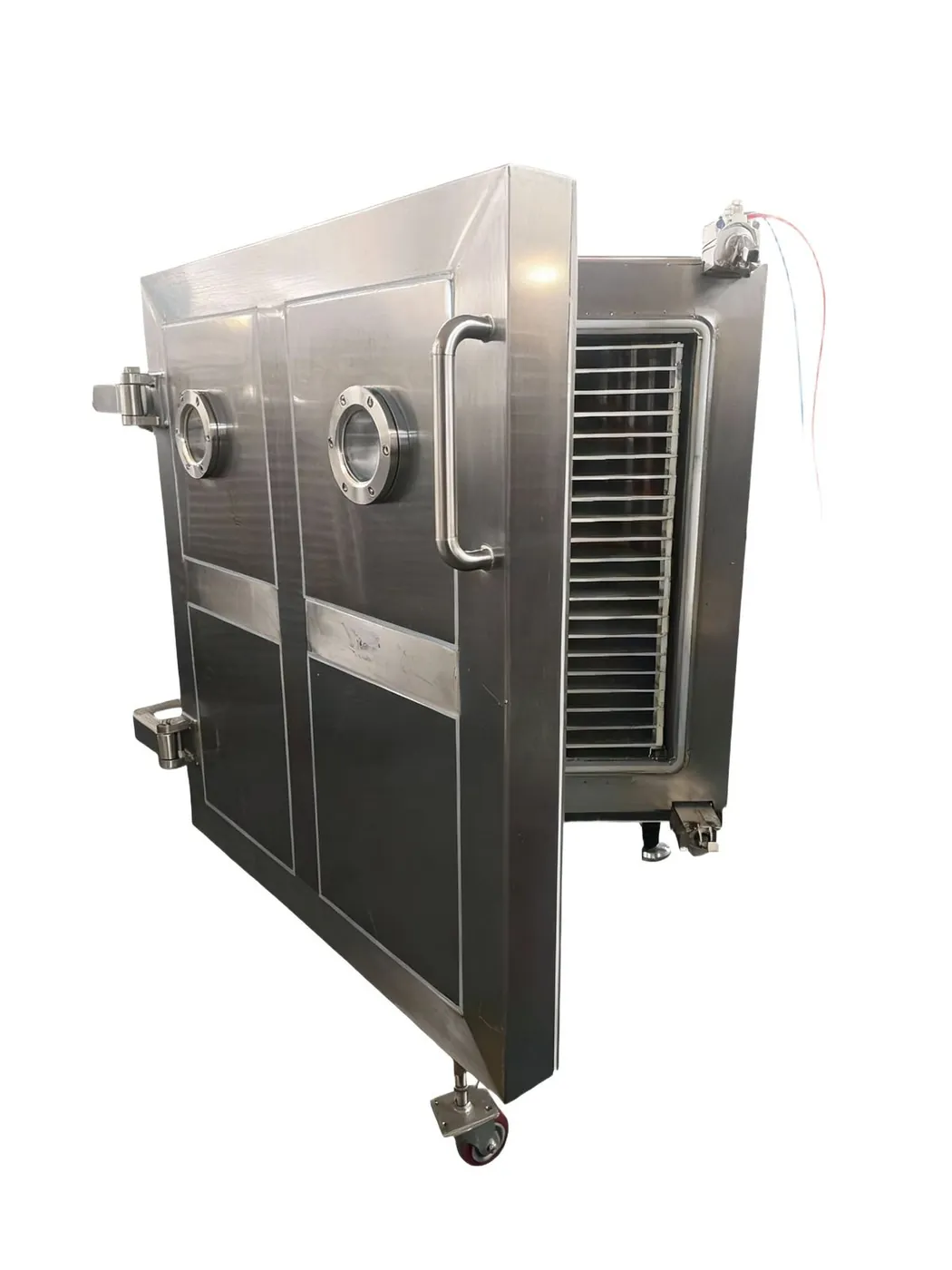
A freeze drying cycle is a three-act play: pre-freezing, primary drying (sublimation) and secondary drying. Each act demands different temperatures, different vacuum levels and different timing — and the transition between acts is where quality is won or lost. A PLC (programmable logic controller) is the stage manager: it executes the programmed sequence exactly, every time.
On the QS-FD series, the controller is a Siemens S7-200 PLC, operated through a bilingual Chinese/English touchscreen. In practical terms it does four jobs:
- Runs the refrigeration — the two-stage cascade to −60 °C — on schedule through pre-freeze and primary drying.
- Controls shelf heating across four independent zones, each held to ±0.1 °C, up to 80 °C, following the programmed ramp for the product.
- Sequences the vacuum set — Roots pump plus screw pump — and holds the target pressure through each phase.
- Stores named recipes — complete cycle programs for each product — and logs alarms and deviations for traceability.
The operator's job shifts from driving the machine to supervising it: load the trays, select the recipe, confirm the run. Everything in between is the controller's responsibility.
Why batch consistency is the real payoff
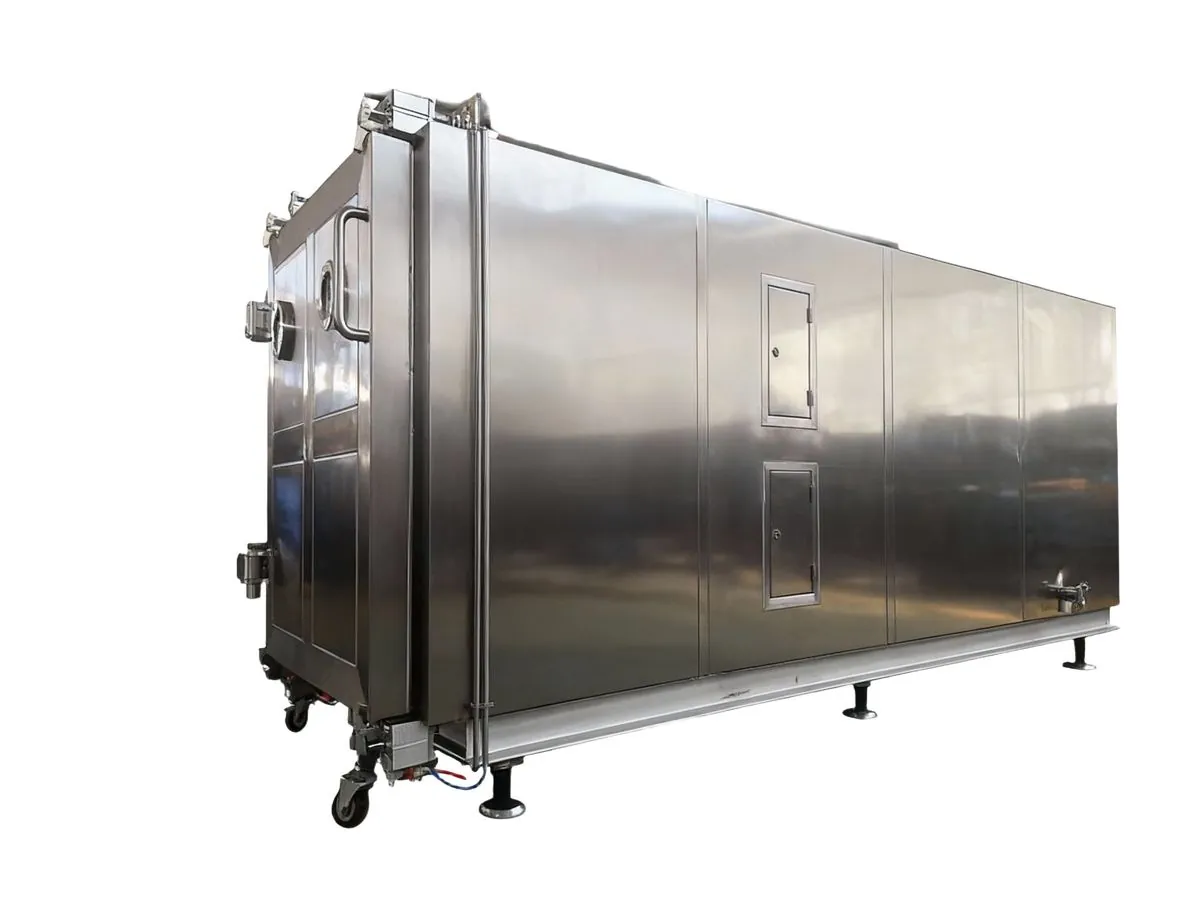
Here is the scenario PLC automation eliminates: an experienced operator dials in a great cycle on Monday; the Tuesday shift runs it slightly differently; the night shift runs it a third way. Each batch is "fine," but a customer buying freeze dried strawberries for a national brand notices that bag A rehydrates differently from bag B. That variance is what loses contracts.
With stored recipes, the cycle is a data file, not a habit. Batch 100 reproduces batch 1 because the machine never improvises: same freezing curve, same vacuum ramp, same per-zone heating profile. Three downstream benefits follow:
- Quality claims become defensible. Residual moisture, color and rehydration stay within the same band batch after batch — which is what export buyers and supermarket private labels audit.
- Troubleshooting gets scientific. When a batch deviates, the alarm log shows exactly where — a temperature excursion in zone 3, a vacuum dip at hour 14 — instead of a debate about who touched what.
- Staff turnover stops being a crisis. The process knowledge lives in the recipe library, not in one veteran's head. New operators run validated programs from day one.
Note the difference from a timer-based "semi-automatic" panel: timers repeat duration, a PLC repeats conditions. Holding −60 °C and the exact pressure curve is not something a timer can do.
What to look for in the control system
Not all "PLC controlled" claims are equal. When comparing machines, check these five items — they are the difference between automation on the brochure and automation on the floor:
The control-system checklist
- PLC brand and model, named. "PLC controlled" without a named unit is a red flag. The QS-FD series names its controller: Siemens S7-200. Ask any supplier to do the same — brand-name PLCs mean spare parts and service are available worldwide.
- Independently controlled heating zones, with accuracy. Four zones at ±0.1 °C is the QS-FD configuration; the key questions are how many zones and how tight the control. In a 432- or 864-tray chamber, unzoned heating means edge and center trays will consistently differ.
- Recipe storage capacity. How many product programs can the system store, and can you name, edit and back them up? A manufacturer running fruits, pet treats and yogurt bites needs a real recipe library.
- Interface language. Your operators must read every screen fluently. The QS-FD touchscreen runs Chinese/English; confirm your language is available before the machine ships, not after.
- Alarms and data logging. Does the system log temperature and vacuum curves, flag deviations, and export the data? For export customers, that log is your evidence of process control.
Specifications are for reference only and are subject to the final supplied equipment.
One more thing to verify: whether the control system also covers the utilities — cooling water or ventilation interlocks, vacuum pump staging, power-failure behavior. A well-designed PLC program handles the abnormal cases (a pump trip, a power blip) as carefully as the normal ones.
Who benefits most
Every buyer benefits from automation, but three buyer types need it:
- Contract manufacturers. Your customers audit your process. Stored recipes and alarm logs are the evidence that batch 100 matches the approved sample — automation is a sales tool as much as a production tool.
- Exporters. Product that travels to another continent must survive the journey with its quality story intact. Repeatable cycles mean the container you ship in March matches the container from January.
- Multi-product producers. Switching between strawberries, pet treats and yogurt bites is a recipe selection on the touchscreen, not a half-day of re-tuning. The broader your product range, the more automation pays.
For a single-product, owner-operated line, a simpler control system can suffice — but even there, recipe storage protects you from the day your one experienced operator is unavailable.
How to evaluate the controls during acceptance testing
Do not take the control system on faith. During factory acceptance testing, ask the supplier to demonstrate:
- Creating a new recipe from scratch on the touchscreen — and switching languages.
- A full alarm test: trigger a temperature deviation, a vacuum leak and a sensor fault, and confirm the system alarms, identifies the cause and (where designed) takes safe action.
- Zone uniformity evidence: run the chamber empty at a set shelf temperature and show all four zones holding within ±0.1 °C.
- Export of the cycle data log — confirm you can get the curves out of the machine, not just view them on screen.
If the supplier hesitates to run these demonstrations, treat that hesitation as information about the control system itself.
Frequently asked questions
What does a PLC do in an industrial freeze dryer?
The PLC is the machine's central controller: it runs the refrigeration, shelf heating, and vacuum pump set through the full cycle program, holds each heating zone at its set temperature, and sequences the phases — pre-freeze, primary drying, secondary drying — without manual intervention. On the QS-FD series this is a Siemens S7-200 PLC, operated through a Chinese/English touchscreen that stores named recipes for different products.
Why does freeze drying need four independently controlled heating zones?
A chamber that holds 84, 432 or 864 trays does not heat perfectly evenly on its own: shelves near the door or the walls see slightly different conditions. Four independent zones, each held to plus or minus 0.1 C up to 80 C, let the controller compensate zone by zone so every tray finishes the cycle at the same residual moisture. Without zoned control, edge trays and center trays would consistently differ in quality.
What is a freeze dryer recipe, and why does it matter?
A recipe is the stored program for one product: freezing temperature and time, vacuum level, heating ramp per zone, and drying phase durations. Storing recipes in the PLC means the exact same cycle runs for batch 1 and batch 100, with no reliance on an operator's memory or handwritten notes. For contract manufacturers and exporters, recipe storage is the technical foundation of batch-to-batch repeatability.
How is PLC automation different from manual control?
Manual or semi-automatic control depends on the operator watching gauges and switching stages by hand — which works until the shift changes, the operator leaves, or a night cycle runs unattended. A PLC runs the same validated program every time, logs alarms and deviations, and prevents the most common human errors: wrong setpoints, skipped phases, and inconsistent vacuum. The result is not just convenience; it is a different consistency class.
What should I check on the control system before buying a freeze dryer?
Verify the PLC brand and model (not just 'PLC controlled'), the number of independently controlled heating zones and their accuracy, how many recipes the system stores, whether the interface is available in your operators' language (the QS-FD touchscreen runs Chinese/English), and whether the system logs alarms and cycle data for traceability. Ask the supplier to demonstrate recipe creation and a full alarm test during factory acceptance.
See the control system in action
Tell us your product range — we'll show you how the QS-FD recipe library and zoned control handle your specific products. See the range on our freeze dryer page.
Specifications are for reference only and are subject to the final supplied equipment.