Which mushrooms suit freeze drying
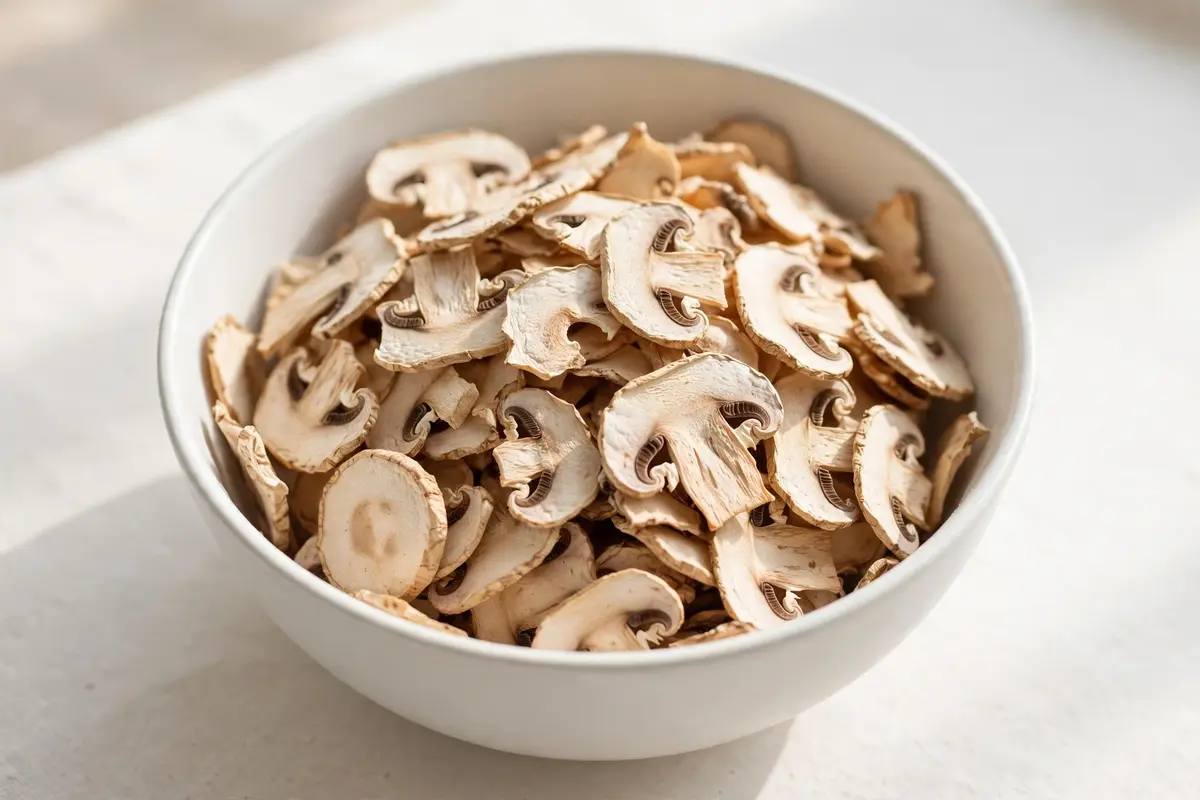
Mushrooms are a natural fit for freeze drying. They hold a lot of water, yet their structure is firm enough to keep its shape once that water is gone. A freeze dried slice still looks like a mushroom, and soaked in water it softens back into something close to fresh. That mix of light weight and long storage is why dried mushrooms sell well for soups, sauces and ready meals.
Firm, fleshy mushrooms with a strong flavour give the best results: shiitake, oyster, porcini, king oyster and button mushrooms are the common choices. Thin, delicate varieties can crumble into flakes, and very wet ones take longer to dry. Start with one variety you can source reliably, run a small test batch, and judge it by your buyer's standards: shape, colour, flavour after rehydrating, and how the pieces survive packing.
Cleaning, slicing and pre-treatment
Good drying starts before the trays go into the dryer. Mushrooms often carry soil and grit, and anything left on the surface stays on the dried slice. Brush off loose dirt first. A quick rinse is usually enough: do not soak them, because mushrooms absorb water fast and extra water means a longer drying cycle. Rinse briefly, drain, and trim away tough stem ends and damaged parts.
Slicing for even drying
Slice to an even thickness. Even slices dry at the same rate; mixed thick and thin pieces mean the thin ones finish early while the thick ones stay damp inside. Thinner slices dry and rehydrate faster, while thicker slices look more substantial in a pack. Whatever you choose, keep it consistent within a batch, and verify the thickness with your own product before scaling up.
To blanch or not to blanch
Some producers blanch sliced mushrooms briefly to slow colour change, while others skip it to keep the flavour as close to fresh as possible. Both approaches are used, and neither suits every product. Try both with a small batch, rehydrate the results, and compare colour, texture and flavour. Confirm with your supplier which approach fits the product your buyer expects.
Tray loading: single layer and density
How you load the trays matters as much as how you slice. Freeze drying removes water by sublimation: ice turns directly into vapour under vacuum, and that vapour must escape from every piece. If slices are piled up, the pieces in the middle stay covered, the vapour cannot escape, and drying slows down.
Spread the slices in a single layer with small gaps between them, and do not let them overlap. A tray that looks half empty is often loaded correctly. An overloaded tray dries unevenly; a lightly loaded one dries faster and more evenly but uses more energy per kilogram of finished product. Start light, check the result, and increase the loading step by step. The trays on a QS freeze dryer measure 400 by 600 millimetres, so plan your loading around that tray area.
The freeze drying process
Freeze drying has three main stages: freezing, primary drying and secondary drying. Understanding what each stage does helps you spot problems early instead of finding them in the finished pack.
Freezing
First, the loaded trays are frozen until the slices are frozen solid all the way through. Freezing turns the water inside the mushroom into ice, and the way that ice forms affects the final texture. The slices must be frozen completely before the vacuum stage begins.
Primary drying
Once frozen, the chamber is put under vacuum and gentle heat is applied. Under low pressure the ice turns directly into vapour without melting: this is sublimation. The vapour is drawn out of the chamber. This is the longest stage, and most of the water leaves during it. Do not rush it: raising the heat too fast can melt the ice instead, and melted water collapses the structure you are trying to preserve.
Secondary drying
After the ice is gone, a small amount of water remains bound inside the tissue. Secondary drying removes it at a slightly warmer temperature, still under vacuum. When it is done well, the slices snap when bent and feel dry all the way through. Check the thickest pieces from the middle of the tray before you decide the batch is finished.
How long a batch takes depends on the variety, slice thickness, loading density and the dryer, so there is no fixed drying time to quote. Run test batches with your own product, and verify the endpoint every time you change variety, thickness or loading.
Equipment and choosing a freeze dryer
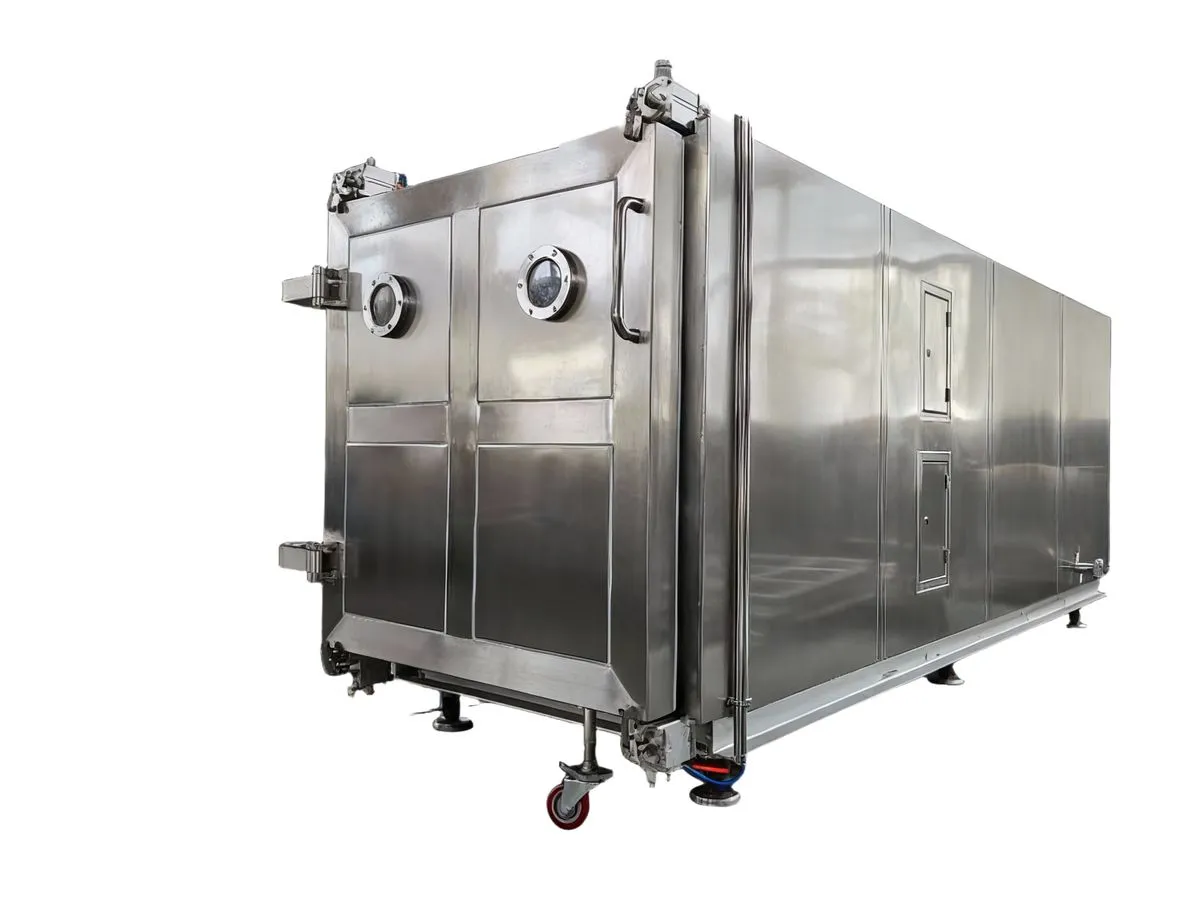
For a producer moving from test batches to regular production, the dryer is the central investment. A freeze dryer is a chamber with shelves, a refrigeration system that freezes the product and traps the vapour, a vacuum system, and a control system that runs the cycle.
Size the dryer to your real output, not to your hopes. A small dryer suits one variety for a local market; a larger machine makes sense once you have steady orders. Mushroom slices are light, so tray area may matter more than raw weight capacity. Also check how easy the trays are to load, how the chamber is cleaned, and whether service is available where you operate. Confirm these points with your supplier before you order.
Rehydrating and cooking uses
Freeze dried mushrooms come back to life quickly. Soak the slices in warm water and they soften within minutes, ready to cook as if fresh. The soaking water picks up mushroom flavour, so many cooks use it in the dish — in a soup stock, a sauce or a risotto — rather than throwing it away.
Soups are the most common use: a handful of dried slices adds depth to a broth and rehydrates directly in the hot liquid. In stir-fries and pasta dishes, rehydrate first, then cook briefly so the slices keep a little bite.
Dried mushrooms also work without rehydrating. Crumbled or ground into powder, they become a seasoning for soups, rubs and noodle dishes. Whole dried slices can top instant noodles and ready meals, where they soften in the hot water the consumer adds.
Storage and packaging
Freeze dried mushrooms are crisp, light and quick to absorb moisture, so pack the slices as soon as they come out of the dryer. The longer they sit open in the room, the more moisture they pick up, and a slice that was crisp in the dryer can turn soft on the bench.
Use a pack that blocks moisture and oxygen, seals cleanly, and protects the brittle slices from breaking. A stand-up pouch suits retail packs; a larger bag inside a carton suits food-service buyers. Label the pack with the product name, net weight, ingredients and storage instructions, and check the labelling rules of the destination market before you print.
Store sealed packs in a cool, dry place out of direct light. If a pack is opened, reseal it promptly: an open pack in a humid room will go soft, and a soft pack should not be shipped.
Common mistakes to avoid
Most failed mushroom batches come from small oversights, not from the dryer.
- Soaking mushrooms before drying: extra water means a longer, costlier cycle.
- Uneven slicing, so thin pieces finish early and thick pieces stay damp inside.
- Overlapping slices on the tray, which traps moisture in the middle of the pile.
- Overloading the trays to save a cycle, then getting an uneven batch.
- Rushing the primary drying stage, which can melt the ice and collapse the slices.
- Leaving dried slices open in a humid room while waiting for packing.
- Skipping a test batch when switching to a new mushroom variety or a new supplier.
QS freeze dryer models
| Model | Drying area | Trays | Power | Dimensions | Batch capacity |
|---|---|---|---|---|---|
| QS-FD-20 | 20.16㎡ | 84 | 35kW | 4500x1300x1400mm | ~200kg/batch |
| QS-FD-100 | 103.68㎡ | 432 | 135kW | 7000x4000x2300mm | ~1t/batch |
| QS-FD-200 | 207.36㎡ | 864 | 135kW | 12000x4000x2300mm | ~2t/batch |
- Chamber: SUS304 stainless steel, square chamber design.
- Freezing: down to -60°C, two-stage refrigeration with R404A/507.
- Heating: four-zone heating, accurate to ±0.1°C, maximum 80°C.
- Control: Siemens S7-200 PLC with a Chinese/English touchscreen.
- Vacuum: Roots pump plus screw pump, built for quiet operation.
- Sealing: food-grade silicone seals on the front door.
- Trays: 400x600mm each.
Frequently asked questions
Which mushrooms are best for freeze drying?
Firm, fleshy mushrooms with a strong flavour work best: shiitake, oyster, porcini, king oyster and button mushrooms are common choices. Thin, delicate mushrooms can turn brittle and crumble, and very wet varieties take longer to dry. Always run a small test batch with your own product before a full production run.
Do mushrooms need to be blanched before freeze drying?
Blanching is optional and depends on the mushroom and the end use. Some producers blanch sliced mushrooms briefly to slow colour change, while others freeze dry raw slices to keep the flavour as close to fresh as possible. Try both with a small batch and compare, then confirm with your supplier which approach fits your product.
How do I know when freeze dried mushrooms are fully dry?
Fully dried slices feel light, crisp and dry all the way through, and they snap rather than bend. Check the thickest pieces from the middle of the tray, not just the thin edges. If any piece feels cool, soft or leathery, the batch needs more drying time. Verify the endpoint with your own product, because slice thickness and loading density change how long a batch takes.
How should freeze dried mushrooms be stored?
Pack them as soon as they leave the dryer, in a moisture-proof pack that is sealed well, and keep them cool, dry and out of direct light. Handle the packs gently, because freeze dried slices are brittle and break easily. If a pack is left open in a humid room, the pieces will absorb moisture and go soft, so seal any opened pack promptly.
Talk to us about your mushroom freeze drying line
Tell us your mushroom variety and target output — we will help you size the dryer and plan the line around it. Explore the range on our freeze dryer page.
Specifications are for reference only and are subject to the final supplied equipment.