Why freeze dried food mills so well
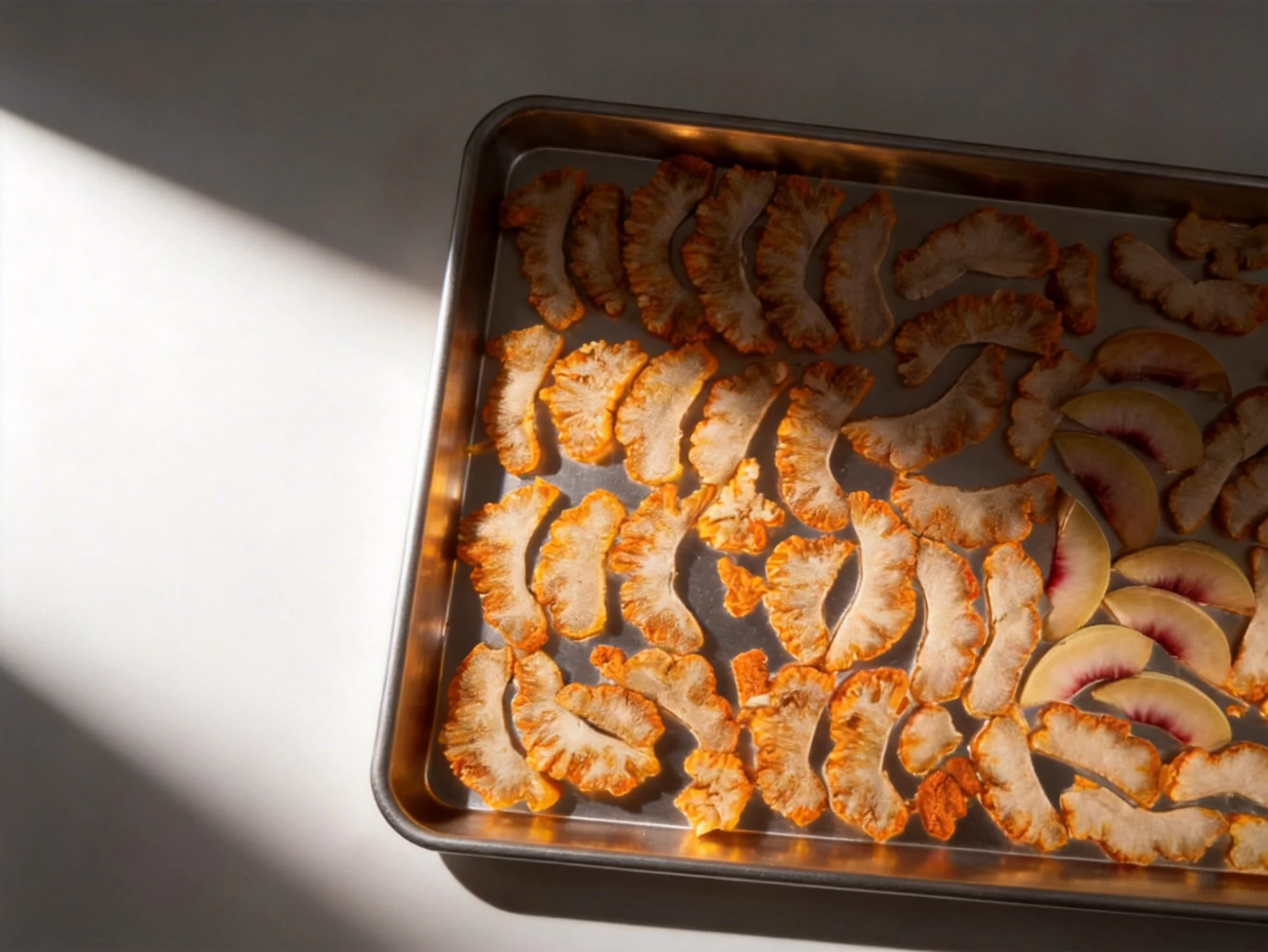
Freeze dried food is easy to mill. During freeze drying, ice inside the food turns directly into vapour under vacuum — sublimation — and the food barely shrinks. What is left is a light, dry piece full of tiny open pores where the ice crystals used to be. That structure is brittle: it snaps under light pressure instead of bending, and grinds into powder rather than smearing into paste.
Food dried by hot air is different: it shrinks as water leaves, closing the pores and hardening the surface into a dense, leathery piece. Grinding that takes more force, more heat, and more time, and the result is often uneven. Freeze dried pieces break apart cleanly along their pore walls, so even a simple mill can produce a fine, free-flowing powder.
The milling workflow: from dried pieces to powder
Milling is usually done in four stages, each with a clear job.
1. Pre-breaking
Large dried pieces are first broken down into smaller, roughly even fragments. This protects the mill from overload and gives it a steady feed.
2. Milling
The fragments pass through the mill, where they are ground into powder. The mill setting and feed rate decide how fine the first pass is: feeding too fast leaves coarse particles, while grinding too hard can heat the powder and damage its colour and flavour.
3. Sieving
The ground material passes through a sieve, which separates the powder from oversize particles. Oversize particles go back to the mill for a second pass, and the cycle repeats until the batch is uniform. Sieving is the control point of the workflow: it is where particle size is decided.
4. Blending
The sieved powder is blended so colour, flavour, and particle size stay consistent from batch to batch. Blending also matters when one product mixes several ingredients, such as a soup powder made from several freeze dried vegetables. Blend in a sealed container and keep the time short.
Particle size and uniformity
Uniformity matters more than fineness. A powder with mixed coarse and fine particles looks uneven in the pack, settles unevenly during transport, and behaves differently every time it is used: fine particles dissolve first while coarse ones sink or stay gritty.
Uniformity is controlled at three points. First, the feed to the mill should be even in size — pre-breaking exists for this. Second, the mill setting and feed rate should stay steady through a batch. Third, sieving should be treated as a real gate: oversize material goes back for another pass, and the final powder is checked before it is packed.
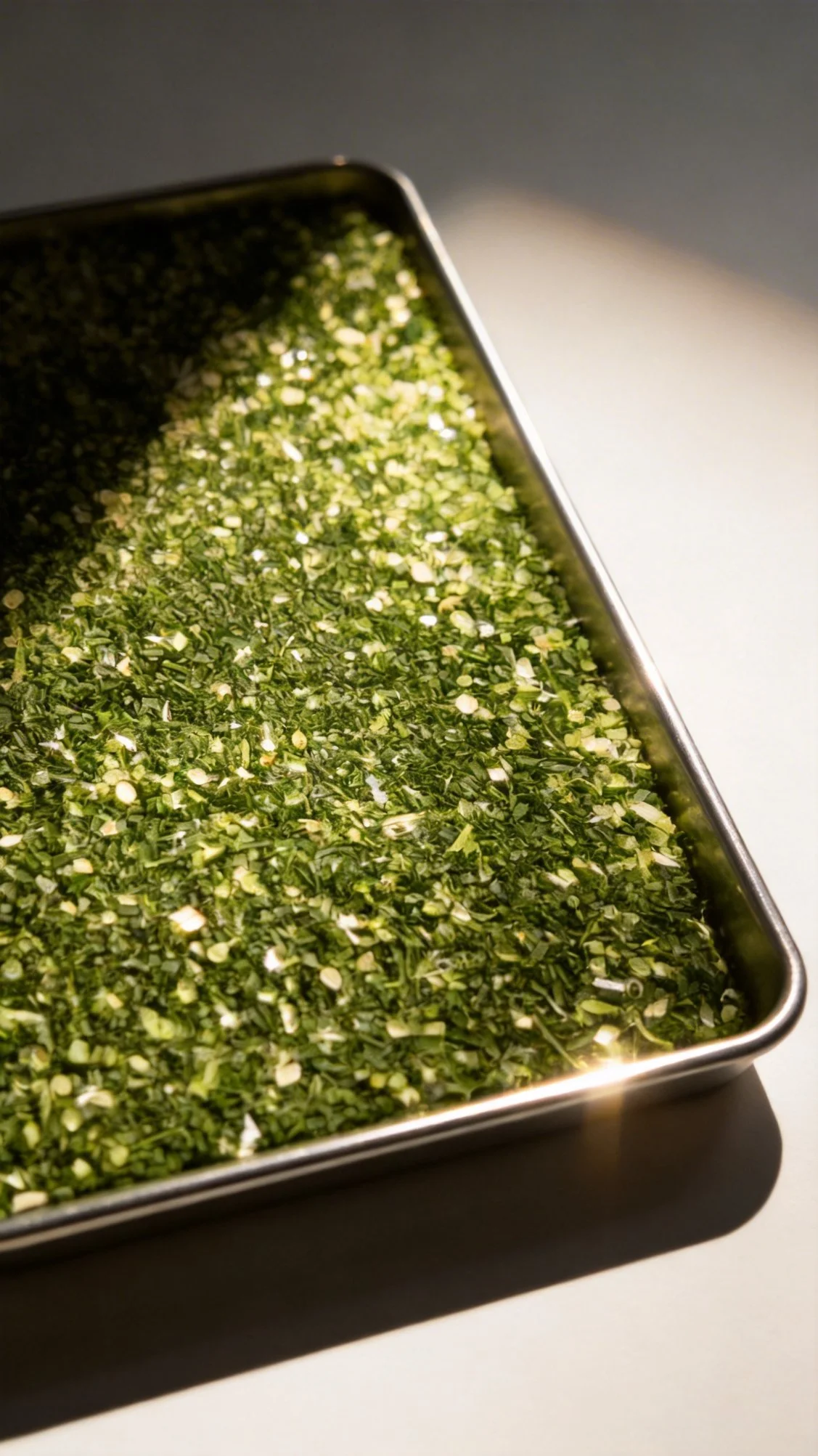
Check it visually, by spreading a sample on a dark surface and looking for coarse specks. Record the result with the mill setting and sieve used.
Moisture: the main risk during milling
Freeze dried food is very dry — moisture typically 1–4% — and that dryness is exactly what makes the powder thirsty: exposed to humid air, it pulls water back in quickly. Milling makes this worse: grinding creates a huge new surface area. A powder that absorbed moisture clumps, flows poorly, and spoils faster.
The numbers to keep in mind are guides only, and you should verify them with your own product: moisture below about 2% inhibits most microbial growth, while above 4–5% the risk rises sharply, and a water activity below 0.60 is the usual target for a dry powder. A batch milled in a humid room can cross those lines before it ever reaches a pack.
Control starts with the room. Mill in a dry, climate-controlled space and keep the humidity low and steady. Keep powder in sealed containers between stages instead of open trays, minimise open-air time, and work in small lots so no lot waits long before it is packed. Test moisture before and after milling: a rise between the two tests tells you the room or the handling is the problem, not the dryer.
Packaging and storing freeze dried powders
Pack promptly. A powder should go from the mill into its pack without a long wait in open air, because every minute exposed is a chance to re-absorb moisture. Use sealed, moisture-proof packaging — a foil pouch, a sealed jar, or a lined bag — and add a desiccant where the product and the pack format allow it.
Store the sealed packs in a cool, dry, dark place. Heat, light, and damp all work against a powder: heat speeds up colour and flavour change, light fades colour, and damp air finds any weak seal. Once a pack is opened, use the powder promptly and reseal what remains.
Powders need more care than whole dried pieces, because their large surface area absorbs moisture faster. Keep scoops and containers dry, close packs between uses, and label every pack with the product, batch, and packing date.
What freeze dried powders are used for
Instant drinks
Fruit and vegetable powders stir into water to make instant drinks and smoothies. The open pore structure that makes milling easy also makes the powder wet and disperse quickly, which is what a drink powder needs. A fine, even powder gives a smooth drink with no grit.
Seasonings and spice blends
Freeze dried herbs, garlic, ginger, and onion mill into aromatic powders for seasonings and spice blends. Because the pieces are dried at low temperature, the powder keeps the colour and aroma of the fresh material, and a uniform grind keeps the blend consistent from pack to pack.
Soups and sauces
Vegetable and mushroom powders thicken and flavour soups, sauces, and ready meals. They dissolve into hot water without the lumps that coarse flakes leave behind, and several powders can be blended into one soup base with a consistent taste in every batch.
Baby food and supplements
Freeze dried fruit, vegetable, and dairy powders are used in baby food and in supplement blends, where a fine, even powder is needed for a smooth texture and accurate dosing. Powders are ingredients: any claims about a finished product are the brand owner's responsibility, and no health claims should be made for the powder itself.
How the dryer shapes the powder
Powder quality is set during drying, so the dryer itself is part of the milling story. Even drying across all trays gives pieces that are equally brittle: they mill the same way, and the powder comes out uniform.
That is why shelf heating control matters. A QS-FD freeze dryer uses four-zone heating controlled to within ±0.1°C, with a maximum of 80°C, under Siemens S7-200 PLC control with a touchscreen. The four zones manage heat evenly across the shelves, avoiding the overheating that collapses pores and leaves pieces leathery.
QS-FD freeze dryer range (reference)
| Model | Tray area | Trays | Power | Dimensions | Batch |
|---|---|---|---|---|---|
| QS-FD-20 | 20.16㎡ | 84 | 35kW | 4500x1300x1400mm | ~200kg/batch |
| QS-FD-100 | 103.68㎡ | 432 | 135kW | 7000x4000x2300mm | ~1t/batch |
| QS-FD-200 | 207.36㎡ | 864 | 135kW | 12000x4000x2300mm | ~2t/batch |
Shared: SUS304 square chamber, -60°C, R404A/507, ±0.1°C heating control, max 80°C, Siemens S7-200 PLC, Roots + screw vacuum pumps, food-grade silicone seals.
Choosing between the three models is a question of batch size: the QS-FD-20 suits runs of around 200kg per batch, the QS-FD-100 around one tonne, and the QS-FD-200 around two tonnes. Standard terms are a 1-year warranty and an approximate 3-month lead time. Specifications are for reference only and are subject to the final supplied equipment.
Frequently asked questions
Why do freeze dried foods mill into powder more easily than other dried foods?
Freeze drying removes water by sublimation, so the food barely shrinks and keeps an open, porous structure. That structure is brittle and dry, so it snaps apart under light pressure instead of bending or smearing.
What steps are involved in milling freeze dried food into powder?
The usual workflow has four stages. Pre-breaking reduces large dried pieces into smaller, roughly even fragments. Milling grinds those fragments into powder. Sieving separates out any oversize particles, which go back for a second pass. Blending then mixes the sieved powder so colour, flavour, and particle size stay consistent from batch to batch.
Why does freeze dried powder absorb moisture during milling, and how can it be controlled?
Freeze dried food is very dry, typically 1 to 4 percent moisture, so it is quick to pull water back from humid air. Milling makes this worse because grinding creates a large new surface area. Control it by milling in a dry, climate-controlled room, keeping powder sealed between stages, minimising open-air time, and testing moisture before and after milling. Verify moisture figures with your own product.
How should freeze dried powders be packaged and stored?
Pack powders promptly in sealed, moisture-proof packaging, with a desiccant where the product and the pack format allow it. Store them in a cool, dry, dark place, and once a pack is opened, use the powder promptly and reseal what remains. Powders need more care than whole dried pieces because their large surface area absorbs moisture faster.
What are freeze dried powders used for?
The main uses are instant drinks, seasonings and spice blends, soups and sauces, baby food, and supplements. In each case the powder disperses quickly in water and carries the colour and flavour of the original food. Powders are ingredients: any claims about a finished product are the brand owner's responsibility, and no health claims should be made for the powder itself.
Plan your freeze drying line
Tell us your target output and products — we will help you size the dryer and test milling and powder quality on your own material.
Specifications are for reference only and are subject to the final supplied equipment.