Why the manufacturer matters more than the machine
An industrial freeze dryer or vacuum fryer is not a consumer appliance — it is a production asset that must run for years. Two machines with similar datasheets can deliver very different results once installed, because what you are really buying includes:
- After-sales reality: When a pump fails at 2 a.m. your time, a real manufacturer diagnoses remotely within hours; a trading company relays your message and waits.
- Spare parts for a decade: Seals, heater elements, and gaskets are consumables. Ask who stocks them and how fast they ship to your region — vague answers mean months of downtime per failure.
- Process know-how: Your first batches need recipe tuning. Manufacturers that build and commission machines have engineers who understand the process; resellers do not.
- Design authority: Only the designer can modify the machine — resize a chamber, adapt controls to your voltage. If your supplier cannot authorize changes, your line cannot evolve.
The checks below separate the two — about two weeks of due diligence before any money changes hands.
Check 1: Is it a real factory?
The single most important question in food machinery sourcing is also the simplest: does the supplier build the machine, or merely sell it? Trading companies and brokers add a markup layer and, worse, cannot support what they did not design.
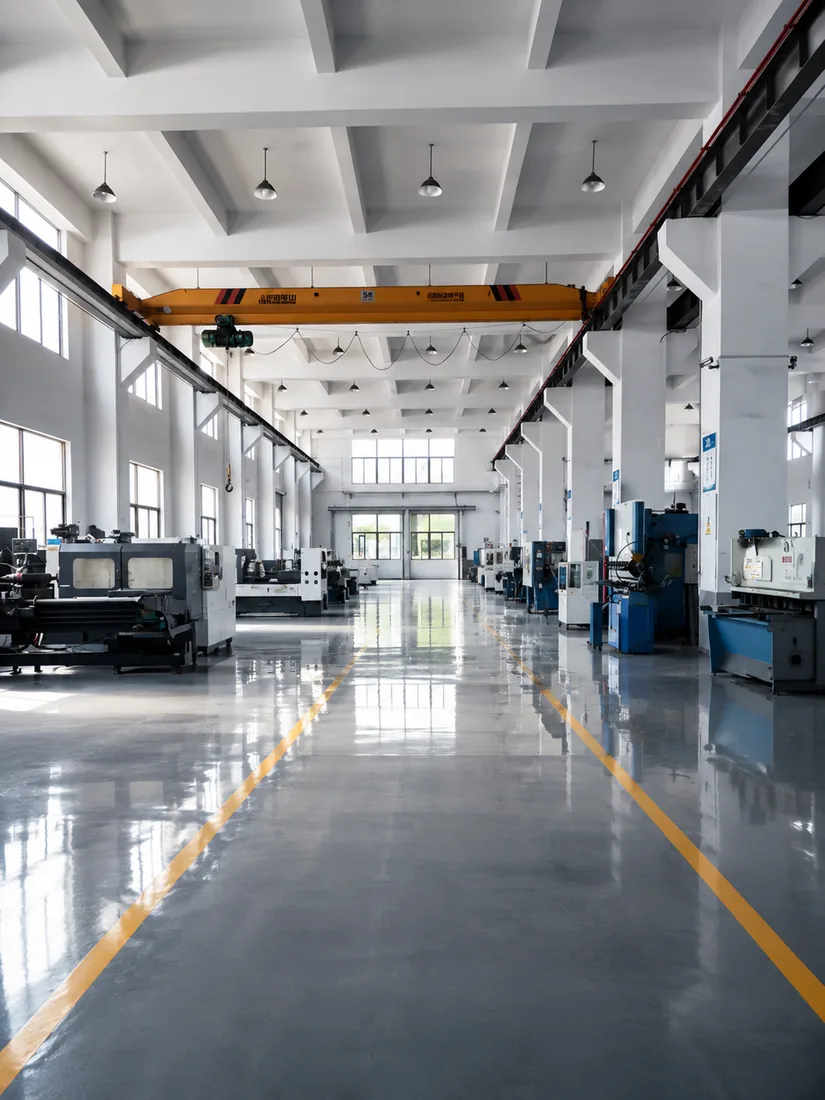
- Ask for a live video walkthrough — not a promotional film — covering the machining area, the welding section, electrical assembly, and machines in final assembly or testing.
- Get the factory address in writing and check it on a map. A verifiable industrial site is a good sign; a residential address or an office park with no workshop is not.
- Ask to see your machine class being built or tested — a chamber under vacuum test or a vessel on the assembly floor tells you more than any certificate.
- Look for raw stainless steel stock, work-in-progress machines, and test-run records. A busy shop floor is hard to fake on a live call.

Red flag: the supplier can only provide stock photos, polished renders, or footage of other companies' equipment — and cannot name a factory address you can verify independently.
Check 2: Engineering and customization capability
Industrial food machinery is rarely one-size-fits-all. The manufacturer must adapt the machine to your product, capacity, and voltage — not force your process to adapt to the machine.
- Test their engineers with process questions — a drying recipe for your product, or how oil temperature and vacuum are controlled in a frying cycle. Detailed answers signal real R&D depth; evasive replies do not.
- Ask what they can customize: chamber sizes, PLC options, heating and vacuum configurations, voltage for your grid. A genuine manufacturer discusses options with prices; a reseller says "this is the model."
- Ask who programs the control system — PLC logic, recipe storage, alarm handling. If they cannot explain how a recipe parameter works, they did not build the controls.
- Ask about process support after installation: will an engineer help tune your first batches, and how many days of commissioning and training are included?
Check 3: Documentation and certifications
What you receive before paying predicts what you will receive after delivery.
- Request a full technical proposal: itemized specifications, component brands, material grades (e.g., SUS304 for food-contact surfaces), dimensions, power requirements, and exclusions. Vague proposals hide vague machines.
- Ask for the FAT procedure or records: vacuum leak tests, heating uniformity, PLC function checks. A serious supplier tests before crating.
- Ask for certificates in writing. If CE or ISO certification is claimed, ask to see the certificates themselves — and confirm they are issued to the manufacturing company, not borrowed from another entity. (For reference: Supreme Beast's equipment is CE- and ISO-certified; we say so only because we can show the certificates.)
- Ask what manuals ship with the machine: an operation manual, a wiring diagram, a spare-parts list with part numbers, and maintenance schedules. You will need these for years.
A supplier that treats documentation as optional will treat your after-sales support as optional too.
Check 4: Export track record
Exporting industrial equipment is its own skill — packing, crating, container loading, customs paperwork. An experienced exporter has a routine; a first-timer is learning on your machine.
- Ask how the machine is packed for sea freight: crating, moisture protection, shock and tilt indicators. Detailed packing answers come from experience.
- Ask what export documents they prepare: commercial invoice, packing list, certificate of origin, bill of lading, and any fumigation or inspection certificates your country requires.
- Ask to see shipment photos — machines loaded into containers, crates sealed. Real export experience leaves a photo trail.
- Ask how after-sales works across time zones: support hours, how to reach an engineer when production is down, and whether remote diagnosis is available.

Check 5: Commercial terms in writing
Every commercial promise must appear in the contract — verbal assurances are worth what they cost to make.
- Warranty: get duration, scope, and response commitments in writing — a 1-year warranty is a common baseline, but only the written contract counts. Which parts are covered, and how fast are replacements shipped?
- Lead time: get the production schedule in writing — approx. 3 months is typical for built-to-order machines, but confirm the number for your configuration. Ask what starts production (contract? deposit?) and what happens if the deadline slips.
- Spare-parts availability: get a written spare-parts list with prices and delivery times — which parts are stocked, which are made to order.
- Payment milestones: a common structure is deposit on order, a milestone payment before shipment (often tied to FAT photos or video), and a balance after commissioning. Full prepayment with no milestones is a warning sign.
- Installation and commissioning terms: who sends engineers, for how many days, at whose cost, and what "successful commissioning" means in measurable terms.
Red flags that should stop the deal
No single red flag is absolute proof of trouble — but two or three together are. Walk away when you see a pattern:
- No verifiable factory: no address, no live workshop footage, no machines visibly under construction.
- Prices far below market with no explanation: a quote dramatically cheaper than every competitor is not a bargain — it is thinner steel, cheaper components, or missing scope. Ask what was cut.
- No written warranty: or a "warranty" stated only verbally, with no scope, duration, or response terms.
- Evasive on specifications: cannot name component brands, material grades, or control-system details — because the supplier did not build the machine.
- Pressure for full prepayment: urgency tactics ("this price expires today") and demands for 100% payment before production starts.
- Refuses factory audit: declines a video walkthrough, will not show the workshop, or answers equipment questions with sales talk.
- Certificates that cannot be produced: claims certifications but cannot show them, or shows certificates issued to a different company.
Your 10-point evaluation checklist
Use this list for every supplier you shortlist. Score each point yes or no — the supplier with the most yeses usually wins.
- Verifiable factory address and a live video walkthrough of the workshop.
- In-house machining, welding, and assembly visible — not just an office.
- Engineers who answer process questions with specifics, not sales language.
- Customization options discussed with prices — chamber sizes, controls, voltage.
- Itemized technical proposal with component brands and material grades.
- FAT procedure or records shared before you commit.
- Certificates shown in writing and issued to the manufacturing company.
- Clear export routine: packing method, documents, shipment photos.
- Written warranty with scope, response commitments, and spare-parts pricing.
- Payment tied to milestones — deposit, pre-shipment, post-commissioning.
Frequently asked questions
Is a factory visit or a live video audit enough to verify a manufacturer?
A visit is ideal, but a live, unscripted video walkthrough is a strong second best — ask to see CNC machining, welding, and final assembly, and your machine type actually being built or tested. Promotional videos and stock photos alone are not enough.
What documents should I request before ordering industrial food machinery?
Request a written quotation with full specifications, a FAT record or procedure, CE and ISO certificates if claimed, a warranty statement with response times, a spare-parts list with pricing, and installation and commissioning terms. If a supplier cannot produce these before you pay, treat that as a warning sign.
How do I verify export experience without customer references?
Ask about sea-freight packing, export documents (invoice, packing list, certificate of origin, bill of lading), and photos of past shipments being loaded. Detailed, consistent answers indicate real export routine.
What warranty terms are standard for industrial food machinery?
A 12-month warranty from commissioning or delivery is the common industry baseline. Get the scope in writing: which parts are covered, how failures are handled across time zones, and how long replacements take to ship. Vague warranty language that commits to nothing is a red flag.
How do I compare two quotes fairly?
Compare line by line: chamber or vessel materials and grades, heating and vacuum components, PLC and touchscreen brands, insulation and sealing details, warranty length and response terms, installation support, and spare-parts pricing. A lower price is often a different component list — ask both suppliers to itemize so the differences are visible.
What should I prepare before requesting a quote?
Prepare your product details, target capacity per batch or per day, power supply, available floor space, and timeline. A complete brief gets you an accurate model recommendation faster.
Want to audit our factory yourself?
Request a live video walkthrough of our workshop or a full documentation pack — technical proposal, FAT procedure, and certificates — before you decide.
Specifications are for reference only and are subject to the final supplied equipment.