The market context: why Indonesia
Three data points frame the opportunity. According to the public summary of Knowledge Sourcing's ASEAN Food Processing Machinery Market report, the ASEAN market is projected to grow from USD 5.85 billion in 2026 to USD 8.1 billion by 2031 — a 6.7% compound annual growth rate — with fully automatic equipment growing at about 7.9% a year as the fastest segment. And Indonesia alone accounts for roughly 27% of the ASEAN market, making it the region's largest national market for food processing machinery.
What does that mean for a fruit crisp venture? Two things. First, Indonesia's food processing sector is investing — the machinery demand is real and growing, which means local production capacity, spare-parts networks, and operator know-how are all deepening. Second, the country's tropical fruit supply is the raw material advantage: bananas, jackfruit, mango, and pineapple grow abundantly and cheaply, yet most of that fruit is still sold fresh or minimally processed. Turning it into shelf-stable crisps captures far more value per kilogram — and vacuum frying is the process built for exactly this kind of whole-fruit snack.
A note on the numbers above: they come from the report's public summary; the full report is a paid publication. They describe the machinery market, not the snack market — treat them as context for the investment climate, not as a forecast of crisp sales.
The fruits that suit vacuum frying
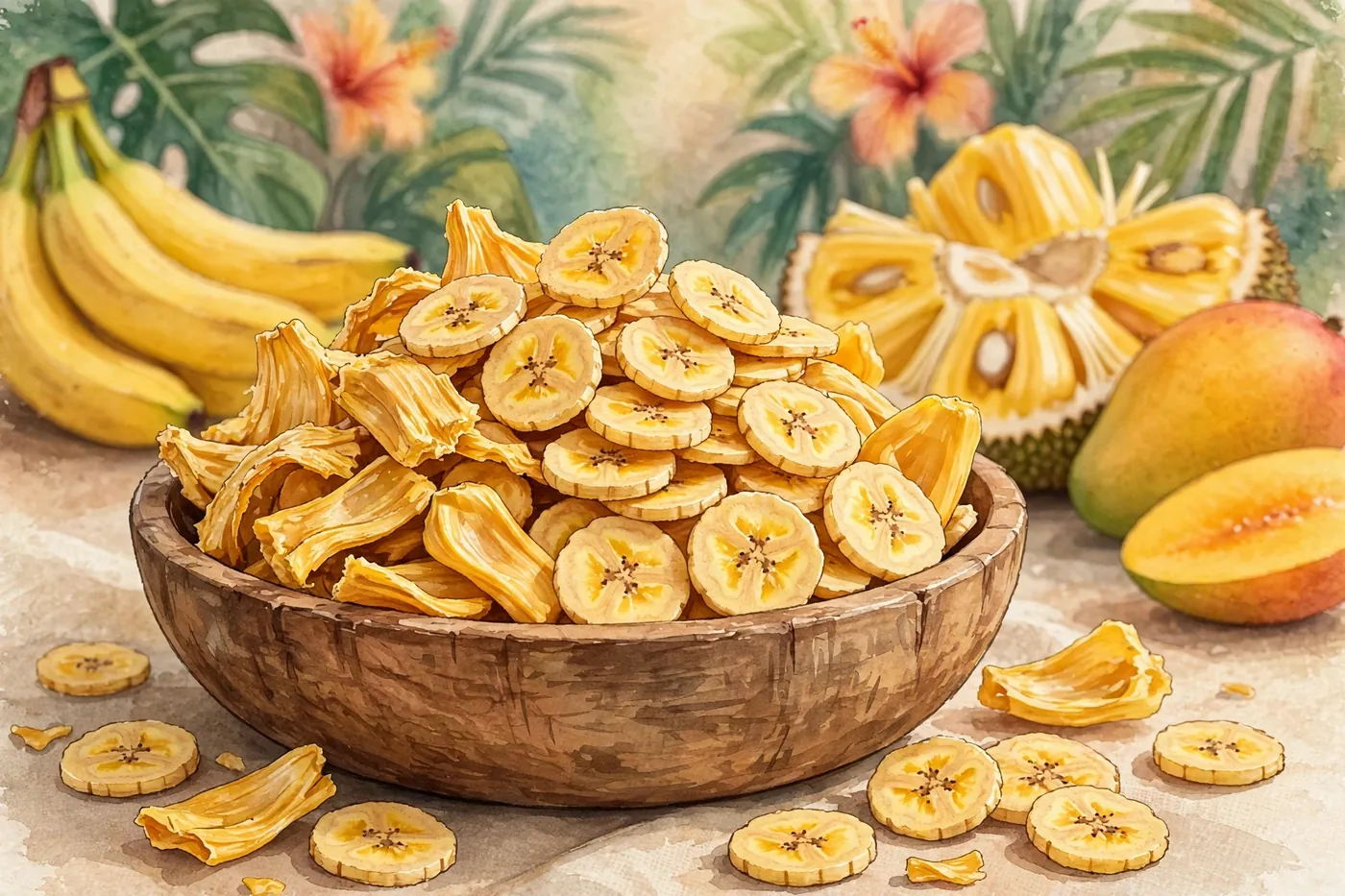
Not every fruit fries well. Vacuum frying rewards firm-fleshed fruits that slice cleanly and hold their shape through the process. The proven candidates for an Indonesian crisp line:
- Banana — the workhorse. Firm, cheap, available year-round, and slices into uniform chips that crisp beautifully at low temperature.
- Jackfruit — distinctive flavor, excellent texture when vacuum fried, and a strong differentiator on the shelf. Indonesia's jackfruit supply is a genuine competitive edge.
- Mango — premium positioning; the low-temperature process preserves the fruit's color far better than conventional frying.
- Pineapple, sweet potato, and taro — solid secondary products that round out a portfolio once the core line is running.
The common trait is structural integrity: the fruit must survive slicing, frying, and centrifugal de-oiling as an intact piece. Very soft or watery fruits that fall apart are poor candidates — pick fruit for structure first, flavor second, and the process will take care of the rest.
The equipment checklist for a fruit crisp line
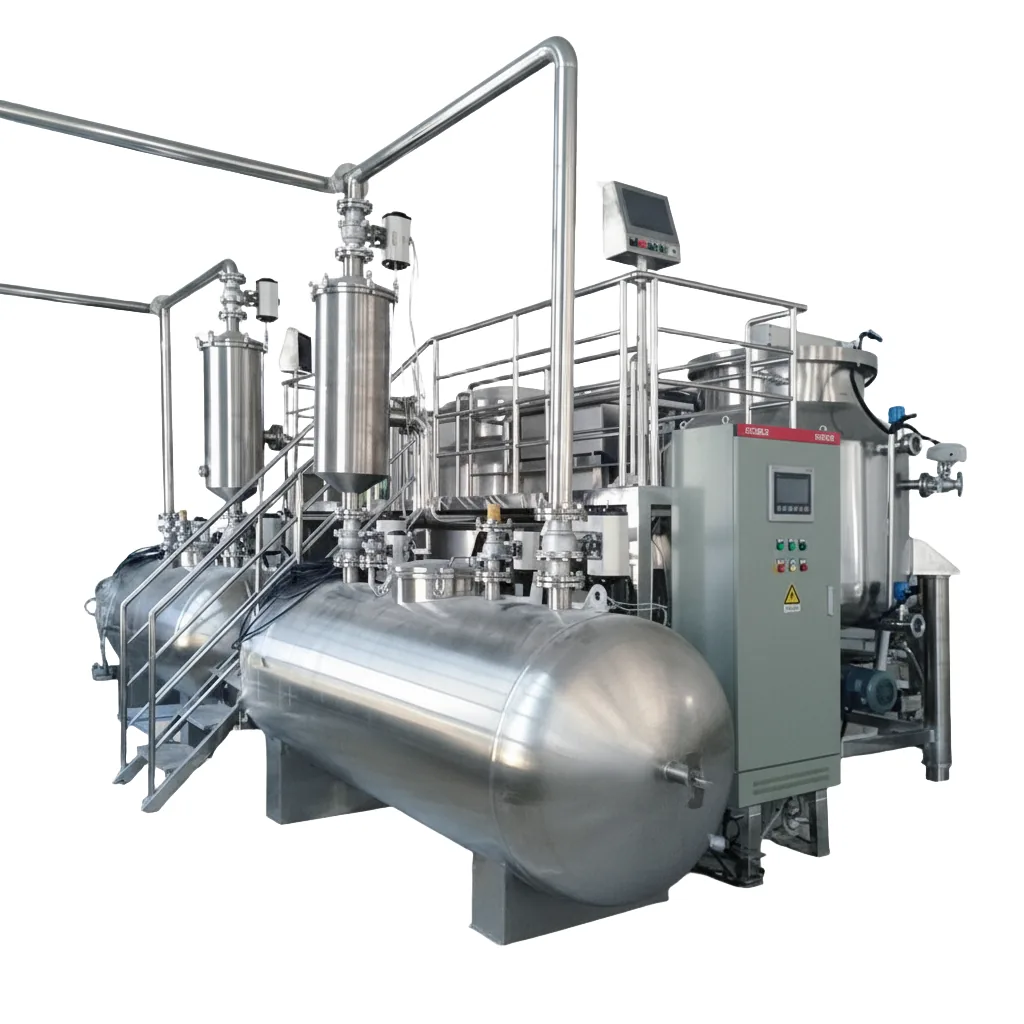
A fruit crisp line is more than a fryer. Here is the full checklist, in process order:
- Washing and peeling. Clean fruit in, clean product out. For banana and jackfruit, peeling is manual or semi-manual at startup scale.
- Slicing. Uniform slice thickness is the single most important upstream variable — uneven slices fry unevenly, and no fryer setting fixes that. Invest in a slicer that holds tolerance.
- Batch vacuum fryer. The core machine: slices fry at 80–100 °C under vacuum, which keeps oil temperature low enough to protect color and structure. Centrifugal de-oiling happens in the same vessel right after frying, spinning surface oil off before discharge.
- Seasoning. A drum or tumbler applies salt, spices, or sweet coatings while the crisps are still warm. Keep seasoning recipes separate from the frying recipe — they are independent variables.
- Cooling and packaging. Cool to packing temperature, then pack promptly in moisture-barrier packaging. Crisps are hygroscopic; every hour in humid tropical air softens them.
Buyers sometimes ask whether they can skip straight to the fryer and improvise the rest. Don't — the fryer gets the credit, but slice uniformity and packaging decide whether the product survives to the consumer.
Choosing your batch size
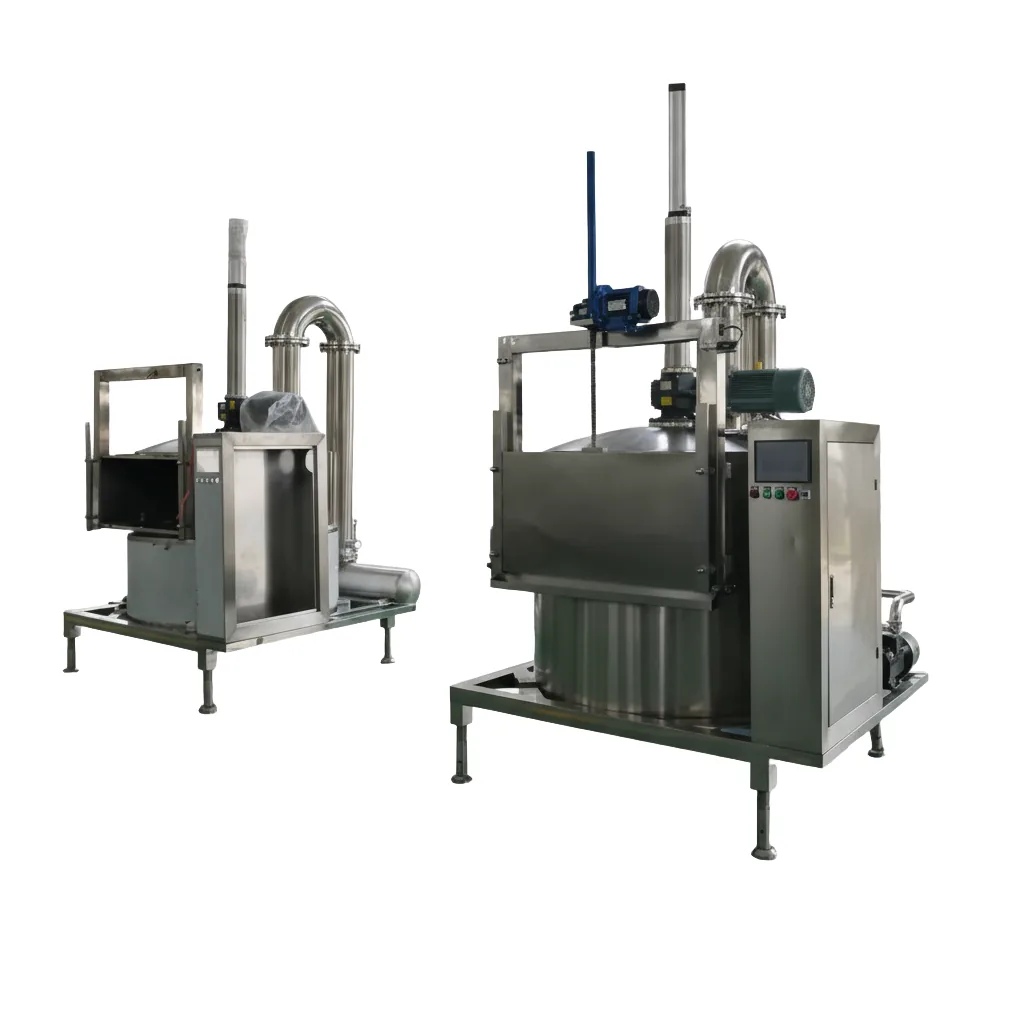
Batch vacuum fryers come in three classes. Match the class to your demand, not your ambition:
QS batch vacuum fryer classes
| Model | Batch size | Fits |
|---|---|---|
| QS-VF100 | 100 KG/batch | Startups and market testing |
| QS-VF150 | 150 KG/batch | Growing brands, regional distribution |
| QS-300 | 300 KG/batch | High volume; vessel 2600 mm (H) × 1600 mm (D) |
Batch vacuum frying at 80–100 °C with centrifuge de-oiling under vacuum; Delta PLC + MCGS controls; 304 stainless-steel construction. Specifications are for reference only and are subject to the final supplied equipment.
The QS-VF100 is where most new crisp brands start: 100 KG per batch is genuine commercial output — enough to supply real retail channels — while recipes and distribution are still being proven. The QS-VF150 serves brands moving into regional distribution, and the QS-300, with its 300 KG batches, fits high-volume production and contract manufacturing. All three run the same Delta PLC + MCGS control logic, so operating know-how transfers as you scale.
Buyer tips for setting up in Indonesia
A few practical points for Indonesian buyers ordering equipment from overseas:
- Confirm utilities early. Get the machine's exact power, water, and compressed-air requirements in writing, and verify your site can deliver them before the equipment ships — not after.
- Ask about factory acceptance testing. A reputable manufacturer will run your machine through no-load testing, vacuum checks, and temperature uniformity verification before shipment, and share the results. Ask what the FAT covers before you sign.
- Lock in warranty and spares. A one-year warranty is standard for this equipment class. Equally important is spare-parts availability for your region — ask which wear parts to stock locally so a small failure never stops your line for weeks.
- Plan the lead time. Expect approximately three months from order to delivery for industrial vacuum fryers, covering manufacturing, testing, and export preparation. Build that into your launch timeline.
- Start near your fruit. Transporting fresh tropical fruit long distances bruises it and raises costs. Locating the crisp line near the growing region is a structural advantage, not just a convenience.
Frequently asked questions
Why is Indonesia a good market for fruit crisp production?
Indonesia is the largest national market in ASEAN's food processing machinery sector at roughly 27%, with abundant tropical fruit supply and a growing snack industry. Local fruit crisp production turns that raw material advantage into shelf-stable, exportable product with far higher value than fresh fruit.
Which fruits work best for vacuum-fried crisps?
Banana, jackfruit, and mango are the classic choices — firm-fleshed fruits that slice cleanly and crisp well at low temperature. Pineapple, sweet potato, and taro also vacuum fry well. The common trait is structural integrity: fruits that hold their slice shape through frying.
What equipment do I need besides the vacuum fryer?
A complete fruit crisp line needs washing and peeling equipment, a slicer for uniform thickness, the batch vacuum fryer with built-in centrifugal de-oiling, a seasoning applicator, cooling, and moisture-barrier packaging. The fryer is the heart of the line, but slice uniformity and packaging decide final quality.
What batch size should a new crisp brand start with?
Most startups begin with a QS-VF100 at 100 KG per batch — enough for genuine commercial output while recipes and distribution are proven. Scale to the QS-VF150 (150 KG per batch) or QS-300 (300 KG per batch) when demand justifies it; the Delta PLC plus MCGS control logic is consistent across sizes.
What should I ask before ordering equipment from overseas?
Confirm the warranty terms (one year is standard), the lead time (approximately three months for this equipment class), what factory acceptance testing is available before shipment, spare-parts availability for your region, and exactly which utilities the machine requires at your site.
Start your fruit crisp line
Tell us your target fruit and output — we'll help you choose the right batch size and plan the full crisp line, from slicer to packer. See the range on our vacuum fryer page.
Specifications are for reference only and are subject to the final supplied equipment.