Buying & capacity questions
How do I choose the right capacity?
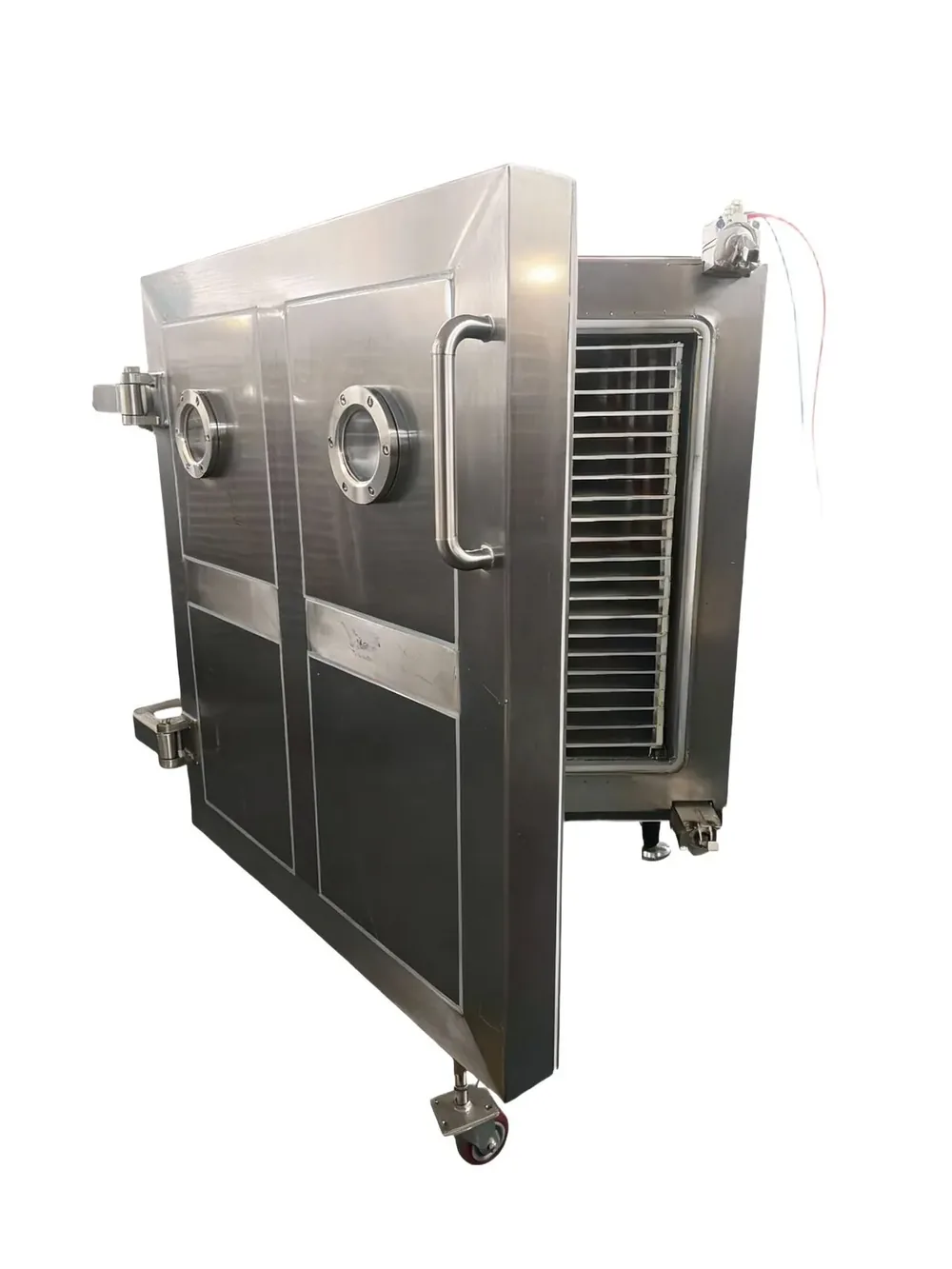
Start from your target output and work backward. Usable shelf area and tray count set the per-batch charge — for reference, the QS-FD-20 offers 20.16 m² of shelf area (~200 kg/batch), the QS-FD-100 offers 103.68 m² (~1 t/batch), and the QS-FD-200 offers 207.36 m² (~2 t/batch). Then divide your weekly target by batches per week: cycle time (typically 20–40+ hours) plus loading/unloading time sets that number. The most common sizing mistake is buying shelf area you cannot fill every cycle — an under-loaded chamber dries the same hours for half the product. Our capacity buying guide walks through the full calculation.
What drives the cost of an industrial freeze dryer?
Capacity is the largest driver, then the refrigeration configuration (two-stage systems reaching −60 °C cost more than single-stage), the vacuum pump package (Roots + screw combinations for industrial duty), controls and automation level, chamber design, installation scope, and ongoing running costs — energy, maintenance, and labor. When comparing quotes, hold the duty point constant: same product, same cycle time, same final moisture target. Two quotes for "a freeze dryer" with different duty points are not comparable. See the cost factors guide for the full breakdown — we discuss cost structure only, never invented prices.
What is the typical lead time from order to production?
For industrial-class machines, expect roughly a 3-month lead time from order confirmation to delivery, plus shipping time and on-site installation and commissioning. Plan your raw-material contracts and facility works against that timeline, not against the day you sign. Specifications are for reference only and are subject to the final supplied equipment.
Process & product questions
How does an industrial freeze dryer actually work?
In three stages: freezing (product frozen solid, typically well below −30 °C), primary drying (under deep vacuum, ice sublimates directly to vapor — this removes most of the water), and secondary drying (gentle heat drives off bound moisture to the final target). Because water leaves as vapor without a liquid phase, the product keeps its shape, color, and most nutrients. The 3-stages explainer covers the process in detail.
How long does a freeze drying cycle take?
Most industrial cycles run 20–40+ hours. The decisive variables are product thickness and piece size, loading density on the trays, the product's initial water content, the target final moisture, and the machine's refrigeration and vacuum performance. Two practical levers sit with the operator: slice thinner and load evenly. A thick, densely packed tray can add many hours; a thin, even load on a well-maintained machine is the fastest cycle you will get. Full detail in the cycle time factors guide.
What foods can be freeze dried?
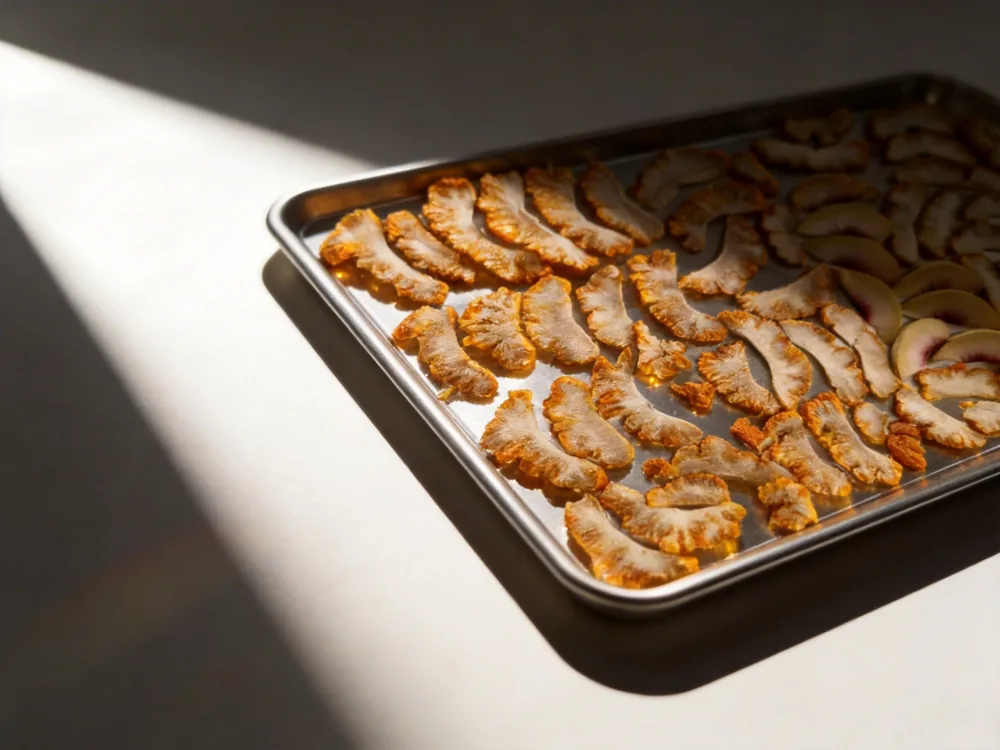
Fruits, vegetables, meats, seafood, dairy, coffee, ready meals, and single-ingredient pet treats all freeze dry well. Products that need care: very high-sugar fruits (they can soften or stay tacky), high-fat products (fat does not sublimate), and liquids or purees (better suited to spray drying or other methods). A useful rule of thumb: if it freezes into a solid piece that holds its shape, it is usually a candidate. The applications guide maps the full range.
Is freeze drying better than dehydrating or spray drying?
It depends on the product and the goal. Freeze drying gives the best shape, color, rehydration, and nutrient retention, but it is the slowest and most energy-intensive method — suited to premium whole pieces. Hot-air dehydrating is cheaper and faster but shrinks and darkens the product. Spray drying is the choice for liquids and powders (milk, coffee, fruit powders), not for pieces. Our comparisons — freeze drying vs dehydrating and spray drying vs freeze drying — lay out the trade-offs.
Installation & operation questions
What utilities and space does an industrial freeze dryer need?
- Power: a stable three-phase supply sized for the refrigeration plant and vacuum pumps (large machines are heavy electrical loads — check the data sheet, not a rule of thumb).
- Space: the chamber footprint plus tray handling on at least one side, and a delivery route — large machines run 7–12 m long and arrive in crates.
- Cooling water (or an air-cooled condenser circuit), compressed air for pneumatic components, and drainage for defrost and washdown water.
Confirm every figure against the supplier's data sheet before civil works start. The installation requirements guide has the checklist by machine size.
How many operators does a freeze dryer need?
Fewer than most buyers expect. Loading and unloading are the labor peaks — trays must be filled, carried in, and discharged on schedule. During the cycle itself, the PLC runs the recipe; one operator can supervise the machine alongside other duties, checking alarms and logging the batch. Labor planning should focus on the loading/unloading windows, not the drying hours.
Maintenance & troubleshooting questions
What maintenance does a freeze dryer need?
Three systems carry the maintenance load: vacuum integrity (door seals, gasket condition, leak checks — vacuum faults are the #1 cause of wet batches), refrigeration (condenser cleaning, refrigerant checks, defrost discipline), and controls (sensor calibration, especially product and shelf temperature probes). The rhythm is daily checks, per-cycle wipe-downs, weekly seal and filter inspections, and annual deep service. The maintenance checklist lists tasks by interval.
What are the most common problems, and how are they fixed?
The short list: vacuum not reaching target (seals, gaskets, door alignment, pump oil), batches coming out wet (vacuum leak, overloaded trays, recipe too aggressive), product collapse or melt-back (shelf temperature ramped too fast in primary drying), refrigeration alarms (condenser fouling, refrigerant charge), and control alarms (sensor drift, usually fixed by calibration). Almost every one traces to seals, loading, or recipe. The troubleshooting guide organizes symptoms, causes, and fixes by system.
Shelf life & food safety questions
How long does freeze-dried food last?
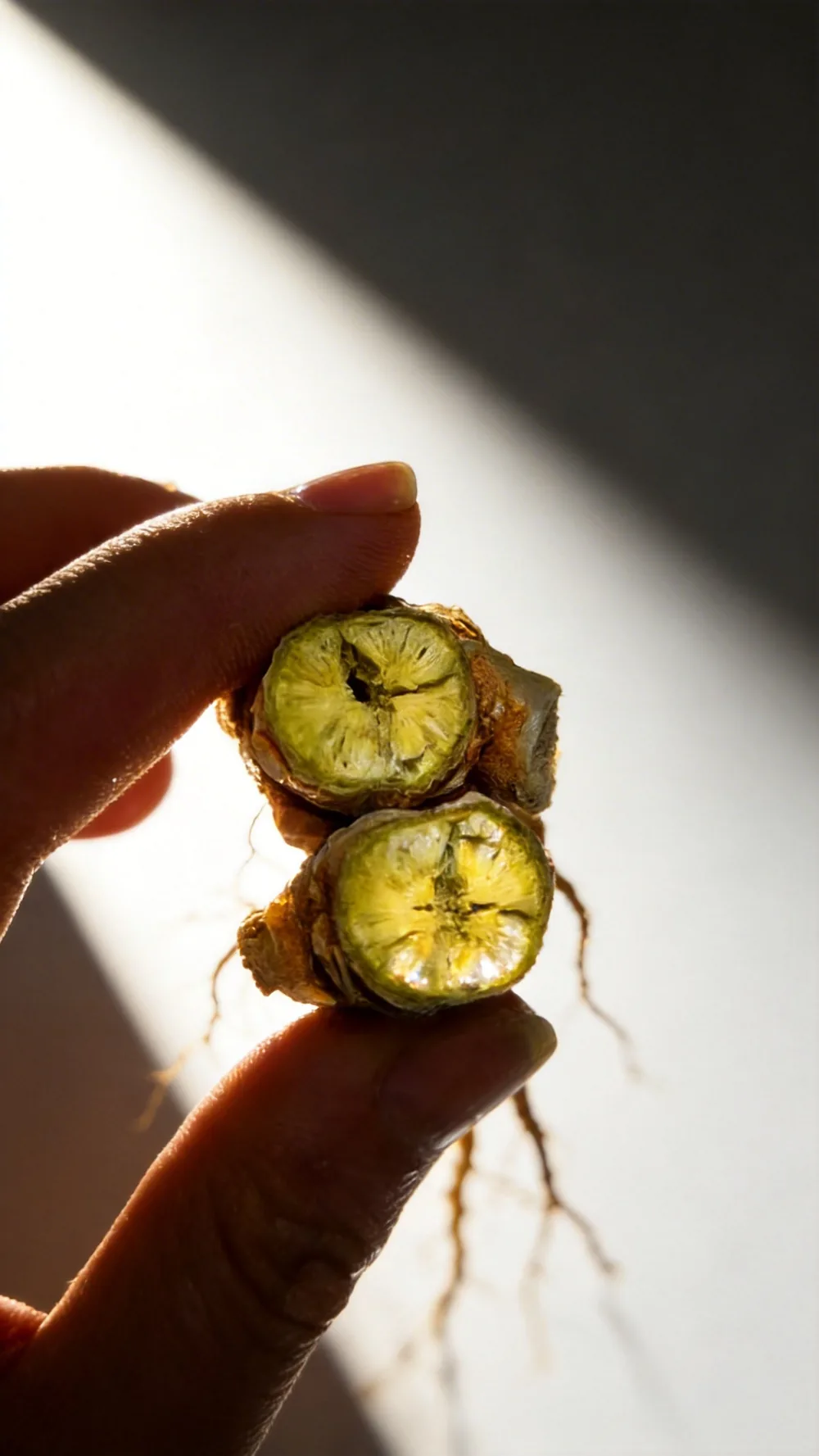
Properly dried and sealed in moisture-proof barrier packaging with oxygen control, freeze-dried food keeps for months to years — far beyond air-dried equivalents. Three controls set the real number: final moisture content (dry to a low, validated target), packaging barrier quality, and storage temperature. The two habits that matter most: validate the moisture target for each product, and seal immediately after discharge — dried product reabsorbs ambient moisture fast. See the shelf life guide.
Is freeze-dried food safe? Does freeze drying kill bacteria?
Freeze drying removes water but does not sterilize — it is a preservation process, not a kill step. Food safety comes from the whole chain: hygienic raw material, washing and blanching where the product needs it, drying to a validated low moisture, immediate barrier packaging, and clean post-drying handling. Our food safety guide covers each control point without claiming certifications we don't hold.
Quick reference: QS freeze dryer classes
| Model | Shelf area | Typical batch |
|---|---|---|
| QS-FD-20 | 20.16 m² | ~200 kg |
| QS-FD-100 | 103.68 m² | ~1 t |
| QS-FD-200 | 207.36 m² | ~2 t |
Shared platform: SUS304 square chamber, −60 °C two-stage refrigeration, 4-zone heating control ±0.1 °C, Siemens PLC, Roots + screw vacuum pumps. Specifications are for reference only and are subject to the final supplied equipment.
Frequently asked questions
How do I choose the right industrial freeze dryer capacity?
Start from your daily output target and work backward: usable shelf area and tray count set the per-batch output (e.g. ~200 kg, ~1 t, or ~2 t per batch on the QS-FD-20/100/200 class machines), and cycle time — typically 20–40+ hours depending on product — sets how many batches you get per week. The classic sizing mistake is buying shelf area you cannot fill every cycle.
What drives the cost of an industrial freeze dryer?
Capacity (shelf area and tray count) is the biggest driver, followed by refrigeration configuration, vacuum system, controls and automation level, chamber design, installation scope, and running costs. Compare quotes on identical duty points — same product, same cycle time, same final moisture — or the numbers mean nothing.
How long does a freeze drying cycle take?
Most industrial cycles run 20–40+ hours. The main variables are product thickness and piece size, loading density on the trays, the product's water content, the target final moisture, and the machine's refrigeration and vacuum performance. Thinner, evenly loaded product on a well-maintained machine dries fastest.
What foods can be freeze dried?
Fruits, vegetables, meats, seafood, dairy, coffee, ready meals, and single-ingredient pet treats all freeze dry well. High-sugar and high-fat products need recipe care, and liquids or purees suit other drying methods. If a product keeps its shape when frozen, it is usually a candidate.
What utilities and space does an industrial freeze dryer need?
A stable three-phase electrical supply, floor space for the chamber plus tray handling and delivery access (large machines run 7–12 m long), cooling water or an air-cooled condenser circuit, compressed air, and drainage. Confirm exact figures on the supplier's data sheet before civil works begin.
How long does freeze-dried food last?
Properly dried and packed in moisture-proof barrier packaging with oxygen control, freeze-dried food keeps for months to years. The real number depends on final moisture content, packaging barrier, oxygen level, and storage temperature — validate the moisture target and seal immediately after discharge.
Still have a question we didn't answer?
Tell us your product and target output — we'll answer directly and point you to the right capacity class.
Specifications are for reference only and are subject to the final supplied equipment.