The three models, side by side
All three machines run the identical batch process: product loads into a sealed vessel, vacuum pulls the boiling point down so food fries at roughly 80–100 °C, then a centrifuge de-oils the basket while still under vacuum before the oil drains and vacuum releases. What changes across the range is scale — vessel volume, centrifuge rating, oil circuit size, and the crew needed to keep it fed.
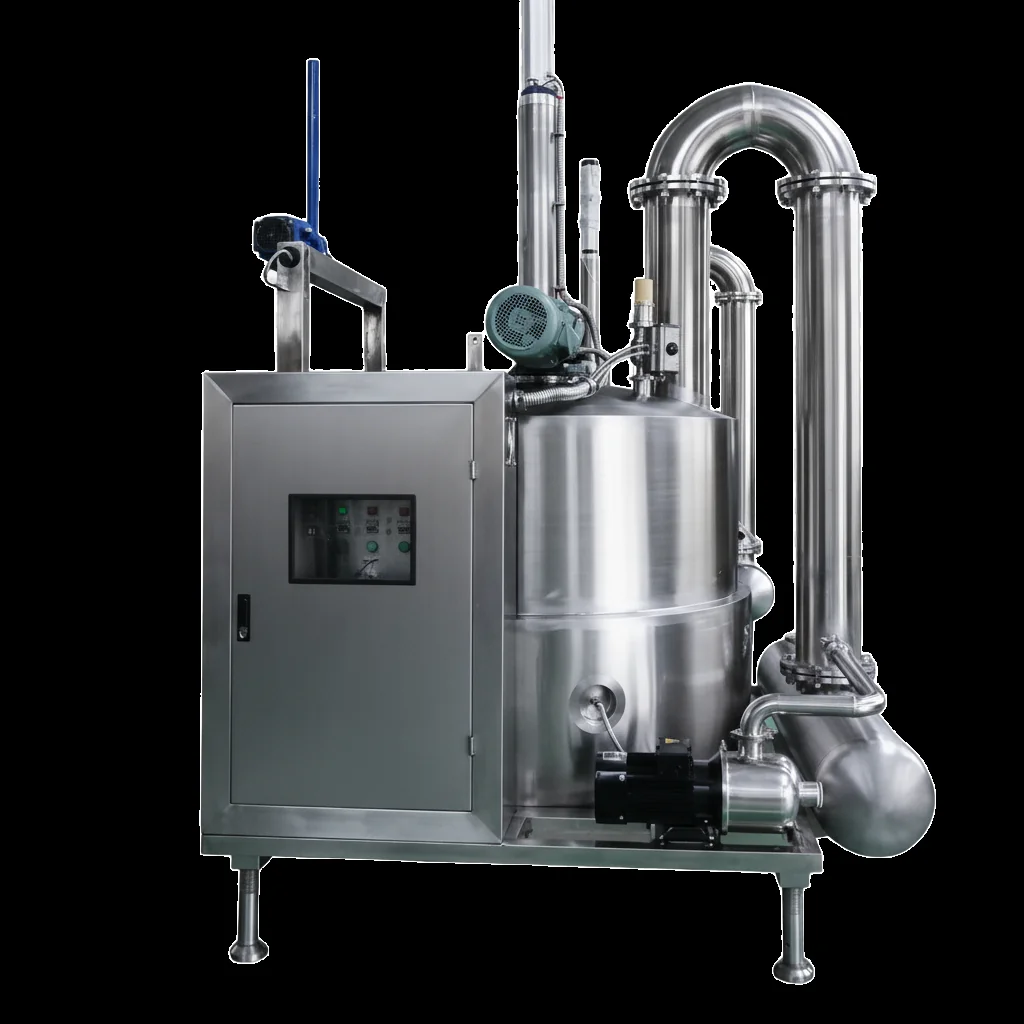
Quick reference: QS batch vacuum fryer comparison
| Model | Batch size | Vessel dimensions | Process | Controls |
|---|---|---|---|---|
| QS-VF100 | 100 KG/batch | Compact batch vessel | 80–100 °C vacuum frying + centrifuge de-oiling | Delta PLC + MCGS touchscreen |
| QS-VF150 | 150 KG/batch | Mid-size batch vessel | 80–100 °C vacuum frying + centrifuge de-oiling | Delta PLC + MCGS touchscreen |
| QS-300 | 300 KG/batch | 2600 mm (H) × 1600 mm (D) | 80–100 °C vacuum frying + centrifuge de-oiling | Delta PLC + MCGS touchscreen |
Batch size is rated on finished-product weight per batch. Specifications are for reference only and are subject to the final supplied equipment.
Because the process is shared, the honest differentiator is throughput class, not technology. A 300KG-class machine does not fry "better" than the 100KG-class — it fries more per cycle. That single fact settles most buying arguments: if your daily target is 400 KG, a QS-VF100 running four batches a shift gets you there; if it is 1.2 tons, you are in QS-300 territory unless you plan to run three shifts around a smaller machine (which is rarely the cheaper answer once labor is counted).
Daily output math: batches × batch size
Batch fryers are sold by batch size, but they earn money by daily output. The formula is simple:
Daily output = batches per shift × batch size × number of shifts
Batch size is rated on finished-product weight — not the fresh weight loaded, since vacuum frying drives off most of the water. Working backward from a daily target:
- 400 KG/day target: QS-VF100 × 4 batches per shift = 400 KG
- 750 KG/day target: QS-VF150 × 5 batches per shift = 750 KG
- 1,200 KG/day target: QS-300 × 4 batches per shift = 1,200 KG
Now the catch that decides whether the math holds: turnaround time. A batch is not just frying time. The full cycle includes loading, vacuum pull-down, frying, centrifuge de-oiling, oil drain, unloading, basket cleaning, and staging the next load. Frying itself takes tens of minutes; the turnaround around it decides how many batches a crew can realistically complete in an eight-hour shift.
Two things move the batch count most:
- Operator count and skill. One to two operators per shift can run a single batch fryer, but loading and unloading are the labor peaks — baskets must be filled, the vessel closed on schedule, and product discharged while the next batch stages. A practiced crew turns noticeably more batches than a new one.
- Changeover between products. Switching SKUs means cleaning baskets, flushing or filtering oil, and loading new recipes on the Delta PLC + MCGS controls. Single-product days run the most batches; multi-SKU days run fewer. Larger machines lose more absolute time per changeover, so the QS-300 pays off best on long, single-product runs.
The classic sizing mistake is buying batch size without sizing the crew. A QS-300 fed by an understaffed team can lose to a well-run QS-VF150 on real daily output — the bigger machine just waits longer between batches. Size the labor and the machine together. Our vacuum fryer sizing guide walks through the full calculation with worked examples.
Three buyer profiles — which one is you?
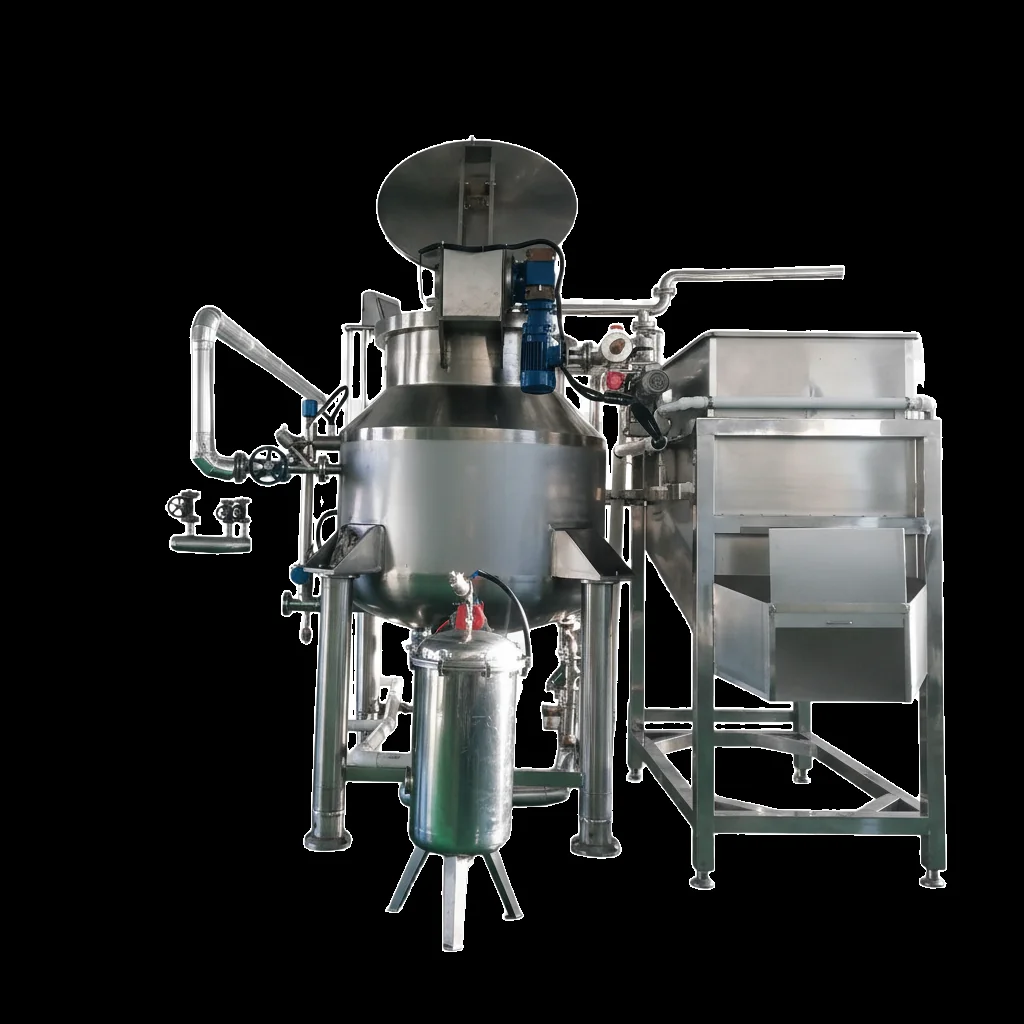
Profile 1: The snack startup — QS-VF100
You are testing recipes, pitching distributors, or validating a market with a new vacuum-fried product. Daily demand is irregular, and you may run one product Monday and a different one Wednesday. The QS-VF100 at 100 KG per batch is the lowest-commitment way into industrial vacuum frying: smaller oil charge, smaller floor footprint, one-to-two operators, and a vessel that cycles through trials quickly. The process parameters you develop on it — temperature curves, de-oiling timing, loading density — transfer directly when you scale, because the process is identical on the larger models.
Profile 2: The growing brand — QS-VF150
You have a product that sells, repeat orders, and a production plan that looks like a schedule rather than an experiment. Demand sits in the mid hundreds of kilograms per day and keeps climbing. The QS-VF150 at 150 KG per batch is the steady-production class: roughly 50% more output per cycle than the VF100 without the floor space, oil volume, or crew demands of the 300KG class. This is the model for brands transitioning from "making product when orders come" to "running a daily production plan" — and the most common long-term workhorse size in Southeast Asian snack lines.
Profile 3: The contract manufacturer / high-volume producer — QS-300
You fry for others, or your own brand ships at tonnage scale. Demand is measured in tons per day, runs are long and single-product, and downtime costs real money. The QS-300 at 300 KG per batch (vessel 2600 mm H × 1600 mm D) is built for that duty: fewer cycles for the same tonnage, which means fewer seal cycles, fewer changeovers, and lower labor cost per kilo. Plan the facility around it — check door widths, floor loading, ceiling height for the hoist mechanism, and service clearances before the truck arrives, because the vessel and frame are the largest single pieces on site.
The upgrade path: start small, scale up
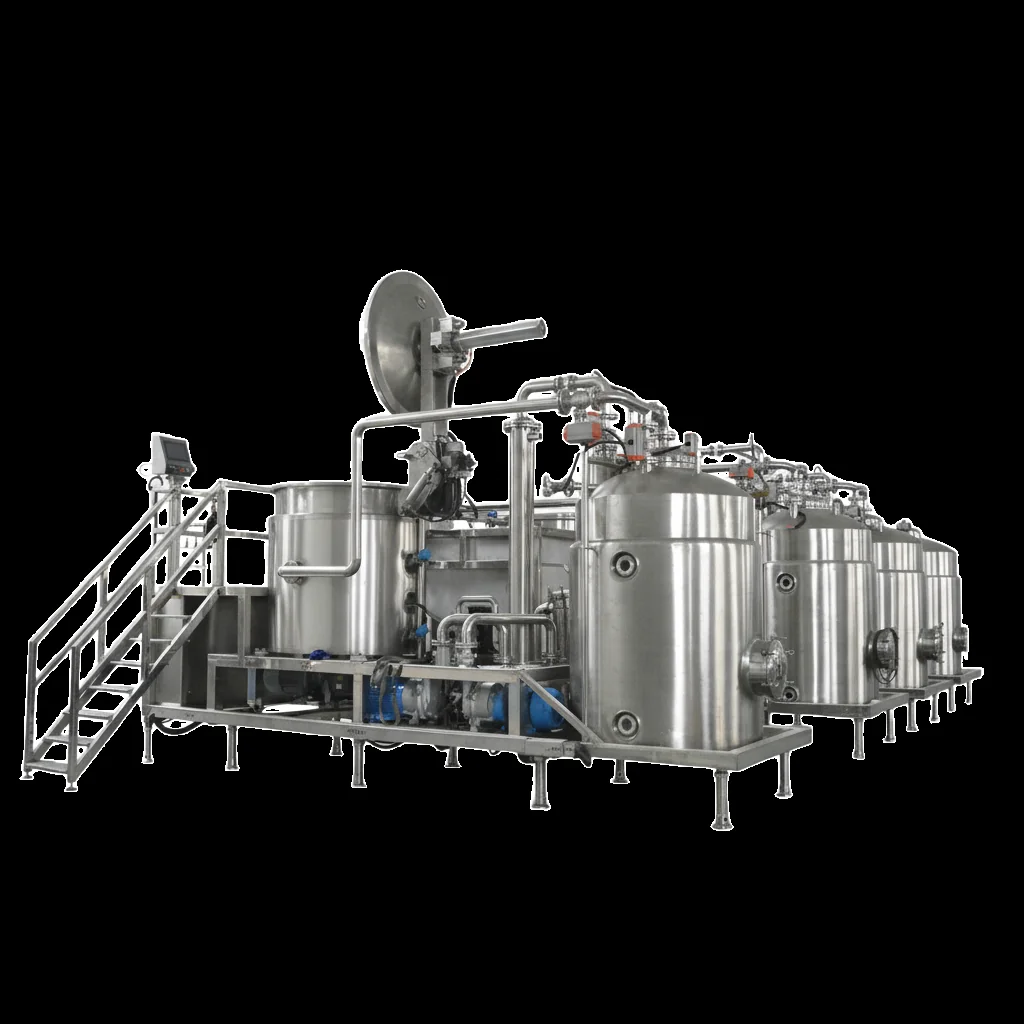
Most producers do not buy their final capacity first. The common trajectory:
- Validate on the QS-VF100. Develop recipes, confirm shelf life and packaging, land the first distributor orders. Keep records of real batch counts per shift — that data becomes your sizing evidence.
- Add a QS-VF150 or QS-300 for volume. When order books consistently exceed what the small machine plus a second shift can deliver, the larger machine takes over scheduled production.
- Keep the small machine for trials. The QS-VF100 becomes your R&D vessel — new SKUs, seasonal products, and customer samples run on it without interrupting the volume line.
This path works because everything transfers: recipes, oil management habits, operator training on the Delta PLC + MCGS controls, and maintenance routines. Only the throughput math and labor planning change. When sizing an upgrade, bring your real numbers — product, current batch counts per shift, target daily tonnage — and the machine is sized from data, not guesses. Expect roughly a 3-month lead time from order confirmation for industrial-class machines, backed by a 1-year warranty, so plan the upgrade against demand forecasts, not against the week you run out of capacity.
How this compares to our sizing guide
This site carries two related guides, and they answer different questions:
- How to Choose a Vacuum Fryer: 100KG vs 150KG vs 300KG teaches the method — how to calculate capacity from daily targets, how to count real batches per shift, and how labor and changeover affect the numbers. Read it to learn how to size.
- This page is the head-to-head model comparison — the three QS models' specs side by side, who each model is for, and how to plan an upgrade path between them. Read it to compare the machines.
If you are early in the process, start with the sizing method, then come back here to match a model to your numbers.
Frequently asked questions
What is the difference between the QS-VF100, QS-VF150, and QS-300?
Batch size. The QS-VF100 processes 100 KG per batch, the QS-VF150 handles 150 KG per batch, and the QS-300 handles 300 KG per batch. All three are batch vacuum fryers running the same process — frying at 80–100 °C under vacuum with centrifugal de-oiling — differing in vessel scale and daily throughput class.
How do I calculate real daily output from batch size?
Daily output = batches per shift × batch size, rated on finished-product weight. A 100KG/batch machine running four batches per shift produces 400 KG per day. Count every step — loading, vacuum pull-down, frying, de-oiling, drain, unloading, cleaning — because turnaround time sets how many batches your crew can actually run.
Which vacuum fryer should a snack startup buy first?
Start with the QS-VF100 (100 KG/batch) for recipe testing and market validation — the lowest-commitment entry into industrial vacuum frying. Growing brands with steady demand step up to the QS-VF150, while contract manufacturers and high-volume lines choose the QS-300.
Can I start small and upgrade from the QS-VF100 later?
Yes. Many producers validate on a QS-VF100, then add a QS-VF150 or QS-300 for volume while keeping the smaller machine for trials and new SKUs. Recipes, controls training, and maintenance routines carry over — only throughput and labor planning change.
What are the vessel dimensions of the QS-300?
The QS-300 vessel measures 2600 mm (H) × 1600 mm (D). Check door widths, floor loading, ceiling height for the hoist, and service clearances against these dimensions before delivery — the vessel and frame are the largest single pieces arriving on site.
How is this guide different from the vacuum fryer sizing guide?
The sizing guide (How to Choose a Vacuum Fryer: 100KG vs 150KG vs 300KG) teaches the calculation method — how to size capacity from daily targets. This page is a head-to-head comparison of three specific models: specs side by side, buyer profiles, and upgrade paths.
Tell us your target output — we'll match the model
Send your product and daily tonnage target; we'll size the right batch class and walk you through the full line at vf.freezevacuumfry.com.
Specifications are for reference only and are subject to the final supplied equipment.