Why de-oiling decides the quality of the snack
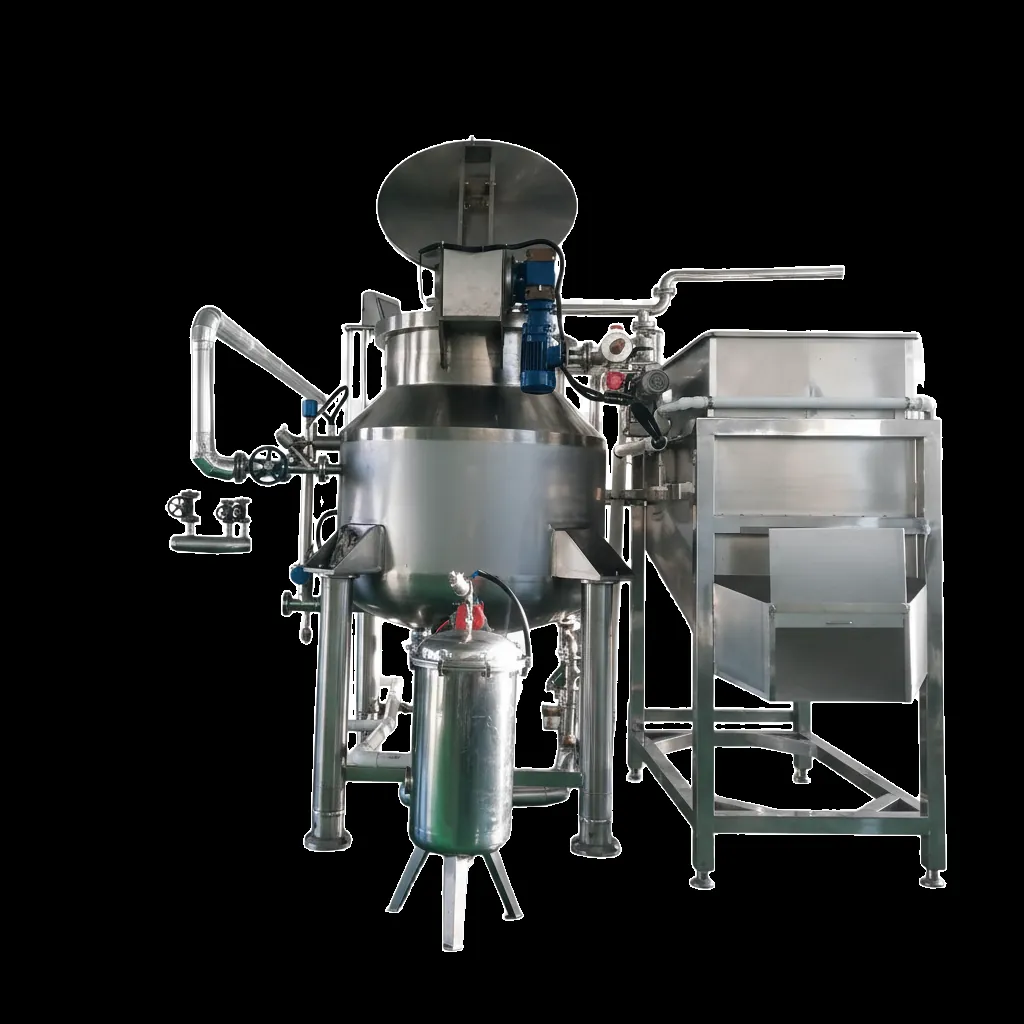
Vacuum frying runs at 80–100 °C instead of the ~170 °C of conventional frying. But the frying step only does half the job: when the chips come out of the oil bath, they carry a film of surface oil — and what happens to that film determines whether the finished snack is crisp and clean or greasy and short-lived.
Surface oil that is not removed is reabsorbed as the product cools. The consequences are direct:
- Greasy mouthfeel. The first bite tastes like oil rather than fruit or vegetable.
- Shorter shelf life. More oil in the product means more oil that can oxidize — and hot product meeting oxygen is the worst combination.
- Wasted frying oil. Every gram of oil that leaves with the product must be bought and replaced. On 100–300 kg batches, that waste compounds fast.
That is why de-oiling is not optional on a vacuum fryer — it is the step that turns "fried" into "low-oil snack." With proper in-vessel de-oiling, vacuum fried snacks reach oil content below 18%. The method matters, and there are really only three: centrifugal spinning, gravity draining, and mechanical pressing.
Method 1 — In-vessel centrifugal spinning under vacuum
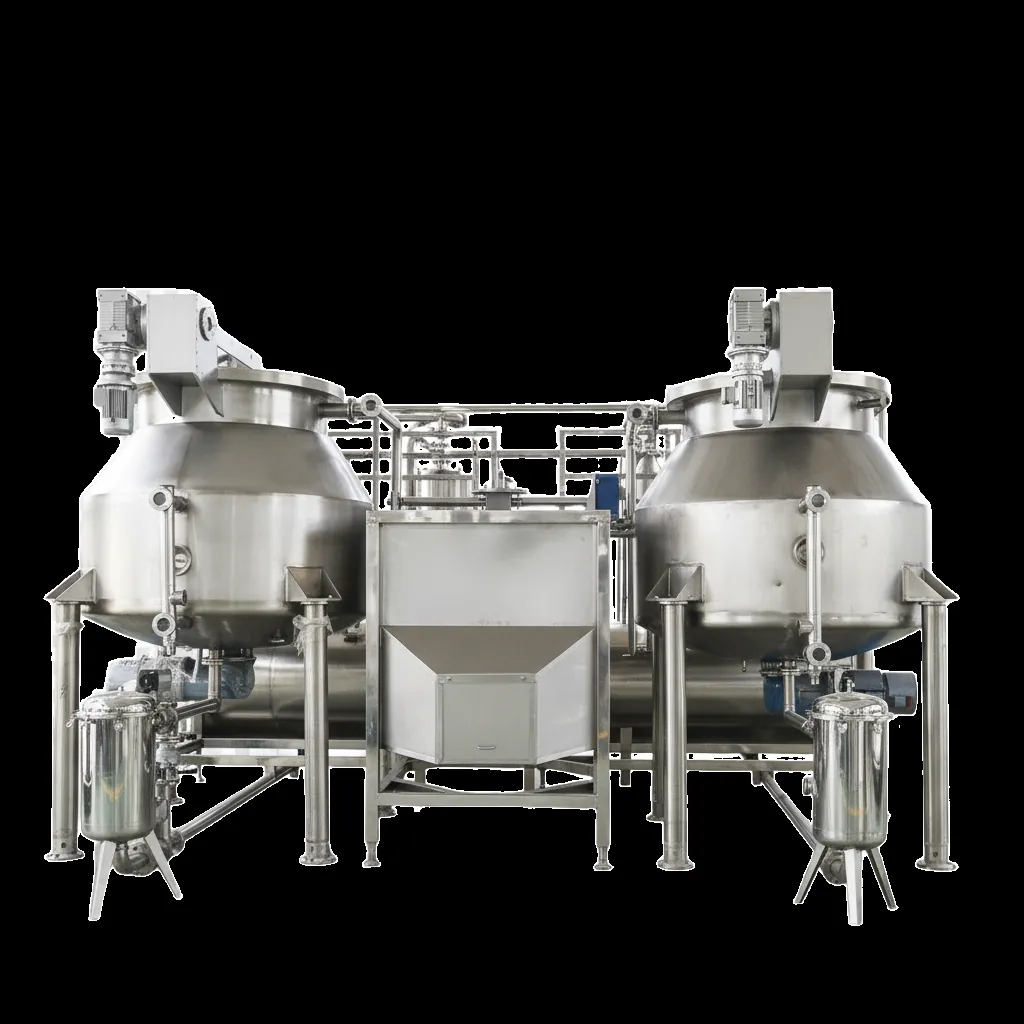
This is the standard on batch vacuum fryers, including the QS-VF100, QS-VF150 and QS-300. The sequence is what makes it work:
- Frying finishes. The product basket is in the oil inside the sealed vessel, still under vacuum.
- The oil drains away back to its storage tank, leaving the basket with no oil bath around it.
- The basket spins. While the vessel is still evacuated — lid closed, vacuum not yet released — the basket rotates. Centrifugal force throws surface oil off the product and against the vessel wall, where it collects and drains.
- Vacuum is released. Only after the spinning is done is the vessel brought back to atmospheric pressure and opened.
The critical detail is step 3: the oil is stripped while the product is still under vacuum. Hot product that has just left the oil is at its most vulnerable to oxidation — but inside the sealed vessel there is effectively no oxygen for it to meet.
The second advantage is that de-oiling needs no extra handling step. The basket never leaves the vessel, the product is never poured or transferred, and the oil goes straight back into the process. That matters for fragile products like strawberry or apple chips, which break every time they are moved.
The trade-off is real but manageable: the method needs a basket-drive mechanism and a drive-sealed vessel, which is why it is built into purpose-designed batch machines rather than bolted on afterwards. For the mechanism in more detail, see our deep-dive: Why Centrifugal De-oiling Matters After Vacuum Frying.
Method 2 — Gravity draining on racks
Gravity draining is the simplest approach: after frying, the basket is lifted out and set on a drip rack, and the oil is left to run off on its own. No mechanism, no capital cost — which is why it persists in small operations.
The physics work against it in three ways:
- Slow means reabsorption. Draining takes minutes, and during those minutes the product cools. Cooling oil thickens and is reabsorbed into the product's surface instead of dripping away.
- Uneven. The bottom of a hanging basket drains worse than the top — pieces at the bottom sit in the oil draining down from above.
- Open air. The basket is out of the fryer, exposed to oxygen while still hot — minutes of oxidation on a large, hot surface area.
There are operational costs too: drip racks take floor space, dripping oil is a hygiene and slip hazard, and someone has to move hot baskets around. Gravity draining suits robust, low-value products where oil content and shelf life are not selling points — but for premium fruit and vegetable chips, it leaves too much quality on the table.
Method 3 — Mechanical pressing
Mechanical pressing removes oil fast by squeezing it out: rollers or plates compress the product. In pure oil-removal terms it is the most aggressive of the three methods.
The problem is that it is also the most destructive. Most vacuum fried products are porous and fragile by design — the open structure that makes a banana or jackfruit chip crisp is exactly the structure that collapses under compression.
- Breakage and fines. Compressed chips fracture, and broken pieces season and pack worse.
- Narrow product range. Only viable for dense, hard products that survive compression — such as thick root vegetable slices — not fragile fruit chips.
- Extra equipment and handling. A press is a separate machine the product must be transferred to, adding handling damage on top of compression damage.
Pressing is a legitimate tool for the specific products it suits. But as a general de-oiling method, it trades one quality attribute (oil content) against another (texture and piece integrity) — a trade that rarely wins.
Side-by-side comparison
De-oiling methods at a glance
- Centrifugal spinning under vacuum: speed — fast, part of the batch cycle; oil removal — high and even across the basket; product damage risk — low, no transfer; oxygen exposure — none, vessel still evacuated; equipment — basket drive integrated in the fryer.
- Gravity draining: speed — slow, minutes on the rack; oil removal — moderate, uneven top-to-bottom; product damage risk — low, but extra handling; oxygen exposure — high, hot product in open air; equipment — racks and collection trays only.
- Mechanical pressing: speed — fast per batch; oil removal — high but texture-destroying; product damage risk — high for fragile chips; oxygen exposure — moderate (separate, usually open machine); equipment — standalone press.
Why centrifugal spinning wins for fruit and vegetable chips
For the products that carry the premium segment — apple, strawberry, banana, jackfruit, carrot and similar chips — spinning under vacuum wins on every dimension that matters commercially:
- Texture survives. The force is centrifugal and distributed: pieces stay cradled in the basket instead of being crushed or tumbled.
- Shelf life improves. Less oil in the product and no oxygen exposure while it is hot.
- Consistency. Every piece experiences the same spin — no top-and-bottom oil split like gravity draining.
- No transfer step. De-oiling happens where the frying happened, eliminating one of the biggest sources of breakage.
- Automatic oil recovery. Spun-off oil collects on the vessel wall and returns to the process instead of ending up on a drip tray.
This combination is why centrifugal in-vessel de-oiling is the default specification on batch vacuum fryers from 100 kg through 300 kg batch size: it delivers oil content below 18% as a repeatable batch property.
Practical factors that shape the result
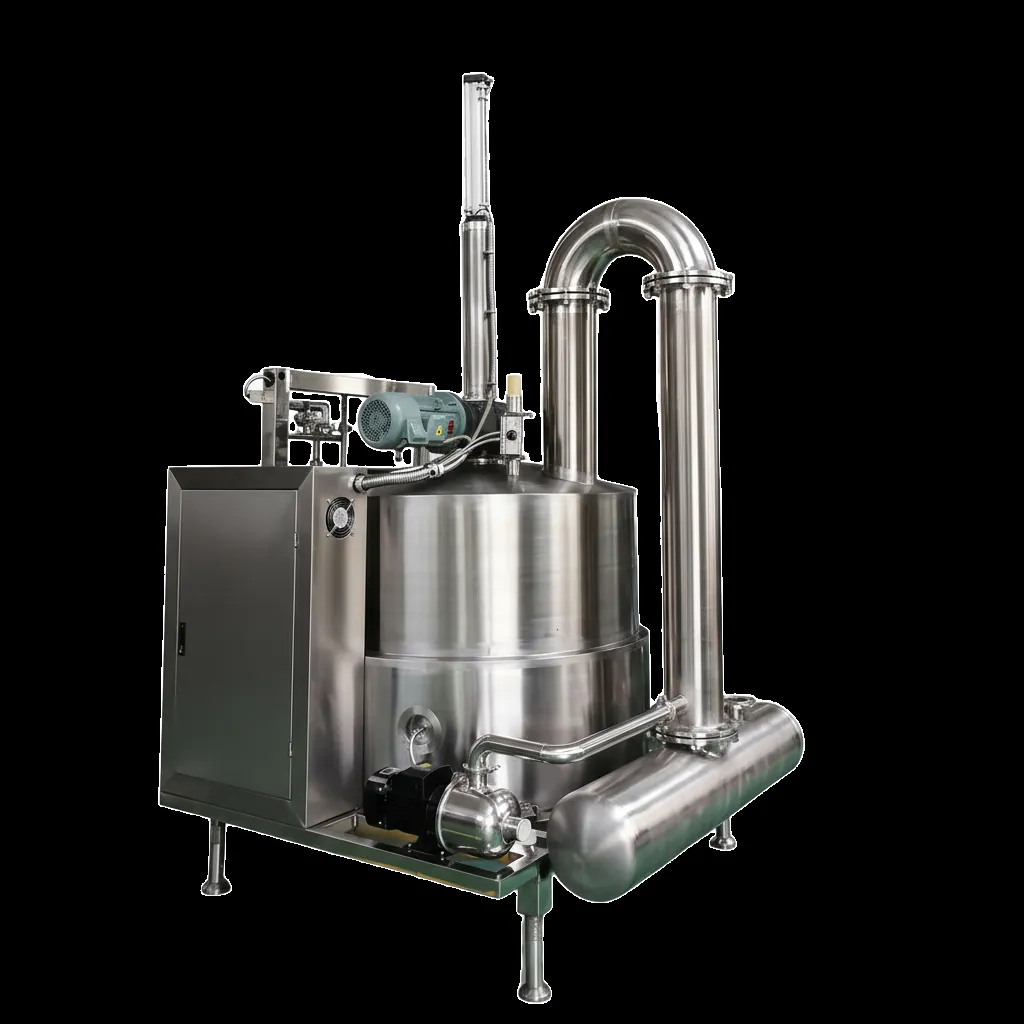
The method is standard, but the result still depends on how it is run. The variables that separate a good spin from a mediocre one:
- Spin timing relative to vacuum release. Spin while the vessel is still under vacuum, and only release vacuum after the spin finishes. Releasing first lets air rush in over hot, oiled product.
- Basket loading. An overloaded basket blocks oil from leaving the bed. Load to the rated batch weight — 100, 150 or 300 kg per batch on the QS line — and keep a loose, even bed.
- Product fragility. Fragile products (thin strawberry slices, delicate apple chips) use a gentler, shorter spin; dense products (thick carrot or cassava slices) can take a longer one.
- Oil condition. Oil that has broken down through long use is more viscous and leaves the product less cleanly — one more reason to manage filtration and change intervals.
- Post-spin handling. After the spin and vacuum release, move the product onward promptly. De-oiled chips are at their best quality the moment the lid opens.
One planning note: machines with integrated de-oiling, like the QS vacuum fryer range, ship on roughly a 3-month lead time and carry a 1-year warranty. Make de-oiling performance an acceptance criterion for your trial batches.
Frequently asked questions
What is centrifugal de-oiling in vacuum frying?
It is the step on a batch vacuum fryer where the product basket spins inside the sealed frying vessel after the oil has been drained away. Centrifugal force throws surface oil off the hot product while the chamber is still evacuated, so the oil leaves before air — and oxygen — can reach the product. It is the standard method on batch machines like the QS line.
Can I skip de-oiling for vacuum fried snacks?
No. Chips come out of the oil bath carrying a film of surface oil, and if it stays there it gets reabsorbed as the product cools — giving a greasy mouthfeel, faster rancidity and shorter shelf life, plus wasted frying oil. De-oiling is the step that makes the finished product's low oil content possible.
Why is gravity draining worse than spinning?
Gravity draining is slow: while the basket hangs over a drip rack, the product cools and its surface oil thickens and reabsorbs instead of dripping away. Results are also uneven — the bottom of the basket drains worse than the top — and the process happens in open air, exposing hot product to oxygen. Spinning the basket under vacuum strips oil off actively and evenly before any of that can happen.
Does de-oiling damage fragile chips like apple or strawberry slices?
Centrifugal spinning in the basket is gentle on fragile chips because the force is distributed and the pieces stay cradled in the basket — no handling, no tumbling, no transfer. That is exactly why spinning is preferred over mechanical pressing, which can crush delicate products. Fragile products simply use a shorter or gentler spin profile.
Which de-oiling method suits which product?
In-vessel centrifugal spinning under vacuum is the default for fruit and vegetable chips — it protects texture and delivers even, low oil content. Gravity draining works for low-value, robust products where oil content and shelf life matter less. Mechanical pressing is only for dense, hard products that can survive compression, such as thick root vegetable slices.
Need low-oil vacuum fried snacks?
Tell us your product and target batch size — we'll show you how in-vessel de-oiling delivers oil content below 18% on the QS vacuum fryer range. See the machines on our vacuum fryer page.
Specifications are for reference only and are subject to the final supplied equipment.