Why heating matters in vacuum frying
Vacuum frying works because the vacuum changes how the oil behaves: under reduced pressure, food fries at 80–100°C, well below open-frying temperatures. That lower temperature protects colour, flavour, and heat-sensitive nutrients, and lets a vacuum fried snack finish crisp with an oil content below 18%. But the advantage only holds if the oil stays at the set temperature, evenly, across the whole vessel, for the whole batch.
That is why the heating method deserves attention during buying, not after installation. Uneven heating means some pieces fry faster than others, so a batch comes out mixed, and oil quality degrades faster where the oil runs hot. Tight, even control keeps the batch consistent and protects the oil. The three methods below all serve the same goal — stable, even heat at 80–100°C — but each brings different demands on your site, your operators, and your maintenance plan.
Electric heating
Electric heating uses heating elements to warm the oil directly or through a jacket around the vessel. Power is switched or modulated by the control system in response to oil temperature, so the heater reacts quickly to drift from the set point. The most obvious feature of electric heating is responsiveness: when a cold batch is loaded and the oil temperature dips, the elements drive it back promptly, and when the set point is reached, they cut back just as fast.
Site requirements are simple in one sense and demanding in another. There is no boiler, no steam pipework, and no separate heating fluid to manage — the fryer needs a suitable electrical supply and a control cabinet. That simplicity suits a site without steam infrastructure. The other side is that the full heating load falls on the electrical supply, so it must be sized for the fryer, and any future expansion may need an electrical review. Check early that the site supply matches the machine.
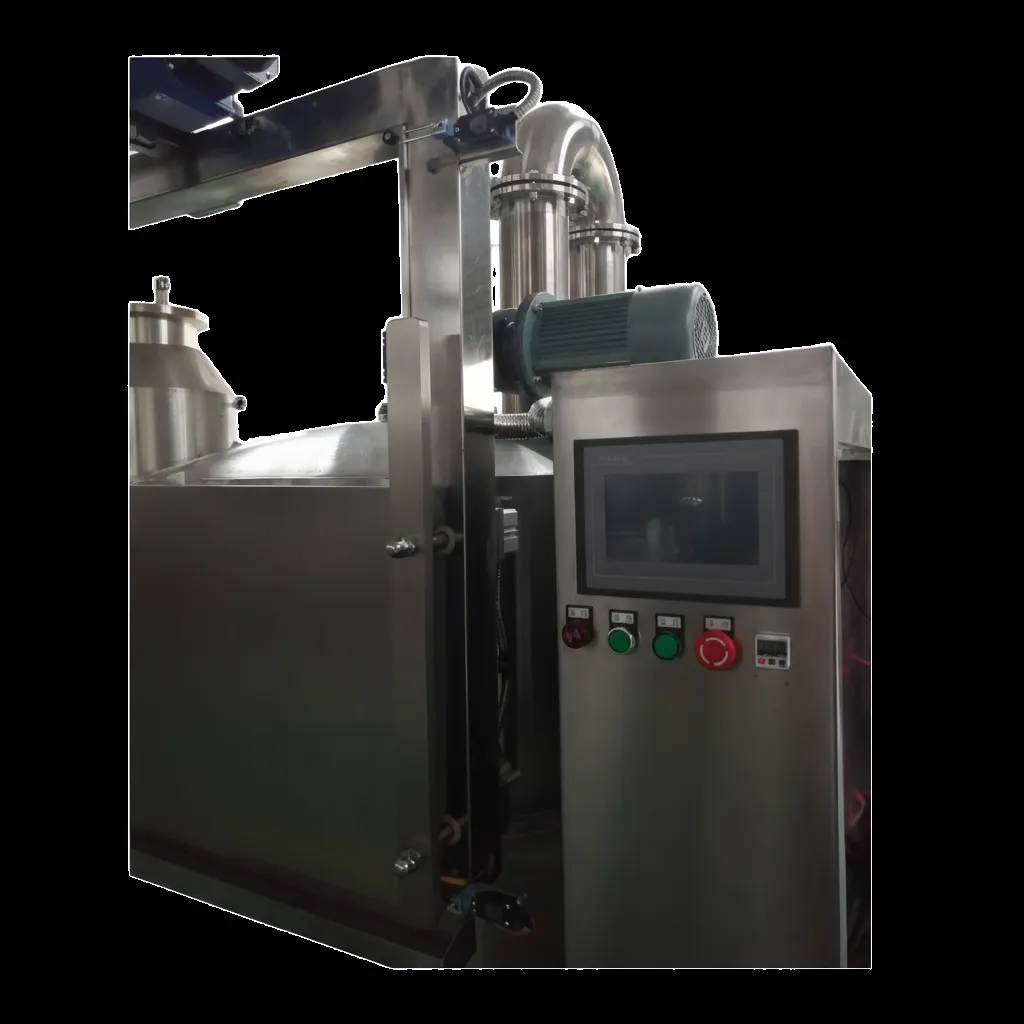
Maintenance centres on the elements and the controls that switch them. Elements are wearing parts: over time they can scale, fatigue, or fail, and a failed element changes the heat pattern until it is replaced. Ask how elements are accessed, whether one can be replaced without draining all the oil, and how faults are reported. On QS fryers, a Delta PLC with an MCGS touchscreen shows temperature set points, alarms, and heating status to the operator at a glance. Finally, heating configurations vary between suppliers and models, so confirm with your supplier which heating configuration your quoted machine uses.
Steam heating
Steam heating carries heat from a boiler to the fryer: steam gives up its heat to the oil through a jacket or coils around the vessel. The transfer is gentle and even: steam condenses at a steady temperature across the whole heating surface, so hot spots are less likely than with a concentrated heat source. For delicate products where even, mild heat matters, that evenness is the main selling point of steam.
The trade-off is infrastructure. Steam heating only makes sense where a boiler already exists or is planned: the fryer needs a steam supply, condensate return, steam traps, and related pipework and safety fittings. If your site already runs steam, the fryer slots into existing utilities. If it does not, adding a boiler purely for the fryer can outweigh the heating benefits, and electric heating may be the simpler route.
Maintenance for steam heating sits mostly outside the fryer: traps, valves, and condensate lines need regular checks, and scale or condensate problems show up as slow or uneven heating. Inside the fryer, the jacket or coils need inspection for leaks and fouling on a planned schedule. Steam also brings safety discipline — pressure fittings, relief devices, trained operators — which a site running steam already has, but a new site must build from scratch. As with every option here, configurations vary between suppliers and models, so confirm with your supplier which heating configuration your quoted machine uses.
Thermal-oil heating
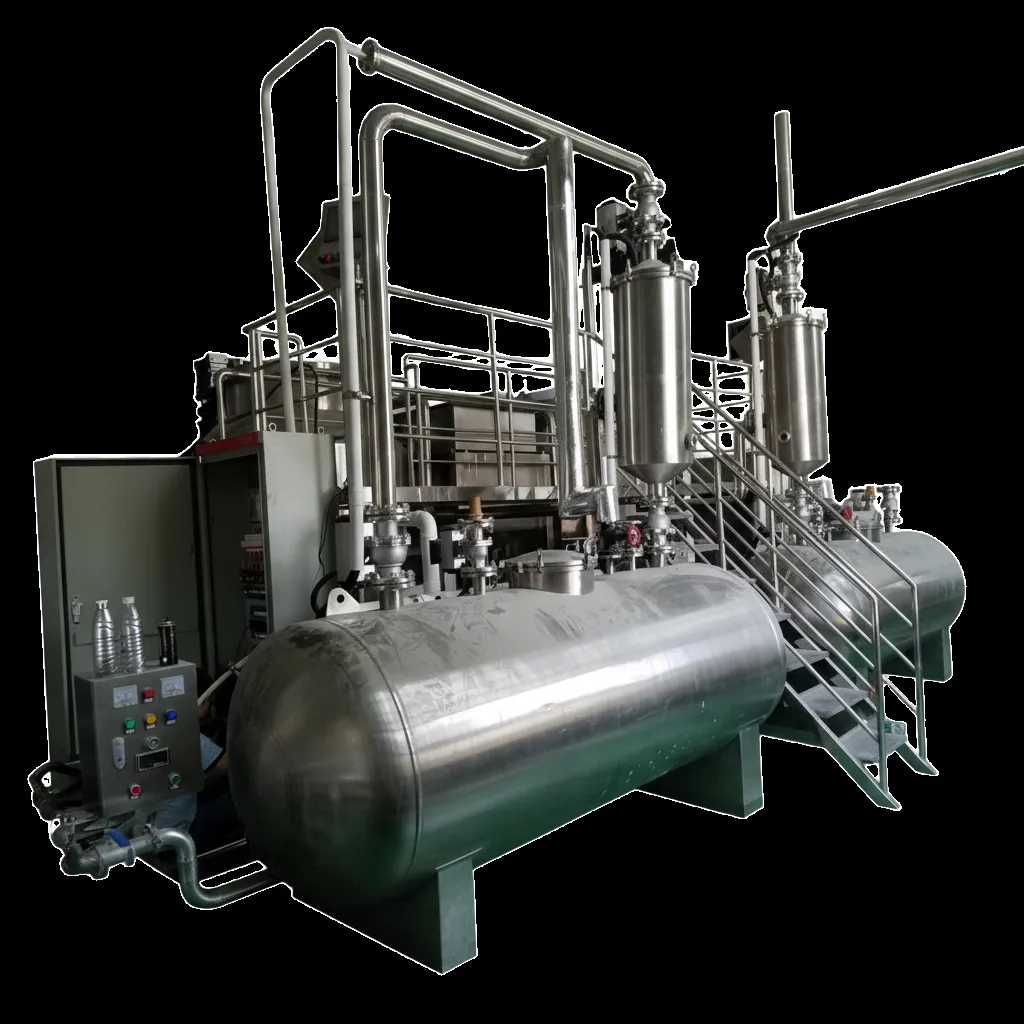
Thermal-oil heating uses a separate loop of heat-transfer oil: an external heater warms it, a pump circulates it through a jacket or coils around the frying vessel, and it gives its heat to the frying oil. Because the fluid circulates, it spreads heat evenly across a large heating surface, which suits larger vessels, where one concentrated heat source would struggle to keep the whole oil volume uniform.
The strength of thermal-oil heating is evenness at scale and a smooth, steady temperature profile without sharp peaks. The price is a second system to own — heater unit, circulation pump, expansion arrangement, and thermal oil that degrades and needs periodic replacement. Leaks in the loop need prompt attention, and the loop adds inspection tasks on top of the fryer itself. For a small single fryer, that extra system can be more than the job needs; for a large vessel or a line where several vessels share one loop, it can make sense.
Temperature control with thermal oil is steady rather than fast: the loop holds a stable temperature well, but responds more slowly to a sudden change, such as the dip when a cold batch is loaded, because the whole loop must adjust. Operators should plan loading around that rhythm. As with the other options, configurations differ between suppliers and models, so confirm with your supplier which heating configuration your quoted machine uses.
The three options side by side
No option wins on every measure. The table below summarises the qualitative differences; no single row decides the choice — match the rows to your site.
Heating options at a glance
| Aspect | Electric | Steam | Thermal oil |
|---|---|---|---|
| Heating method | Elements heat oil directly or via a jacket | Steam condenses in a jacket or coils | Transfer oil circulates through a jacket or coils |
| Control responsiveness | Fast: elements switch quickly | Steady and even | Steady, slower after sudden load changes |
| Site utilities | Electrical supply and control cabinet | Boiler, steam supply, condensate return | Heater unit, circulation pump, thermal-oil loop |
| Maintenance focus | Elements and switching controls | Traps, valves, condensate lines, jacket integrity | Heater, pump, loop integrity, thermal-oil condition |
| Best fit | Sites without steam infrastructure | Sites already running a boiler | Larger vessels, shared lines |
Read the table against your own situation. A site with a boiler next door weighs steam very differently from a greenfield site, and a buyer planning one small fryer weighs the extra thermal-oil loop very differently from a buyer planning a multi-vessel line. Heating is a site decision as much as a machine decision.
Heating and batch size
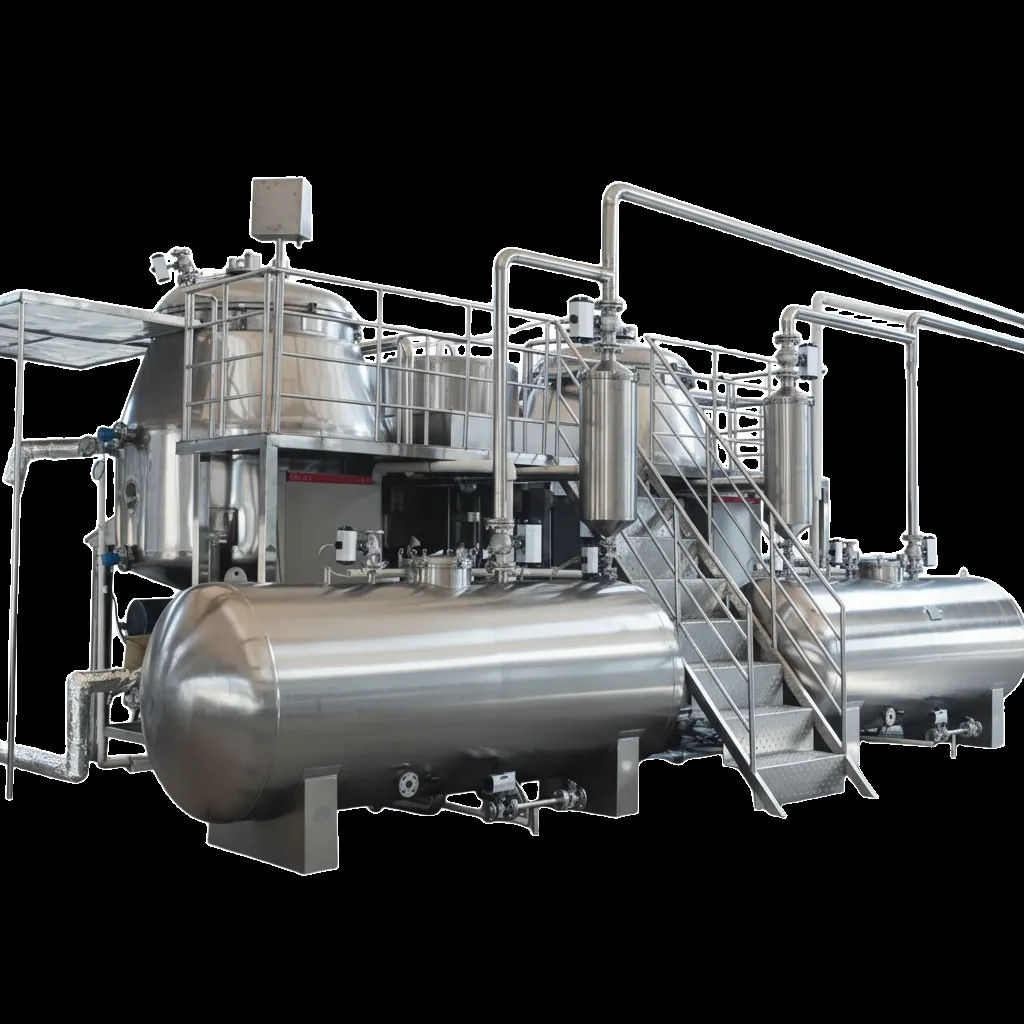
Batch size changes what the heating system must do. A small batch in a small vessel is forgiving: modest oil volume, heating surface close to all of it, quick recovery under any method. As batches grow — from a 100KG/batch QS-VF100, through a 150KG/batch QS-VF150, to a 300KG/batch QS-300 — the oil volume grows faster than the heating surface, and evenness becomes harder to hold. A method that keeps a small vessel uniform may leave warm and cool zones in a large one, and a slow-responding method will show a longer dip after a large cold load.
That is why scale-up questions belong in the quotation stage. Ask the supplier how temperature uniformity is achieved at your planned batch size, how the control system handles the loading dip, and whether the heating arrangement changes between small and large models in the range. A Delta PLC with an MCGS touchscreen shows oil temperature and heating status clearly, but the display only reports what the heating system achieves — it cannot fix an uneven vessel. Confirm heating behaviour at full batch size before you order, and confirm with your supplier which heating configuration your quoted machine uses.
Decision checklist: questions for your supplier
Use these questions in your enquiry or quotation discussion. Together, the answers tell you more than any brochure claim:
- Which heating configuration does my quoted machine use — electric, steam, or thermal oil?
- What site utilities does it need, and what must be ready before installation?
- How is oil temperature controlled and displayed, and what alarms warn of overheating or heater faults?
- How even is the oil temperature across the vessel at my largest planned batch size?
- How does the system recover when a cold batch is loaded and the oil temperature dips?
- Which heating parts are wearing parts, how are they accessed, and which spares should I stock?
- What routine maintenance does the heating system need, and how often?
- If I expand to a larger batch size later, does the heating arrangement change?
Heating is easy to overlook beside capacity and product range, but it decides whether the low-temperature advantage of vacuum frying — frying at 80–100°C with crisp results and oil content below 18% — holds batch after batch. Settle it in writing before you order.
Frequently asked questions
Which heating option is best for a batch vacuum fryer?
There is no single best option. Electric heating suits sites that want simple utilities and responsive control. Steam heating suits sites that already run a boiler and value gentle, even heat. Thermal-oil heating suits larger vessels where even temperature across a big oil volume matters most. The right choice depends on your site utilities, batch size, and maintenance capacity, so confirm with your supplier which heating configuration your quoted machine uses.
Does the heating method change the frying temperature?
No. The frying temperature is set by the process, not by the heater. Vacuum frying happens at 80–100°C because the vacuum lowers the behaviour of the oil, letting food fry at a lower temperature than open frying. The heating method only supplies and holds that temperature; what matters is how evenly and steadily it does so across the whole oil volume.
Can I change the heating method after the fryer is installed?
In practice, no. The heating method is built into the vessel design, the pipework, and the control setup, so switching from one method to another after installation would mean major rework. Treat the heating choice as a permanent part of the machine specification, and settle it before you order, not after delivery.
What should I ask the supplier about heating before ordering?
Ask which heating configuration your quoted machine uses, what site utilities it needs, how temperature is controlled and displayed, what routine maintenance the heating parts need, and which wearing parts you should stock. Also ask how the heating behaves at your largest batch size, and how the control system responds when a batch is loaded and the oil temperature dips.
Plan your vacuum frying line
Tell us your snacks and target output — we will help you size the fryer. Explore the range on our vacuum fryer page.
Specifications are for reference only and are subject to the final supplied equipment.