What each process actually is
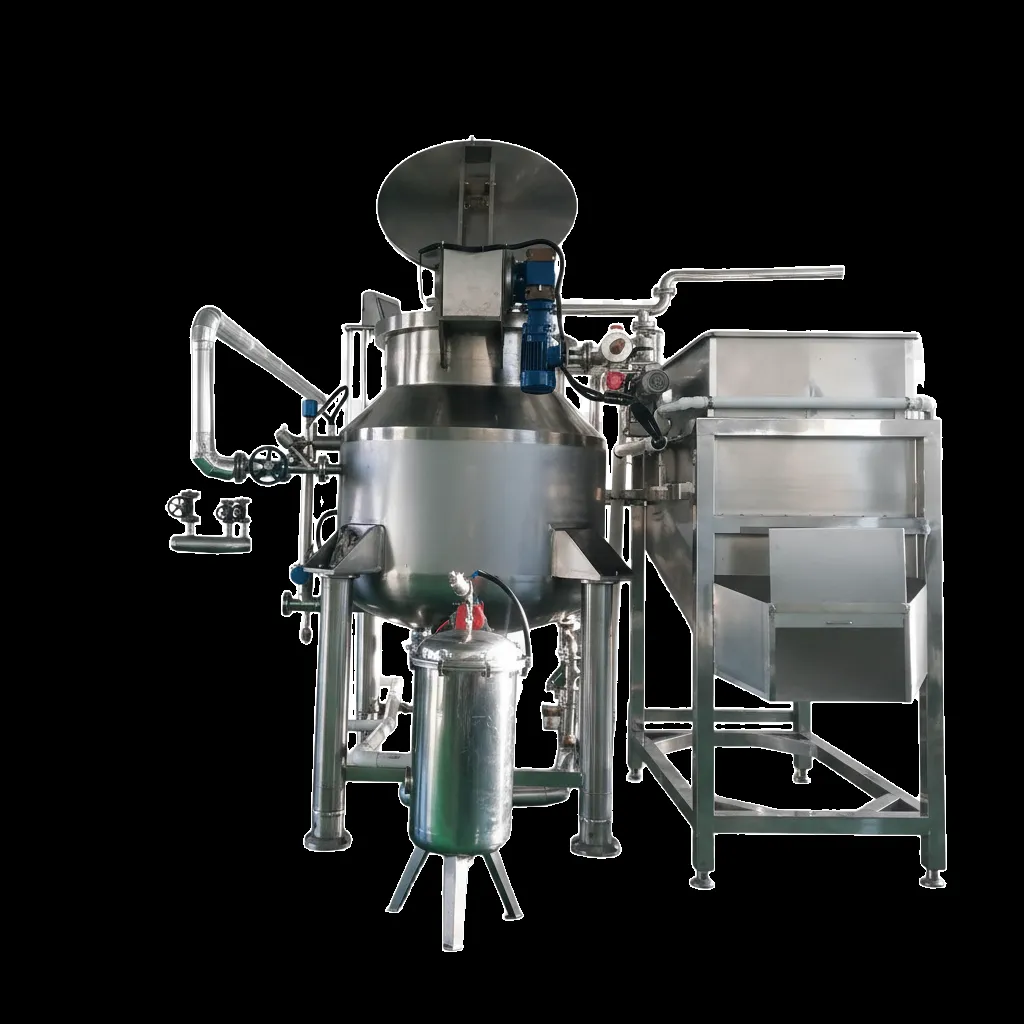
Vacuum frying is frying under reduced pressure. Lowering the pressure lowers the boiling point of water, so the product's moisture escapes vigorously at only 80–100 °C — temperatures where sugars don't caramelize aggressively and pigments and heat-sensitive compounds survive. After frying, a centrifugal de-oiling spin inside the sealed vessel throws surface oil off before the vacuum is released. Oil content below 18% is the confirmed benchmark for QS vacuum fryers.
Baking is cooking with hot air at atmospheric pressure. Heat transfers from the air (and usually from heated trays or bands) into the product; there is no oil bath and typically no de-oiling step. Temperatures are much higher than in vacuum frying, and the process is continuous — products travel through tunnel ovens on a belt, with time and zone temperatures as the main controls.
The two processes don't compete for the same job. Vacuum frying starts with a real slice of fruit, vegetable or seafood and keeps it recognizable. Baking starts with a dough, batter, pellet or extruded piece and builds structure through heat. That difference in starting point is what everything else follows from.
Texture, color and eating experience
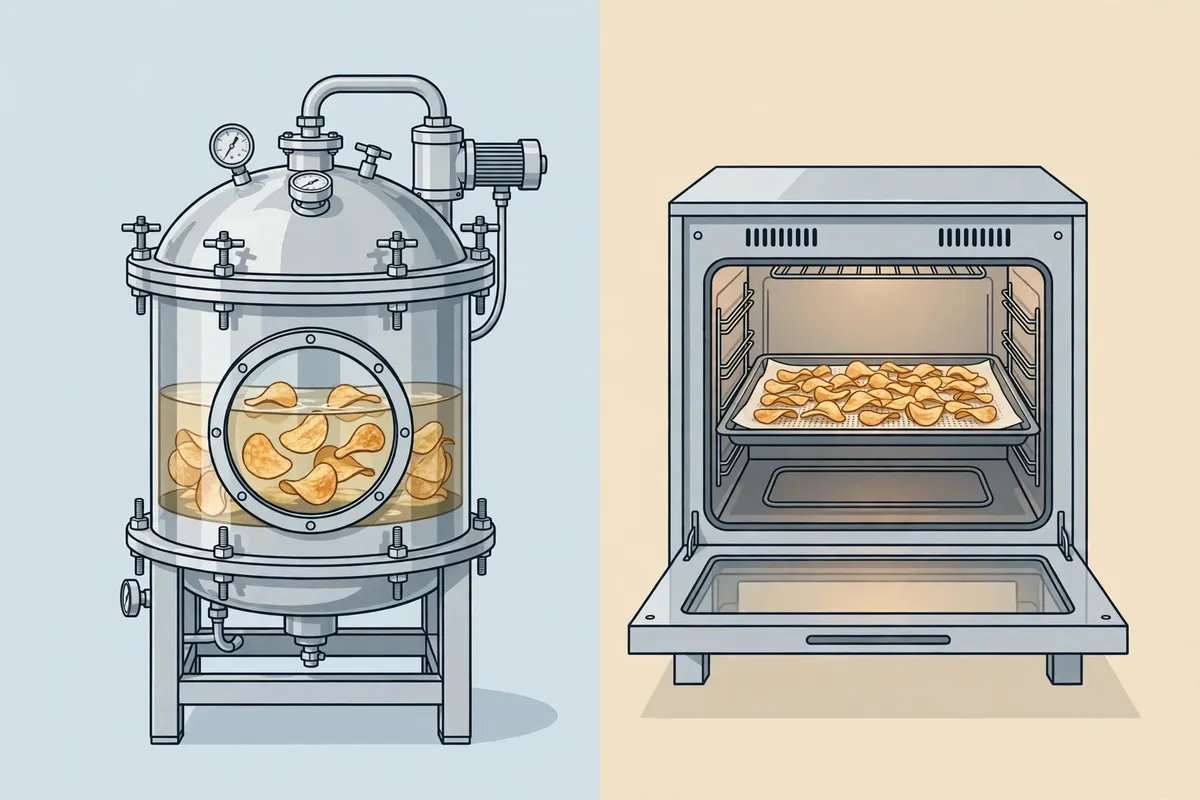
The eating experience is where consumers actually judge the difference:
- Vacuum-fried snacks are light and crisp with a slightly puffed, airy structure. Because frying happens at low temperature, the slice keeps its natural color — a mango crisp looks like mango, a beetroot chip looks like beetroot. The bite is delicate rather than hard, which is why vacuum-fried snacks skew premium.
- Baked snacks develop their structure through surface drying and browning. Thin baked slices can be crisp, but the process tends toward a harder, drier bite, and hot air at high temperature browns the surface — fine for crackers where the brown note is part of the flavor, less fine for a product that should look and taste like the fruit it came from.
- Uniformity. Vacuum frying is a batch process: every slice in the basket experiences the same vacuum, temperature and time, so batches are highly uniform. Tunnel ovens are continuous and excellent for volume, but edge-vs-center temperature variation across a wide belt is a real operational concern.
Rule of thumb: if the product's selling point is "real fruit/vegetable, nothing added," vacuum frying's gentle profile is hard to beat. If the product is formulated — flavored crackers, protein crisps, extruded pellets — baking is the natural home.
The "healthy" question: oil and nutrition
Both processes get marketed as healthy, and both claims need a closer look:
- Vacuum-fried snacks contain frying oil — but less of it, and with less damage. The confirmed benchmark for QS vacuum fryers is oil content below 18%, achieved through in-vessel centrifugal de-oiling while the vacuum is still on. Low-temperature frying also produces fewer heat-damaged oil compounds than deep frying at 160–180 °C, and the oil turns over more slowly because it isn't constantly scorched.
- Baked snacks contain no frying oil. That is a genuine advantage for oil-free label claims — "baked, never fried" is one of the most recognizable snack claims in the world. But no-oil is not the same as low-calorie: baked snacks can still be energy-dense, and the high temperatures involved can degrade heat-sensitive compounds more than gentle low-temperature frying does.
- The honest comparison is the nutrition panel. Compare per-100g oil content, calories and ingredient lists of the actual finished products, not the process names. A vacuum-fried mango crisp with under 18% oil and a two-ingredient list (mango, oil) is a different product from a baked cracker with fifteen ingredients — whichever direction the numbers favor depends on the recipe.
Neither process lets you invent claims. Don't promise vitamin retention numbers you haven't measured, and don't call a fried product "oil-free." Measure the finished product, print the panel, and let the label say what the lab proved.
Which products suit which process
Product fit is the decision that matters most. A quick map:
- Vacuum frying — natural slices. Mango, strawberry, banana, jackfruit, apple; carrot, beetroot, lotus root, okra, sweet potato, taro; shrimp chips and fish skin crisps. These are products where the raw material is a recognizable slice and the selling point is its natural character.
- Baking — formulated products. Grain and legume crackers, extruded and pelleted snacks, dough-based chips, protein-fortified crisps. These are products where the recipe is built for hot-air cooking and structure comes from the formulation, not from the raw slice.
- The overlap zone — potato. Potato is the one raw material with a genuine choice: vacuum-fried potato crisps (premium, natural, low oil) and baked potato snacks (formulated, oil-free claim) both sell. Here the decision is brand strategy, not physics.
Be wary of the "bake everything" shortcut for natural slices. Thin fruit and vegetable slices baked at high temperature tend to come out hard, dark and leathery — the process fights the product instead of serving it. If your raw material is a delicate fruit slice, it is telling you which process it wants.
Line complexity, throughput and cost
The equipment realities differ as much as the products:
- Baking lines are simpler and cheaper to install. Ovens are mature commodity equipment; a tunnel oven line is straightforward to buy, install and staff. For a startup chasing volume with a formulated product, baking is the lower-risk capital choice.
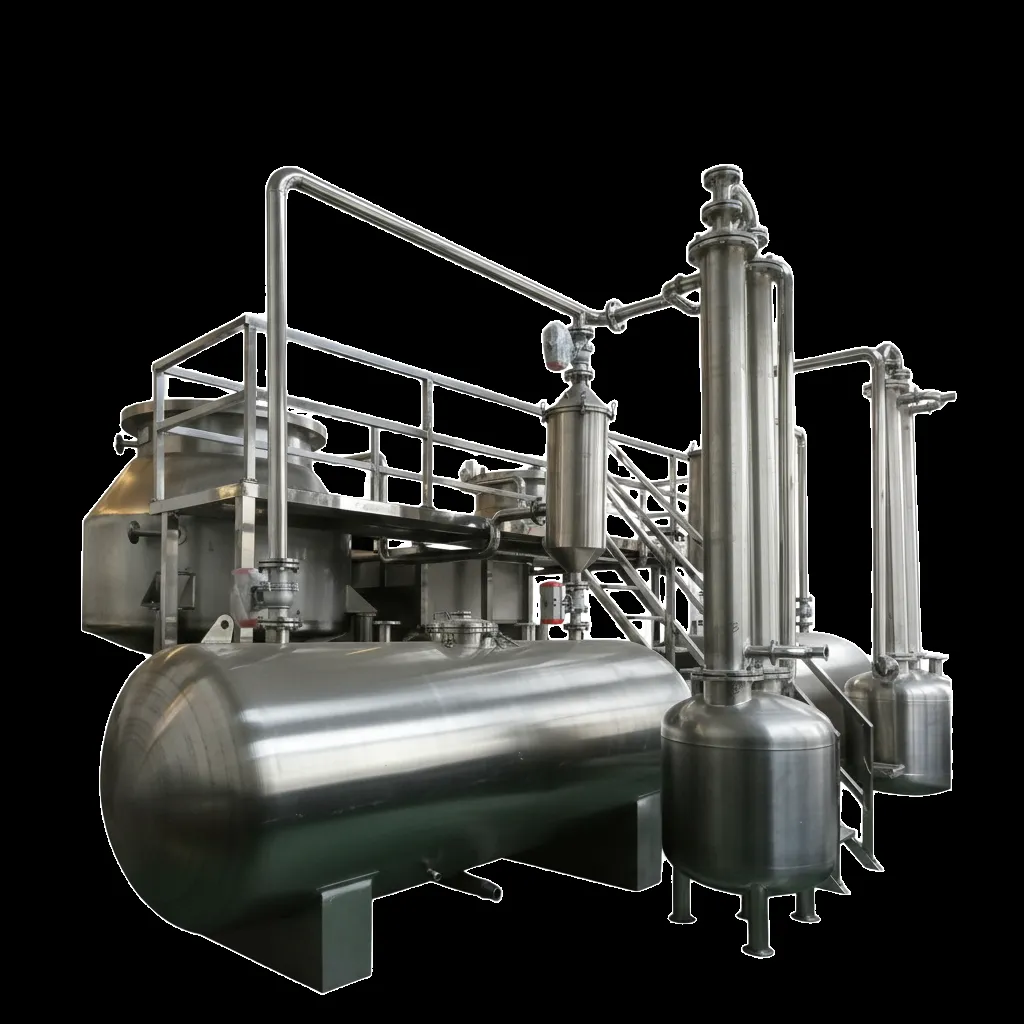
- Vacuum fryers are more complex — because they do more. A vacuum fryer is a pressure vessel plus vacuum pump station, heating system, de-oiling centrifuge and oil management, all sequenced by a Delta PLC with MCGS touchscreen control. It costs more, needs trained operators, and rewards proper commissioning. The payoff is a premium product that commodity ovens cannot make.
- Batch vs continuous. Vacuum frying is a batch process — QS-VF100 runs 100 kg per batch, QS-VF150 150 kg, QS-300 300 kg. Baking is typically continuous and scales by belt width and oven length. Neither is inherently "faster"; compare output per shift for your product, including changeover and cleaning time.
- Commercial terms. Supreme Beast QS vacuum fryers carry a 1-year warranty and ship with roughly a 3-month lead time. Plan utility connections (power, cooling, floor space) against that schedule regardless of which process you choose.
Can one factory run both?
Yes — and many snack manufacturers do. The two processes serve different product families, so they don't cannibalize each other; they expand the portfolio:
- A vacuum fryer covers premium natural crisps (fruit, vegetable, seafood) where low temperature and low oil are the selling points.
- A baking line covers formulated snacks (crackers, pellets, protein crisps) where oil-free claims and volume matter.
- Both share the expensive downstream: seasoning, packing, metal detection, QC lab, warehousing and export logistics.
The practical sequencing question is which comes first. If your hero product is a natural fruit or vegetable crisp, start with the vacuum fryer and add baking when the portfolio needs it. If your hero product is a formulated cracker, do the reverse. Buy the process your first product demands; plan the building so the second one fits later.
Decision matrix: vacuum frying vs baking
- Raw material is a natural fruit/vegetable/seafood slice → vacuum frying
- Product is a formulated dough, pellet or extruded piece → baking
- Label strategy needs "never fried" / oil-free → baking
- Label strategy needs "real fruit, low oil, natural color" → vacuum frying
- Priority is lowest capital cost and simplest operation → baking
- Priority is premium positioning of natural crisps → vacuum frying
- Portfolio needs both segments → run both, share downstream
Frequently asked questions
Is vacuum frying or baking healthier for snack production?
Neither process is automatically healthier — it depends on the product and the label claim. Vacuum frying keeps oil content low (QS vacuum-fried snacks typically hold under 18% oil after centrifugal de-oiling) while preserving natural color and shape. Baking adds no frying oil at all, which suits oil-free claims, but it can dry and harden some products. Compare the finished product's nutrition panel, not the process name.
Why does a vacuum-fried chip taste different from a baked one?
Vacuum frying happens under reduced pressure at 80–100 °C, so water escapes quickly without scorching the surface — the result is a light, crisp, puffed texture with the product's natural color intact. Baking uses hot air, often at much higher temperatures, which browns the surface and tends to produce a harder, drier bite, especially in thin slices.
Which products are better suited to baking than vacuum frying?
Baking suits products that are formulated for it — grain-based crackers, extruded pellets and dough pieces where the recipe expects hot-air cooking. Vacuum frying suits whole-fruit and vegetable slices (mango, strawberry, carrot, beetroot, okra) and seafood, where the product is a real slice that needs to keep its shape, color and natural bite.
Can one factory run both vacuum frying and baking?
Yes, and many snack brands do: the two processes serve different product families, not competing versions of the same chip. A vacuum fryer (for example the QS-VF100, QS-VF150 or QS-300) plus a baking line lets a factory cover premium fruit/vegetable crisps and oil-free baked snacks from one building, sharing packing, QC and logistics.
Which process is cheaper to set up and run?
A baking line is generally simpler and cheaper to install — ovens are commodity equipment. A vacuum fryer is a pressurized vessel with vacuum pumps, de-oiling centrifuge and oil management, so it costs more up front and needs skilled operation. The business case for vacuum frying is the product: a premium natural fruit or vegetable crisp commands a retail position that a baked cracker cannot.
Choosing the process for your snack line?
Send us your product list and target capacity — we'll tell you honestly whether vacuum frying fits, and size the right fryer if it does. See the range on our vacuum fryer page.
Specifications are for reference only and are subject to the final supplied equipment.