
Home / Insights / Vacuum Frying Cost per Batch
PILLAR GUIDE
Vacuum Frying Cost per Batch
What a vacuum frying batch really costs: oil, energy, labour and maintenance — the four drivers, and how in-chamber de-oiling and filtration move them.
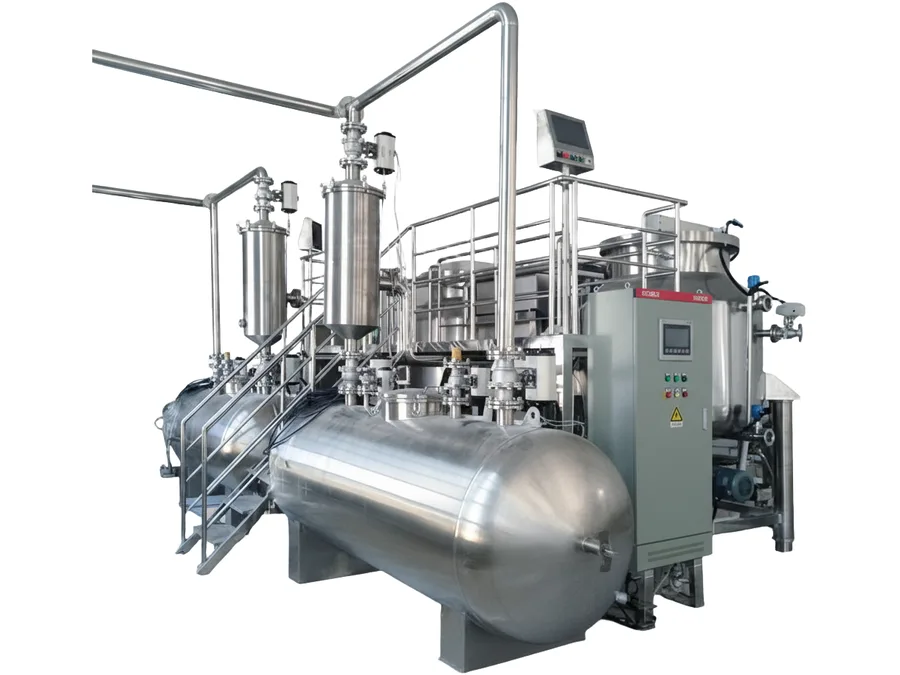
Four costs make up a batch
A vacuum frying batch costs four things: the oil it consumes, the energy to run the machine, the labour to prepare, load and pack, and the maintenance on the parts that wear. None of these is fixed. All four move with the product, the batch size and how the line is run. This guide explains each driver so you can cost your own product instead of trusting a single number from a brochure.
Oil: the cost that compounds
Oil is the largest running cost in most vacuum frying lines, and it is the one buyers underestimate. Three things consume oil: oil absorbed into the product, oil lost to filtration and handling, and oil that has degraded and must be replaced. In-chamber centrifugal de-oiling attacks the first of these directly — by spinning oil out of the product while the chamber is still under vacuum, it keeps finished oil content under 18% on our machines, which means less of your oil leaves the factory inside the snack. Filtration attacks the third: oil that is filtered between batches lasts longer, and food particles left in hot oil are what shorten its life.
We make one verified claim about this: our machines extend oil life by +200% compared with unfiltered open frying practice. Treat any such claim as a starting point, not a guarantee — the result depends on your product, your oil and how the line is maintained. Ask the supplier what the claim is measured against and what filtration the machine includes. And always ask whether the oil filtration tank is included in the quotation or priced separately.
Energy: heat and vacuum, not one or the other
A vacuum fryer uses energy in two places: heating the oil and holding the vacuum. Frying at 80–100 °C uses less heat than open frying, which is one of the reasons vacuum frying exists. But the vacuum pump runs through the batch too. The energy cost of a batch depends on the product's water content — water leaving the product is what the vacuum pump works hardest on — and on how well the vessel holds temperature. A 6 mm thick-walled 304 stainless vessel holds heat steadily; a thin vessel cycles the heater on and off and wastes energy.
Batch size matters here as well. Our three models take 100, 150 and 300 kg of raw material per batch. A larger batch spreads the heat-up and pump-down energy across more product, so energy per kilogram falls as the batch grows — as long as you can supply the raw material to fill the vessel. A 300 kg fryer running at 100 kg per batch is the most expensive way to run a line.
Labour: preparation dominates
The fryer itself runs on a recipe — Delta PLC with an MCGS touchscreen — so the operator's job is preparation and packing, not watching the fry. Preparation is where the time goes: washing, peeling, slicing to an even thickness, and blanching where the product needs it. Even slicing matters more than it looks: uneven slices fry unevenly, and uneven batches create rework. When you cost labour, count the full line — receiving, preparation, frying, de-oiling, seasoning, packing — and cost it per finished kilogram, not per batch.
Maintenance: pumps, seals and heating
The wearing parts on a vacuum fryer are the vacuum pump, the door and vessel seals, the heating elements and the oil system — filters, pumps and valves. These are standard industrial parts. Before you order, get a two-year spare parts list with prices from the supplier. Our machines carry a 12-month warranty. Installation and commissioning by our engineers is USD 200 per person per day, with travel and accommodation by the buyer, and delivery takes about 3 months.
The number we do publish
We advertise "Save $25,000+ per year" for vacuum frying lines. That is a marketing claim based on oil savings from extended oil life and low oil content — it is not a promise for your product. Your saving depends on your oil price, your current oil consumption, your product and how many batches you run. Use the four drivers above to build your own figure, and ask us for a sample batch first: we fry your product in our factory free of charge — you pay shipping only — so you see the real oil content and the real yield before you spend anything.
Frequently asked questions
What costs the most per batch?
For most products, oil — what the product absorbs and what degrades between batches. In-chamber de-oiling and proper filtration are the two cheapest ways to cut it.
Does a bigger batch always cost less per kilogram?
Only if you fill the vessel. Energy per kilogram falls with batch size, but a half-full 300 kg fryer costs more per kilogram than a full 100 kg fryer. Size to your reliable raw material supply.
How do I compare two fryers on cost?
Compare the same four numbers: oil content guaranteed for your product, whether de-oiling is in-chamber and centrifugal, whether the filtration tank is included, and the spare parts list with prices. Everything else is secondary.
What is the $25,000+ per year figure based on?
It is our marketing claim for oil savings from extended oil life and low oil content. It is not a guarantee for any specific product or volume. Cost your own line with the drivers in this guide and a sample batch, and the figure will be yours, not ours.
Can I test my product before buying?
Yes. We run free sample frying in our factory — you pay shipping only. The sample gives you the real oil content and the real yield for your product, which is what any cost calculation depends on.
Supporting guides
Deeper reading from our knowledge base on this topic: