What FAT is — and what it is not
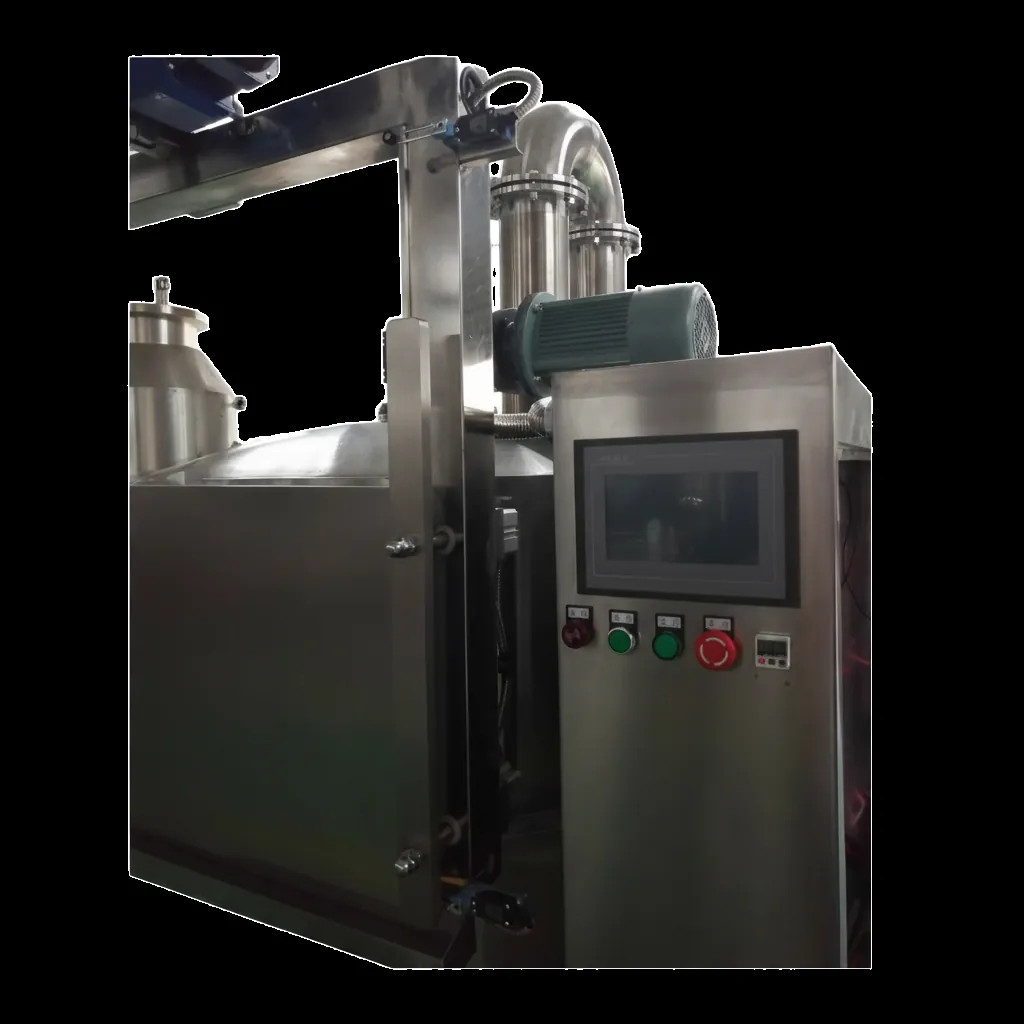
Factory acceptance testing is a structured, documented test of your machine at the manufacturer's plant, performed before packing and shipment. You — or an inspector you trust — run through a written checklist and the factory demonstrates, on your actual machine, that it matches what the purchase order promised.
FAT is not a certificate and does not replace the site acceptance test (SAT) after installation. Its value is simpler: it moves the discovery of problems from after the container arrives — when every fix means freight and delay — to before the machine is packed, when the factory's own engineers and spare parts are ten meters away.
Typical industrial food machinery (a QS-VF150 vacuum fryer, a QS-FD-100 freeze dryer) ships on roughly a 3-month lead time. FAT sits at the end of that lead time, just before export packing. Protect that sequence in your contract: no packing before the FAT report is signed.
The buyer-verifiable FAT checklist
A FAT is only as good as its checklist. Everything below is buyer-verifiable with eyes, instruments and questions — no laboratory needed. Send the checklist to the factory before the FAT date so the machine is ready for each item.
1. Mechanical and visual inspection
- Check the vessel/chamber: uniform stainless steel finish, clean welds with no cracks or burn-through, correct door alignment and smooth closing.
- Inspect seals — food-grade silicone door seals on freeze dryers, fryer vessel seals — for even seating and no damage.
- Confirm all ordered accessories are present: trays (84 / 432 / 864 depending on model), baskets, filter elements, spare seals.
- Verify nameplate data against the order: model, batch size class (100 / 150 / 300 kg for vacuum fryers), voltage, phases.
2. Vacuum performance
Vacuum is the core of both product lines, and it is the easiest thing to test:
- Pull-down test: the factory evacuates the chamber to the design pressure within the specified time. Watch the gauge yourself — don't accept a printed curve without seeing the live reading.
- Hold test: close the valves and observe the pressure over a defined hold period. A steady reading means tight seals and valves; a climbing reading means leaks that will haunt every batch.
- On a freeze dryer, confirm the cold trap reaches and holds temperature under vacuum; on a vacuum fryer, confirm the vessel holds vacuum steadily through the cycle.
3. Temperature control
- Freeze dryer: verify the refrigeration pull-down toward −60 °C and run the shelf heating at a setpoint — on a QS-FD, confirm all four heating zones hold within ±0.1 °C of setpoint at the same time. Ask to see all four zone readings on the screen simultaneously.
- Vacuum fryer: verify oil temperature control at the frying setpoint, including heat-up time and stability — plus the cooling behavior after the cycle.
4. Control system demonstration
- Have the operator create a new recipe from scratch and run a segment of it — this tests the system you will actually use, not a rehearsed demo.
- Run a full alarm test: trigger a temperature deviation, a vacuum leak and a sensor fault. The system must alarm, identify the cause and take the designed safe action. On the QS vacuum fryers the controls run on a Delta PLC with MCGS touchscreen; on the freeze dryers, a Siemens S7-200 with a Chinese/English touchscreen.
- Switch the interface language to your operators' language and confirm every screen, including alarms, is readable.
- Confirm you can export the cycle data log, not just view it on screen.
5. No-load dry run
Run the machine through a complete cycle without product: all phases, all interlocks, the full sequence. Listen for abnormal vibration and check every fitting for leaks. On a vacuum fryer, run the centrifugal de-oiling cycle and observe smooth, balanced rotation.
6. Safety devices
- Emergency stop: press it. The machine must halt safely and require a deliberate reset.
- Over-temperature cutout and pressure relief: demonstrate each one, not just point at it.
- Door interlocks: the cycle must not start — and must pause — with the door open or unsealed.
7. Documentation
- The signed FAT report itself, with measured values against the agreed pass criteria — including anything deferred or conditional, stated explicitly.
- Operation and maintenance manual, electrical wiring diagram, spare-parts list, packing list.
- Warranty terms in writing — the QS machines carry a 1-year warranty; confirm what it covers and how claims are handled.
8. Export packing (witness it if you can)

Confirm the packing plan: moisture protection, bracing, container loading. Photograph the packed machine and match the packing list against the container contents — disputes about missing parts are settled by that list, not by memory.
Remote FAT: when you can't fly in

Can't fly in? A remote FAT over live video works — if you run it like an inspection, not a tour:
- Agree the checklist and the pass criteria in writing before the call. No criteria, no acceptance.
- Require continuous live footage: close-ups of gauges and screens during pull-down and temperature tests, no cuts during the critical readings.
- Have the factory screen-share the control system while creating a recipe and running the alarm test.
- After the call, receive the raw test data — pressure and temperature curves, the alarm log — and the signed FAT report.
Red flags at the factory
- "The machine is already packed." Packing before FAT is the classic way to make problems unfixable. Refuse delivery of the excuse.
- No written pass criteria. If the factory won't agree beforehand what "pass" means, every test result will be "good enough."
- Reluctance to demonstrate alarms or safety devices. Hesitation here is information about the machine, not about the schedule.
- Verbal promises instead of report entries. "We'll fix that after delivery" belongs in the FAT report as a signed, dated corrective action — or it doesn't exist.
Our own manufacturer vetting guide covers what to check about a supplier before you even reach the FAT stage — use both together.
Frequently asked questions
What is factory acceptance testing (FAT)?
Factory acceptance testing is a structured test of your machine at the manufacturer's plant, before packing and shipment. You (or your inspector) verify the equipment matches the order: build quality, vacuum performance, temperature control, the control system, safety devices and the documentation set. FAT is the last point where fixes are cheap — afterwards, every correction means freight and delay.
What should be on a FAT checklist for a vacuum fryer?
For a batch vacuum fryer such as the QS-VF100, QS-VF150 or QS-300: inspect the vessel, welds and seals; verify the vacuum system pulls down and holds (a leak test over a defined hold time); check oil temperature control at the frying setpoint; run the centrifugal de-oiling cycle and observe smooth operation; demonstrate the control system (Delta PLC with MCGS touchscreen) — recipe setup, alarms, language; run the no-load dry cycle end to end; and confirm every safety device (pressure relief, over-temperature cutout, emergency stop).
How long does FAT normally take?
A proper FAT for one batch machine takes one to two working days: inspection, vacuum and temperature tests on day one; the dry-run cycle, control demonstrations and documentation review on day two (or part of it). A full thermal cycle — e.g. a freeze dryer's pull-down to minus 60 C — needs extra time. Schedule FAT before export packing, not after.
Can I do factory acceptance testing remotely?
Yes. A remote (video) FAT works when the factory follows your written checklist on a live video call: close-ups of gauges and screens, continuous footage of vacuum pull-down and temperature ramps, and screen sharing of the control system. Agree the checklist and pass criteria in writing before the call, and get the raw test data (curves, logs) afterwards. A factory that resists video documentation is telling you something.
What documents should I receive at FAT?
At minimum: the FAT report itself (signed, with measured values against the agreed criteria), the operation and maintenance manual, the electrical wiring diagram, the spare-parts list, the packing list, and warranty terms (the QS machines carry a 1-year warranty). If any test was deferred or conditional, the report must say so explicitly — verbal promises do not survive shipping.
What is the difference between FAT and SAT?
FAT (factory acceptance testing) happens at the manufacturer's plant, before shipment, and proves the machine was built and performs to the order. SAT (site acceptance testing) happens at your plant after installation, and proves the machine performs in your environment — on your power supply, your water, your operators. FAT protects you from shipping a bad machine; SAT protects you from installing it wrong. Serious buyers do both.
Buying a vacuum fryer? Ask about our FAT
We run structured factory acceptance testing — on-site or over live video — on every QS-VF100, QS-VF150 and QS-300 before export packing. See the range on our vacuum fryer page.
Specifications are for reference only and are subject to the final supplied equipment.