What freeze dried baby food is
Freeze dried baby food is food made for young children — usually fruit, vegetable, or mixed fruit-and-vegetable purees and pieces — put through a freeze drying cycle. The food is frozen, then placed under vacuum so its frozen water turns directly into vapour, leaving a light, dry piece or powder that keeps much of its original shape and colour.
The category is aimed at manufacturers and buyers who supply food for young children. A baby food brand buys or makes the dried ingredient, packs it, and sells it under its own label. Freeze drying removes water without cooking the food.
Freeze dried baby food is not a substitute for breast milk or formula. It is a complementary food product, and must be positioned and labelled as such under the rules of each market.
Why freeze drying suits baby food
Freeze drying works by sublimation: water passes directly from solid ice to vapour, without becoming liquid first. That only happens under vacuum at low temperature, and it protects the food's shape and colour. Because the food is never cooked at high temperature, its flavour stays recognisable.
For baby food, three features matter most. First, the low-temperature process keeps the food's original character — a strawberry puff still looks and tastes like strawberry. Second, the dried product is light and stable, so it ships cheaply and stores without refrigeration if kept dry. Third, the format is flexible: the same dried fruit or vegetable can become a puff, a powder, or an instant mix.
Freeze drying is not a shortcut around food safety. It removes water; it does not remove contamination or fix a poor recipe. The finished product depends on the raw material, the recipe, and the hygiene of the whole line.
Common formats: puffs, powders, and instant mixes
Most freeze dried baby food falls into three formats.
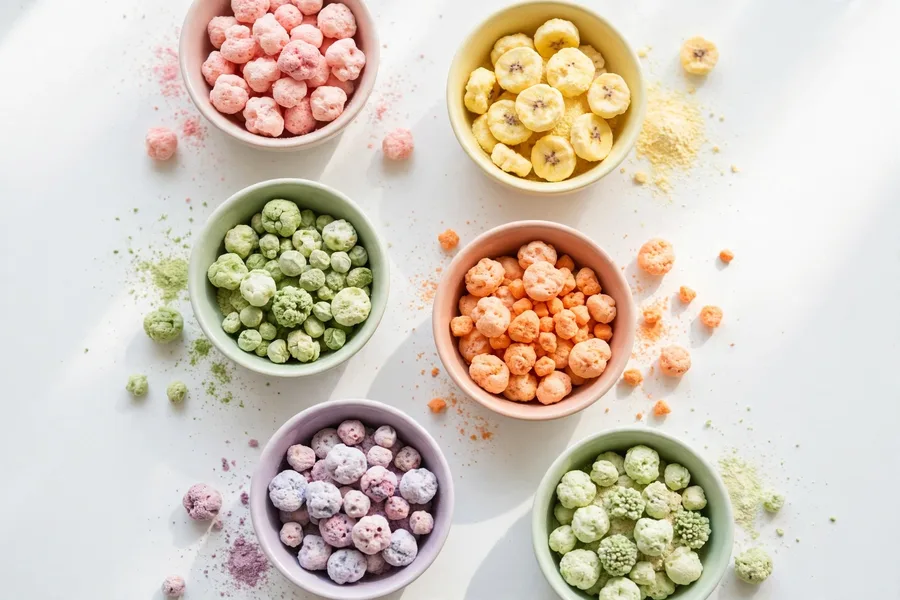
Fruit and vegetable puffs
Puffs are small, light pieces made from a puree that is shaped, then freeze dried until crisp. Apple, banana, strawberry, carrot, and sweet potato are common starting points. The puree recipe decides the texture: too thin and the puff crumbles, too thick and it dries unevenly.
Powders
Powders are made by freeze drying fruit or vegetables, then milling the dried pieces into a fine powder. The powder can be sold on its own or blended into other foods. Milling is a separate step with its own hygiene controls, so keep the area clean and dry and pack the powder promptly.
Instant mixes
Instant mixes are dried pieces or powders rehydrated with water before serving. The dried food absorbs water and returns close to its original soft texture. Rehydration depends on piece size and recipe, so test it with the ratio your label will recommend.
The process steps for manufacturers
Making freeze dried baby food at production scale is a repeatable sequence. Record the settings that work and keep them fixed.
- Select raw materials: use fresh, sound fruit and vegetables from a supplier you trust, and check each delivery.
- Wash and prepare: wash, peel, and trim as your recipe requires, and cut pieces to a uniform size.
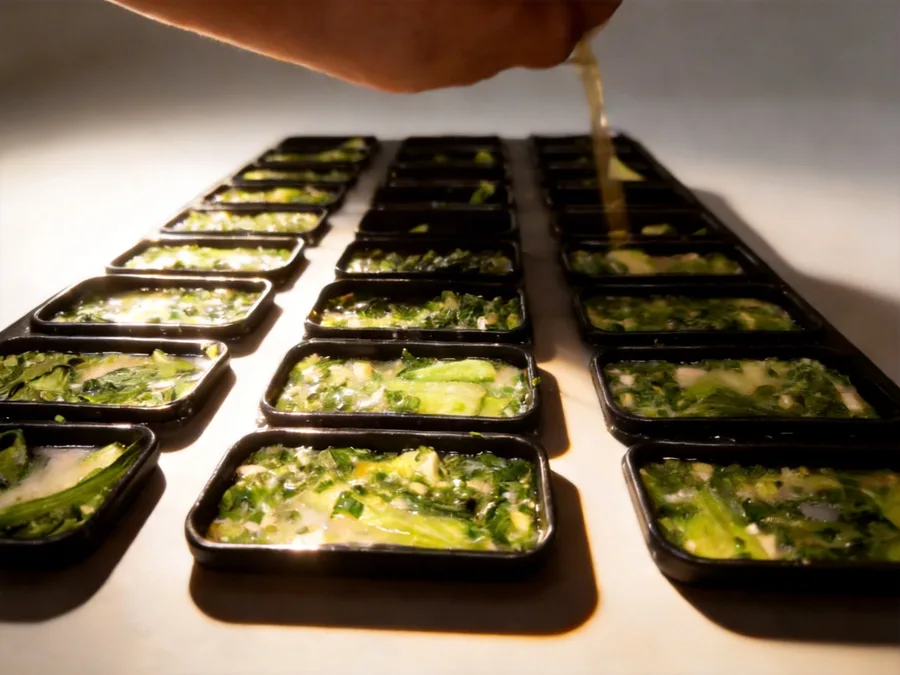
- Make the puree or pieces: blend to your recipe for puffs and powders, or keep uniform pieces.
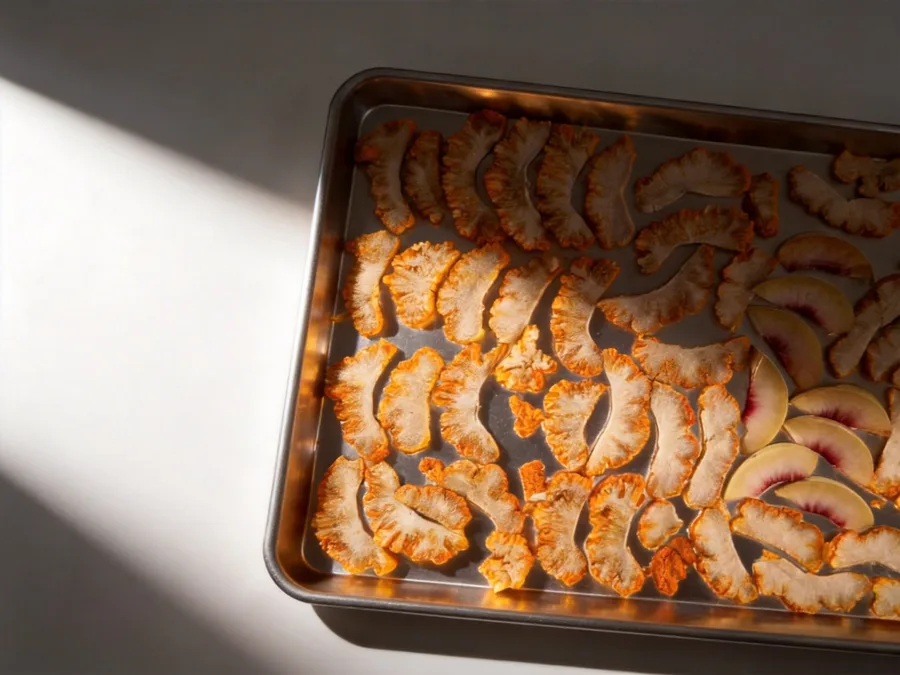
- Arrange on trays: spread shapes or pieces in a single layer with space between them, so vapour can escape.
- Load the chamber: slide the trays in and close the door, checking the food-grade silicone seal first.
- Freeze: bring the chamber down so the food freezes through before drying begins.
- Primary drying: pull the vacuum and apply gentle, controlled heat — maximum 80°C, accurate to ±0.1°C — so the ice sublimates out of the food.
- Secondary drying: continue under vacuum to remove the remaining bound moisture.
- Unload and check: break the vacuum, inspect the batch for colour, shape, and texture, and taste-test it.
- Pack promptly: move the finished product into its pack and seal it against moisture.
Moisture is the number to control. Freeze dried foods are commonly finished at 1–4% moisture; below about 2% most microbial growth is suppressed, while above 4–5% the risk rises, and water activity below 0.60 is the usual target. Treat these as reference points only — verify your own product against your own standard.
Hygiene and food safety
Baby food is one of the most hygiene-sensitive categories a manufacturer can work in. Freeze drying removes water; it does not make an unsafe ingredient safe. Every step before and after the dryer matters.
Start with the raw material. Buy from suppliers you have checked, wash and prepare food in a clean area, and keep raw and finished product apart. A freeze dryer with a SUS304 chamber and food-grade silicone seals is built to be cleaned: clean the chamber, trays, and seals on a fixed schedule.
After drying, the risk shifts to recontamination and moisture. Dried food that picks up moisture can spoil, and food handled with unclean hands or tools can pick up contamination. Pack promptly and keep the packing area dry and clean.
Do not make health or nutrition claims for infants unless you have verified them and your market's rules allow them. This guide makes no health or nutrition claims, and it does not claim that any freeze dried product is suitable for any specific age. Your product team must decide the age guidance, claims, and labelling for your own product and markets.
Regulation and labelling
Infant and young-child food is regulated more tightly than ordinary food in most markets, and the rules differ from one country to the next. A product compliant in one market may need a different label, recipe, or claim in another.
Before you sell into a market, check its infant-food regulations and labelling rules: what the product may be called, what age guidance may be shown, which ingredients are allowed, and which claims are permitted. Work with a regulatory adviser or your customer's compliance team, and keep the evidence for every claim you print.
Supreme Beast manufactures freeze drying equipment, not finished baby food. We can help with the equipment and the production know-how, while the recipes, compliance checks, and sales are yours. If a buyer asks for a certificate or test report for the finished food, that evidence must come from your own product testing.
Packaging and storage
Freeze dried baby food is dry, light, and porous — and that is exactly why packaging matters. A puff that leaves the dryer perfectly crisp can turn soft again in humid air, because the open structure that makes it light also takes moisture back in easily.
Pack the product as soon as it leaves the dryer, and seal the pack against moisture. Choose a pack material with a good moisture barrier, and close it properly — a weak seal is the same as no seal. Single-serve packs suit puffs well; larger packs need a resealable closure and clear instructions.
Test how your own packed product holds up in storage: pack a few samples, store them as your customers will, and open them later to check texture and flavour. Do not print a shelf-life figure unless you have tested it yourself. Cushion the packs and mark cartons as fragile.
Equipment and capacity
Freeze dried baby food is made on an industrial freeze dryer: a vacuum chamber with trays, a freezing system, a vacuum pump set, and a controlled heating system run by a PLC.
QS freeze dryers come in three sizes, chosen by batch weight.
QS freeze dryer models
| Model | Drying area | Trays | Power | Batch capacity |
|---|---|---|---|---|
| QS-FD-20 | 20.16㎡ | 84 | 35kW | ~200kg/batch |
| QS-FD-100 | 103.68㎡ | 432 | 135kW | ~1t/batch |
| QS-FD-200 | 207.36㎡ | 864 | 135kW | ~2t/batch |
- Chamber: SUS304 stainless steel, square chamber design.
- Freezing: down to -60°C, two-stage refrigeration, R404A/507.
- Heating: four-zone, accurate to ±0.1°C, maximum 80°C.
- Control: Siemens S7-200 PLC, Chinese/English touchscreen.
- Vacuum: Roots pump plus screw pump.
- Sealing: food-grade silicone seals on the front door.
When you size a dryer, think in batches per week, not only kilograms per batch. A QS-FD-20 at about 200kg per batch suits a producer starting out; a QS-FD-100 at about 1 tonne per batch suits regular orders; a QS-FD-200 at about 2 tonnes per batch is for volume. Check dimensions too — QS-FD-20 4500x1300x1400mm, QS-FD-100 7000x4000x2300mm, QS-FD-200 12000x4000x2300mm — and confirm floor space and power supply before you order.
QS freeze dryers carry a 1-year warranty and have an approximate 3-month lead time. Order the machine first, then finalise recipes and packaging while it is being built.
Frequently asked questions
What is freeze dried baby food?
Freeze dried baby food is food made for young children — usually fruit, vegetable, or mixed fruit-and-vegetable purees and pieces — that has been freeze dried so its water is removed under vacuum at low temperature. Common formats are puffs, powders, and instant mixes that are rehydrated before serving.
Is freeze dried baby food safe?
Freeze dried baby food can be produced safely when the manufacturer controls raw materials, hygiene, drying, and packaging, and follows the infant-food regulations and labelling rules of each market it sells into. Freeze drying itself does not make an unsafe ingredient safe. Manufacturers must verify their own product against their own standard.
What equipment do I need to make freeze dried baby food?
You need an industrial freeze dryer with a vacuum chamber, a freezing system, and a controlled heating system. Supreme Beast QS freeze dryers come in three sizes: QS-FD-20 at about 200kg per batch, QS-FD-100 at about 1 tonne per batch, and QS-FD-200 at about 2 tonnes per batch. All three use a SUS304 square chamber, reach -60°C, and run on a Siemens S7-200 PLC, with a 1-year warranty and an approximate 3-month lead time.
How should freeze dried baby food be packaged?
Pack freeze dried baby food as soon as it leaves the dryer, in a pack with a good moisture barrier, and seal it properly. Test how your own packed product holds up in storage, and do not print a shelf-life figure unless you have tested it yourself.
Plan your freeze dried baby food line
Tell us your products and target output — we will help you size the dryer. See the range on our freeze dryer page.
Specifications are for reference only and are subject to the final supplied equipment.