What a freeze dried ready meal is
A freeze dried ready meal is a complete meal cooked, portioned, and then freeze dried as a finished dish. Unlike a single freeze dried ingredient, it is meant to be eaten as it stands: add water, and a full plate of food comes back.
Freeze drying suits ready meals because it removes water without cooking the food a second time. The meal is frozen, then placed under vacuum so its frozen water turns directly into vapour — sublimation. The pieces keep their shape and colour, and the porous structure left behind takes water back quickly.
What goes into a ready meal
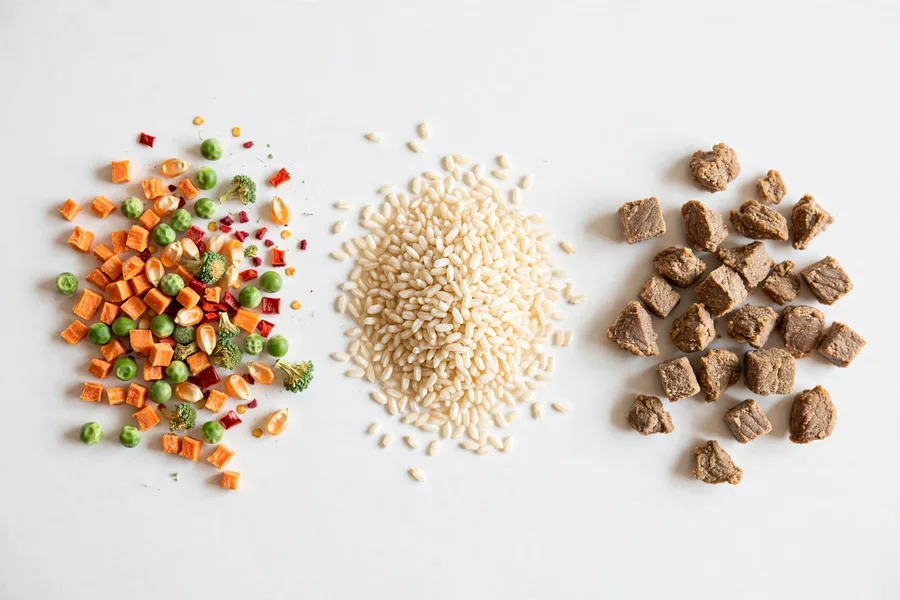
A ready meal is built from three parts, and each behaves differently in the dryer. Plan the recipe with drying in mind: a component that dries badly spoils the serving.
Protein
The protein is the centre of the dish: chicken, beef, pork, fish, or beans, lentils, or tofu. Cut it into small, even pieces before cooking, so it freezes, dries, and rehydrates evenly. Large chunks are the most common cause of a meal that is dry outside and still wet inside.
Vegetables
Vegetables add colour, texture, and variety: carrots, peas, green beans, sweetcorn, peppers, or mushrooms are common. Dice or slice them to a similar size so they dry at a similar rate, and cook them until just done — they will not get another chance to soften. Delicate leafy vegetables dry less reliably, so test them in a trial batch first.
Starch
The starch gives the meal its body: rice, pasta, noodles, or potatoes. Cook it fully before drying, and keep the grains or pieces separate rather than clumped, so vapour can escape. Rice and pasta rehydrate well when cooked properly first; undercooked starch stays hard, and overcooked starch turns to mush.
How freeze drying works for a complete meal
Freeze drying a complete meal follows the same three stages as freeze drying any food, but a meal is a mixed load: protein, vegetables, starch, and sauce dry at different speeds in the same tray. Set the cycle for the slowest component.
Stage 1: Freezing
First, the portioned meal is frozen solid: the water inside every piece turns to ice and the structure locks in place. A QS freeze dryer freezes down to -60°C, cold enough to freeze a cooked meal through. Freeze quickly and evenly, so ice crystals stay small and the texture is protected.
Stage 2: Primary drying — sublimation
Next, the chamber goes under vacuum and gentle heat is applied. Under low pressure, the ice sublimates — it turns straight into water vapour and is drawn out. Because the water leaves from a solid, the food does not collapse as it would in hot-air drying: it stays open and porous, so it rehydrates quickly. The heat is gentle, with a maximum of 80°C and control accurate to ±0.1°C, so the meal is never cooked again and its colour and flavour survive.
Stage 3: Secondary drying
Once the ice is gone, a small amount of water remains bound inside the food, and secondary drying removes it under vacuum, leaving a dry, stable meal. A well-dried product commonly reaches a moisture content of 1–4%, and a water activity below 0.60 suppresses most microbial growth — but these are general reference points, not a guarantee for your recipe. Verify the moisture of your finished meal against your own standard.
Cooking and portioning before drying
Freeze drying does not fix a badly cooked meal. It preserves what you put in, faults included, so the kitchen work before the dryer decides the quality.
- Cook each component properly: bring the protein, vegetables, and starch to the finished eating quality you want — the dryer will not improve them.
- Mix and sauce evenly: combine the components and sauce so every portion carries the same mix. Uneven mixing is why one serving tastes different from the next.
- Portion by weight: weigh each serving into its tray or mould. Consistent portion weight is what makes drying times and rehydration instructions repeatable.
- Cool before freezing: let the portions cool, then freeze them through. Loading a hot meal wastes energy and dries unevenly.
Tray loading and portioning
How a meal sits on the tray decides how evenly it dries. Spread each portion in a thin, even layer, with the pieces loose rather than pressed together, so vapour can escape. Thick piles and dense clumps dry slowly in the middle and can come out damp while the edges are finished.
Keep portions separate and the loading depth the same across every tray. If one tray is loaded thick and another thin, they will not finish together. Leave a small gap between portions so you can lift them out without breaking them.
Portion size is a production decision too. Smaller portions dry and rehydrate faster, but take more handling; larger portions suit bulk packs and catering, but need a longer, carefully tested cycle. Choose the portion your customer will actually eat.
Rehydration at the point of eating
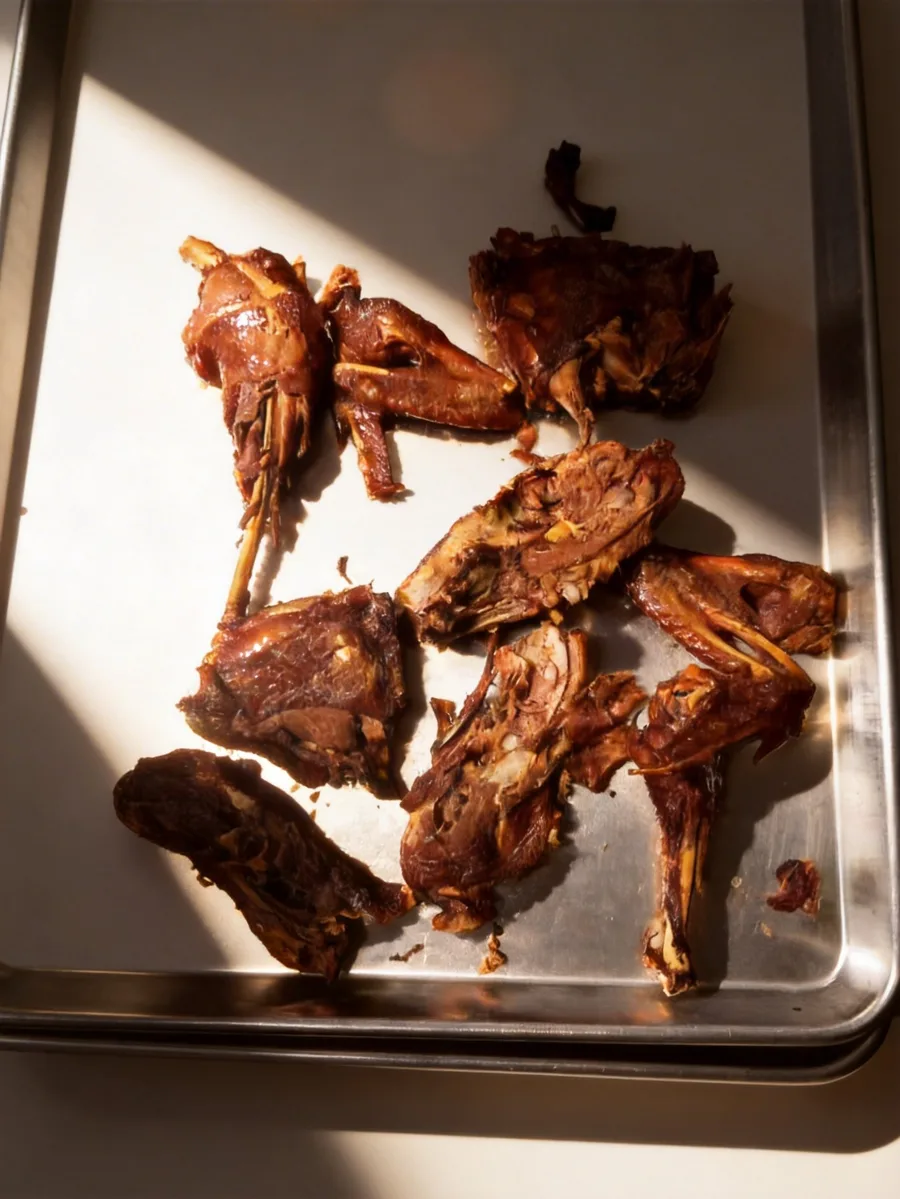
Rehydration is where the meal is judged.
Print clear instructions on the pack: how much water to add, whether it should be hot, and how long to wait. Test those instructions with the water temperature your customers will actually have, not with ideal laboratory conditions.
Piece size, sauce thickness, and portion weight all change how a meal rehydrates. Small, even pieces and a well-distributed sauce come back fastest; large chunks and thick, oily sauces come back slowest. When a meal rehydrates badly, the cause is usually in the recipe or the portioning, not in the dryer. Test your own product, and do not print a rehydration time or ratio you have not verified yourself.
Packaging and storage
A freeze dried meal is dry, light, and porous — and that is exactly why packaging matters. The open structure that lets water back in quickly also takes moisture back in from humid air, so a crisp meal can turn soft again if it sits unpacked.
Pack the meal as soon as it leaves the dryer, and seal the pack against moisture. Choose a pack material with a good moisture barrier, and close it properly — a weak seal is the same as no seal. Handle the dried pieces gently, because they are brittle and crush easily.
Store the sealed packs in a cool, dry place, and test how they hold up: pack a few samples, store them as your customers will, and open them later to check texture and flavour. Do not print a shelf-life figure unless you have tested it yourself. Mark cartons as fragile.
Equipment and sizing
Freeze dried ready meals are made on an industrial freeze dryer: a vacuum chamber with trays, a freezing system, a vacuum pump set, and a controlled heating system run by a PLC. Upstream you also need cooking equipment and a portioning step.
QS freeze dryers come in three sizes, chosen mainly by batch weight.
QS freeze dryer models
| Model | Drying area | Trays | Power | Batch capacity |
|---|---|---|---|---|
| QS-FD-20 | 20.16㎡ | 84 | 35kW | ~200kg/batch |
| QS-FD-100 | 103.68㎡ | 432 | 135kW | ~1t/batch |
| QS-FD-200 | 207.36㎡ | 864 | 135kW | ~2t/batch |
- Chamber: SUS304 stainless steel, square chamber design.
- Freezing: down to -60°C, two-stage refrigeration with R404A/507.
- Heating: four-zone heating, accurate to ±0.1°C, maximum 80°C.
- Control: Siemens S7-200 PLC with a Chinese/English touchscreen.
- Vacuum: Roots pump plus screw pump, built for quiet operation.
- Sealing: food-grade silicone seals on the front door.
When you size a dryer, think in portions per week, not only kilograms per batch. A QS-FD-20 at about 200kg per batch suits a producer starting out or testing a new meal range; a QS-FD-100 at about 1 tonne per batch suits regular orders; a QS-FD-200 at about 2 tonnes per batch is for volume production. Work backwards from your target: servings per week, weight per serving, and how many batches that means. Check dimensions too — QS-FD-20 4500x1300x1400mm, QS-FD-100 7000x4000x2300mm, QS-FD-200 12000x4000x2300mm — and confirm floor space and power supply.
QS freeze dryers carry a 1-year warranty and have an approximate 3-month lead time. Order the machine first, then finalise recipes, portions, and packaging while it is being built and shipped.
Frequently asked questions
What is a freeze dried ready meal?
A freeze dried ready meal is a complete cooked meal — protein, vegetables, and a starch — freeze dried as a finished dish. The meal is cooked first, portioned into servings, frozen, and dried under vacuum so its water turns directly into vapour. The result is a light, shelf-stable meal that returns to a hot, ready-to-eat dish when water is added.
How do you rehydrate a freeze dried ready meal?
Add hot water to the meal in its pack or bowl, stir, and let it stand until the pieces are soft and the sauce has thickened again. The amount of water and the waiting time depend on the recipe, the piece size, and the water temperature. Test your own meal with the water temperature and portion your customers will use, and print the instructions that matched your test.
How long does a freeze dried ready meal last?
A freeze dried meal keeps well when it is dried to your own moisture standard, sealed promptly in a moisture-proof pack, and stored in a cool, dry place. Do not print a shelf-life figure until you have tested your own product under the storage conditions your customers will use. Verify moisture and storage stability against your own product standard.
What equipment do I need to make freeze dried ready meals?
You need an industrial freeze dryer with a vacuum chamber, a freezing system, and a controlled heating system, plus cooking and portioning equipment upstream. Supreme Beast QS freeze dryers come in three sizes: QS-FD-20 at about 200kg per batch, QS-FD-100 at about 1 tonne per batch, and QS-FD-200 at about 2 tonnes per batch. All three use a SUS304 square chamber, reach -60°C, and run on a Siemens S7-200 PLC, with a 1-year warranty and an approximate 3-month lead time.
Plan your freeze dried ready meal line
Tell us your meals and target output — we will help you size the dryer. Explore the range on our freeze dryer page.
Specifications are for reference only and are subject to the final supplied equipment.