Why plan a line, not just a machine
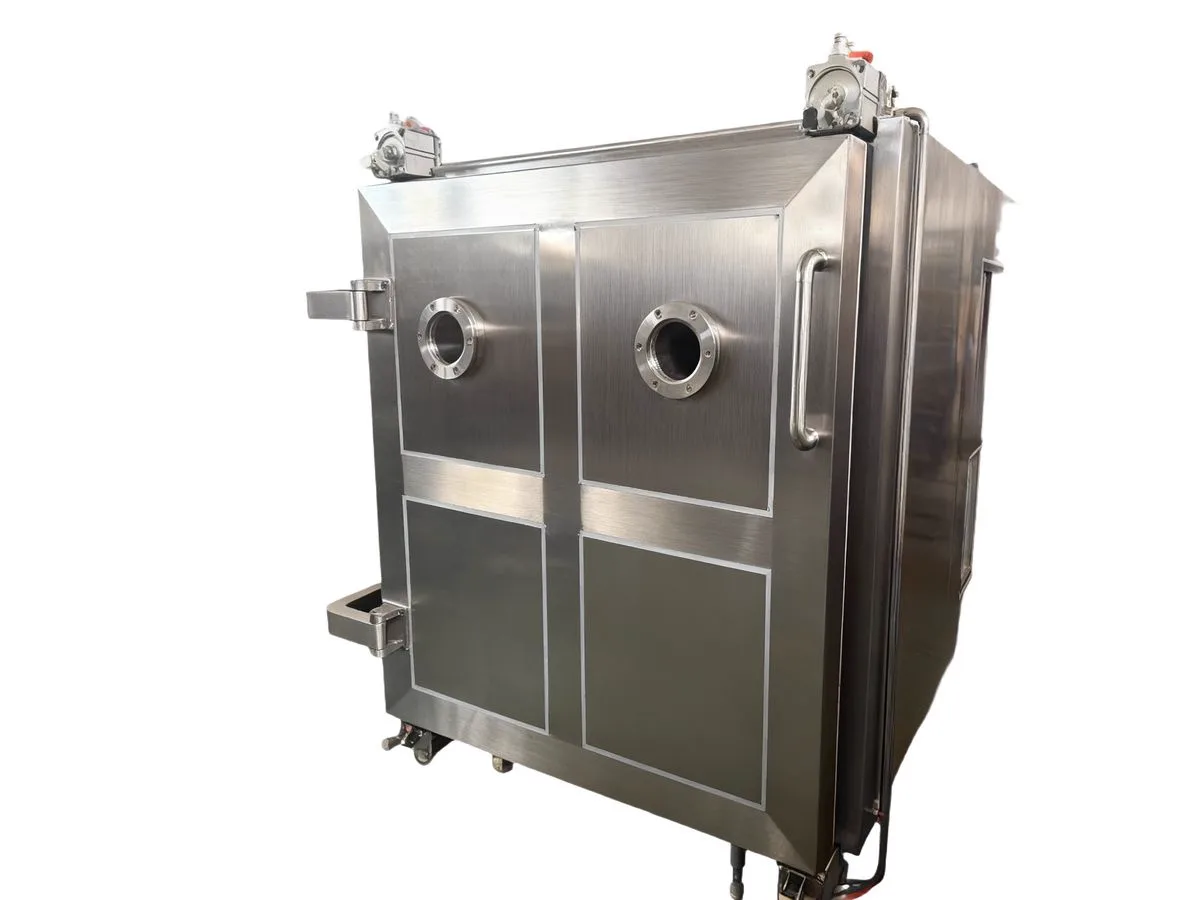
A freeze dried snack line is a chain of five stages — receiving, washing, cutting, pre-freezing, freeze drying and packaging. Like any chain, its output is set by the slowest link, and here the slowest link is always the freeze dryer.
That single fact shapes every decision. Upstream equipment (washers, cutters, blast freezers) must be fast enough that the dryer never waits for trays; downstream packaging must be fast enough that dried product never waits in open air.
Stage 1 — Receiving, sorting and washing
Everything downstream depends on raw material quality. This stage is deliberately simple, and it deserves more attention than it usually gets:
- Receiving and inspection: check incoming fruit, vegetables or meat against your specification — ripeness, size, damage. Freeze drying concentrates quality; it also concentrates defects. Establish a clear accept/reject standard before volume starts.
- Sorting and grading: uniform pieces dry uniformly. Oversized and undersized pieces in the same batch dry at different rates, so the thinnest piece sets the cycle — or the thickest piece stays wet. Grade by size before anything else.
- Washing: wash lines remove soil and field contamination. Keep this a wet zone physically separated from the dry, post-drying area.
Stage 2 — Cutting, blanching and traying

Preparation turns washed raw material into dryer-ready trays. Three decisions here directly affect the drying cycle:
- Slice thickness: thinner slices dry faster and more evenly, but they are more fragile and yield less "premium" mouthfeel; thicker slices look better in the retail pack but extend the cycle. Pick one thickness per product and hold it — the dryer's recipe assumes it.
- Blanching or pre-treatment: some vegetables and fruits benefit from blanching, dipping or sugar/acid pre-treatment for color and texture. These are product-specific; validate them at pilot scale before committing the line.
- Tray loading: spread pieces in a single layer with small gaps for vapor escape. Overloading trays chokes vapor flow and extends the cycle for the whole batch. The dryer's rated batch weight (roughly 200 kg, 1 tonne or 2 tonnes per batch on the QS-FD-20 / -100 / -200) is a ceiling, not a target to exceed.
Stage 3 — Pre-freezing
Freeze drying only works on frozen material, so trays must be fully frozen before the drying cycle begins. Two common setups:
- Freeze on the dryer shelves: industrial freeze dryers can freeze product directly on their own shelves. This needs no extra equipment, but the dryer spends part of its cycle freezing instead of drying — which reduces how many batches it can run.
- Separate blast/quick freezer: a dedicated freezer freezes trays faster and lets the dryer concentrate on sublimation. On higher-volume lines this is usually the throughput investment that pays first: the dryer is the bottleneck, and every hour of drying time you win back becomes saleable output.
Whichever route you choose, freeze trays flat and undisturbed — disturbed trays mean uneven beds, and uneven beds mean uneven drying. A holding freezer between the blast freezer and the dryer acts as a buffer, so a ready batch is always waiting when the dryer finishes.
Stage 4 — Freeze drying: the heart of the line
The freeze dryer runs three phases — freezing (if not pre-frozen), primary drying (sublimation of ice under vacuum) and secondary drying (removal of bound water) — and it runs them longer than any other stage on the line. This is where the product's texture, color, nutrition and shelf life are locked in.
When the dryer is the line's centerpiece, these are the capabilities that matter:
What to look for in the line's central dryer
- Square SUS304 chamber with food-grade silicone door seals and front-door loading that keeps the wet loading area separated from the dry zone.
- −60 °C two-stage refrigeration (R404A/R507) with a Roots + screw vacuum pump unit for deep, quiet vacuum.
- Four independently controlled heating zones holding within ±0.1 °C of setpoint up to 80 °C — uniformity across the shelf stack is what keeps every tray in a batch identical.
- PLC automation with recipe storage — on the QS line, a Siemens S7-200 with a Chinese/English touchscreen — so each product's cycle is a repeatable one-touch program, not an operator's memory.
- Batch size matched to the line: roughly 200 kg per batch (QS-FD-20, 20.16 m², 84 trays), 1 tonne per batch (QS-FD-100, 103.68 m², 432 trays) or 2 tonnes per batch (QS-FD-200, 207.36 m², 864 trays). Size up when the dryer — not the packaging — is what you want to grow.
The dryer also dictates utilities: the larger models draw around 135 kW installed (35 kW for the QS-FD-20), with average draw roughly 60% of nameplate during a cycle. Plan power, cooling water and floor space (the QS-FD-200 is 12 m long) before the machine ships — our installation guide covers the checklist.
Stage 5 — Packaging and storage
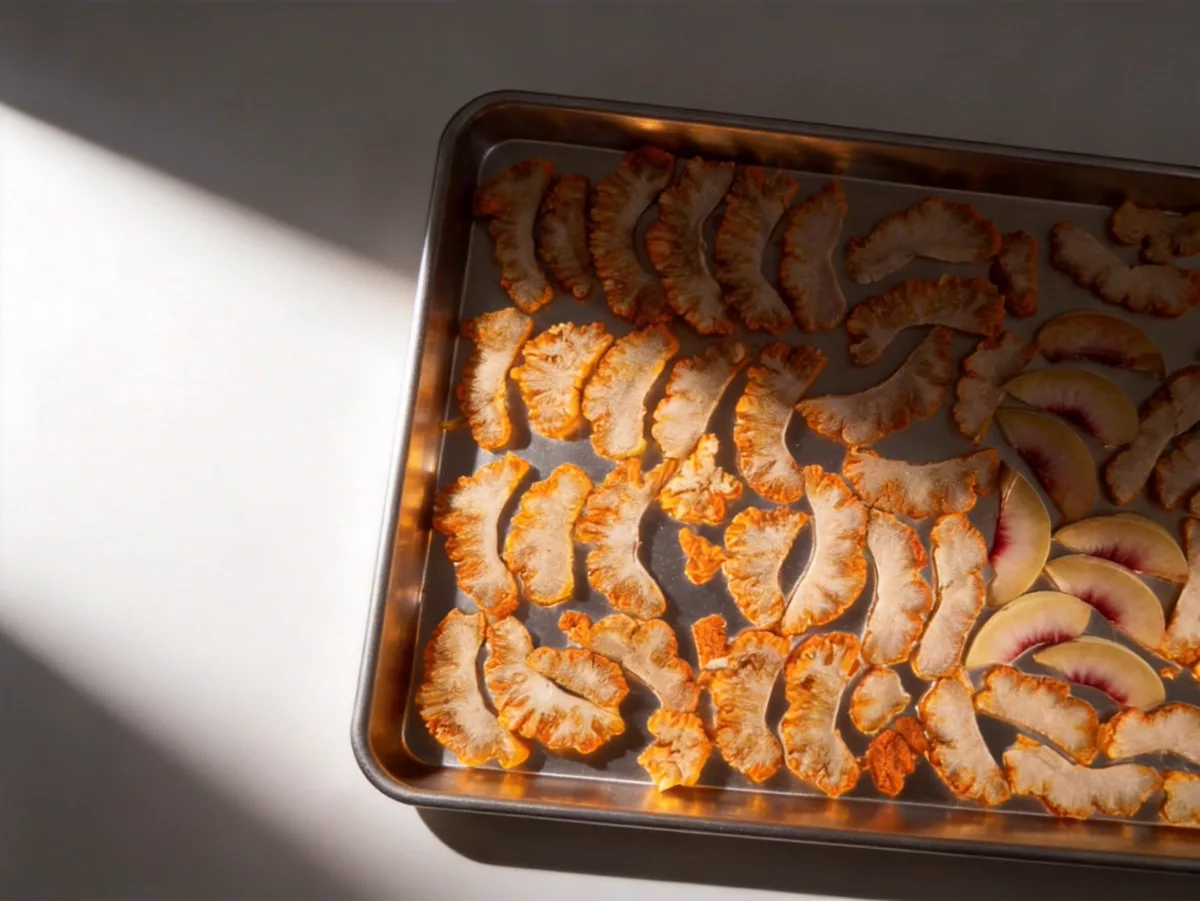
Freeze dried product is at its most vulnerable the moment it leaves the dryer: it reabsorbs moisture from the air within hours. Packaging is therefore a race against time, not an afterthought:
- Move fast from dryer to pack: unload trays into the packing area immediately and keep ambient humidity controlled. Dried product should never sit exposed on the floor.
- Use barrier packaging: retail packs need moisture-proof, oxygen-barrier laminated films, usually with a nitrogen flush or an oxygen absorber. Bulk buyers often take vacuum-sealed bags.
- Match packing speed to the dryer: a packing station that cannot clear a batch before the next one finishes becomes the line's "second speed limit."
- Code and trace: date/batch coding and metal detection belong on the packing line.
Sizing the line around the bottleneck
The practical sizing method runs backwards from the dryer:
- Set the target daily output in finished (dried) kilograms — remember dried weight is a small fraction of wet input weight.
- Pick the dryer batch size that covers that target with a margin: ~200 kg/batch for pilot and specialty lines, ~1 t/batch for established brands, ~2 t/batch for high-volume processors. Add headroom for changeovers and cleaning.
- Size upstream to feed it: washing and cutting capacity per hour must exceed what the dryer consumes per hour, with a frozen-tray buffer (holding freezer) absorbing the mismatch.
- Size downstream to clear it: the packing station must seal a full batch's worth of product before the next batch lands — dried trays in a queue are quality degrading.
- Plan labor at the handoffs: tray loading/unloading and packing are the labor peaks; everything else can run lean.
One more planning input: industrial dryers of this class ship on roughly a 3-month lead time and carry a 1-year warranty. Order the dryer early — site preparation and permits run in parallel — so commissioning isn't waiting on the longest-lead item.
Layout, hygiene and utility notes
- Wet-to-dry flow: lay the line out in a straight or L-shaped flow — receiving and washing (wet) → cutting and freezing (cold) → drying and packaging (dry). Keep the dryer's front-loading zone as the boundary between wet and dry areas.
- Floor and power: washdown floors and drainage for the wet zone; dry, dust-controlled floors for drying and packing. Budget the dryer's installed power (35 kW / 135 kW class) plus freezers and packing machines, and confirm supply capacity before ordering.
- Access for service: leave clear space behind and beside the dryer for pump and refrigeration servicing — a wall-tight layout makes routine maintenance miserable.
- Expansion room: if growth means a second dryer, reserve floor space and utility capacity now. Retrofitting around a running line costs multiples of planning it once.
For the full pre-delivery verification of the dryer itself, see our factory acceptance testing guide — FAT is where a well-planned line starts, not where problems are discovered.
Frequently asked questions
Where should the freeze dryer sit in the production line?
At the center. The freeze dryer is the slowest and most expensive stage, so it dictates the line's output. Arrange the layout so upstream equipment (washing, cutting, pre-freezing) always has trays ready before the dryer finishes a batch, and downstream packaging always has room to receive the dried product. A line designed around the dryer's rhythm never has it waiting.
How do I know what size freeze dryer my snack line needs?
Start from your target daily output, then work backwards. If a dryer holds about 200 kg per batch (QS-FD-20 class), 1 tonne per batch (QS-FD-100 class) or 2 tonnes per batch (QS-FD-200 class), divide your daily target by the batch size and by the number of batches you can realistically run per day. Leave a margin: dried output weighs far less than wet input, and packaging, labor and sanitation all need slack.
Can the freeze dryer freeze the product itself, or do I need a separate pre-freezer?
Industrial freeze dryers can freeze product directly on their shelves, so a separate pre-freezer is not strictly required. A dedicated quick freezer is still common because it freezes trays faster and frees the dryer to spend its time drying — the dryer is the bottleneck, and every hour of drying time won back becomes saleable output.
What usually limits a freeze dried snack line's output?
Almost always the freeze dryer: it runs the longest cycle of any stage, so everything else queues on it. The second most common bottleneck is packaging — filling and sealing retail packs is surprisingly labor- or machine-intensive, and dried product cannot wait in open air. If output is stuck, check the dryer first and the packing station second.
What packaging do freeze dried snacks need?
Moisture-proof, oxygen-barrier packaging. Freeze dried products reabsorb moisture from the air within hours, so retail packs typically use laminated barrier films with a nitrogen flush or an oxygen absorber inside. Vacuum-sealed bulk bags are common for food-service and ingredient buyers. Match the packaging machine's speed to the dryer's output so dried trays never sit exposed.
Planning a freeze dried snack line?
Tell us your target product and daily output — we'll help you size the freeze dryer at the center of the line. See the range on our freeze dryer page.
Specifications are for reference only and are subject to the final supplied equipment.