Start with batch size, not chamber size
The single most important line on any spec sheet is batch size — kilograms (or tons) of wet product per cycle. It is the number your entire production plan hangs on: daily output targets, raw-material ordering, labor scheduling, and payback math all start here.
On the QS-FD series this reads as roughly 200 kg (QS-FD-20), 1 ton (QS-FD-100), and 2 tons (QS-FD-200) per batch. Treat the figure as wet input, not finished product — freeze drying removes most of the water weight, so finished output is a fraction of this number and varies by product.
The common mistake is shopping by chamber dimensions or by price and only later discovering the batch size does not match the order book. Read batch size first; everything else on the sheet exists to deliver it reliably.
Drying area and tray count: the capacity pair
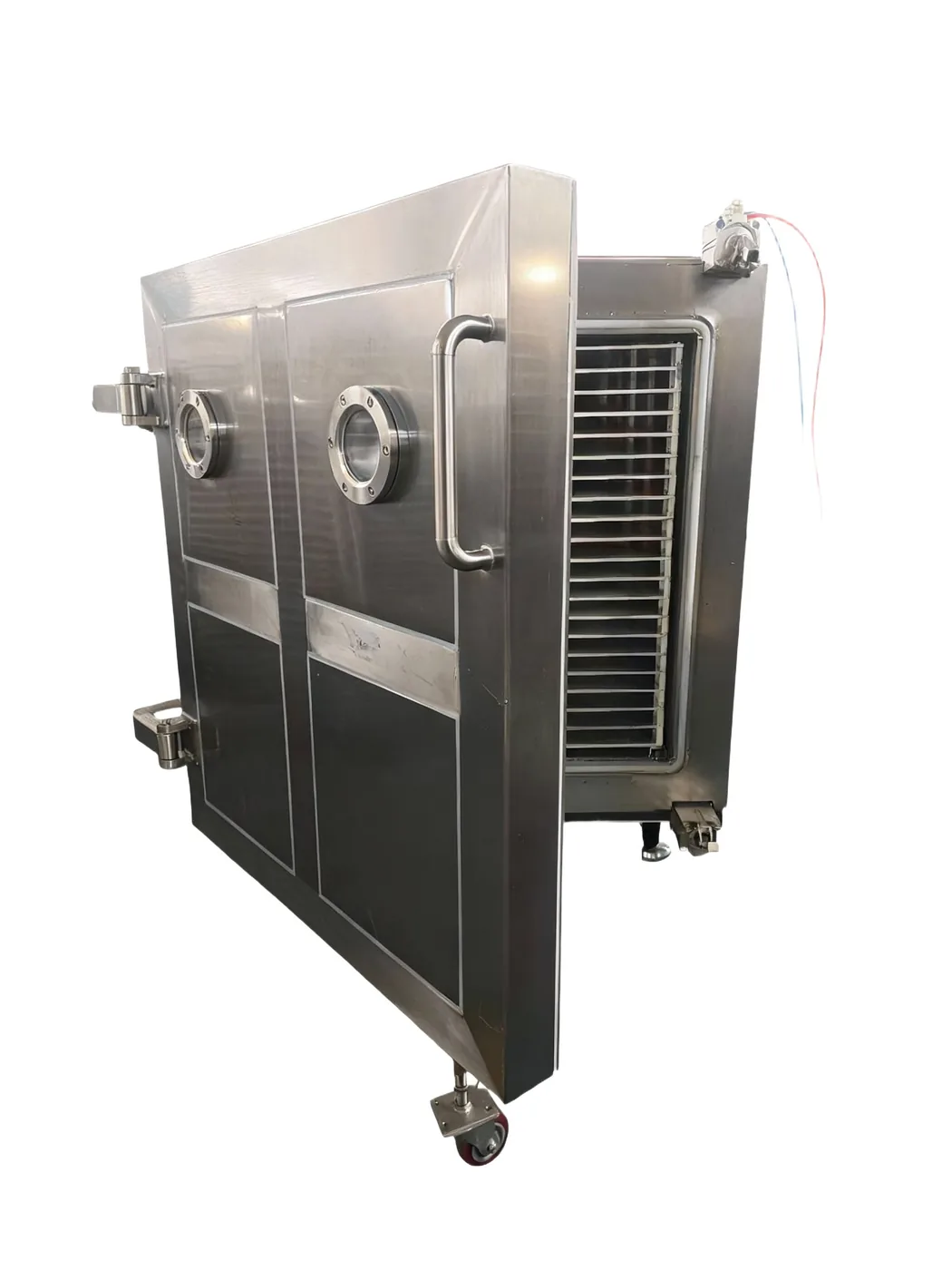
Spec sheets usually list drying area (total heated shelf surface) and tray count together, and you should always read them as a pair. On the QS-FD series:
Capacity pair, QS-FD series
| Model | Drying area | Trays | Tray size |
|---|---|---|---|
| QS-FD-20 | 20.16 m² | 84 | 400 × 600 mm |
| QS-FD-100 | 103.68 m² | 432 | 400 × 600 mm |
| QS-FD-200 | 207.36 m² | 864 | 400 × 600 mm |
Specifications are for reference only and are subject to the final supplied equipment.
Why both matter: drying area alone can mislead, because a large area loaded with shallow trays behaves differently from the same area in deep trays. Tray size (here 400 × 600 mm across the range) tells you the loading unit your operators will actually handle. When comparing two suppliers, normalize to kilograms per tray per cycle — it is the only apples-to-apples capacity number.
Refrigeration: how deep the freeze goes
The freezing stage sets the ceiling for everything that follows. Look for three data points:
- Minimum temperature. Industrial machines in this class reach −60 °C with two-stage cascade refrigeration. Deep freezing grows small ice crystals, locks cell structure, and is non-negotiable for difficult products like high-sugar tropical fruits.
- Refrigerant type. R404A / R507 is the standard pairing for two-stage systems at this temperature. It tells you the machine uses conventional, serviceable refrigeration rather than an exotic circuit your local technicians cannot maintain.
- Actual power draw. Nameplate power is the installed maximum; the useful number is what the machine draws in normal operation. On this platform the real draw is roughly 60% of the 35 kW or 135 kW nameplate — the figure your electricity budgeting should use.
A sheet that lists only "refrigeration: yes" or a vague "deep freeze" without a temperature number is not giving you a specification; it is giving you marketing copy.
Vacuum system: pumps, seals and chamber
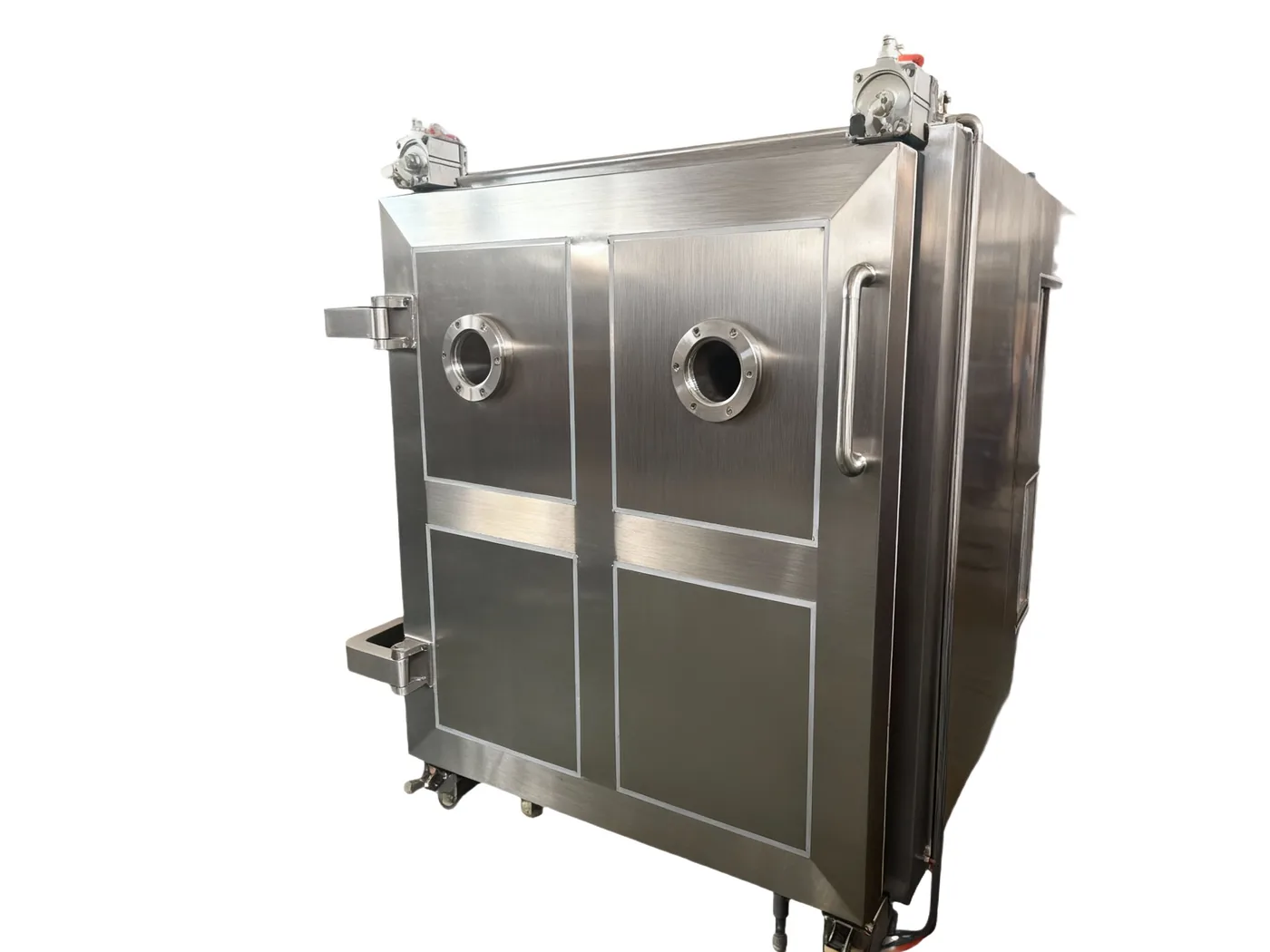
Vacuum is what makes freeze drying possible, and the spec sheet should describe the whole vacuum chain, not just a target pressure:
- Pump configuration. A Roots plus screw pump set is the industrial answer: the Roots blower moves large vapor volumes quickly while the screw pump holds the deep end. Single-pump systems can reach the pressure on paper but struggle to hold it across long, vapor-heavy cycles.
- Chamber construction. Expect an SUS304 stainless-steel chamber — food-grade, corrosion-resistant, and cleanable. A square chamber uses floor space and tray loading more efficiently than a round one at industrial scale.
- Seals and loading. Food-grade silicone seals and front-door loading with wet/dry separation are the details that determine whether the machine holds vacuum year after year and whether daily operation is practical for your team.
Heating zones and PLC control
After freezing and vacuum, the third performance system is heat — and specifically, how precisely it is controlled:
- Zone count. Four-zone independent heating control means the shelf stack is divided into four separately regulated zones. Different tray positions can follow different temperature curves, which is how you dry mixed loads or difficult products without scorching the easy ones.
- Accuracy and range. ±0.1 °C accuracy up to 80 °C is the precision that makes staged drying curves repeatable. The ceiling matters too: 80 °C gives headroom for the secondary-drying phase without approaching temperatures that damage product quality.
- Control platform. A Siemens S7-200 PLC with a Chinese/English touchscreen stores full recipes — freezing profile, vacuum setpoints, shelf temperatures, phase timing — so the cycle that worked last month runs identically this month. For buyers, the practical question is transferability: a recipe proven on one machine size should run the same way on the others in the series.
Control quality is the hardest thing to verify from a sheet alone, which is why a sample drying trial with the full cycle record is the standard due-diligence step before ordering.
Power, footprint and lead time
The last section of the sheet is logistics, and it kills more deals than any technical line:
- Installed power. 35 kW for the compact QS-FD-20; 135 kW (listed) for the QS-FD-100 and QS-FD-200. Confirm three-phase supply before falling in love with a chamber size — upgrading a facility's electrical service can cost more than the machine difference.
- Footprint. 4500 × 1300 × 1400 mm for the FD-20, 7000 × 4000 × 2300 mm for the FD-100, and 12000 × 4000 × 2300 mm for the FD-200. Add clearance for tray loading, maintenance access, and ventilation on all sides; the FD-200 is line equipment that the building is planned around, not a standalone box.
- Lead time. Expect approximately three months for machines of this class, covering manufacturing, testing, and export preparation. Configuration choices can shift it, so confirm the schedule in writing when you request a quotation.
Worked example: the QS-FD series side by side
Putting the reading order together, here is how a buyer compares the three QS-FD models:
QS-FD-20 / QS-FD-100 / QS-FD-200 at a glance
| Spec line | QS-FD-20 | QS-FD-100 | QS-FD-200 |
|---|---|---|---|
| Batch size | ~200 kg | ~1 t | ~2 t |
| Drying area | 20.16 m² | 103.68 m² | 207.36 m² |
| Trays | 84 | 432 | 864 |
| Power (nameplate) | 35 kW | 135 kW | 135 kW (listed) |
| Footprint | 4500×1300×1400 mm | 7000×4000×2300 mm | 12000×4000×2300 mm |
| Refrigeration / vacuum / control | Common platform: −60 °C two-stage (R404A/507), Roots + screw pumps, 4-zone ±0.1 °C to 80 °C, Siemens S7-200 | ||
Specifications are for reference only and are subject to the final supplied equipment.
The pattern to notice: the performance platform is identical across all three, and only capacity, power and footprint scale. That is the signature of a mature product family — and it is why the reading order works: pick the batch size, then verify that the performance systems behind it are genuinely industrial.
Red flags to watch for
- Batch size missing or vague. "Large capacity" is not a specification. Every serious sheet states kilograms or tons per batch.
- Area without trays, or trays without size. Capacity claims you cannot convert to kilograms-per-tray cannot be compared between suppliers.
- No freezing temperature. "Deep freeze" without a number (industrial class: −60 °C) tells you nothing.
- Single pump, no seal or chamber detail. Vacuum is a system; a sheet that names only a pressure target is incomplete.
- No control accuracy. "Automatic control" without zone count and temperature accuracy cannot be evaluated.
- Utilities and lead time absent. A sheet that hides power, footprint and delivery schedule is not ready for a purchasing decision.
Frequently asked questions
What is the most important number on a freeze dryer spec sheet?
Batch size — how many kilograms of wet product the machine handles per cycle. Everything else (trays, power, footprint) follows from it. On a QS-FD series sheet this reads roughly 200 kg, 1 ton, or 2 tons per batch, and that single line is what your production plan should be built around.
Why do spec sheets list both drying area and tray count?
Because area alone can mislead. Drying area (for example 20.16, 103.68 or 207.36 square meters on the QS-FD series) describes the total heated shelf surface, while tray count (84, 432 or 864 trays of 400 × 600 mm) tells you how that area is actually loaded. Together they define the real working capacity; either one alone is an incomplete picture.
What does −60 °C refrigeration mean for a buyer?
It is the depth of the machine's two-stage cascade refrigeration, and it determines how fast and how solidly product freezes before drying. A deep freeze locks cell structure and shortens the risk of collapse for difficult, high-sugar products. Check the refrigerant type too (R404A / R507 is standard for this class) and ask what fraction of rated power the machine actually draws in normal operation — about 60% is typical for this platform.
What should the vacuum line of a spec sheet tell me?
Look for the pump configuration, not just a pressure number. A Roots plus screw pump set is the industrial answer for sustained deep vacuum across long cycles. Also check the seals and chamber material: an SUS304 stainless-steel chamber with food-grade silicone seals and a square-chamber design is the construction to expect.
What is four-zone heating control and why does it matter?
It means the heated shelves are divided into four independently controlled zones, each accurate to ±0.1 °C up to 80 °C. This lets different tray zones follow different temperature curves, which is how difficult products get a long, gentle primary-drying phase without scorching. The control is handled by a Siemens S7-200 PLC with a Chinese/English touchscreen, and recipes are stored so batches repeat exactly.
What utilities and space do industrial freeze dryers need?
Nameplate power runs 35 kW for the compact QS-FD-20 and 135 kW for the QS-FD-100 and QS-FD-200, with footprints from 4500 × 1300 × 1400 mm up to 12000 × 4000 × 2300 mm. Confirm three-phase power availability, ventilation, and clearance for tray loading and maintenance before committing — and expect roughly three months of lead time for machines of this class.
Send us a spec sheet — we'll read it with you
Comparing models or suppliers? Send your target output and product, and we'll walk through which QS-FD configuration fits. See the range on our freeze dryer page.
Specifications are for reference only and are subject to the final supplied equipment.