Nameplate power is a ceiling, not a bill
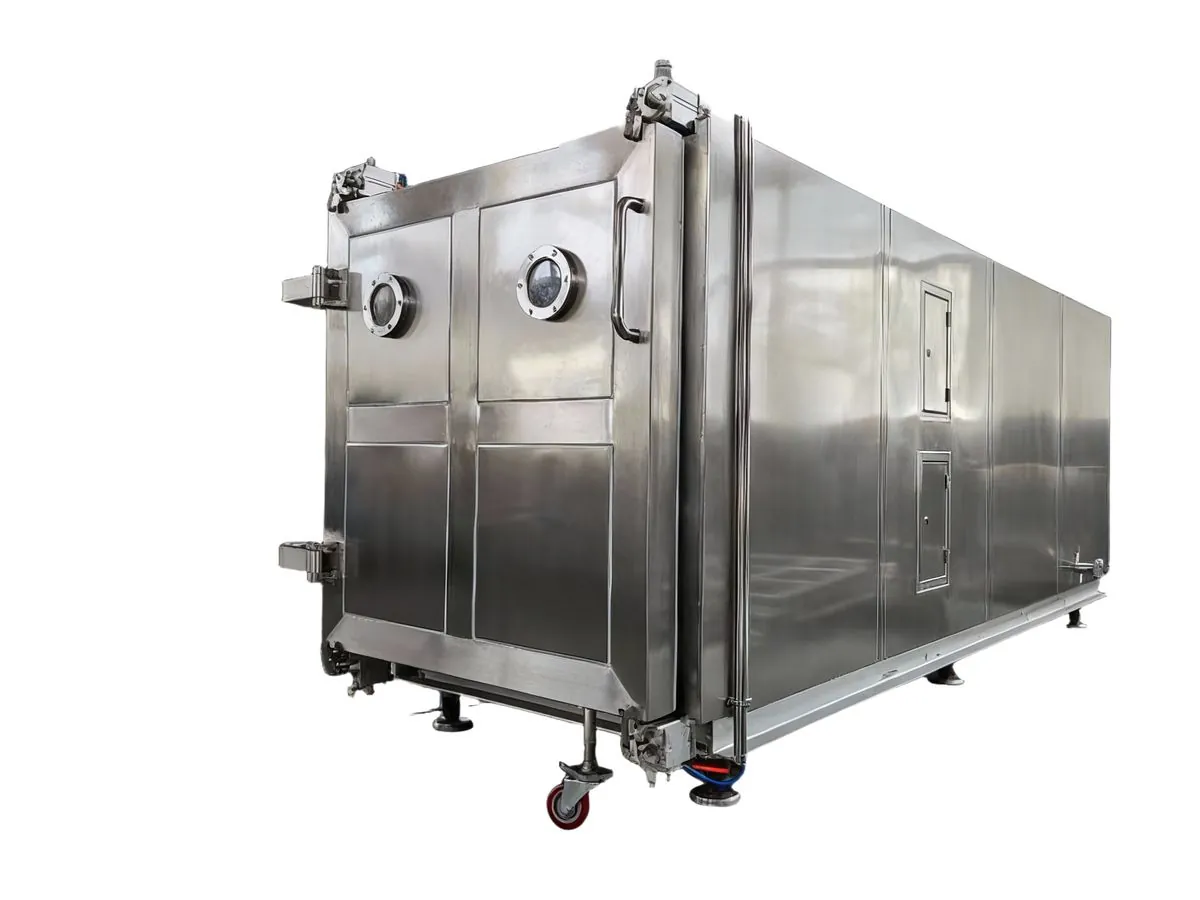
The first number every buyer meets is the nameplate: 35 kW on the QS-FD-20 (~200 kg per batch), 135 kW on the QS-FD-100 (~1 t per batch) and the QS-FD-200 (~2 t per batch). It is tempting to multiply that figure by cycle hours and call it the electricity bill. That overstates reality.
Nameplate power is the sum of every electrical consumer at full load — compressors, heaters, pumps, fans, controls — all running simultaneously. In a real freeze drying cycle, that never happens:
- Loads cycle on and off. Shelf heaters switch under temperature control; pumps stage up and down; refrigeration modulates as the load changes. The machine is a choreography of loads, not a constant draw.
- Phases differ. Pre-freezing is refrigeration-heavy; primary drying leans on heating and vacuum; secondary drying is mostly heating at low intensity. Each phase has a different signature.
- Experience shows ~60%. Across typical production cycles, average draw lands near 60% of nameplate — 135 kW installed behaves like a ~80 kW average load, 35 kW like ~20 kW.
This does not make the nameplate irrelevant. It still sizes your electrical supply, breakers and cables (see sizing utilities). But for operating cost, what matters is the duty cycle — how each load behaves across a real batch of your product.
The three loads that actually draw power
1. Two-stage refrigeration to −60 °C
This is normally the largest consumer. A two-stage cascade refrigeration system using R404A/R507 holds the chamber and cold trap at −60 °C through the entire pre-freeze and most of primary drying. Compressors run long hours at high load, and unlike heaters they cannot be "switched off" for long — the vacuum and the frozen product depend on the cold trap staying cold.
2. Zoned shelf heating
The product shelves are heated through four independently controlled zones (±0.1 °C, up to 80 °C). Heating is the main energy source for sublimation — the ice leaving the product carries energy away with it. Heaters cycle under PID control, so their average draw is far below their installed rating, but over a long primary-drying phase they still accumulate significant energy.
3. The vacuum pump set
A Roots pump backed by a screw pump pulls and holds deep vacuum through the cycle. Vacuum pumps draw a steady, moderate load — smaller than refrigeration or heating, but they run for nearly the whole cycle, so their share of total kWh is not negligible.
A useful mental model: refrigeration is the marathon runner, heating is the sprinter, and the vacuum pumps are the metronome — constant, moderate, always there.
Five variables that move the meter

- Loading rate. A chamber filled to 60% still heats, cools and evacuates 100% of its volume. Energy per kilogram is lowest on full loads — partial loads are the single most common source of "the machine uses more than we budgeted" surprises.
- Ambient temperature. The refrigeration condensers reject heat into your plant room. In a 35 °C room in Southeast Asia the compressors work noticeably harder than in a 20 °C room. A ventilated, shaded machine room within the specified temperature range is the cheapest energy-saving measure there is.
- Product and pre-treatment. Water content, slice thickness and pre-freeze condition change how long primary drying runs. Thicker slices and high-sugar fruits run longer cycles; a product already frozen hard to −30 °C or below shortens the pre-freeze phase. This is why no honest supplier quotes "kWh per kg" without knowing your product.
- Cycle program. The temperature ramp and pressure profile in the PLC recipe decide how aggressively heating and vacuum are applied. A well-tuned recipe finishes faster at equal quality; an overly cautious one burns energy protecting a margin you do not need. Recipe tuning is an operating discipline, not a one-time setup.
- Maintenance state. A dirty condenser, a tired vacuum pump or a leaking door seal (food-grade silicone seals need inspection) all degrade efficiency quietly. The maintenance discipline in our freeze dryer maintenance checklist is also an energy discipline.
How to get a realistic power figure from your supplier
Ask for these five items before you sign
- The nameplate power of each consumer separately — refrigeration, heating, vacuum pumps — not just the machine total.
- The expected average draw across a full cycle for your product class (fruits, pet treats, etc.), not just the installed rating.
- Whether the machine offers energy-saving features: variable-frequency drives on pumps or fans, automatic staged vacuum pump operation, heat-recovery options.
- The electrical supply specification: voltage, phases, required breaker size and cable cross-section for your site.
- The cooling specification: condenser cooling method (air or water), required room temperature range, and ventilation rate for the machine room.
Specifications are for reference only and are subject to the final supplied equipment.
A serious supplier answers these in writing. A vague "it uses about X" without a duty-cycle breakdown is not a figure you can build a business case on. And compare like with like: the per-batch energy cost of a QS-FD-100 at full load beats two half-loaded QS-FD-20s — which is exactly why matching machine size to your output is the first energy decision.
Sizing your utilities right
Two practical consequences for your plant:
- Electrical supply. Size breakers, cables and transformers for the nameplate (35 kW / 135 kW), not the average — the worst case is everything starting at once. Under-sizing the supply is a commissioning failure, not a cost saving.
- Heat rejection. Almost all the electricity becomes heat in your plant room — the refrigeration system moves heat from the chamber to the room. In tropical plants, plan ventilation or an exhaust strategy before the machine arrives; a hot room raises the compressor load, which raises the room temperature further.
Get the electrical and room requirements from the supplier's installation specification (our installation requirements guide walks through power, space and utilities line by line) and have your electrician sign off before shipment. Power problems discovered at commissioning are the most expensive kind.
Frequently asked questions
How much power does an industrial freeze dryer use?
Nameplate power for the QS-FD series is 35 kW on the QS-FD-20 (200 kg/batch) and 135 kW on the QS-FD-100 and QS-FD-200 (1 t and 2 t/batch). In real cycles the machine typically draws around 60% of nameplate on average — the loads cycle on and off rather than running flat-out. Actual energy per batch depends on product, loading rate, ambient temperature and cycle program, so always ask the supplier for a realistic duty-cycle figure for your product.
Which system in a freeze dryer uses the most electricity?
The refrigeration system is usually the largest consumer: the two-stage cascade that holds the chamber at minus 60 C runs through most of the cycle, including the entire pre-freeze and primary drying phases. Shelf heating (four independently controlled zones) is the second major load, and the vacuum pump set — Roots pump plus screw pump — is the third. Heating elements cycle on and off under temperature control, so their average draw is lower than their installed rating.
Does a bigger freeze dryer use proportionally more power?
Not proportionally. Doubling batch size does not double energy per kilogram of finished product: larger chambers have a better ratio of product surface to heat loss through the walls, and shared systems (one control cabinet, one vacuum set) serve more trays. The QS-FD series keeps the same 135 kW nameplate across the 1 t and 2 t batch classes, which is why per-batch energy efficiency improves with size — provided you actually fill the chamber.
Does ambient temperature affect freeze dryer power consumption?
Yes. The refrigeration condensers reject heat into the plant room, so a hot utility room forces the compressors to work harder — especially in tropical climates. Placing the machine in a ventilated, shaded area and keeping the room within the specified temperature range is one of the simplest ways to keep real power draw near the lower end of its range.
What questions should I ask a supplier about energy use?
Ask for the nameplate power of each electrical consumer (refrigeration, heating, vacuum pumps), the expected average draw across a full cycle for your product class, and whether the machine offers energy-saving features such as variable-frequency drives or automatic staged pump operation. Also confirm the electrical supply requirement (voltage, phases, breaker size) and the cooling water or ventilation specification before you sign.
Planning a freeze drying line?
Tell us your product and target batch size — we'll size the right QS-FD batch class and give you the realistic duty-cycle figures for your energy plan. See the range on our freeze dryer page.
Specifications are for reference only and are subject to the final supplied equipment.