What changes when material is frozen
Freezing does three things to raw material, and every difference in this guide traces back to one of them. First, the water inside the cells turns to ice. Ice takes up more space than liquid water, so growing crystals push against cell walls and, in delicate products, rupture some of them. Second, the material gains a water load fresh material does not carry: surface frost, ice between pieces, and water trapped in damaged cells all enter the fryer with the batch. Third, handling changes — the material becomes rigid and stackable, but brittle, and must stay frozen until use.
None of this is damage in the moral sense; it is a transformation with costs and benefits — the ruptured cells that worry a fresh-produce buyer are the same ones that let water escape faster in the fryer for some products.
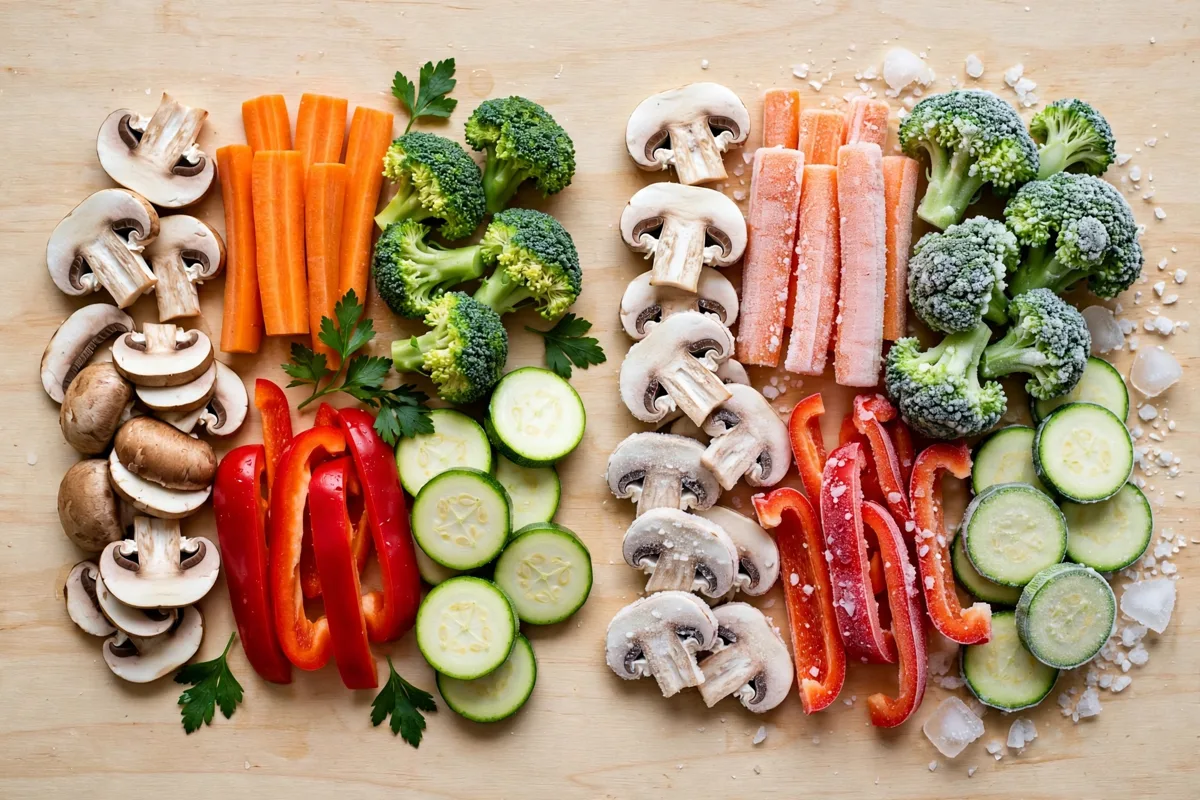
One more point deserves emphasis. Pre-freezing before vacuum frying is a real practice for some products — strawberries and chips or fries are common examples — but it is an optional variant, not a default step. Fresh and frozen are parallel starting points.
Fresh material: strengths and constraints
Fresh material's biggest strength is speed. Harvest, wash, cut, and fry can happen in a single short chain, with no freezing, thawing, or cold storage in between. For a producer near the growing region, that short chain is also a quality argument: the material enters the oil with cell structure, color, and aroma as close to harvest as they will ever be. Delicate products — leafy vegetables, herbs, thin fruit slices — benefit most, because their texture depends on intact cells that freezing would break.
The constraints are equally clear. Fresh material spoils fast, so the whole chain runs on a clock: receiving, preparation, and frying must be scheduled tightly, and any delay becomes waste. Supply is seasonal, so the line either idles out of season or switches products. A break in the cold chain shows up as softened material that fries unevenly.
Frozen material: strengths and constraints
Frozen material's defining strength is time. A harvest can be frozen at peak season and drawn on all year, turning a seasonal crop into a year-round product line and smoothing the purchasing calendar. Frozen supply is also more consistent, since pieces are graded and cut before freezing. For producers far from the growing region, or for short-season products, that consistency is often the difference between a viable line and none at all.
The constraints mirror the physics above. The material brings ice and extra water into the fryer, adding load to the oil and lengthening each batch — and longer batches mean fewer batches per day on the same machine. Some products lose delicate texture, because freezing broke the cells that held it. Frozen material also depends on its own cold chain: it must stay frozen through transport and storage, and any thaw-and-refreeze cycle damages texture further.
Preparation differences: thawing vs frying from frozen
Here the two starting points diverge most in daily practice, and both routes are genuinely used — the choice is a production decision to test, not a rule to inherit.
Thawing first
Thawing removes surface ice and free water before the material meets the oil, so the fryer deals with a load closer to fresh. The cost is an extra step with its own handling: thawed material drips, softens, and must be used promptly, and the drip carries away some soluble flavor and color. Thawing also adds scheduling complexity, because the thaw must finish just as the fryer is ready — too early and the material sits and softens; too late and the fryer waits.
Frying from frozen
Frying from frozen skips the thaw step entirely, simplifying scheduling and keeping handling to a minimum. The trade is that all of the ice goes into the oil with the batch: water load rises, foaming and splattering need watching at the start of the batch, and the oil's condition degrades faster. For robust products — root vegetable chips, thicker-cut pieces — this route is often the simpler choice.
Whichever route you choose, preparation before the fryer still matters. Cutting size and uniformity, surface water removal, and any blanching or pretreatment your product requires all apply to fresh and frozen alike — the starting point changes how much water arrives, not whether preparation matters. Run both routes side by side on pilot batches, and judge by the finished piece and the oil's condition after the batch.
Oil care and filtration implications
Oil is where the fresh-versus-frozen choice shows up as a running cost. Vacuum frying runs at 80–100 °C — low enough to protect heat-sensitive compounds and keep oil in good condition far longer than high-temperature frying — and finished products made this way can reach an oil content below 18%. But water is oil's main enemy in any fryer, and frozen feed brings more of it. Extra water accelerates oil breakdown, carries fines and starch into the oil, and shortens the interval between filtrations.
Plan on checking oil condition more often when running frozen material, and on filtering by condition rather than by a fixed schedule. Watch for the early signs: darker color, off odors, foaming that does not settle, and fines building up in the filter. Filtration removes particles but not dissolved breakdown products, so it delays rather than cures oil decline — the real control is limiting water load at the source, through preparation and the thaw-or-fry-from-frozen decision above.
Finished-texture and seasoning differences
Texture is where the choice becomes a product decision rather than a process one. Fresh material generally enters the oil with its cell structure intact, which suits delicate products that need a light, even crisp — the piece fries as a coherent structure and comes out with a clean bite. Frozen material can come out crisper for some products, because the cell walls that freezing broke let water escape more freely, producing a more open, porous structure. Neither outcome is universal: the same freezing step that opens one product's texture can make another mealy or hollow.
Seasoning follows texture. A more porous, open piece takes up seasoning more readily and evenly — an advantage for coated or dusted products — but it also absorbs seasoning more aggressively, so rates set for a fresh-fed product may overshoot on a frozen-fed one. A denser fresh-fed piece may need a heavier application for the same flavor impact. When you switch starting points, re-tune seasoning as part of the changeover, and treat the first batches after a switch as trials.
How to choose for your product line
Start from supply, not from preference. If your raw material is local, in season for most of your production year, and available in consistent quality, fresh is the natural starting point — the shortest chain and the most delicate texture. If your material is seasonal, distant, or variable, frozen is usually the practical starting point — a year-round line and steadier feed, at the price of water load and oil care.
Then test, rather than decide on paper. Run the same product from fresh and from frozen, through both preparation routes where relevant, and compare four things: finished texture and appearance, oil condition after the batch, batch time and daily output, and seasoning uptake. Weight those four by what your market pays for — a premium buyer may pay for texture above all, while a cost-driven line may weight oil life and output higher.
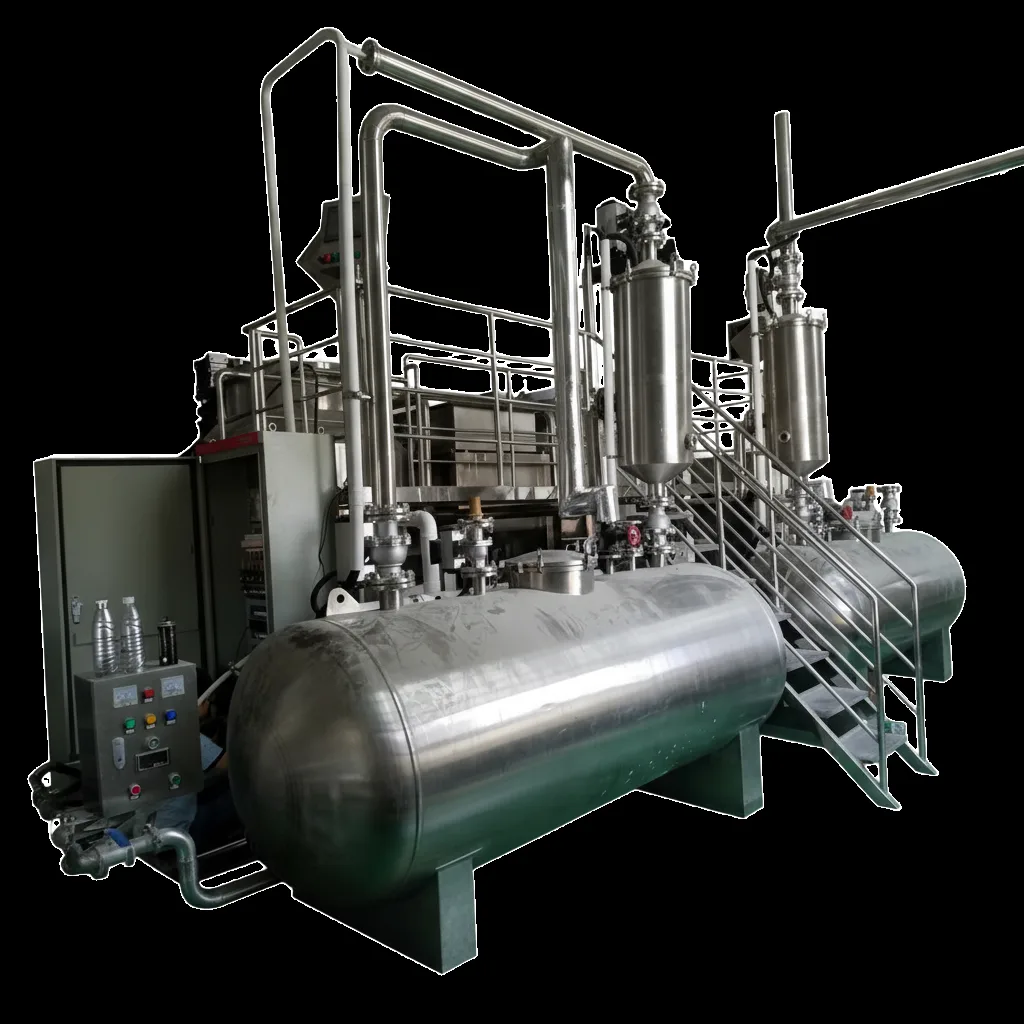
Finally, size the equipment against the answer. If frozen feed lengthens each batch, daily output drops on the same machine, so a line that runs mostly frozen material may need the next size up:
QS-VF series — batch vacuum fryers
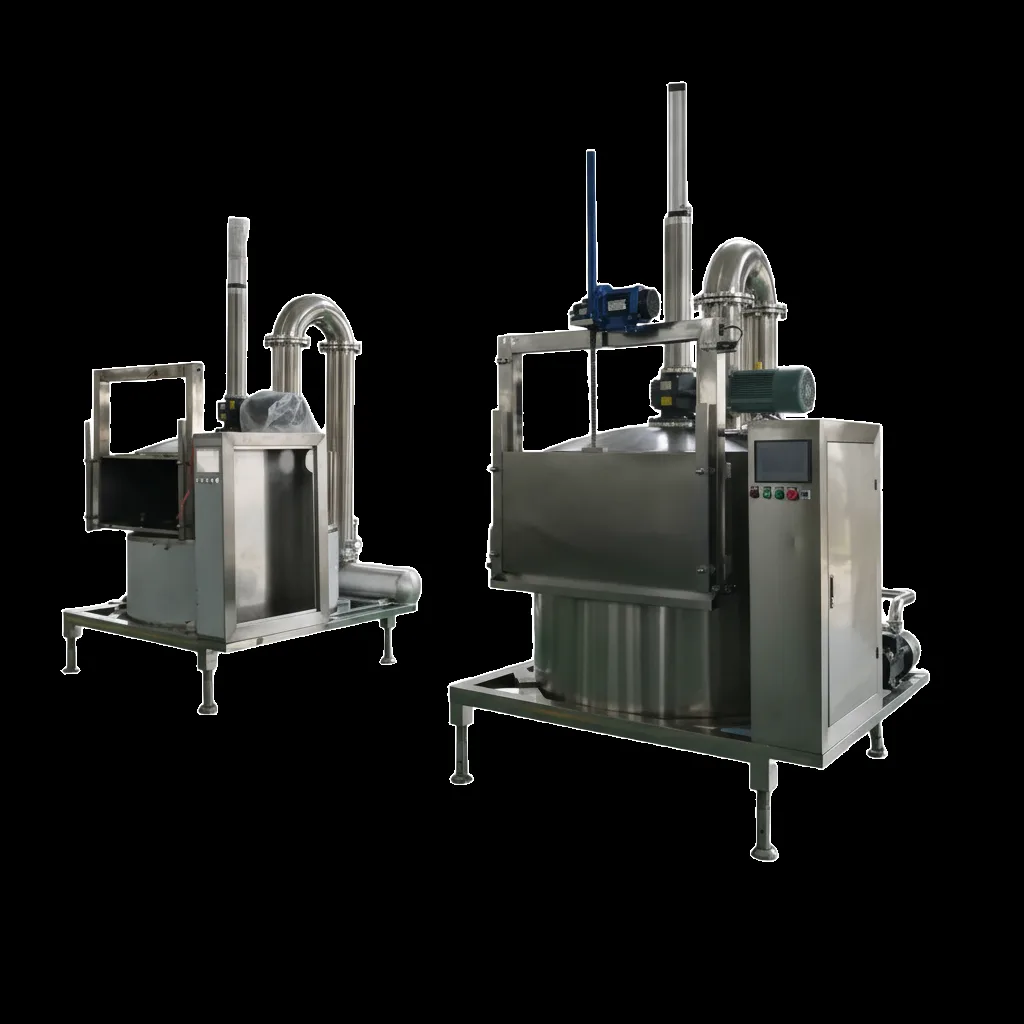
- QS-VF100 (100 kg per batch) — pilot and small production.
- QS-VF150 (150 kg per batch) — growing lines.
- QS-300 (300 kg per batch) — high-volume operations.
All three share one platform — Delta PLC with MCGS touchscreen control — so a process developed on the smallest machine transfers to the larger ones. Standard terms: 1-year warranty, approximately 3-month lead time.
Specifications are for reference only and are subject to the final supplied equipment.
Frequently asked questions
Can frozen material go straight into the vacuum fryer?
Both routes are used in practice: some producers thaw first, others fry from frozen. Frying from frozen skips a handling step, but the ice adds water load to the oil and can slow the batch. Thawing first removes that surface ice, at the cost of an extra step and drip loss. Run both routes on pilot batches before committing.
Does frozen material change how often I filter the oil?
Yes, in practice frozen feed tends to push filtration earlier. Extra water and loose ice carry fine particles into the oil, and water accelerates oil breakdown. Check oil condition more often when running frozen material, and filter on condition rather than on a fixed schedule.
Which starting point gives a crisper finished product?
There is no universal winner — crispness depends on the product and its preparation. Fresh material generally enters the oil with its cell structure intact, suiting delicate products that need a light, even crisp. Frozen material can come out crisper for some products, because freezing breaks cell walls and lets water escape more freely. Trial both and judge by the finished piece, not by theory.
Does the choice of fresh or frozen affect which fryer size I need?
It can, through batch time rather than capacity. If frozen feed lengthens each batch, daily output drops on the same machine, so a mostly frozen line may need the next size up. A QS-VF100 (100 kg per batch) suits pilot and small production; a QS-VF150 (150 kg per batch) fits growing lines; a QS-300 (300 kg per batch) serves high-volume operations. All three share the same Delta PLC plus MCGS touchscreen platform.
Plan your vacuum frying line
Tell us your product, your raw material supply, and your target output — we'll help you choose the starting point and size the fryer for your line. Explore the range on our vacuum fryer page.
Specifications are for reference only and are subject to the final supplied equipment.