Two technologies, two different mango snacks
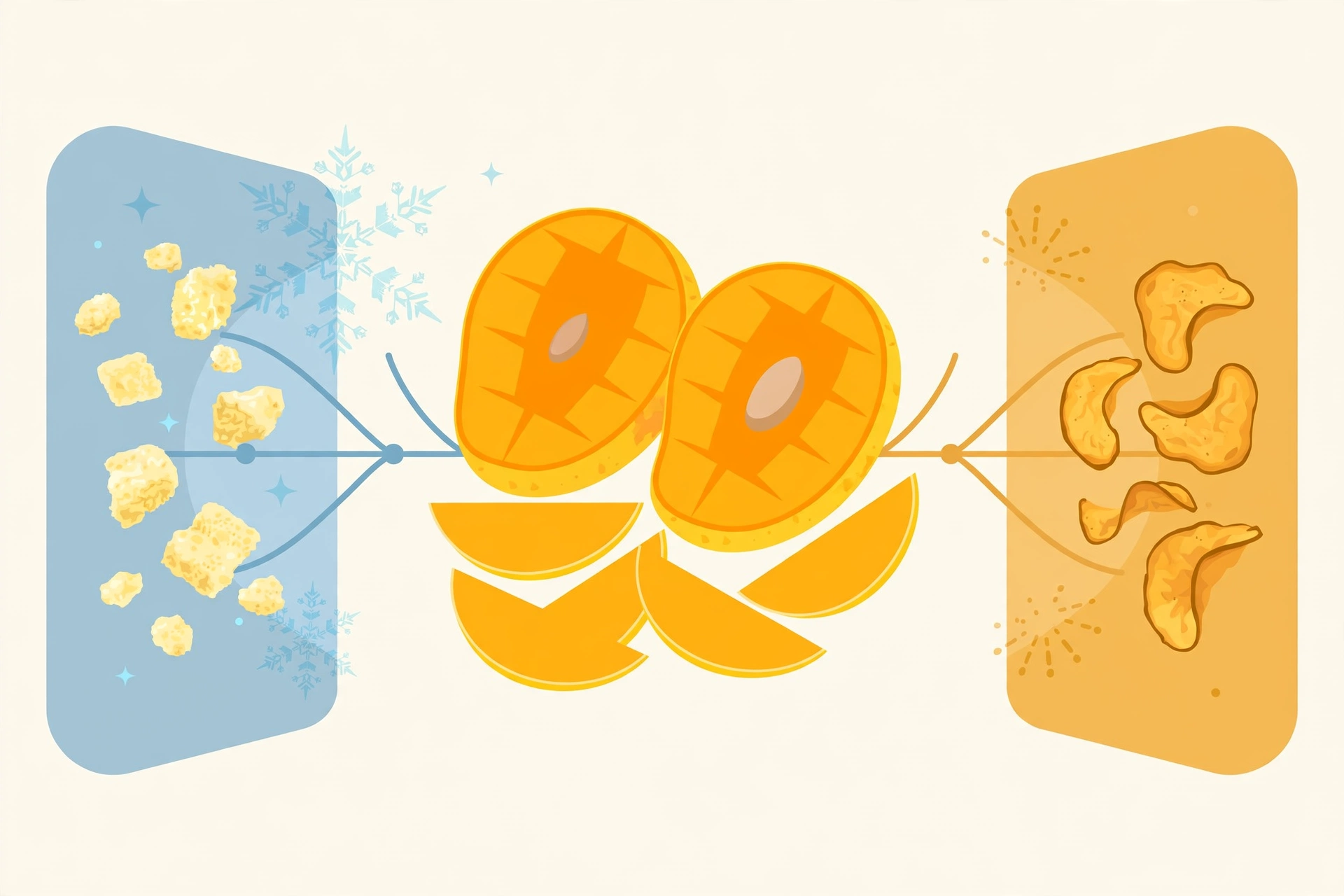
Mango is one of the few fruits that succeeds brilliantly in both processes — which is exactly why buyers ask which one to pick. The answer starts with understanding that the two technologies do not make competing versions of the same product. They make different products:
- Freeze dried mango: light, porous pieces that melt in the mouth, with concentrated mango aroma and no oil. Eaten as-is, added to cereal and yogurt, or used as a premium ingredient. Positioned at the high end of the snack shelf.
- Vacuum fried mango chips: thin, golden, crispy slices with a satisfying crunch and a hint of richness from the frying oil. Eaten as a mainstream snack, competing with potato chips and banana chips on texture and fun.
Both keep mango's signature flavor — low-temperature processing is the whole point of both technologies. The difference is the eating experience and the price tier, which means the decision is really a positioning decision.
How the processes differ
Under the hood, the two processes could hardly be more different:
- Freeze drying freezes mango to −60 °C, then removes the ice by sublimation under deep vacuum — ice turns directly to vapor without ever becoming liquid. Shelf heat, applied through four independently controlled zones (±0.1 °C, up to 80 °C), drives the process over a long cycle. No oil is involved at any point.
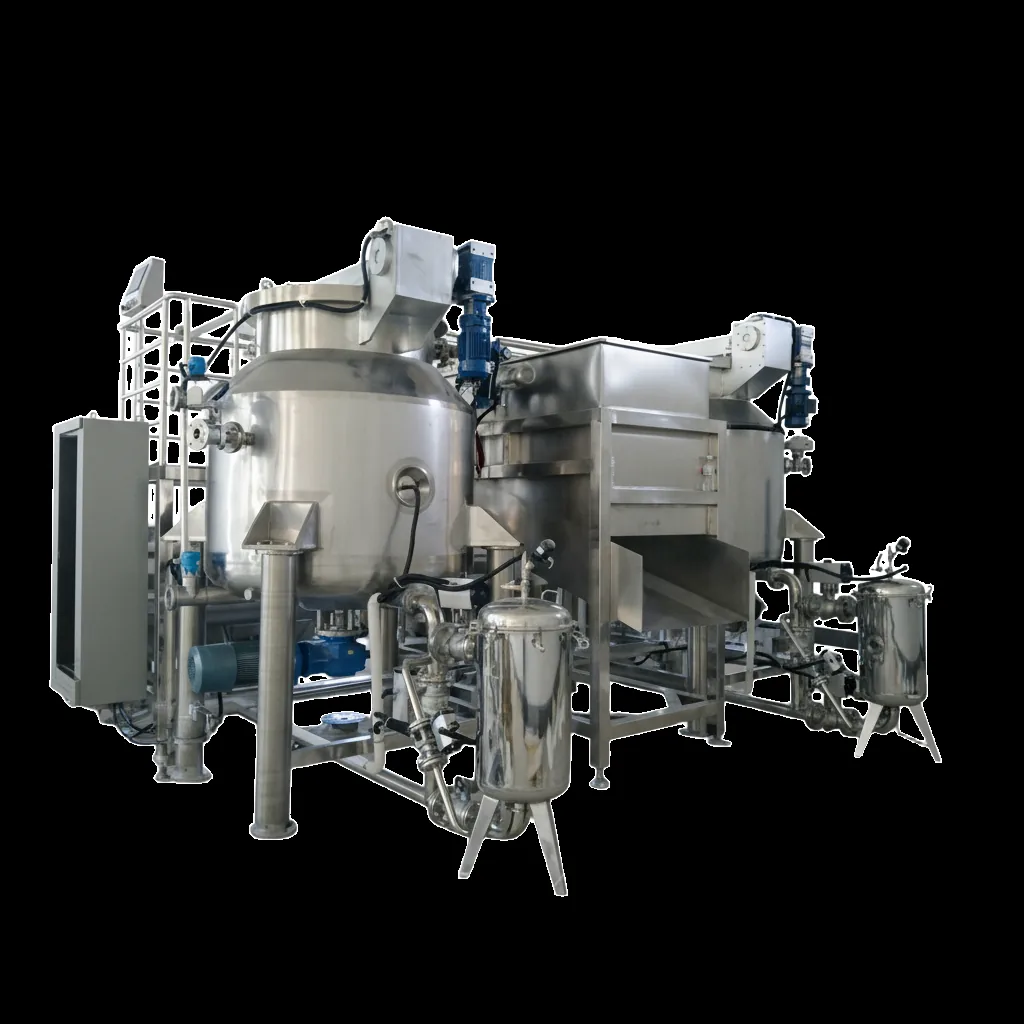
- Vacuum frying lowers the boiling point of the cooking oil by pulling a vacuum, so mango fries at a much lower temperature than traditional deep frying. After frying, the batch is spun by centrifugal de-oiling inside the vessel, flinging surface oil off before the product leaves the machine. Water is replaced by a small amount of oil rather than removed entirely.
The practical consequence: freeze drying is a dehydration process with long cycles and high energy use per kilogram, while vacuum frying is a cooking process with shorter cycles and oil management (filtration, turnover) as the ongoing operational discipline. The control platforms differ too — Siemens S7-200 on the freeze dryer line, Delta PLC with MCGS touchscreen on the vacuum fryer line — but both store recipes for batch-to-batch repeatability.
Texture, flavor and eating experience
This is where the products truly diverge, and it is the section to read most carefully if you are choosing:
- Freeze dried mango is feather-light and porous, dissolving quickly on the tongue. The flavor is intensely mango — low-temperature drying preserves the volatile aromatics — and the sweetness reads as concentrated rather than caramelized. It feels like a "health" product even to indulgent eaters.
- Vacuum fried mango chips are dense, crisp and shattering, closer to a kettle chip in mouthfeel. Low-temperature frying preserves the golden color that high-heat frying would destroy, and the small oil content adds richness and a savory edge that makes the chips hard to stop eating.
Neither texture is objectively better — they serve different snacking occasions. Premium health-positioned brands gravitate to freeze dried; fun, craveable snack brands gravitate to vacuum fried.
Shelf life and packaging logic
Both products keep well, but for different reasons and with different packaging demands:
- Freeze dried mango keeps longest under normal storage because its residual moisture is extremely low and there is no oil to oxidize. Standard moisture-barrier packaging does the job; the main enemy is humidity reabsorption.
- Vacuum fried mango chips also keep well — centrifugal de-oiling keeps surface oil low — but as an oil-containing snack they are more sensitive to oxygen, light and heat. Barrier packaging with good seals, and sensible storage away from heat, matter more here than for freeze dried product.
For exporters shipping through tropical climates, both products benefit from professional packaging lines; neither is a product you want to ship in thin retail film across the equator.
Cost structure and buyer profiles
No honest article can give you a universal cost comparison — raw-material prices, energy tariffs and labor differ by country — but the structure of the two cost models is stable everywhere:
- Vacuum frying: lower entry cost. Batch vacuum fryers start at 100 kg per batch (QS-VF100), scale through 150 kg (QS-VF150) to 300 kg (QS-300), run shorter cycles, and carry lower installed power per machine. For a snack startup, the total project investment — machine, installation, working capital for oil and packaging — is the more accessible of the two.
- Freeze drying: higher intensity, premium output. The QS-FD series spans 200 kg (QS-FD-20), 1 ton (QS-FD-100) and 2 tons (QS-FD-200) per batch at 35–135 kW, with long cycles and −60 °C refrigeration running throughout. The per-kilogram production cost is structurally higher — but the finished product sells in a higher price tier, which is where the margin comes from.
The buyer profiles follow the cost structure: vacuum frying suits snack startups and growing regional brands that need volume and crunch at an accessible investment; freeze drying suits premium brands, exporters and contract manufacturers whose customers pay for the positioning. Some producers run both — a QS-FD-100 for the premium line and a QS-VF150 for the mainstream line — sharing raw-material prep and packaging.
Decision guide: which fits your product
Mango process decision table
| If your product is… | Lean toward | Why |
|---|---|---|
| Premium health-positioned snack | Freeze drying | No oil, intense natural flavor, longest shelf life |
| Mainstream crunchy snack | Vacuum frying | Shattering crunch, craveable richness, accessible cost |
| Ingredient for cereal / yogurt | Freeze drying | Light pieces blend and rehydrate well |
| Startup with limited capital | Vacuum frying | Lower entry investment, faster cycles |
| Export premium brand | Freeze drying | High value density, robust shelf life |
| Two-tier brand portfolio | Both | FD for premium, VF for mainstream, shared prep line |
Specifications are for reference only and are subject to the final supplied equipment.
Frequently asked questions
Which is better for mango: freeze drying or vacuum frying?
Neither is universally better; they make different products. Freeze drying produces light, airy mango pieces with intense natural flavor and long shelf life, positioned as a premium snack. Vacuum frying produces golden, crispy mango chips with a satisfying crunch, positioned as an everyday indulgent snack. The right choice depends on your target price point and consumer.
How do the two processes differ technically?
Freeze drying freezes mango to −60 °C, then removes ice by sublimation under deep vacuum, with shelf heat applied through four controlled zones. Vacuum frying lowers the boiling point of oil with vacuum so mango fries at low temperature, then spins off surface oil by centrifugal de-oiling inside the vessel. Freeze drying removes water without oil; vacuum frying replaces water with a small amount of oil.
Which process costs less to run?
Vacuum frying has the lower entry cost: batch vacuum fryers start at 100 kg per batch (QS-VF100), run shorter cycles, and use less installed power per machine. Freeze drying is more capital- and energy-intensive per kilogram — the QS-FD series runs 35 to 135 kW across 200 kg, 1 ton and 2 ton batch classes — but produces a premium-positioned product that sells at a higher price tier. Compare full cost per finished kilogram for your own product, not machine prices alone.
Which mango snack has a longer shelf life?
Freeze dried mango keeps longer under normal storage because its residual moisture is extremely low and there is no oil to go rancid. Vacuum fried mango crisps also keep well thanks to centrifugal de-oiling, but as an oil-containing snack they are more sensitive to oxygen, light and heat, so barrier packaging and sensible storage matter more.
Can one factory run both processes for mango?
Yes, and some snack brands do exactly that: freeze dried mango for the premium line and vacuum fried mango chips for the mainstream line, sharing raw-material preparation and packaging. The two processes use separate machines — for example a QS-FD-20 or QS-FD-100 alongside a QS-VF150 — so plan the equipment layout and utilities for both from the start.
Which mango product are you building?
Tell us your target market and output — we'll help you choose between vacuum frying and freeze drying, and size the right batch class. See the range on our vacuum fryer page.
Specifications are for reference only and are subject to the final supplied equipment.