Why banana and jackfruit are the flagship vacuum fried fruits
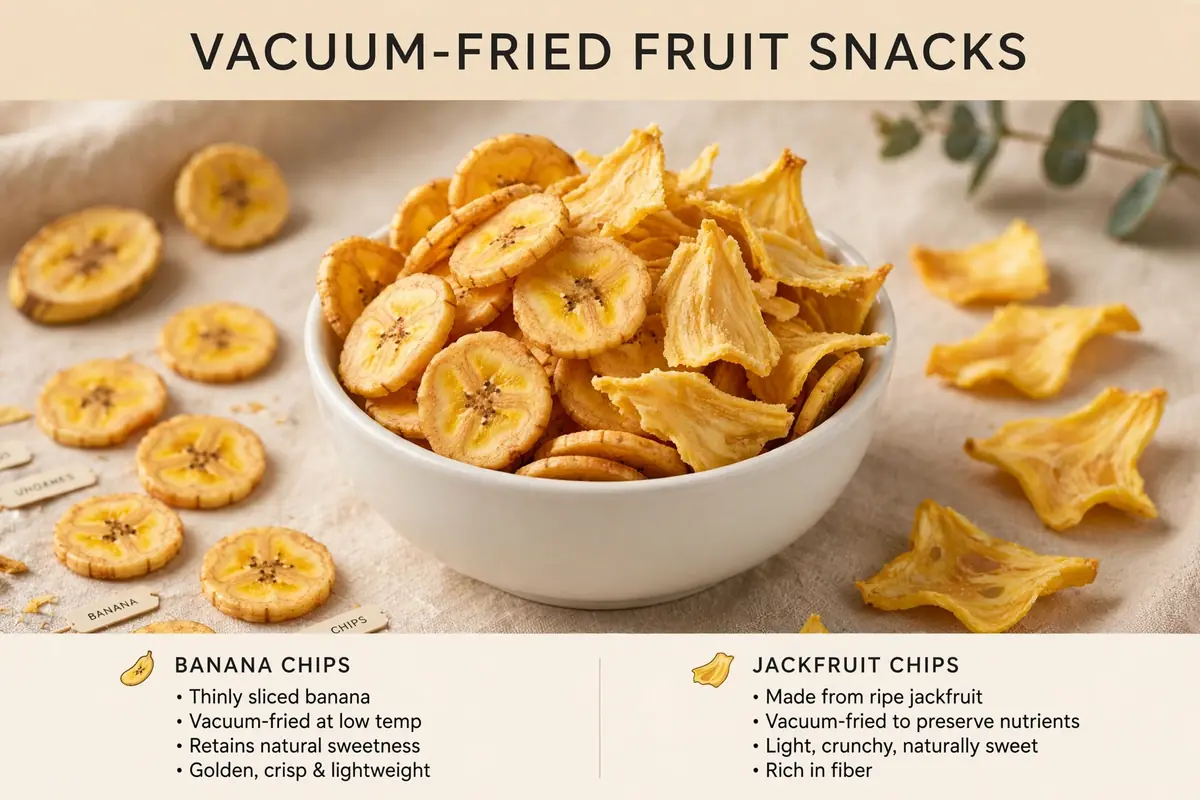
In any premium snack aisle in Southeast Asia, the best-selling fruit crisps tell the same story: banana and jackfruit. Both are grown abundantly across tropical Asia, cheap at the farm gate, and command a strong premium as shelf-stable crisps — the combination that anchors so many vacuum fried snack projects.
Vacuum frying suits them for a simple reason: both fruits are relatively high in sugar and moisture, and both brown and scorch easily at conventional deep-frying temperatures. A low-temperature vacuum process drives the water off without burning the sugars, so the chips keep their natural golden color and clean fruit flavor instead of the dark, bitter edge that ~170 °C frying produces. The result is a crisp that tastes like the fruit it came from — which is what the premium market pays for.
But neither fruit is forgiving. Banana and jackfruit differ in starch, fiber, sugar and structure, and treating them the same way is the most common reason a fruit chip project disappoints at scale.
The fruit-selection rules that decide chip quality
Four variables — ripeness, slice thickness, sugar logic and pre-treatment — decide whether a batch comes out golden and crisp or dark and bitter.
Ripeness: avoid overripe, high-sugar fruit
Overripe fruit is the biggest cause of dark, bitter chips. As fruit ripens, starch converts to sugar, and sugar browns under heat far more aggressively than starch. Fully ripe banana and jackfruit also soften, so slices deform, stick together and fry unevenly. The rule is consistent: choose firm, slightly under-ripe fruit — yellow with green tips for banana, firm mid-ripe segments for jackfruit — and reject anything mushy or leaking juice. Grade every delivery before it reaches the cutting line; quality cannot be recovered later.
Slice thickness: uniform, and thin enough for vapor to escape
Vacuum frying removes water by boiling it off at low pressure. Thin, uniform slices release vapor quickly and fry evenly; thick or mixed-thickness pieces leave the center wet while the outside overcooks. Uniformity matters more than any absolute number: a batch where every slice is the same thickness reaches crispness together. For banana, hold one fixed slicer setting across the whole run; for jackfruit, cut the thicker shoulder pieces down to match the thinner bulbs.
Sugar content logic: more sugar means thinner slices and tighter control
Sugar forces trade-offs: high-sugar fruit browns faster, so it needs thinner slices and shorter cycles. Mid-ripe fruit beats fully ripe fruit every time. If incoming fruit is riper than ideal — common in peak season — compensate by slicing thinner and tightening pre-treatment rather than accepting darker output.
Pre-treatments: blanching, osmotic pre-drying and pre-freezing
- Blanching: a short hot-water or steam blanch sets color, inactivates browning enzymes and firms the surface — the standard first step for banana slices.
- Osmotic sugar dip: a controlled sugar-solution soak firms texture and stabilizes color for high-sugar tropical fruit — but concentration and soak time must be validated, since an overly heavy dip leaves its own stickiness and off-flavor.
- Pre-freezing: freezing slices before frying gives fragile fruit enough structure for loading and handling, and keeps thin pieces from deforming. Frozen slices also enter the oil in a more uniform state.
Pre-treatments are not optional decorations — they absorb the variability of real fruit deliveries. Validate every pre-treatment at pilot scale on your actual fruit before committing a full production batch.
Banana specifics: starchy green vs. ripe
Banana is the classic vacuum fried fruit: it slices into perfect coins, fries to a beautiful golden color, and delivers the sweetness consumers expect. But the ideal ripeness window is narrow, and banana punishes both ends of it:
- Green/starchy bananas are firm and easy to slice, but lack developed sugar — the chips come out pale and bland, more cracker than snack.
- Fully ripe bananas have the flavor but too much sugar: they brown fast and turn gummy instead of crisp.
- The sweet spot is slightly under-ripe — yellow with green tips, firm to the touch. These slice cleanly, hold their shape through the cycle, and finish golden and crisp with real banana flavor.
For banana, thickness discipline is the operational key: a fixed slicer setting, checked regularly, plus a brief rinse after cutting to remove surface starch.
Jackfruit specifics: fibrous segments and seed removal
Jackfruit is the rising star of the vacuum fried category — its fibrous texture produces a crisp unlike anything else, and its aroma survives the low-temperature process remarkably well. But it demands more preparation labor than banana:
- Remove every seed — seeds do not fry evenly with the flesh and add dead weight to the vessel.
- Trim the pith and rags. The white fibrous material on the segments is the usual source of the bitter off-taste in bad jackfruit chips.
- Cut segments to uniform size. The thickest shoulders must be cut down to match the thinner bulbs. Jackfruit flesh holds more core moisture than banana — thinner is safer.
- Watch ripeness carefully. Mid-ripe — firm, aromatic, not yet leaking juice — is ideal. Overripe jackfruit is very high in sugar and darkens before it crisps.
The payoff is real: well-made vacuum fried jackfruit has almost no direct competitor on the shelf, and its aroma alone sets it apart from the banana-plantain crowd.
Why vacuum frying at 80–100 °C makes the difference
Conventional deep frying runs at roughly 170 °C. At that temperature, the sugars in banana and jackfruit caramelize faster than the interior dries — which is why conventionally fried fruit chips are dark, bitter at the edges, and coated in heat-degraded oil. Vacuum frying changes the physics: by lowering the pressure inside the vessel, the boiling point of water drops, so the fruit's moisture is driven off at 80–100 °C instead.
That temperature gap is the entire business case. At 80–100 °C:
- Color is preserved — the sugars do not caramelize aggressively, so banana fries golden instead of brown and jackfruit keeps its bright tone.
- Flavor stays true — the volatile aromatics that make jackfruit distinctive and banana familiar survive at low temperature; at 170 °C they are cooked away or masked by fried-oil notes.
- Oil quality lasts longer — frying at half the temperature stresses the oil far less, extending oil life.
The second half of the low-oil story is what happens after frying. The vessel spins the product in a centrifuge while still under vacuum, flinging surface oil off before re-pressurization. In conventional frying, oil soaks into the product as it cools in hot air; under vacuum, the de-oiling step removes it first. This is how vacuum fried fruit chips achieve oil content below 18% — a figure retail buyers increasingly ask for by name.
Our temperature guide and de-oiling guide cover both mechanisms in depth.
From pilot batch to industrial production
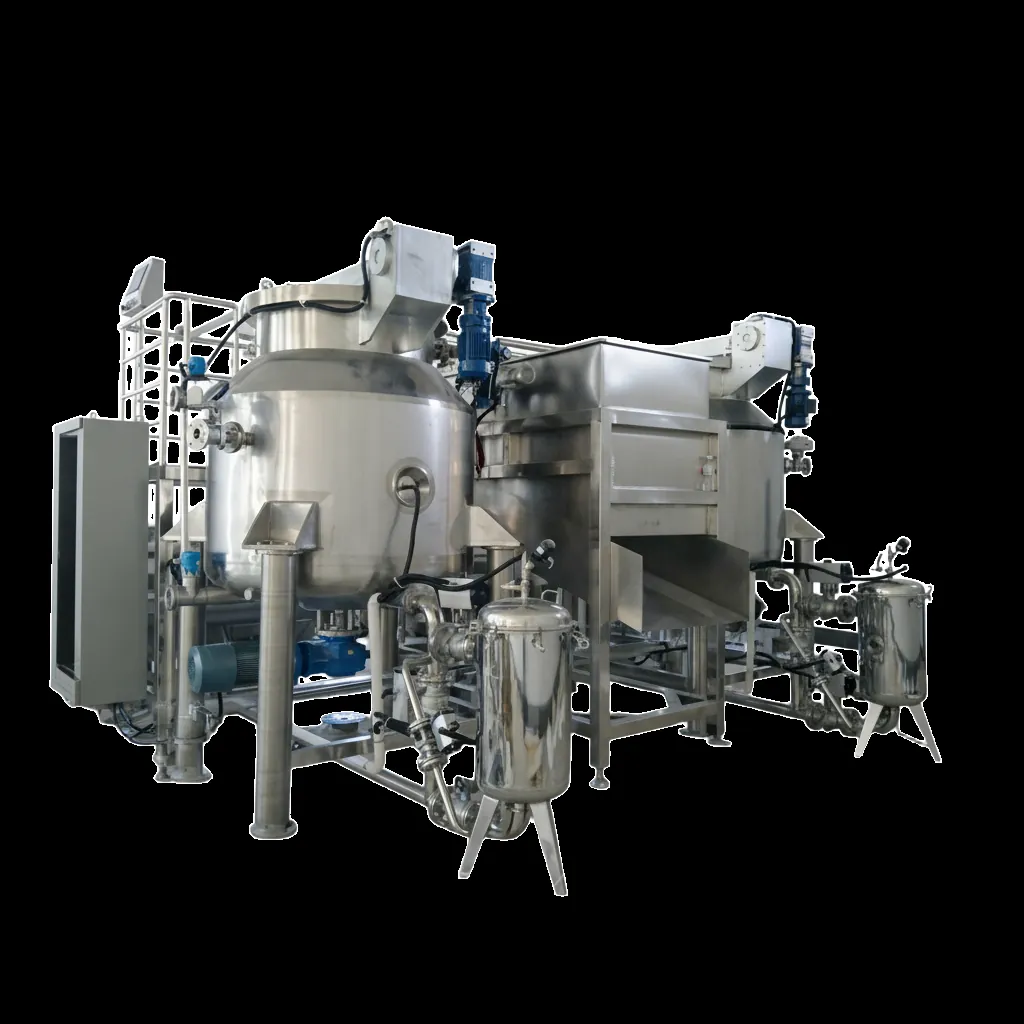
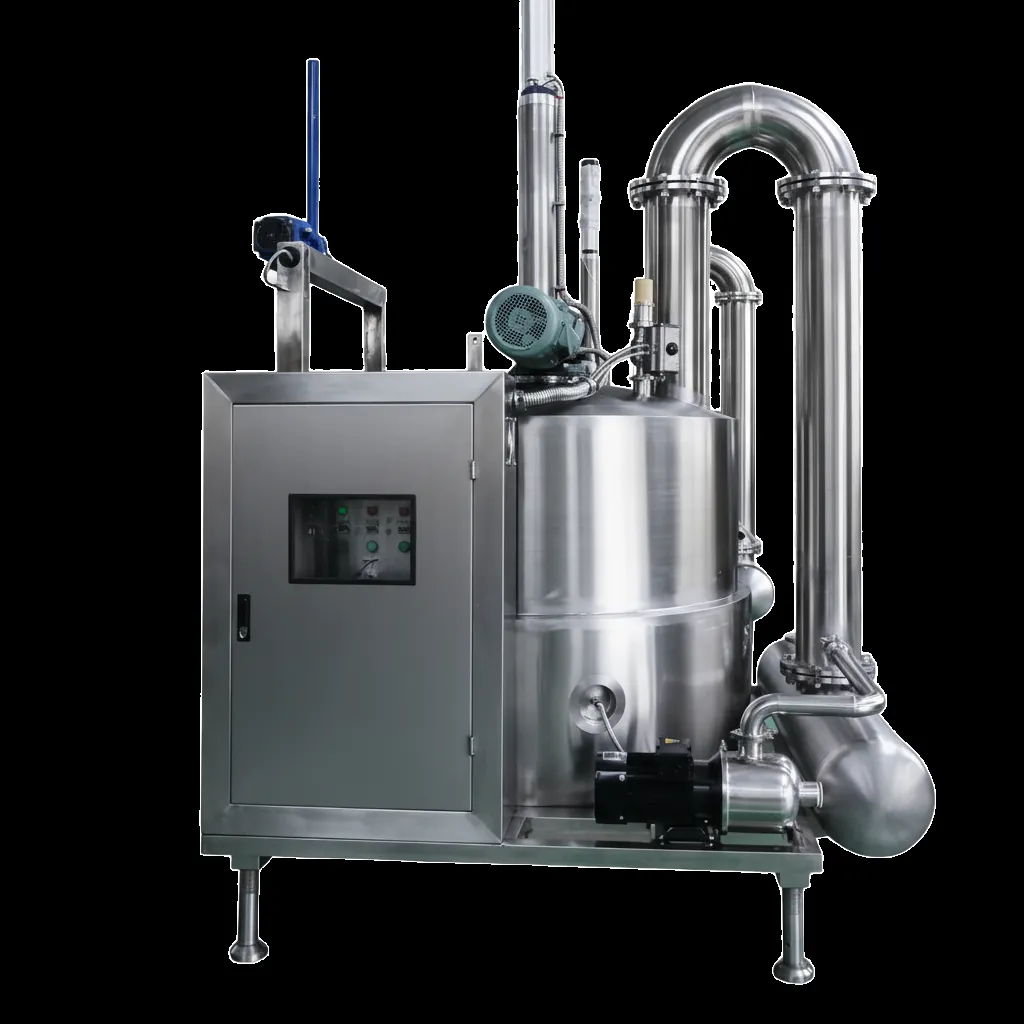
Fruit selection rules validated at pilot scale carry straight through to production — the process does not change, only the vessel does. The QS vacuum fryer line scales in three batch sizes:
QS vacuum fryer batch sizes
- QS-VF100: 100 kg per batch — pilot lines, specialty producers and new product development.
- QS-VF150: 150 kg per batch — growing brands adding a second product or stepping up from pilot.
- QS-300: 300 kg per batch — established processors with committed volume. Vessel 2600 mm (H) × 1600 mm (D).
All three run on a Delta PLC with an MCGS touchscreen for recipe-driven, repeatable cycles — once the banana or jackfruit recipe is dialed in, the operator selects it and the machine repeats it. Machines ship on approximately a 3-month lead time with a 1-year warranty.
A practical note for mixed-fruit producers: the fryer is equipment-neutral on fruit varieties — banana in the morning, jackfruit in the afternoon, the difference is the recipe and the pre-treatment, not the machine. Validating recipes per fruit at pilot scale is the highest-value work a project can do.
Frequently asked questions
What is the best ripeness for vacuum fried banana?
Slightly under-ripe bananas — yellow with green tips — are the best choice. They slice cleanly and hold their shape through the cycle. Fully ripe bananas carry more sugar, which darkens at frying temperature and turns the texture gummy instead of crisp.
Why do my jackfruit chips sometimes taste bitter or turn dark?
Bitterness usually comes from the pith or rags clinging to the fruit segments — remove all white fibrous material before frying. Darkening comes from overripe fruit with high sugar content, or from pieces cut too large so the outside overcooks before the inside is done. Use firm, mid-ripe segments, trim them well, and keep pieces small and uniform.
What pre-treatments do banana and jackfruit need before vacuum frying?
Three are common: blanching to set color and inactivate browning enzymes, an osmotic sugar dip to firm texture and stabilize color, and pre-freezing to give fragile slices enough structure for loading and frying. Validate each pre-treatment on a pilot batch before scaling up.
What is the oil content of vacuum fried fruit chips?
Vacuum fried fruit chips typically reach oil content below 18%, thanks to in-vessel centrifugal de-oiling performed under vacuum before the fryer is re-pressurized. Because the oil is spun off while the product is still under vacuum, it never soaks back into the chips the way it does when a conventionally fried product cools in open air.
Can I vacuum fry banana and jackfruit in the same batch?
You can, but running them separately is safer. Banana slices and jackfruit segments differ in thickness, moisture and sugar level, so they reach crispness at different rates — a mixed batch risks dark banana while the jackfruit is still chewy, or vice versa. If you do mix, cut both to comparable thickness and trial the batch before committing a full vessel.
Making fruit chips with vacuum frying?
Tell us your fruit, ripeness and target texture — we'll help you match it to the right vacuum fryer. See the full range on our vacuum fryer page.
Specifications are for reference only and are subject to the final supplied equipment.