Why mushrooms suit vacuum frying
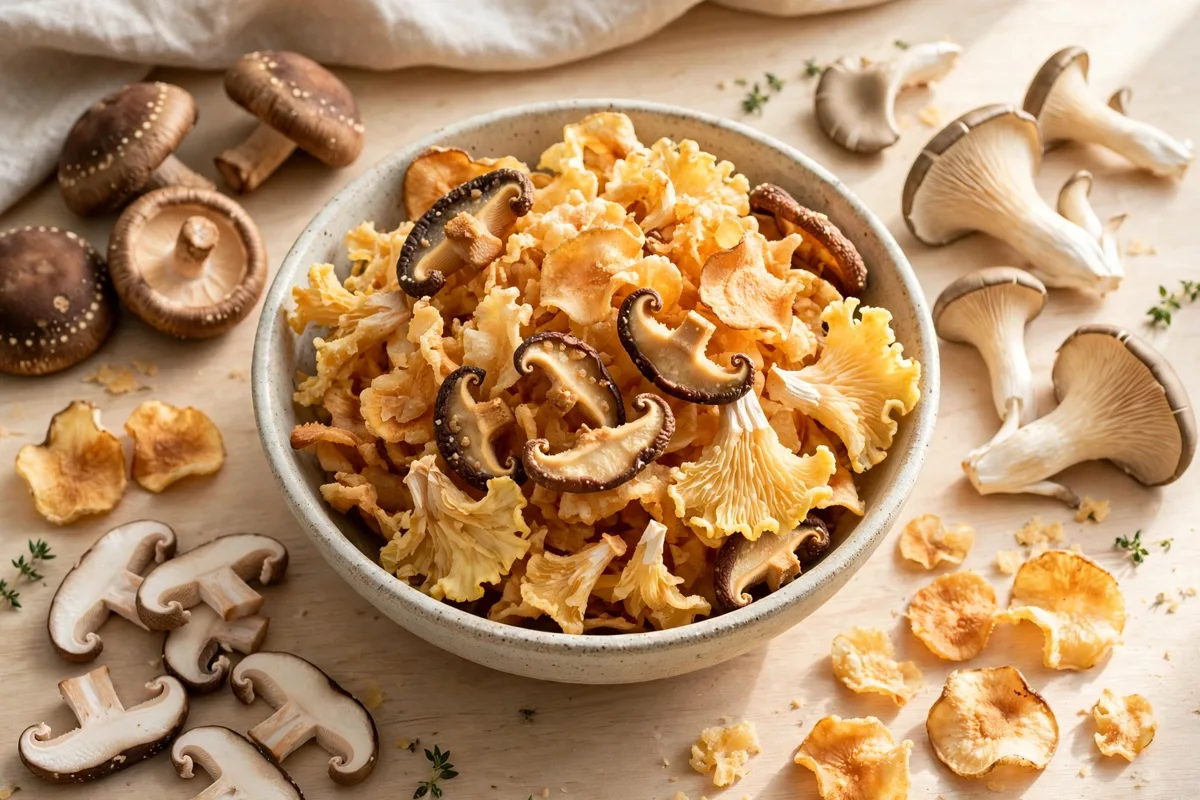
A mushroom is mostly water held in a spongy network of fibers, and that structure is both its charm and its problem. Fry it hot and the outside browns before the inside dries, leaving a crisp shell over a soggy center; dry it with hot air and it shrivels into something leathery. Vacuum frying solves both problems at once: under vacuum, water leaves the mushroom at a low temperature, so the fibers set into a light, airy crisp while the shape stays recognizably mushroom.
Three varieties lead the mushroom crisps market, each for a different reason:
- Shiitake brings the deepest umami of the three. Its thick, meaty cap fries into a substantial, savory crisp that anchors a snack mix and carries seasoning well.
- Oyster mushrooms bring delicacy. Their thin, fan-shaped caps and soft stems fry into light, lacy crisps with a gentle, almost nutty flavor — the variety for buyers who want a refined, elegant snack.
- King oyster mushrooms bring body. Their thick, dense stems slice into firm, meaty rounds that fry into crisps with real bite — the closest thing in the mushroom world to a chip with substance.
That range is the commercial point: one process, one fryer, and three distinct products — a savory anchor, a delicate premium, and a hearty everyday crisp.
The 5-step process chain
Vacuum frying is a chain, and every step exists to protect the step after it. Skipping or rushing one stage shows up in the finished pack as uneven color, excess oil, or a crisp that softens too fast.
1. Pretreatment — clean, trim, and prepare
Everything starts with the raw mushroom. Trim away damaged or woody parts, remove any growing-medium residue, and sort the batch so that pieces of similar size travel together. Mushrooms should be as dry as practical when they enter the fryer — surface water adds frying load and can make the finished crisp less even.
2. Vacuum — pull the air out first
The prepared mushrooms go into the frying chamber, which is then sealed and evacuated. Removing the air before any oil is introduced is what makes the whole process possible: with the air gone, water can leave the mushroom at a low temperature, and oxygen cannot attack the oil or darken the product while it fries. A tight, reliable vacuum is the foundation of consistent quality.
3. Low-temperature frying — crisp at 80–100°C
With the vacuum established, the mushrooms fry in oil at 80–100°C. At this range the water inside the mushroom turns to vapor and escapes through the porous structure, leaving behind the crisp network of fibers. Because the temperature stays low, the mushroom's flavor compounds and golden color survive, and the oil itself degrades far more slowly than it would at conventional frying temperatures. The result is a crisp that tastes like mushroom, not like oil — with a confirmed oil content below 18% in the finished product.
4. In-vacuum centrifugal de-oiling — spin before the air returns
This is the step that separates vacuum-fried crisps from every other fried snack. Before the vacuum is released, the basket spins at high speed inside the chamber, throwing surface oil off the crisps while they are still under vacuum. De-oiling inside the vacuum matters because the moment air returns, the pores of the crisp would draw oil back in. Spin first, and the oil stays out — which is why the finished crisp is light rather than greasy.
5. Packing — seal the crisp in
The de-oiled crisps leave the chamber warm, dry, and fragile. Handle them gently from this point on: rough handling breaks pieces and creates crumbs that drag down the look of the pack. Move them promptly to packing, where moisture-barrier packaging, a tight seal, and protection from light and air keep the crisp crisp.
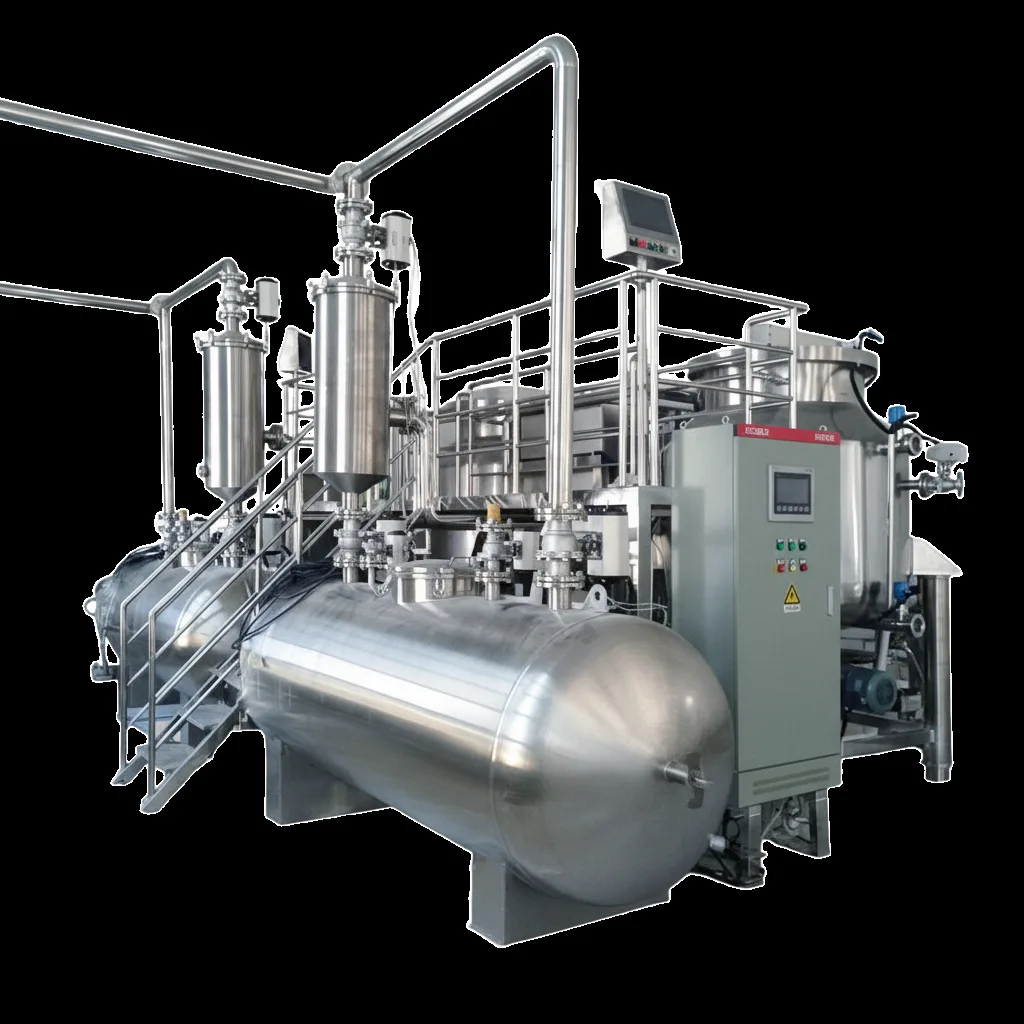
Run in this order, the chain is forgiving of small variations in raw material. Most quality complaints about vacuum-fried snacks trace back to a step that was rushed, not to the fryer itself.
Slicing and preparation
Slicing is where product design happens. The cut decides the texture, the look in the pack, and how evenly the batch fries.
- Slice evenly above all else. Even slices fry evenly. A batch that mixes thick and thin pieces will always disappoint: thin pieces over-crisp while thick ones stay soft in the middle. Consistency of cut matters more than any particular thickness.
- Match the cut to the variety. Shiitake caps slice into broad, cupped pieces that fry into hearty crisps. Oyster mushrooms separate into natural fans or strips that keep their delicate, lacy character. King oyster stems slice into clean, uniform rounds — the most chip-like format of the three.
- Keep pieces intact. Mushroom crisps sell on appearance as much as on flavor. Torn edges and broken pieces read as low quality in the pack, so handle sliced mushrooms gently and avoid overloading baskets, which crushes the pieces at the bottom.
- Sort before frying, not after. Removing damaged, undersized, or off-color pieces before they enter the fryer is far cheaper than picking them out of the finished batch — and a sorted batch fries more evenly because the pieces are alike.
Seasoning and flavoring
Mushroom flavor is the product — seasoning is the accent. That hierarchy should guide every flavor decision.
- Season after de-oiling. Seasoning applied before frying can wash off in the oil or scorch during the process. Seasoning applied to warm, freshly de-oiled crisps clings evenly to the dry surface. This single rule prevents the most common seasoning failure in vacuum-fried snacks.
- Keep the layer light. A heavy seasoning coat hides the mushroom flavor buyers came for, and it adds weight that can make the crisp feel dense. Start light, taste, and build up only if the product needs it.
- Tumble gently. Freshly fried mushroom crisps are fragile. Tumble them with the seasoning just enough to coat evenly — aggressive tumbling breaks pieces and turns premium crisps into crumbs.
- Build a flavor range, not a single flavor. The mushroom base supports many directions: a light sea-salt version, a garlic-and-herb version, a spicy version, and a barbecue-style version. One base product, several SKUs, and no change to the frying process.
Packing and storage
A vacuum-fried mushroom crisp is dry, porous, and fragile — three traits that make packing the most underestimated step in the line.
- Pack promptly. Dry, porous crisps pull moisture from the air quickly. Every minute spent exposed to humid air softens the texture you just worked to create. Move crisps from the fryer to packing without delay, and keep the packing area as dry as practical.
- Use moisture-barrier packaging. The pack is the crisp's only defense against humidity. A pouch or bag with a genuine moisture barrier and a reliable seal is the baseline — a weak seal undoes everything the fryer achieved.
- Protect from light and oxygen. Light fades the golden color buyers associate with quality, and oxygen degrades flavor over time. Opaque packaging, and oxygen absorbers or nitrogen flushing where your product specification calls for it, keep the pack looking and tasting fresh.
- Handle the finished pack gently. Crushing a sealed bag breaks the crisps inside it, and the buyer sees the damage the moment they open it.
Choosing equipment size
A batch vacuum fryer with a programmable recipe is the right tool for mushroom crisps, and the QS-VF series covers the range most producers need:
QS-VF series — batch vacuum fryers
- QS-VF100 (100 kg per batch) — startups and pilot production.
- QS-VF150 (150 kg per batch) — established producers.
- QS-300 (300 kg per batch) — high-volume operations.
All three share one control platform — Delta PLC with MCGS touchscreen — so a recipe developed on the smallest machine transfers to the larger ones as volume grows. Standard terms: 1-year warranty, approximately 3-month lead time.
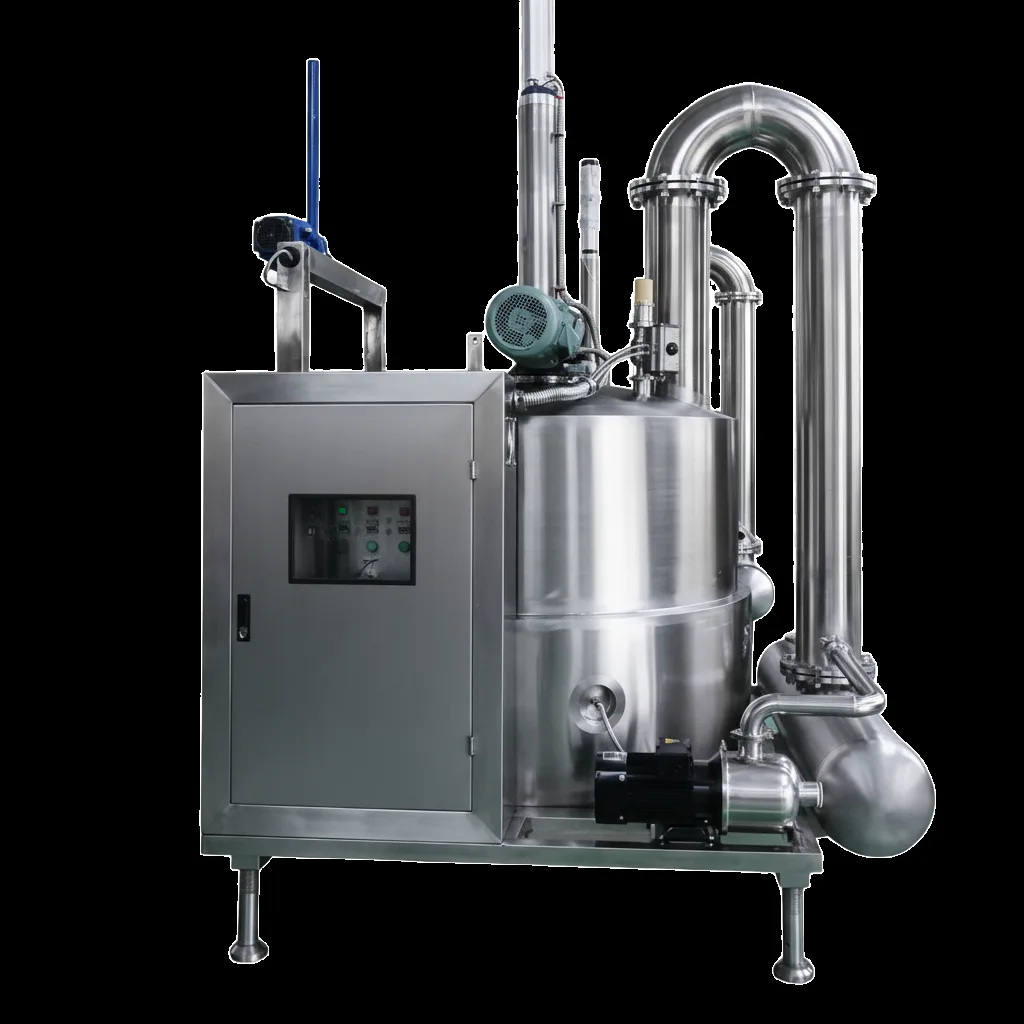
Start from your target output and work backward: how many batches per shift, and how much room you want to grow. A machine that fits today's volume with room to grow is cheaper than one you outgrow in a year.
Specifications are for reference only and are subject to the final supplied equipment.
Frequently asked questions
Why do mushrooms suit vacuum frying so well?
Mushrooms are naturally porous and high in water, which is exactly the combination vacuum frying handles best. Under vacuum, water leaves the mushroom at a low temperature, so the structure sets into a crisp, airy bite instead of collapsing into something greasy or leathery. Shiitake brings deep umami, oyster mushrooms bring a delicate, fan-shaped crisp, and king oyster brings a meaty, substantial bite — three different textures from one process.
What temperature does vacuum frying use for mushroom crisps?
Vacuum frying runs at 80–100°C, far below conventional frying temperatures. At this range the mushroom's natural flavor compounds and golden color survive the process, while the vacuum environment keeps oxygen away from the oil and the product. That combination — low temperature plus low oxygen — is why vacuum-fried mushroom crisps taste closer to the fresh mushroom than hot-fried versions do.
When should mushroom crisps be seasoned?
Season after de-oiling, not before frying. Seasoning applied before frying can wash off in the oil or scorch during the process, while seasoning applied to warm, freshly de-oiled crisps clings evenly to the dry surface. Tumble the crisps gently with the seasoning so fragile pieces do not break, and keep the seasoning layer light — the mushroom flavor should lead, with the seasoning as the accent.
Which fryer size fits a mushroom crisps line?
It depends on target output and growth plans. A QS-VF100 (100 kg per batch) suits startups and pilot production; a QS-VF150 (150 kg per batch) fits established producers; a QS-300 (300 kg per batch) serves high-volume operations. All three use the same Delta PLC plus MCGS touchscreen control platform, so recipes developed on the smallest unit transfer directly to the larger ones.
Plan your mushroom crisps line
Tell us your target output and which mushroom varieties you process — we'll help you size the vacuum fryer and plan the line from receiving to packing. Explore the range on our vacuum fryer page.
Specifications are for reference only and are subject to the final supplied equipment.