Why export packing decides the outcome
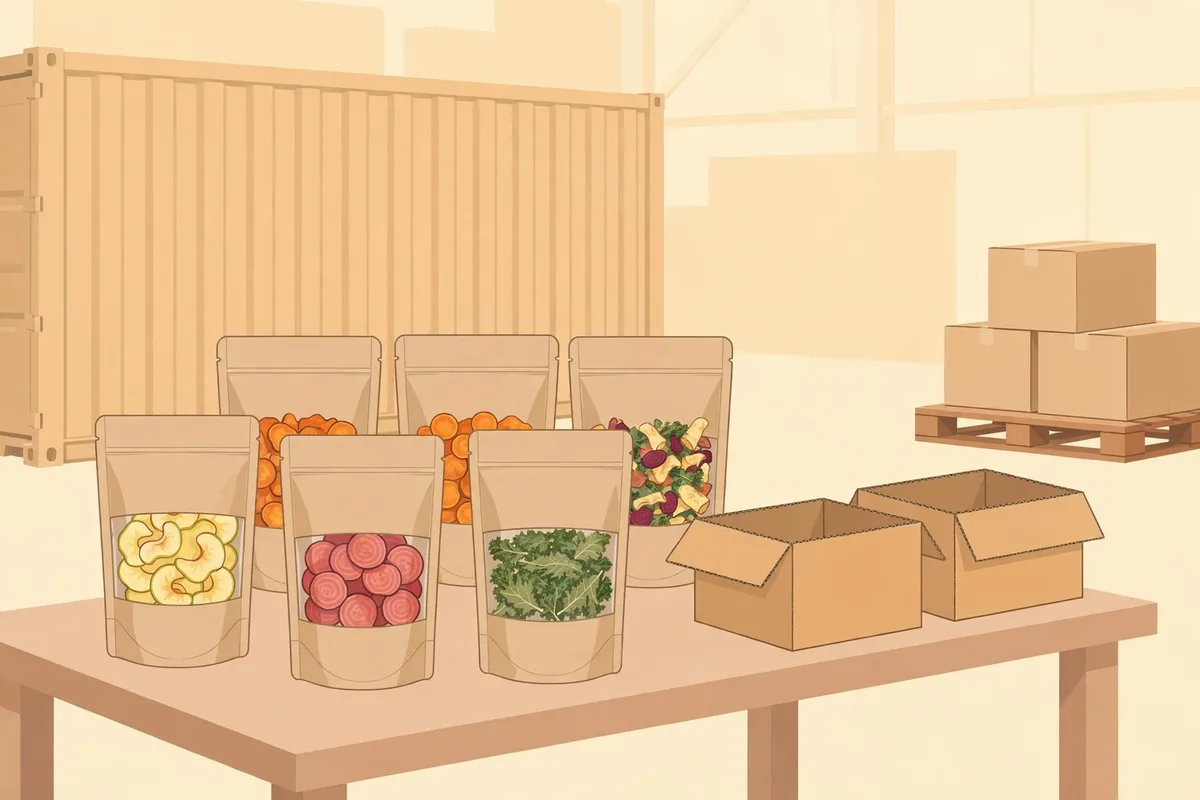
A vacuum fried chip leaves the fryer as a near-perfect product: low moisture, porous structure, oil content under 18%, bright color. Then it spends three to six weeks in a steel container crossing the ocean — through humid ports, hot decks and cold nights — before anyone tastes it. Everything the fryer achieved can be undone by a weak pack.
Vacuum fried snacks are especially demanding cargo for three reasons:
- They are extremely dry. A crisp chip at very low moisture acts like a sponge for ambient humidity. A pouch that lets moisture in produces a soft, stale product long before any expiry date.
- They are porous and fragile. The open structure that makes the crunch so satisfying also crushes easily. The pack has to protect the product mechanically, not just seal it.
- They contain oil. Even well de-oiled product carries frying oil, and oil exposed to oxygen turns rancid. Export packing is therefore an oxygen-management problem as much as a moisture problem.
The practical consequence: plan your export pack at the same time you plan your product, not after the first distributor complaint.
Pouch formats for export snacks
The retail pouch is what the consumer sees and what the product lives in. Three formats dominate export snack packing:
- Pillow bags. The classic sealed-on-three-sides pouch. Cheap, fast to run, and fine for single-serve portions — but they offer little shelf presence and no reclosability once opened.
- Stand-up pouches (doypacks). The workhorse of premium export snacks. They stand on the shelf, take a resealable zipper, and accept a larger printable face for branding. Most vacuum fried fruit and vegetable chips aimed at export retail use this format.
- Portion and multipack formats. Small single-serve sachets bundled into a larger outer bag. Popular in Southeast Asian retail, where low unit prices move volume.
One format decision is easy to get wrong: pouch size versus fill weight. Vacuum fried snacks are bulky for their weight, so an undersized pouch crushes the product during sealing, while an oversized one wastes film and looks half-empty. Size the pouch to the product's bulk density, not to a standard template.
Barrier materials: what keeps crispness in and moisture out
The pouch film is a wall with three jobs: keep moisture out, keep oxygen out, and keep light off the oil. Single-layer films cannot do all three, so export pouches are laminates — several layers bonded together, each contributing one property.
- Moisture barrier. The critical property for crispness. Ask your film supplier for the laminate's moisture-vapor transmission rating and compare options on that number — lower is better, and the right level depends on your transit time and the humidity of the route.
- Oxygen barrier. The critical property against rancidity. Metallized films and foil laminates are the standard answers for export snacks; plain transparent films are usually not enough for a multi-week sea journey.
- Light barrier. Light accelerates oil oxidation. This is why export snack pouches are overwhelmingly metallized or opaque — a clear window looks attractive but should stay small if you use one at all.
- Mechanical strength. Puncture and tear resistance matter when pouches are machine-filled, carton-packed and container-shipped. Thin films save money per pouch and lose it in damaged goods.
The rule of thumb: the longer and more humid the route, the more barrier you should buy. A pouch that survives domestic retail may fail on a six-week voyage through tropical ports. When in doubt, over-specify the film — it is the cheapest insurance in the whole export chain.
Nitrogen flushing and headspace oxygen
Sealing a pouch full of air seals the oxygen in with the product. Nitrogen flushing — replacing the headspace air with food-grade nitrogen just before sealing — is the standard export answer, and it does two jobs at once:
- It displaces oxygen. With most of the oxygen gone, the oil's path to rancidity slows dramatically. This is the single biggest lever on flavor stability during long transit.
- It cushions the product. A nitrogen-filled pouch is slightly pressurized, like a tiny airbag around fragile crisps. Vacuum fried chips break less in a flushed pouch than in a flat-sealed one.
Most export-oriented packing lines and contract packers offer gas flushing as a standard option — confirm it is included in your packing setup rather than assuming. One caution: flushing only works if the seal is good, which brings us to the most neglected step.
Seal integrity: the weakest link in the pouch
A perfect barrier film with a bad seal is a bad pouch. The seal is where export packs fail most often, and the causes are almost always process control, not materials:
- Seal through contamination. Oil, seasoning dust or product crumbs in the seal zone prevent the layers from bonding. Well de-oiled product helps here — free surface oil migrating into the seal area is a classic failure. Keep the seal zone clean by design, not by luck.
- Seal parameters. Temperature, pressure and dwell time must match the laminate. Too cold and the seal peels; too hot and the film distorts or burns through. Validate the settings for each film structure and re-validate when you change suppliers.
- Cool the product first. Never seal warm product. Chips straight off the cooling line carry residual heat that condenses inside the pouch — you will have packed your own humidity. Product must reach ambient temperature before it meets the pouch.
- Test the seals. Build seal checks into routine QC: visual inspection of every seal, plus periodic burst or leak testing on samples. A simple water-bath squeeze test catches gross leaks; your packer should have a defined sampling plan.
Treat seal integrity as a controlled process with logged parameters, not as something the operator "eyeballs."
Master cartons, pallets and container loading
The pouch protects the product; the master carton protects the pouches; the pallet protects the cartons. Each layer has its own failure modes on a sea voyage:
- Carton strength. Export cartons need higher burst and stacking strength than domestic ones — they will be stacked several high in a container and handled multiple times. Specify export-grade corrugated board and confirm the stacking strength with your carton supplier.
- Inner count and fit. Pouches should fit the carton snugly. Loose pouches shift and abrade; overstuffed cartons burst at the seams. Design the carton around the actual pouch dimensions.
- Pallet patterns. Interlock or column-stack cartons for stability, stretch-wrap the full pallet, and keep the pallet footprint within the container's loading plan. A stable pallet survives rough handling; a loose one does not.
- Container moisture. Steel containers sweat — temperature swings condense water on the container roof ("container rain"), which drips onto cartons. Container desiccants and proper ventilation practices are standard export hygiene; discuss them with your freight forwarder.
- Labeling. Destination markets have their own food-labeling rules — ingredients, nutrition panels, allergens, language, importer details. Labeling compliance is the buyer's and importer's responsibility; confirm the requirements for each market before printing a single carton.
Export packing checklist
- Pouch format sized to the product's bulk density, with resealable zipper for multi-serve sizes
- Barrier laminate matched to transit time and route humidity (moisture + oxygen + light)
- Nitrogen flushing confirmed on the packing line
- Seal parameters validated per film structure; seal zone kept free of oil and crumbs
- Product cooled to ambient before packing; packing room kept dry
- Routine seal QC: visual checks plus periodic leak/burst sampling
- Export-grade master cartons, snug inner count, stable pallet pattern, stretch wrap
- Container moisture plan with the freight forwarder; labeling per destination-market rules
- Shelf-life validation on the final product in its final pack before launch commitments
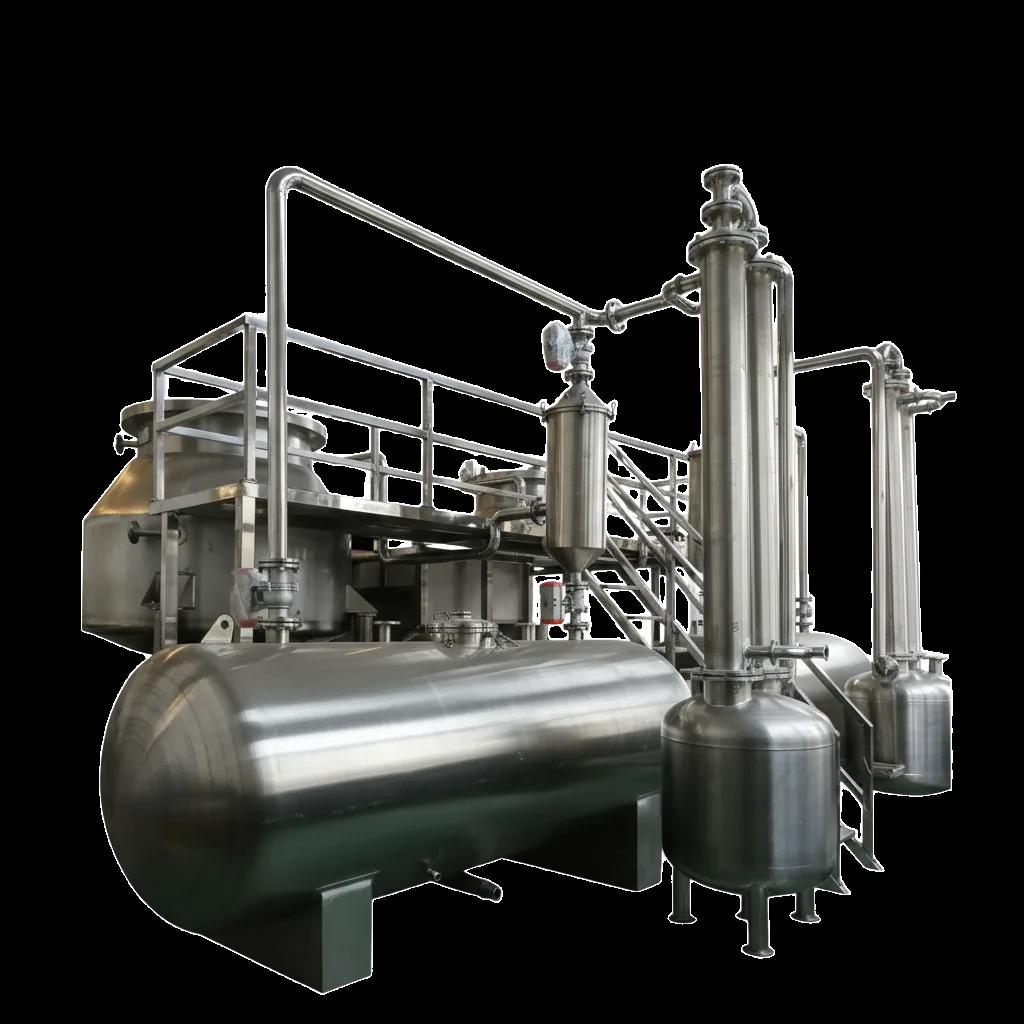
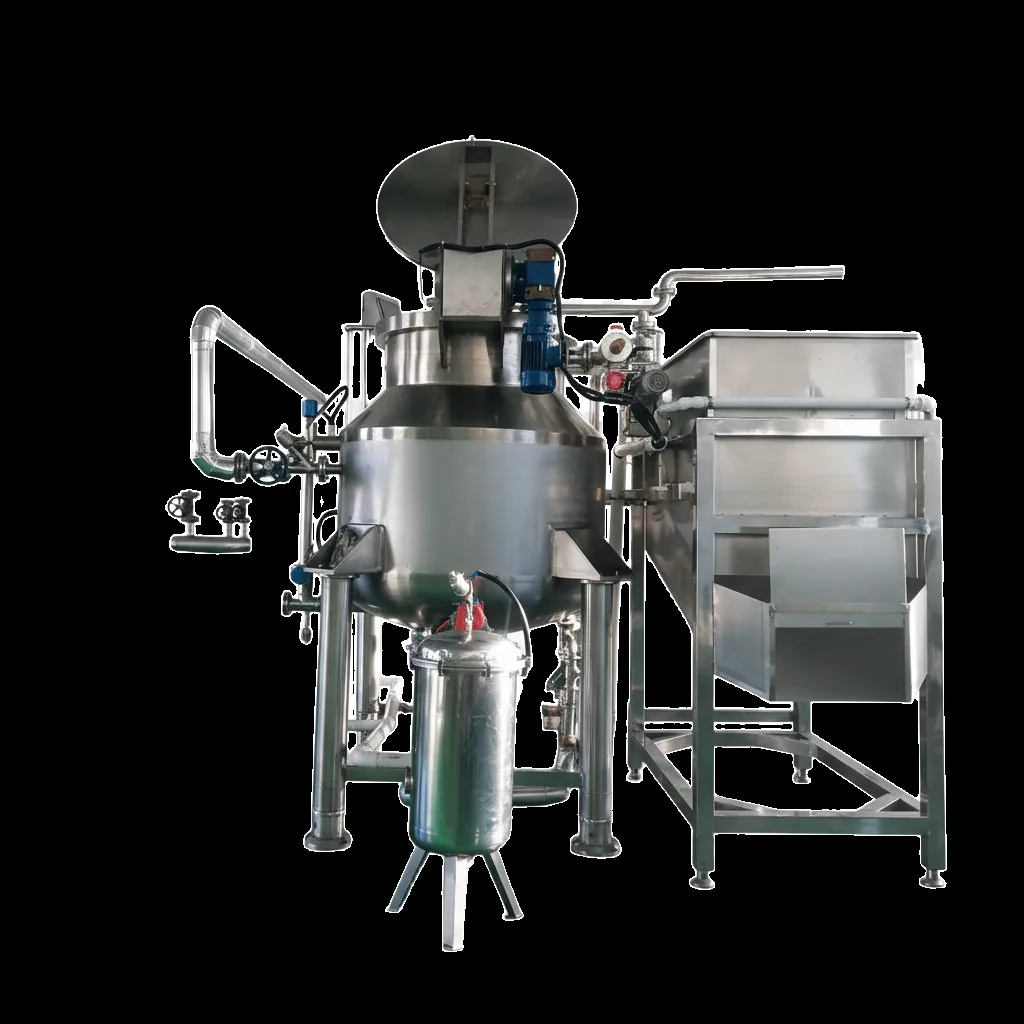
QS vacuum fryers — the QS-VF100 (100 kg per batch), QS-VF150 (150 kg per batch) and QS-300 (300 kg per batch) — produce the low-oil, evenly fried product that makes export packing easier: thorough centrifugal de-oiling means less free oil to fight the seal, and consistent batches mean the packing line settings stay valid. Our snack shelf-life guide and exporting equipment guide cover the neighboring decisions.
Frequently asked questions
How long do vacuum fried snacks stay fresh after export?
There is no single number: it depends on the product, the oil content, the pouch's barrier properties, whether the headspace was nitrogen-flushed, and the storage climate at destination. Run shelf-life validation — accelerated and real-time tests on your actual product in its final pack — before committing to a distributor's launch date.
Do I need nitrogen flushing for vacuum fried snacks?
For export, nitrogen flushing is standard practice. Replacing the air in the pouch headspace with nitrogen displaces the oxygen that drives rancidity and staleness, and the slight positive pressure cushions fragile crisps in transit. Most contract packers and export-oriented packing lines offer gas flushing as an option.
Which pouch material should I choose for export snacks?
Ask your film supplier for the moisture-vapor and oxygen transmission ratings of each laminate, then match them to your transit time and destination climate. Metallized or foil laminates give the strongest barrier for long sea shipments; the longer and more humid the route, the more barrier you should buy.
Can my local packing supplier handle export-grade packing?
Usually yes, if they can do gas flushing, controlled sealing, and seal-integrity checks. Walk through the export checklist with them: barrier film, nitrogen flush, seal parameters, leak testing, and master cartons sized for palletized container loading — and run a trial shipment before scaling up.
What should I ask my fryer supplier about packing?
The fryer and the packing line are separate equipment, but the handoff matters: product must be cooled to ambient temperature before it goes into a pouch, and de-oiled thoroughly so free oil never sits against the seal area. Ask your supplier how their discharge and cooling stage hands off to the packing line.
Building an export snack line?
Tell us your product and target markets — we'll help you match the fryer to your output and talk through the packing handoff. See the full range on our vacuum fryer page.
Specifications are for reference only and are subject to the final supplied equipment.