What the control panel actually controls
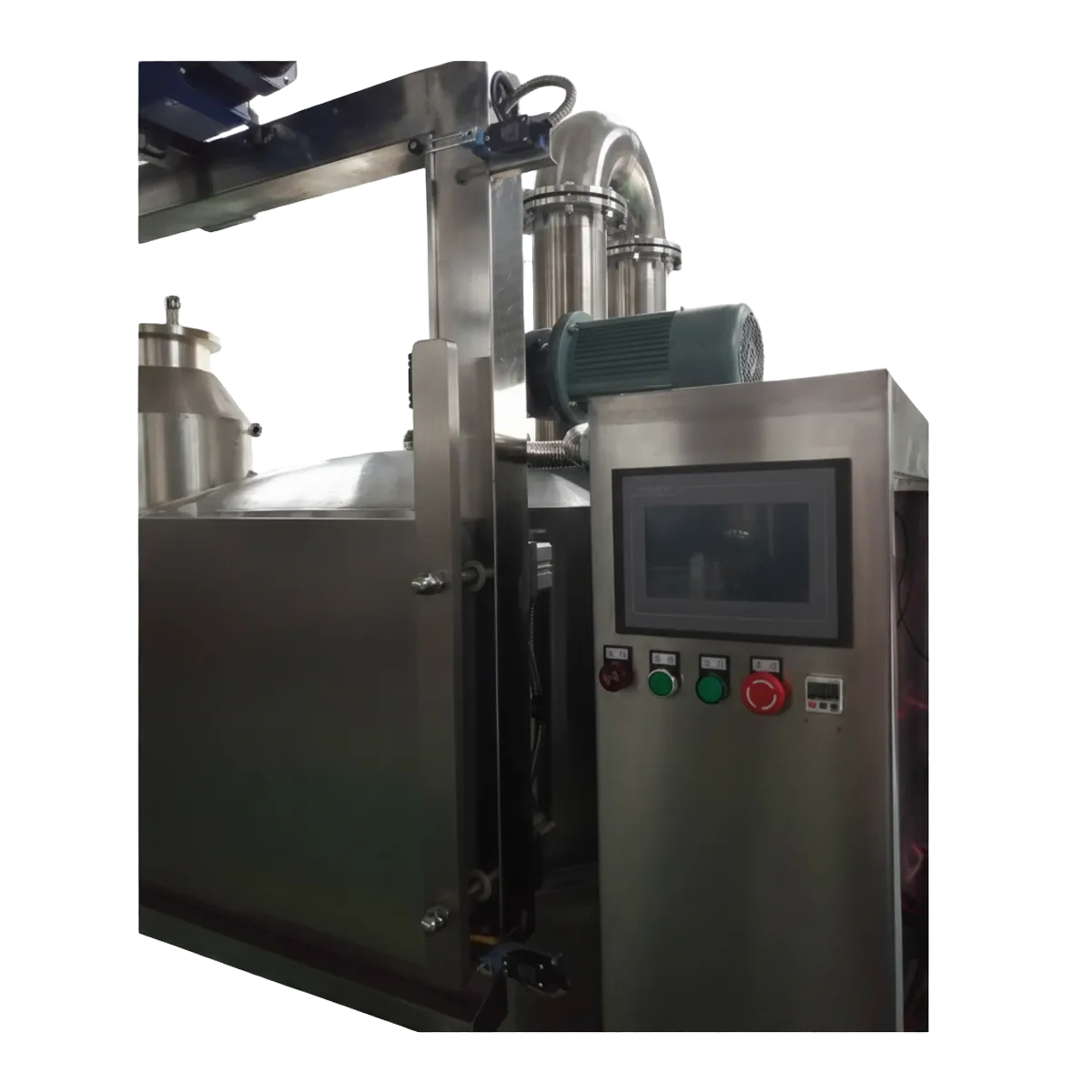
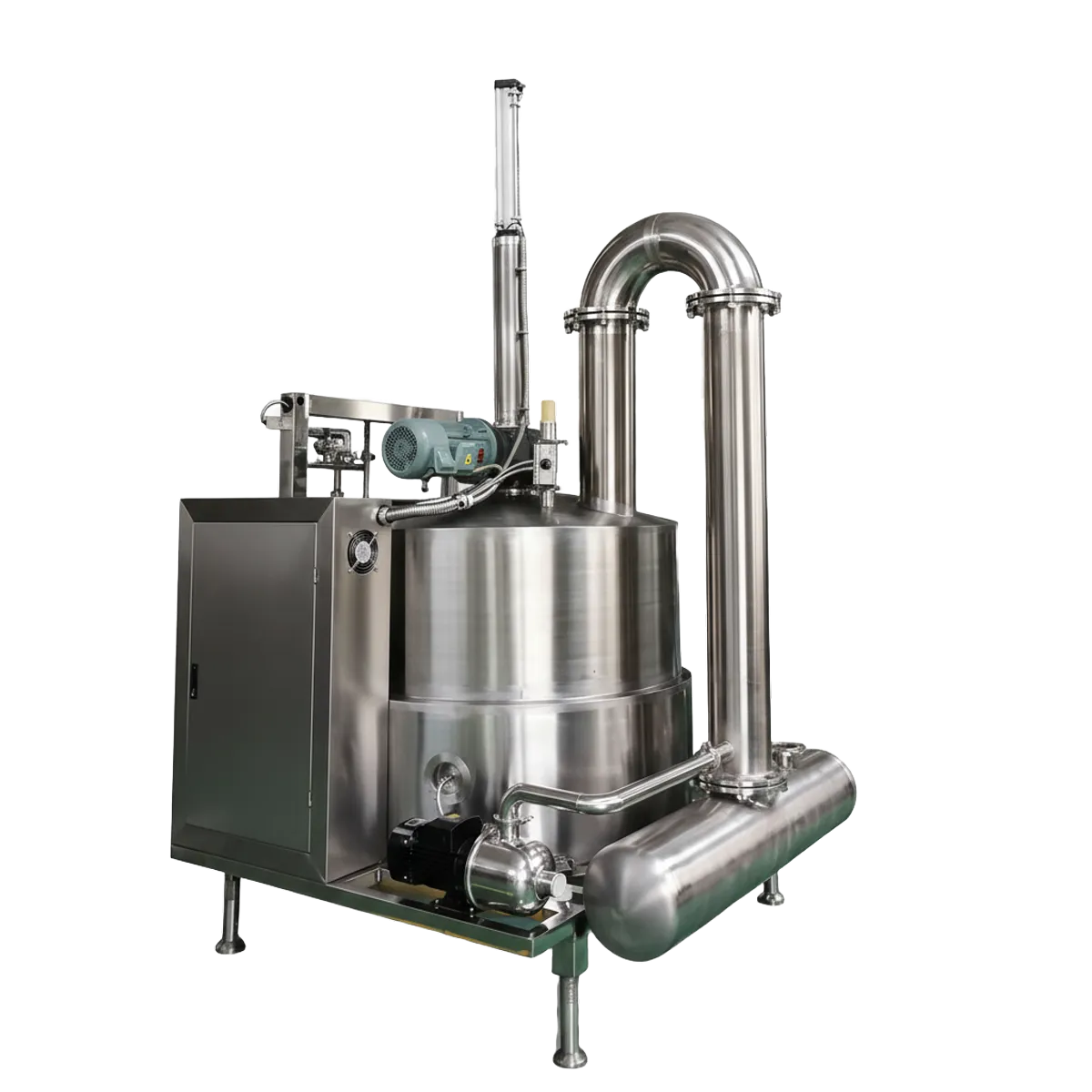
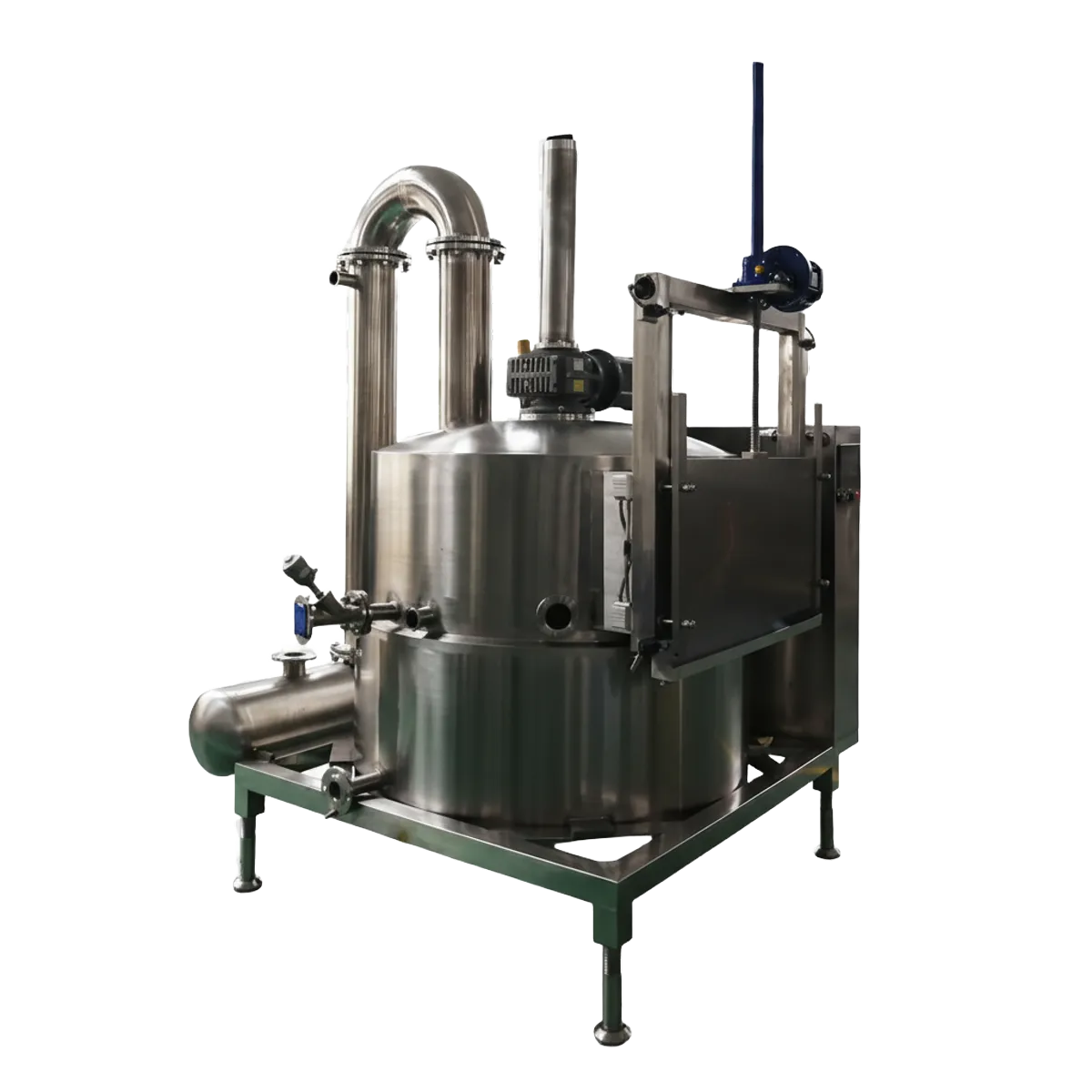
A vacuum fryer is not a fryer with a lid. It is a vacuum vessel, a heating system, a de-oiling centrifuge, a vacuum pump station and an oil circuit — all of which must act in the right order, every batch. The control panel's job is to run that sequence so the operator doesn't have to choreograph it manually:
- Vacuum pump sequencing. Starting and staging the vacuum pumps, monitoring vacuum level, and holding the vessel at the target vacuum through the frying cycle.
- Heating and temperature regulation. Driving the heating system and holding oil temperature at the recipe setpoint — the most quality-critical variable in the whole process.
- Batch sequence timing. Running the ordered steps: load confirmation → vacuum pull-down → frying → de-oiling spin → vacuum release → discharge readiness.
- Centrifugal de-oiling. Controlling the de-oiling drive — start, speed profile and duration — which decides final oil content and texture.
- Alarms and interlocks. Watching every sensor for out-of-range conditions and refusing to start or continuing a step when a safety condition is not met.
Manual control of all this — valves, pumps, heaters, timers — is how early vacuum fryers ran, and it is why batch consistency was the industry's old headache. PLC control exists to remove the operator's memory from the critical path.
The Delta PLC: the brain behind the cabinet door
A PLC (programmable logic controller) is an industrial computer built for exactly this job: read sensors, make logic decisions, drive outputs, repeat thousands of times per second. Supreme Beast QS vacuum fryers use Delta PLC hardware. What the PLC does on a fryer:
- Scans inputs continuously. Temperature probes, vacuum sensors, door position switches, oil level sensors, motor status — the PLC reads them all every scan cycle, so nothing drifts unnoticed between operator glances.
- Executes the sequence. The batch program is a state machine: it will not start heating until vacuum pull-down confirms, will not start de-oiling until the frying step completes, and will not release vacuum until the spin finishes. Skipped steps are impossible by design.
- Enforces interlocks. If the vessel door is open, the cycle cannot start. If vacuum is lost mid-batch, the PLC responds per its program — typically alarming and holding a safe state rather than continuing blindly.
- Logs what happened. Batch data — setpoints, actual readings, alarms, cycle times — is recorded for traceability. When a batch comes out wrong, the log tells you which variable moved, instead of a debate among shifts.
One practical consequence: when you evaluate a fryer, ask which PLC brand is inside and whether the program is documented. A well-known PLC brand means local electricians can service it; a documented program means the supplier can support you remotely instead of flying an engineer out for every issue.
The MCGS touchscreen: what operators actually see
The operator never touches the PLC. Everything runs through the MCGS touchscreen — the HMI (human-machine interface) mounted on the cabinet. Think of it as the fryer's dashboard:
- Process overview screen. The current step, live readings (temperature, vacuum level), and progress through the batch — one glance tells the operator whether the batch is on track.
- Recipe selection. Products are stored as named recipes. The operator picks "Carrot Chips" or "Fish Skin" and the system loads the correct parameters — no manual number entry per batch.
- Parameter screens. Setpoints for temperature, timing and de-oiling, organized by recipe. Changing a production parameter should require a deliberate step (often a password level), not an accidental tap.
- Alarm display. When something goes out of range, the touchscreen shows which sensor, what value, and usually a suggested check. Good alarm design tells the operator where to look, not just that something is wrong.
Recipe management: one line, many products
Recipe storage is the feature that turns one fryer into a multi-product line. Each SKU — carrot chips, beetroot chips, shrimp, fish skin — gets its own stored parameter set. The business value:
- Repeatability. The tenth carrot batch runs the same program as the first. Batch-to-batch variation drops to whatever the raw material brings, not what the operator remembered.
- Fast changeover. Switching products is selecting a different recipe plus the physical changeover (cleaning, basket swap). No re-programming, no parameter sheets taped to the cabinet.
- Protected know-how. Recipe parameters are the line's intellectual property. Password levels keep production parameters readable by operators but editable only by authorized staff — ask your supplier how the access levels are organized.
When trialling a new product, the supplier typically helps you develop and store its recipe during commissioning or a factory trial — this is one of the questions worth asking before you sign, not after the machine arrives.
Safety interlocks the panel enforces
Interlocks are the panel's non-negotiable rules. The most important ones on a vacuum fryer:
- Door interlock. The frying cycle cannot start — and vacuum cannot be pulled — unless the vessel door is confirmed closed and locked.
- Vacuum confirmation. Heating stays off until the vessel reaches its target vacuum. Heating oil at atmospheric pressure is a different process with different risks; the interlock prevents the mix-up.
- Emergency stop. A hardwired E-stop that halts the sequence immediately, independent of the touchscreen. Operators should be able to reach it without crossing the discharge zone.
- Alarm hold. On a critical alarm (vacuum loss, over-temperature, motor fault), the PLC holds the batch in a safe state and requires an acknowledged reset before continuing — it never silently resumes.
Daily operator checks on the panel
Most aborted batches are preventable with a one-minute panel routine at shift start:
- Confirm the correct recipe is selected for the product about to run.
- Verify the oil temperature reading matches the recipe target before loading — a cold fryer means an extended cycle; a drifting sensor means a bad batch.
- Watch the vacuum pull-down on the first batch of the day. If it takes noticeably longer than usual, suspect a door seal or a pump issue before loading product.
- Confirm no uncleared alarms are active from the previous shift.
- Test the emergency stop and door interlock response periodically — not every batch, but on a defined schedule.
Questions to ask your fryer supplier about controls
- Which PLC and HMI brands are used? (QS fryers: Delta PLC + MCGS touchscreen)
- How many recipes can the system store, and how are access levels organized?
- Does the interface support your operators' language?
- What alarms and safety interlocks are standard?
- Is the control program documented for remote support and local electricians?
- What electrical supply does the line require? (Confirm against the supplier's electrical load table)
Common panel and HMI issues
Control problems are rarely mysterious once you know the usual suspects:
- Touchscreen unresponsive. First check: is the screen actually powered and is the PLC running? A surprising share of "HMI failures" are a tripped breaker or a loose 24V supply, not a dead screen.
- Sensor readings that don't move. A temperature or vacuum reading frozen at one value usually means a failed sensor or a broken signal wire, not a process problem. The panel is telling the truth about what it sees — verify the sensor before overriding anything.
- Nuisance alarms. Alarms that trigger on every batch with no real fault usually mean a setpoint or delay timer was entered wrong — often after a recipe edit. Compare the alarm's trigger value against the recipe; the answer is usually visible on the parameter screen.
- Lost recipes after power failure. Recipes should be stored in non-volatile memory, but always confirm this with the supplier and keep a written backup of your recipe parameters. Paper backup is cheap insurance.
QS vacuum fryers — the QS-VF100 (100 kg per batch), QS-VF150 (150 kg per batch) and QS-300 (300 kg per batch) — all run Delta PLC with MCGS touchscreen control, with per-SKU recipe storage and the interlock set described above. Each carries a 1-year warranty and ships with roughly a 3-month lead time.
Frequently asked questions
What does the control panel of a vacuum fryer actually control?
The control panel runs the whole batch cycle: vacuum pump sequencing and vacuum-level monitoring, heating and temperature regulation, the frying sequence timing, the centrifugal de-oiling spin, valve and discharge sequencing, and all safety interlocks and alarms. On Supreme Beast QS fryers this is handled by a Delta PLC with a MCGS touchscreen as the operator interface.
What is the difference between the PLC and the touchscreen?
The PLC (programmable logic controller) is the brain: it reads sensors, executes the batch sequence and enforces safety interlocks. The touchscreen is the face: it displays the process, lets operators select recipes and set parameters, and shows alarms. You never touch the PLC directly — everything goes through the touchscreen.
Can the control panel store different recipes for different products?
Yes. Recipe storage is one of the most practical features of PLC control: each product SKU gets its own stored set of parameters — frying profile, de-oiling settings, cycle steps. Operators select the recipe by name instead of re-entering numbers, which removes the biggest source of batch-to-batch variation.
What should operators check on the panel before each batch?
Confirm the correct recipe is selected, verify the oil temperature reading matches the recipe target, check that vacuum level reaches its set point during pull-down, confirm no alarms are active from the previous batch, and check that the emergency stop and door interlocks respond. These checks take a minute and prevent most aborted cycles.
What control features should I ask a vacuum fryer supplier about?
Ask which PLC and HMI brands are used, how many recipes the system stores, whether the interface supports your operators' language, what alarms and interlocks are standard, and whether parameter changes require a password level. Supreme Beast QS fryers use Delta PLC with MCGS touchscreen, carry a 1-year warranty, and ship with roughly a 3-month lead time.
Evaluating a vacuum fryer?
Ask us about the control system, recipe storage and commissioning support — we'll walk you through the panel on a video call. See the full range on our vacuum fryer page.
Specifications are for reference only and are subject to the final supplied equipment.