Safety in layers, not single devices
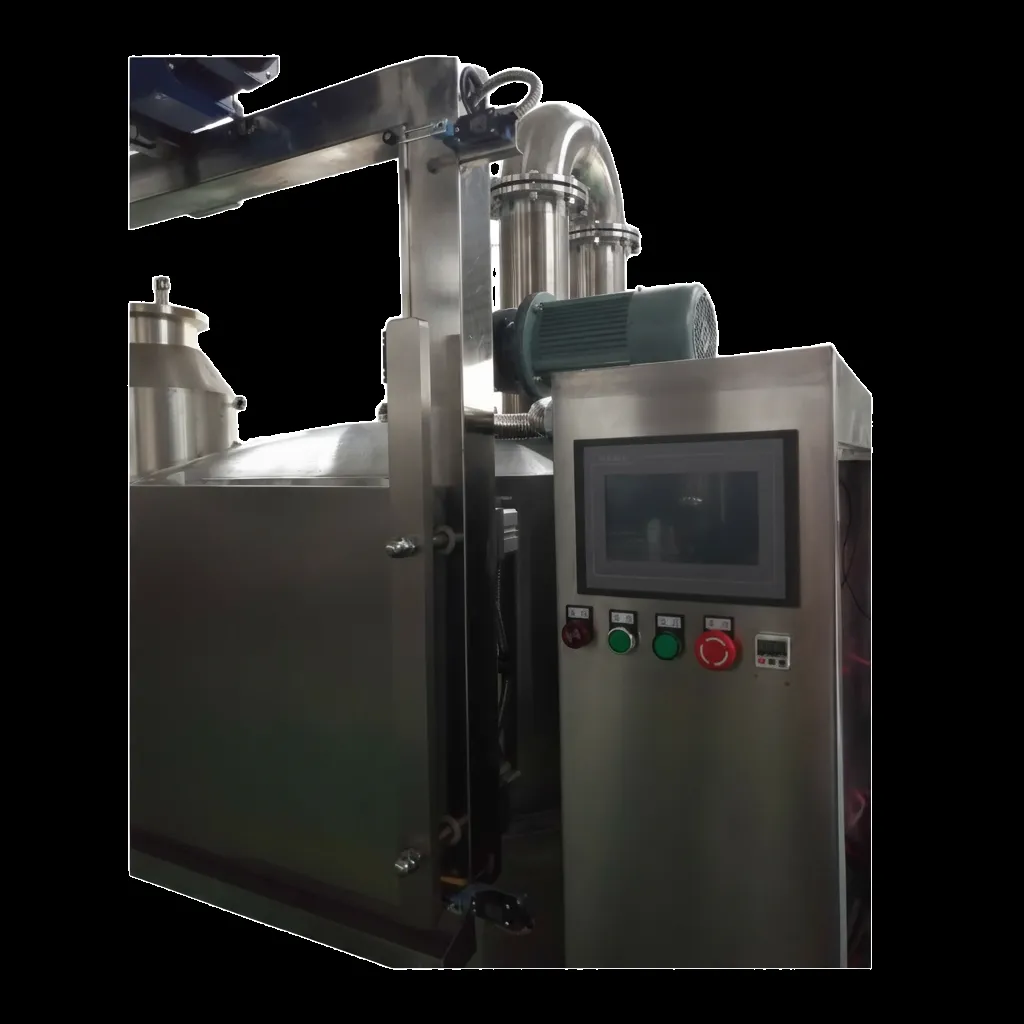
A vacuum fryer combines a sealed chamber working under vacuum, hot oil, and moving parts in the basket and de-oiling system. Safety therefore cannot rest on one switch, one alarm, or one careful person. It must be built in layers, so that if one layer is missed or fails, another still protects the operator.
The layers work in order: the chamber and door keep hands out while a cycle runs; the control panel shows what is happening inside; the emergency stop halts the machine fast; careful oil handling removes everyday slip and splash risks; de-oiling discipline protects the operator when the basket moves; and lockout protects the maintenance worker.
Sealed chamber and door discipline
Before every batch, confirm that the door closes fully, the seal sits cleanly in place, and the locking mechanism engages as described in the supplied equipment manual. Food debris, a twisted seal, or a door that needs force to close are reasons to stop and fix the problem first, not defects to work around.
During a cycle, door discipline is absolute: never force a door, never try to open it while the chamber is under vacuum, and never bypass an interlock to save time. Wait for the cycle to finish and for the chamber to return to normal atmospheric pressure, following the manual. If the door does not release normally, treat that as a fault, not an invitation to use more force.
Vacuum and temperature monitoring
The operator cannot see inside a sealed chamber, so the control panel is the operator's eyes. On QS vacuum fryers, vacuum and temperature are shown on the Delta PLC plus MCGS touchscreen, which also runs the programmed cycle. Confirm readings move as expected, temperature stays within 80–100°C, and no alarm is active or unexplained.
An alarm is information, not an annoyance. If a reading looks wrong, stops changing when it should change, or triggers an alarm, stop the batch and follow the supplied equipment manual before continuing. Do not silence an alarm and carry on, or adjust a setting to make it disappear without understanding its cause. Record alarms and the action taken, so a repeated alarm becomes a maintenance job.
Emergency stop and operator stop discipline
Before their first batch, every operator should know exactly where the emergency stop is, what it stops, and how the machine restarts afterwards. It exists for the moment when something is clearly wrong and there is no time to work through a menu: a person at risk, a strange noise, or a leak. In that moment, hesitation is the danger. Press the stop, make the area safe, and report what happened.
Ordinary stops matter too. Pausing a cycle, ending a batch, and shutting down at the end of a shift each have a correct sequence in the manual, and skipping steps can leave the machine in an unsafe state for the next operator. Test the emergency stop in routine checks, and treat a stop that does not work as an urgent fault that takes the machine out of production until repaired.
Hot-oil handling and housekeeping
Hot oil causes the most frequent injuries around any fryer, and most are preventable by habit rather than hardware. Treat every oil surface, pipe, and container as hot until verified otherwise, wear the protective clothing specified for the task, and move slowly around open oil.
Keep absorbent material and cleaning tools where oil is handled, and clean up spills immediately rather than leaving them for the end of the shift. Oil on the floor is a slip hazard and a fire hazard at once, and a thin film is often the most dangerous because it is easy to miss.
In-vacuum de-oiling basket discipline
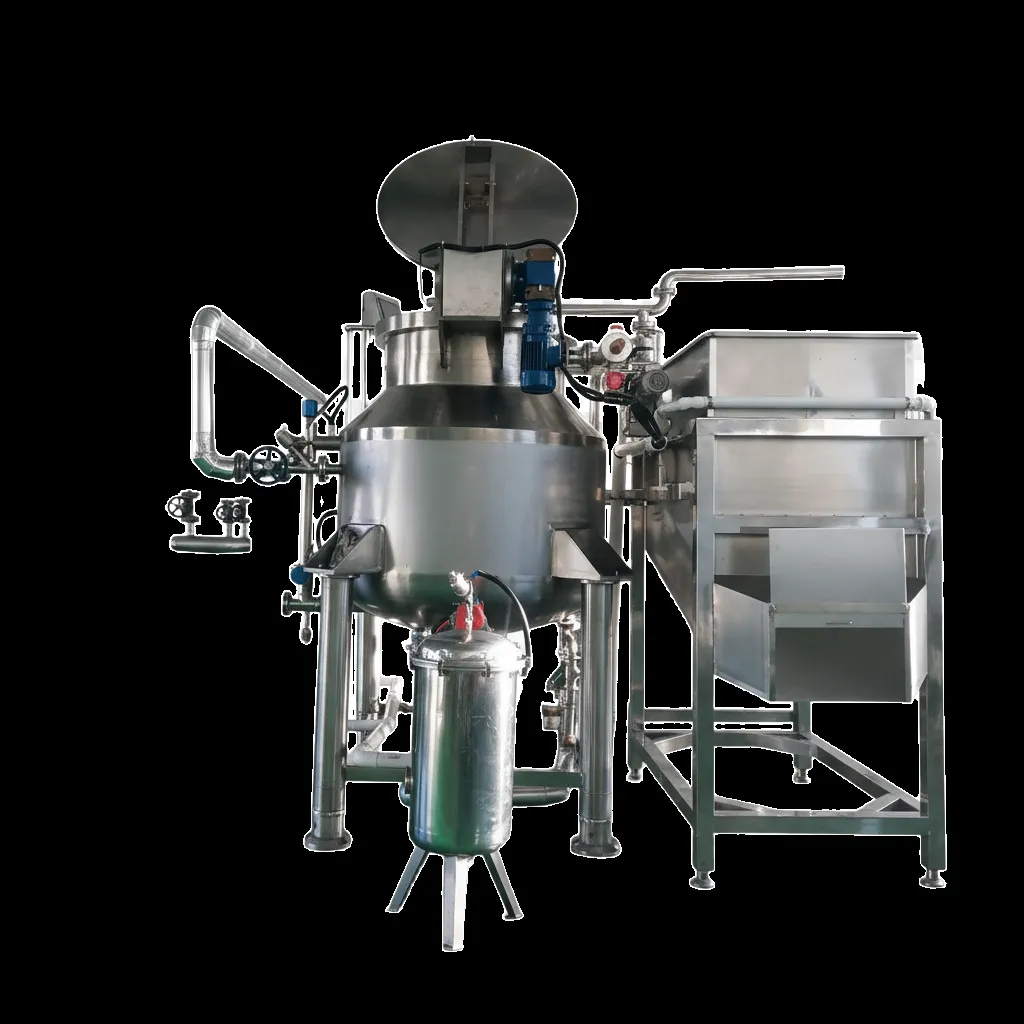
De-oiling is a defining step of vacuum frying: before the vacuum is released, the basket spins inside the chamber and throws surface oil off the product. It combines a moving basket, hot oil, and a sealed chamber, so the basket moves only when the chamber is closed and the cycle calls for it.
Load evenly and within the batch size for the model in use, so the basket runs balanced. Do not overload to squeeze in extra product, and do not reach into a basket that is still moving or has not been confirmed stopped. If the basket sounds different, vibrates unusually, or stops unexpectedly, treat it as a fault: stop the machine following the manual and report it for maintenance.
Cleaning and maintenance lockout
Cleaning and maintenance put workers closest to the machine's hazards, which is why lockout is non-negotiable. Before opening any control panel, guard, or service cover, and before servicing any moving part, isolate the machine following the lockout steps in the supplied equipment manual, and confirm isolation rather than assuming it.
Never clean around moving parts, never reach into a chamber or basket area that has not been isolated and confirmed stopped, and never use water or cleaning agents on electrical components except exactly as the manual allows. After maintenance, guards must be refitted, panels closed, and tools removed before the machine is tested through its normal start-up sequence.
Training and shift handover
Controls only work if the people using them understand them, so training is itself a safety control. Every operator should be trained on the specific model they will run, covering the chamber and door, the Delta PLC plus MCGS touchscreen, the emergency stop, hot-oil handling, de-oiling, and lockout. Training should be practical: the operator should demonstrate each step, including stopping the machine and responding to an alarm, before working unsupervised.
Refresher training matters as much as initial training, and temporary staff should receive the same safety training as permanent staff. Shift handover is equally important: the outgoing operator should hand over machine state, alarms or faults, and outstanding maintenance, and the incoming operator should confirm understanding before taking over.
Daily, weekly, and monthly checks
Routine checks are how a manager knows the safety layers are still in place. They should be scheduled, assigned to a named person, and recorded. The exact items, methods, and intervals for a given machine are those in the supplied equipment manual, which takes precedence over any general guide.
- Daily: inspect the chamber door and seal, confirm the door locks as designed, check that the emergency stop and alarms respond as described in the manual, review vacuum and temperature readings at start-up, inspect the oil-handling and filtration areas, and confirm spill-control materials are in place.
- Weekly: inspect guards, covers, and the basket area for damage or loose fittings, check hoses, containers, and transfer equipment in the oil area, review the week's alarm and fault records for repeats, and confirm training and handover notes are up to date.
- Monthly: carry out the deeper inspection and maintenance tasks listed in the supplied equipment manual, review all safety checks and near misses for trends, verify warning labels and posted procedures are present and legible, and confirm outstanding maintenance has been closed.
A check without a record cannot be audited, cannot show a trend, and cannot prove a control was working on a given day. When a check finds a fault, the machine's status should be clear to everyone.
Choosing equipment size
Safety does not change with batch size, but the scale of the work does, so choose a model that fits the production plan without encouraging overload.
QS-VF series — batch vacuum fryers
- QS-VF100 (100 kg per batch) — startups and pilot production.
- QS-VF150 (150 kg per batch) — established producers.
- QS-300 (300 kg per batch) — high-volume operations.
All three share one control platform — Delta PLC with MCGS touchscreen — so safety procedures, alarm responses, and operator training transfer across sizes as volume grows. Standard terms: 1-year warranty, approximately 3-month lead time.
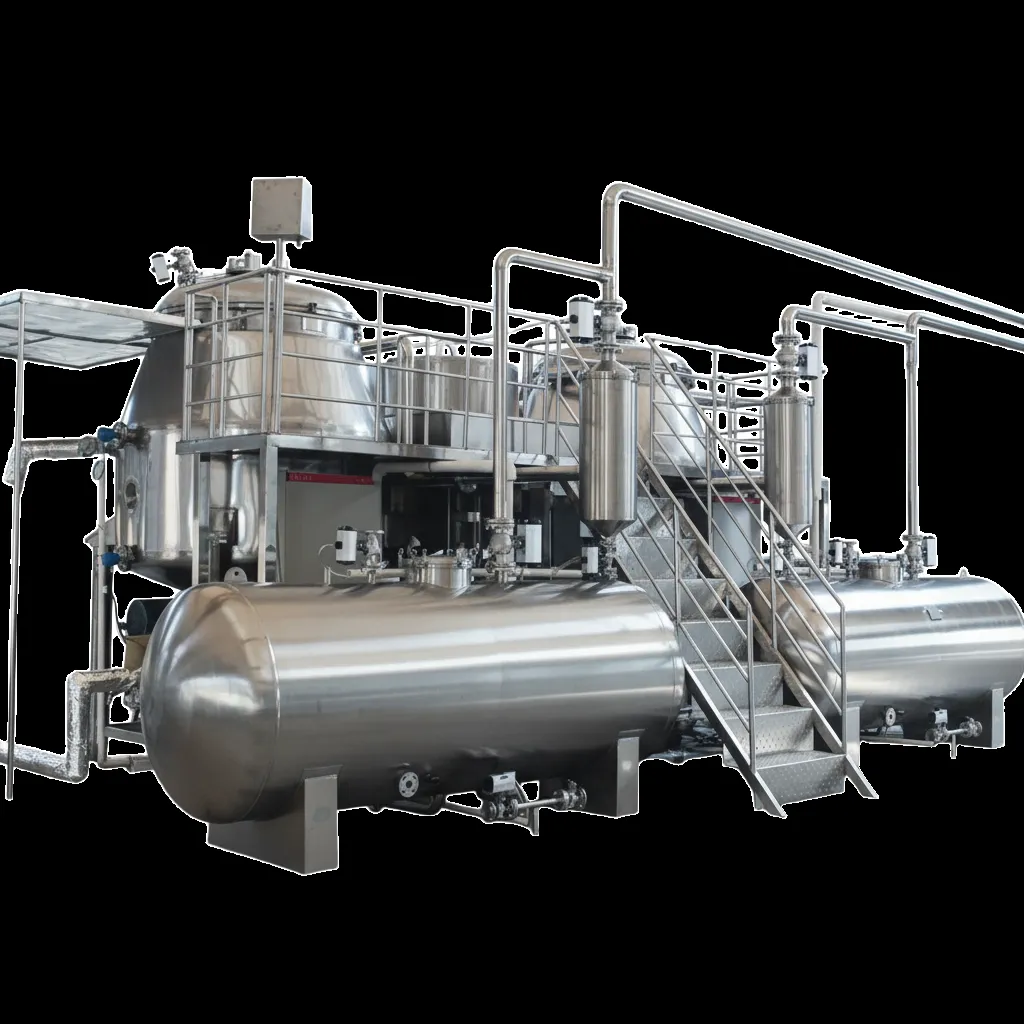
Whichever size fits the line, plan the safety system at the same time as the machine: door and seal inspection, panel monitoring, emergency stop testing, oil handling layout, lockout steps, and training. A machine installed without that surrounding system is only half installed.
Specifications are for reference only and are subject to the final supplied equipment.
Frequently asked questions
What is the first safety rule for a vacuum fryer door?
Never force a vacuum fryer door, and never try to open it while the chamber is under vacuum or while a cycle is running. Wait for the cycle to finish and for the chamber to return to normal atmospheric pressure, following the procedure in the supplied equipment manual. Forcing a door can damage the seal, the locking mechanism, and the chamber itself, and it puts the operator at risk.
What should an operator watch on the control panel during frying?
Watch the vacuum and temperature readings on the Delta PLC plus MCGS touchscreen, and check that the readings move as expected through each stage of the cycle. If a reading looks wrong, stops changing, or triggers an alarm, stop the batch and follow the supplied equipment manual before continuing. Do not guess at a reading or keep running while an alarm is unexplained.
When must a vacuum fryer be locked out before work?
Isolate the machine before opening any control panel, guard, or service cover, and before servicing any moving part. That means following the lockout steps in the supplied equipment manual, making sure the machine cannot restart unexpectedly, and confirming isolation before hands go near moving parts or live components. Cleaning around a running machine is not a substitute for a proper lockout.
How often should safety checks be done on a vacuum fryer?
Safety checks belong in the daily, weekly, and monthly routines, not only when something goes wrong. Daily checks cover doors, seals, alarms, and the emergency stop; weekly checks cover oil handling areas, guards, and housekeeping; monthly checks cover deeper inspection and maintenance tasks listed in the supplied equipment manual. Record each check so problems are spotted as trends, not surprises.
Plan your vacuum frying line
Tell us your target output and which products you process — we'll help you size the vacuum fryer and plan the line from receiving to packing. Explore the range on our vacuum fryer page.
Specifications are for reference only and are subject to the final supplied equipment.