Oil is the cost that comes back every batch
Every batch costs oil. Not just the oil the snacks carry out — the oil that stays behind, heats up again, and comes back a little worse each time. Crumbs come off the product and stay in the charge. Leave them there and they keep cooking between batches, darkening the oil and lending a stale note to everything fried after them.
That is why filtration matters more than most buyers expect when they first price a line. The fryer is a one-off purchase. Oil is the spend that repeats, batch after batch. A setup that keeps a charge usable longer does not make day-one snacks better — it lowers the cost per batch over months.
Ask any operator who has run a fryer for a year and they will tell you the same thing: the oil tells you when it is tired long before any gauge does. It darkens. It foams more than it used to. It smells different when the lid opens. Filtration pushes that day further out — it buys time, and time is money when the oil bill lands every week.
What filtration removes — and what it does not
Filtration removes solids: crumbs, fines, bits of batter, flakes of seasoning — the small dark specks that come off the product as it fries. They sit in hot oil and keep cooking after the batch is out. Pull them out and the oil stays cleaner and lighter, and picks up off flavours slower.
What filtration does not remove is just as important. It cannot take out the dissolved breakdown products — the compounds that form when oil is heated again and again at 80–100°C and exposed to air and moisture from the product. Those stay in the oil no matter how fine the filter.
That distinction is where buyers get misled. A supplier who talks about filtration as if it resets the oil is selling a story, not a system. Filtration buys usable life by removing the solids that speed up ageing — the oil still ages, just slower.
Same as a frying pan at home. Strain the crumbs out and the oil fries clean again. Strain it ten times and the oil is still old — darker, heavier, smelling of everything it has ever fried. Same idea, bigger tank: the QS-300 runs a tank 2600mm high and 1600mm across, and every crumb in that volume keeps cooking until someone takes it out.
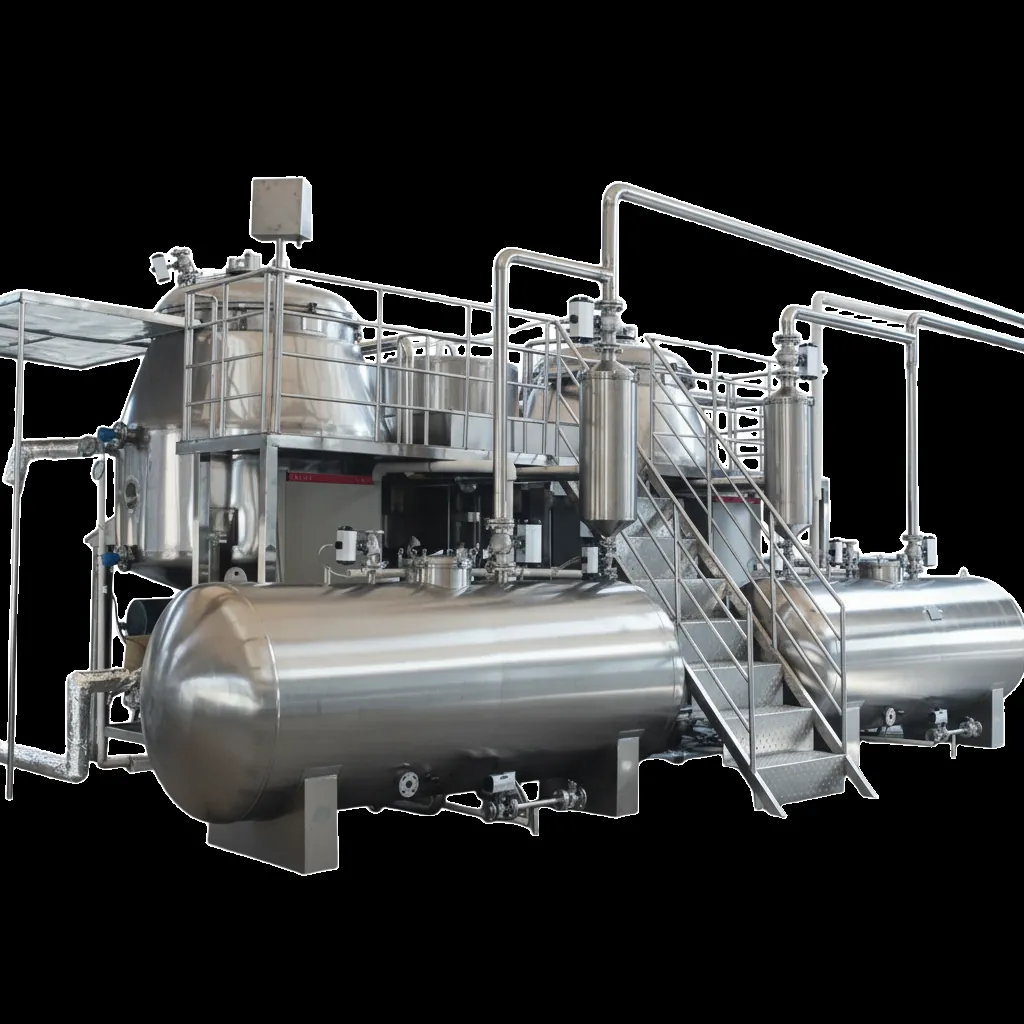
Where filtration sits in the line
Filtration happens between batches, not during them. While a batch is frying, the oil is busy — circulating, heating, carrying water vapour out of the product. You filter in the gap between baskets.
On most lines the routine is simple. The batch finishes, the basket lifts, and the oil circulates through the filter while the operator loads the next batch. The fines get caught, the cleaned oil returns to the tank, and the next batch starts in oil closer to fresh. The pause costs minutes.
Some setups filter continuously, circulating oil through a filter element while the fryer runs. That works when the filter can keep up with the flow and the element can be changed without stopping production. Ask which way the line you are buying does it.
Either way, the filter sits in the oil circuit, downstream of the tank and the pump, where the whole charge passes through it. Check on a drawing: does all of the oil pass the filter, or only part of it? A filter that sees only a side stream leaves the rest unfiltered, and those crumbs keep cooking.
The three filter arrangements buyers will meet
Buyers meet three arrangements, sometimes on the same line. Each catches different solids, and each asks something different of the operator.
Mesh screens
A mesh screen is the simplest filter: a stainless screen that catches the larger crumbs and lets the oil through. It lifts out, rinses, and goes back in minutes. Its limit is obvious — fines pass straight through it, and those small particles darken the oil fastest. Treat a screen as the first pass, not the whole system.
Bag and paper filters
Bag and paper filters catch finer particles than a screen. Oil passes through a cloth bag or a paper element, and the fines stay behind. The trade-off is consumables and time: bags and papers fill up, need changing, and need spares on the shelf. Ask what a replacement costs and how often the element needs changing on a line running your product — and get the answer in writing if it is vague.
Centrifugal separation
Centrifugal separation spins the oil so the heavier solids move outward and collect where they can be removed. It handles fine particles well and runs without disposable elements. It is the most mechanical of the three — a spinning assembly that needs cleaning and a motor that needs looking after — so ask what the cleaning routine involves and who does it. On a small line it can be more machine than the job needs.
Most working lines combine two of these: a screen to catch the big pieces first, then a finer stage behind it. A fine filter fed with un-screened oil clogs fast; a screen with nothing behind it leaves the fines. Ask the supplier to describe the full chain, not one component.
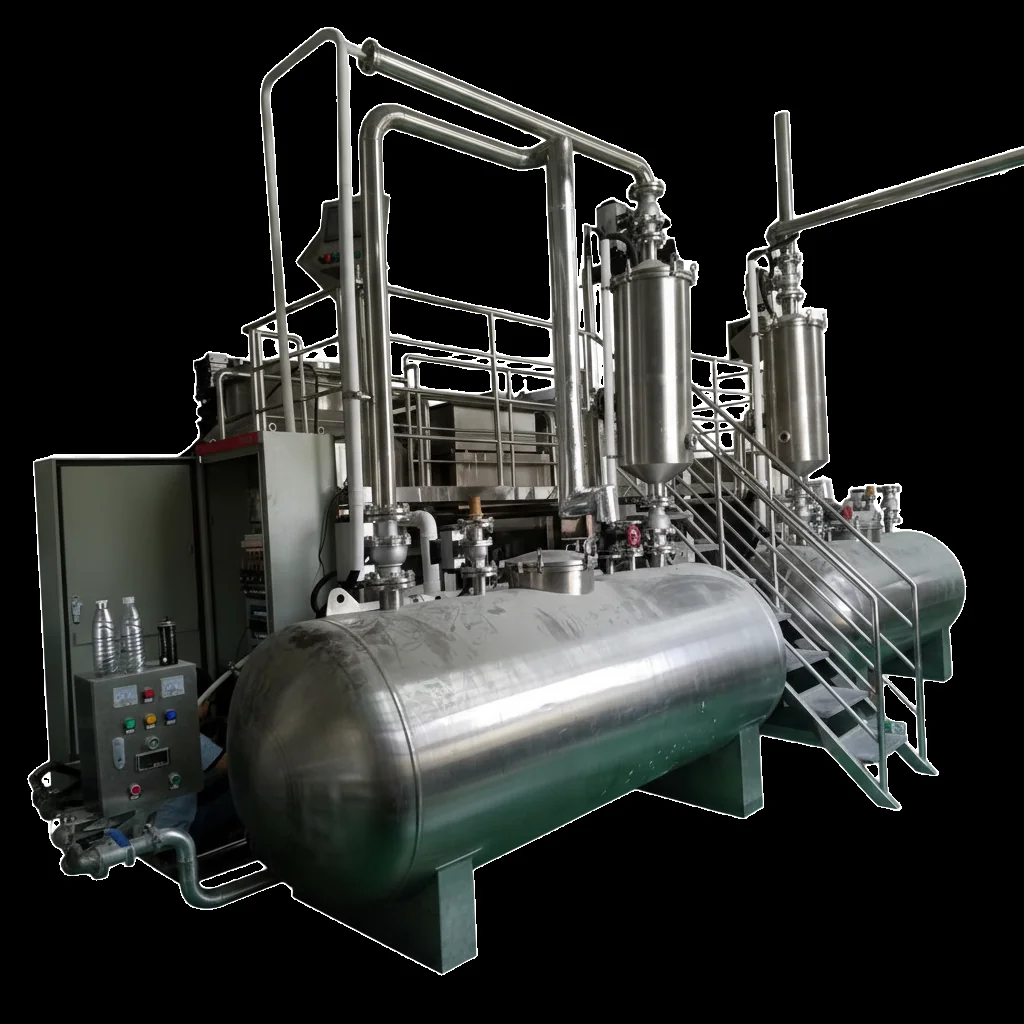
When to filter, and when to change the oil
Filter after every batch. The fines are fresh, they have not had time to cook down into the oil, and the filter catches them before the next batch starts. Wait until the oil looks dirty and the damage is already done — the dark specks have been cooking for hours.
How do you know the oil needs changing, not just filtering? Watch three signs. Colour: the oil darkens steadily, and filtration slows the darkening but never reverses it. Foaming: oil that foams more than it used to when a fresh batch goes in is telling you its chemistry has moved on. Smell: a stale, sharp, or rancid note when the lid opens is the clearest signal of all.
No fixed interval covers every product. A starchy root sheds more fines than a firm fruit; a seasoned snack loads the oil faster than a plain one. Do not accept a number of batches or hours as a promise — validate with your own trials, watch the three signs, and change the oil when the signs say so, not when a calendar does. Keep a simple log — date, batch count, colour, foam, smell — and after a few weeks the pattern is obvious.
One more habit: keep the filter itself clean. A clogged filter slows circulation, and slow circulation means uneven heat and longer frying. Follow the equipment manual for cleaning or changing the element, and keep spares on the shelf — a line stopped for want of a filter bag is a line losing money.
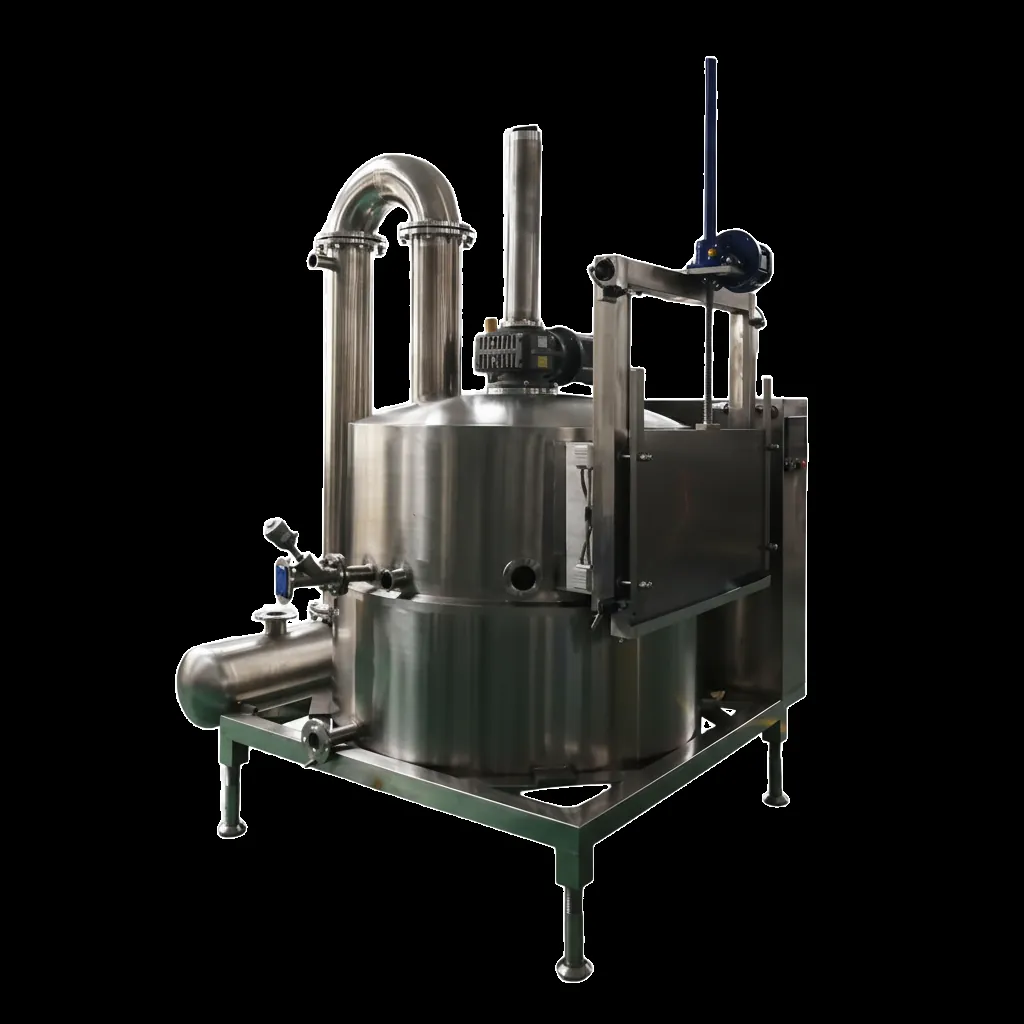
What to ask the supplier before ordering
Before you order, ask the supplier to walk you through the filtration setup on the line you are actually buying — not a catalogue picture of a different model.
- Does all of the oil pass through the filter, or only part of the charge?
- What filter stages are included — screen, bag or paper, centrifugal — and what does each one catch?
- How is the filter cleaned or changed, and how long does the line stop?
- What consumables does it need, what do they cost, and how many should we stock?
- What does the manual say about changing the oil, and what signs should operators watch for?
Write the answers down and compare them across suppliers. One quote includes a two-stage setup with spares; another quotes a single screen and leaves the rest to you. The cheapest filter on the quote is rarely the cheapest over a year of oil bills.
Your next step is one email. Send your supplier the product you plan to fry and your expected batch size — a QS-VF100 at 100KG/batch, a QS-VF150 at 150KG/batch, or a QS-300 at 300KG/batch — and ask: "What filtration stages are included on this line, and what does each stage catch?" The answer tells you whether the oil cost in your budget is realistic.
QS vacuum fryer models
| Model | Batch capacity | Vessel |
|---|---|---|
| QS-VF100 | 100KG/batch | — |
| QS-VF150 | 150KG/batch | — |
| QS-300 | 300KG/batch | 2600mm (H) x 1600mm (D) |
- Frying temperature: 80–100°C under vacuum.
- Finished oil content: under 18%.
- De-oiling: centrifugal, inside the chamber.
- Control: Delta PLC + MCGS touchscreen; 304 stainless steel.
- Warranty: 1-year warranty; lead time approx. 3 months.
Frequently asked questions
How often should I filter the frying oil?
Filter after every batch, before the next load goes in. Fresh fines come out easily; fines left to cook in hot oil darken the charge and are harder to remove later.
Can filtration make old oil usable again?
No. Filtration removes solids — crumbs and fines — but not the dissolved breakdown products that build up as oil is heated again and again. It slows ageing; it does not reverse it.
What is the difference between a mesh screen and a bag filter?
A mesh screen catches the larger crumbs, but fines pass through it. A bag or paper filter catches finer particles, so the oil comes back cleaner — and its element needs changing and restocking.
How do I know the oil needs changing instead of just filtering?
Watch colour, foaming, and smell. Oil that keeps darkening, foams more than it used to, or smells stale or rancid when the lid opens has moved past filtering. Change it.
Does the fryer model change the filtration setup?
The principle is the same across the QS-VF100, QS-VF150, and QS-300 — all run at 80–100°C with centrifugal de-oiling inside the chamber — but a bigger charge holds more oil and more fines, so ask what stages your model includes.
Talk to us about your vacuum frying line
Tell us your product and target output — we will help you size the fryer and its filtration setup. Explore the range on our vacuum fryer page.
Specifications are for reference only and are subject to the final supplied equipment.