Why root vegetables suit vacuum frying
Not every vegetable deserves a place in the fryer. Root vegetables earn theirs for four structural reasons:
- Dense, even flesh. Carrot, beetroot and lotus root have compact tissue with no air pockets or soft interiors, so they slice into uniform pieces that fry evenly — the single most important property for batch consistency.
- Shape retention. Firm raw material survives the pressure swings of the vacuum frying cycle without crumbling. Soft, high-water produce like tomato or cucumber is far harder to handle; roots behave.
- Natural color. Each of these three roots brings a signature color — orange, ruby, pale gold with a lace pattern — that survives low-temperature frying and becomes the product's visual identity. Color you don't have to add is marketing you don't have to buy.
- Built-in flavor. Roots carry natural sugars and earthy notes that concentrate during frying. Vacuum fried root chips need little or no added seasoning, which simplifies the line and the label.
There is also a business argument: roots are cheap, available year-round in most producing regions, and store well fresh — so raw material supply rarely becomes the bottleneck it can be with seasonal fruit.
Carrot chips: sweetness you can see
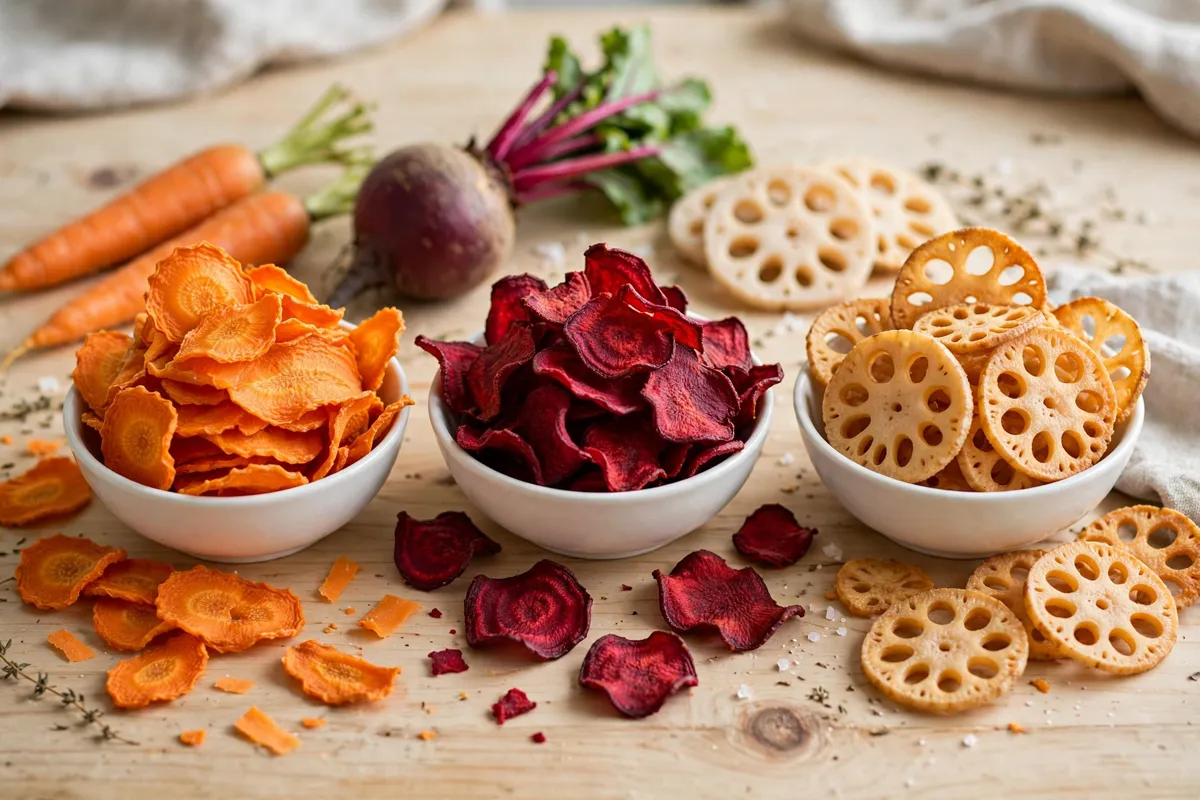
Carrot is the volume driver of the root chip family. Its high natural sugar content caramelizes gently under vacuum, giving chips a sweet, toasty flavor that needs no seasoning — a genuine "one-ingredient snack," which is exactly what clean-label buyers ask for.
Two practical notes on carrot:
- Sugar content varies by variety. Sweeter, mature carrots give the best flavor concentration. Immature or watery carrots fry to a bland, pale chip. Lock in the variety with your grower before you size the line.
- Watch the color. Carrot's orange deepens to a rich amber in the fryer. Faint brown edging means the slices were too thin or the cycle too aggressive for that thickness — adjust one variable at a time.
Beetroot chips: color is the selling point
Beetroot chips exist because of their color. The deep ruby red that ordinary frying destroys in minutes survives vacuum frying because the temperature stays low — and that color is the entire reason the SKU commands a premium over plain vegetable chips.
The catch is pre-treatment: beetroot's color pigments are water-soluble and its cut surface oxidizes fast. Slices should move from cutter to blanch to fryer with minimal air exposure, and the blanch water should be handled so the color stays in the chip, not in the tank. This is where a well-designed pre-treatment sequence pays for itself.
Lotus root chips: the lace that sells itself
Lotus root is the photographer's favorite: its natural air channels slice into a lace pattern that no die cutter can imitate. Each chip looks like a delicate snowflake — a built-in visual signature that no competitor's potato chip can copy.
- Slice across the root, not along it. Cross-sections expose the channel pattern; lengthwise cuts hide it.
- Mind the browning. Lotus root's pale flesh darkens quickly once cut. A brief anti-browning treatment or fast blanch keeps the finished chip ivory instead of grey.
- Seasoning sits in the holes. The channels trap seasoning powder, which means light seasoning goes further — but also that uneven tumbling shows. Go gentle on the tumbler speed.
Slicing and pre-treatment: where batches are won or lost
Ask experienced fryer operators where bad batches come from and most will point upstream of the fryer. The pre-treatment sequence for root vegetables typically runs: wash → peel → slice → blanch → surface-dewater removal. Every step exists for a reason:
- Washing and peeling. Roots carry field soil. Incomplete washing contaminates the frying oil early and shortens its life. Peel depth matters too — the peel's pigment and fiber fry differently from the flesh, so leftover peel creates uneven chips.
- Slicing. Uniform thickness across the whole batch is the single most valuable slice attribute. Mechanical slicers that hold a consistent gap beat hand cutting for anything above pilot scale. Trialling slice thickness with your fryer supplier before locking the production setting saves months of rework.
- Blanching. Standard for carrot and beetroot: it deactivates the enzymes responsible for browning and off-flavors, softens slices slightly for even frying, and evens out surface moisture. Lotus root usually gets a shorter blanch or an anti-browning dip.
- Surface water removal. Slices should enter the fryer with as little surface water as practical — spinning or air-drying after blanching shortens the frying cycle and reduces oil foaming. Water into hot oil is the enemy of both oil life and chip texture.
Root chip pre-treatment checklist
- Wash thoroughly — field soil shortens frying oil life
- Peel fully — peel fries differently from flesh
- Slice to uniform thickness — mechanical slicer above pilot scale
- Blanch carrot and beetroot; short blanch or anti-browning dip for lotus root
- Remove surface water before the slices meet the fryer
- Minimize air exposure between cutting and frying for beetroot and lotus root
The vacuum frying process for root chips
The core sequence is the same for all three roots: load → vacuum pull-down → low-temperature frying under vacuum → centrifugal de-oiling (still under vacuum or immediately after) → discharge → cooling. The details that matter for roots:
- Batch, not continuous. Each variety runs as its own batch with its own recipe in the control system — slicing thickness, frying profile and de-oiling setting all stored per SKU. Switchover between carrot and beetroot is mainly a vessel-cleaning step plus the oil routine.
- De-oiling decides texture. Centrifugal de-oiling strips surface oil before it soaks in, keeping oil content below 18% and delivering the dry, glassy crunch buyers expect. Roots with higher sugar content (carrot, beetroot) are more sensitive here — excess residual oil plus sugar reads as greasy, not crisp.
- Cool before packing. Chips must reach ambient temperature before they go into a pouch. Residual heat sealed into a pack becomes condensation, and condensation on a low-moisture chip is stale product.
Seasoning, grading and packing
Root chips are unusual in that the best versions need almost no seasoning — the raw material does the work. That said, three finishing steps complete the line:
- Light seasoning if any. A salt dust or a single spice (black pepper on carrot, a touch of sea salt on lotus root) is usually enough. Heavy seasoning masks the color advantage of beetroot — season to enhance, not to hide.
- Grade before packing. Remove broken chips, edge-burnt pieces and off-color outliers. For lotus root, the lace pattern is the brand — chips with torn channels go to a lower grade, not the premium bag.
- Pack for the journey. Vacuum fried chips are dry, porous and fragile. Export pouches need proper barrier film and nitrogen flushing, and cartons need to protect against crushing. Our export packing guide and shelf-life guide cover this in detail.
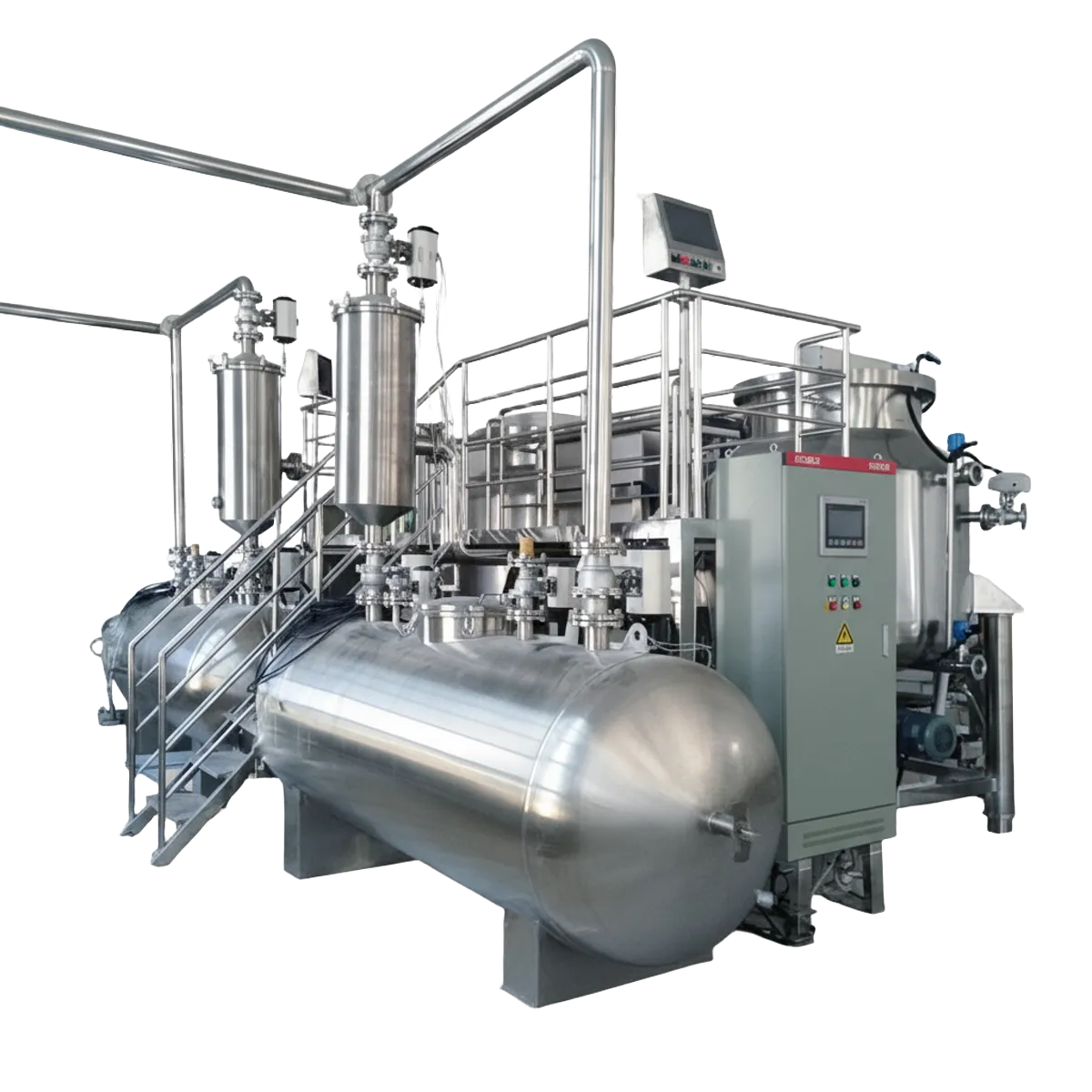
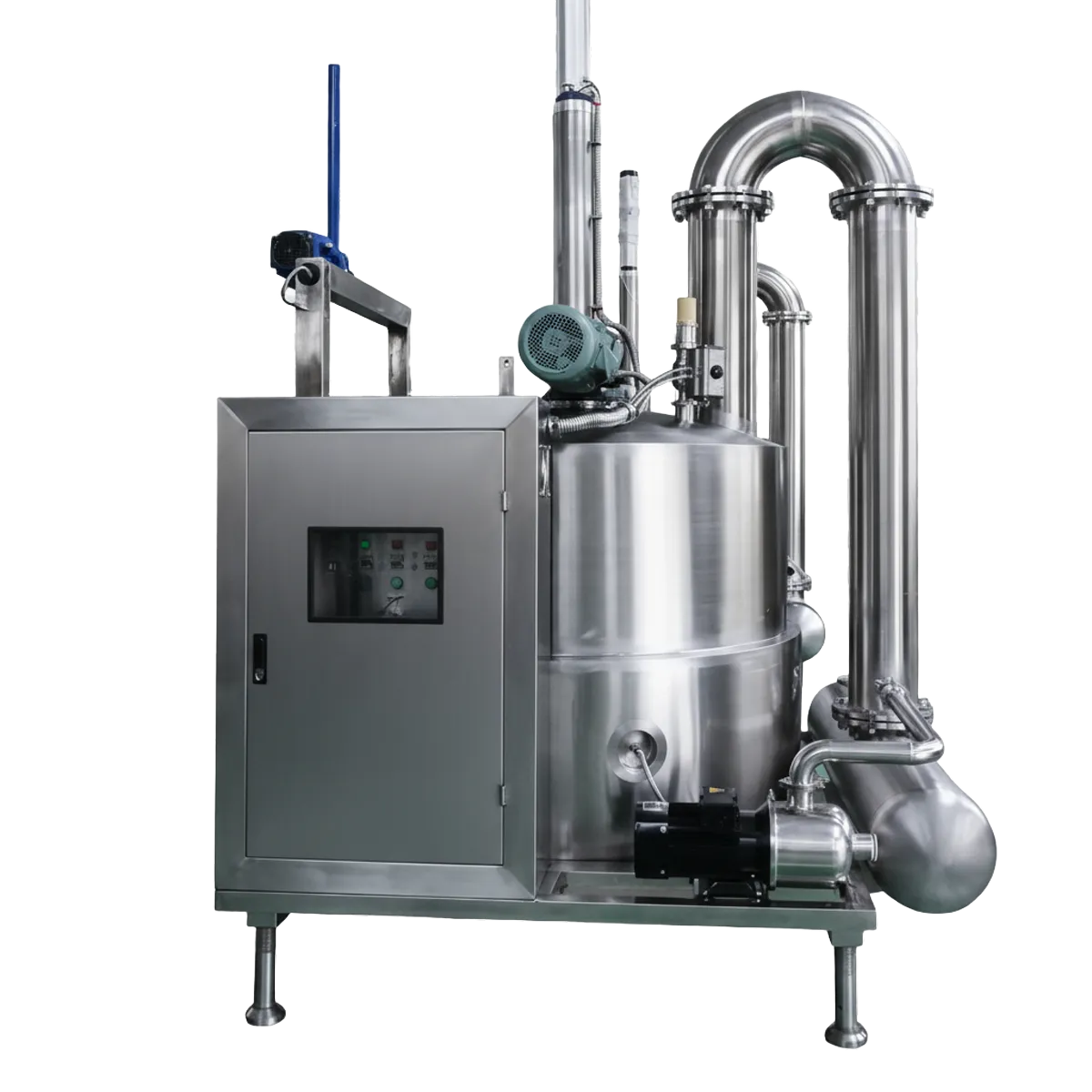
QS vacuum fryers — the QS-VF100 (100 kg per batch), QS-VF150 (150 kg per batch) and QS-300 (300 kg per batch, vessel 2600 mm high × 1600 mm diameter) — run all three roots as separate stored recipes, with centrifugal de-oiling that keeps oil content below 18%. Each carries a 1-year warranty and ships with roughly a 3-month lead time.
Frequently asked questions
Why are root vegetables good candidates for vacuum frying?
Root vegetables such as carrot, beetroot and lotus root have dense, uniform flesh that holds its shape as slices, plus enough natural sugars to develop flavor without heavy seasoning. Their firm structure survives the pressure swings of vacuum frying better than soft, high-water produce, and low-temperature frying preserves the vivid color that makes each variety distinctive on the shelf.
Do I need to blanch root vegetables before vacuum frying?
Blanching is standard practice for carrot and beetroot: it deactivates enzymes that cause browning and off-flavors, softens the slices slightly for even frying, and evens out moisture before the slices enter the fryer. Lotus root slices usually receive a brief blanch or an anti-browning dip to protect their pale color. Always confirm the exact pre-treatment with your fryer supplier for your specific raw material.
How thin should root vegetable slices be for vacuum frying?
Consistent thickness is more important than any single number: uneven slices fry unevenly, with thin pieces over-fried before thick pieces finish. Mechanical slicing that holds a uniform thickness across the whole batch is one of the highest-value investments in a root vegetable chip line. Trial your slice thickness with the supplier before locking in the production setting.
Can one vacuum fryer handle carrot, beetroot and lotus root?
Yes — a batch vacuum fryer is designed to run different products as separate batches, with the control system storing a recipe for each. Switchovers mainly require cleaning the vessel and changing the oil-management routine where needed. Many snack producers run exactly this mixed-SKU strategy to keep one line busy across seasons.
What should I ask a vacuum fryer supplier about root vegetable chips?
Ask for a trial run on your actual raw material, a recommended pre-treatment sequence for each variety, the batch capacity options that match your daily output target, how de-oiling is handled, and what the lead time and warranty terms are. Supreme Beast QS vacuum fryers come in 100, 150 and 300 kg per batch, carry a 1-year warranty, and ship with roughly a 3-month lead time.
Planning a root vegetable chip line?
Tell us your raw material and daily output target — we'll help you size the fryer and talk through slicing and pre-treatment. See the full range on our vacuum fryer page.
Specifications are for reference only and are subject to the final supplied equipment.