
Home / Insights / How to Extend Frying Oil Life
PILLAR GUIDE
How to Extend Frying Oil Life
How to extend frying oil life in vacuum frying: filtration, temperature control, de-oiling and turnover — and what the +200% claim actually means.
Oil is a consumable, and it is expensive
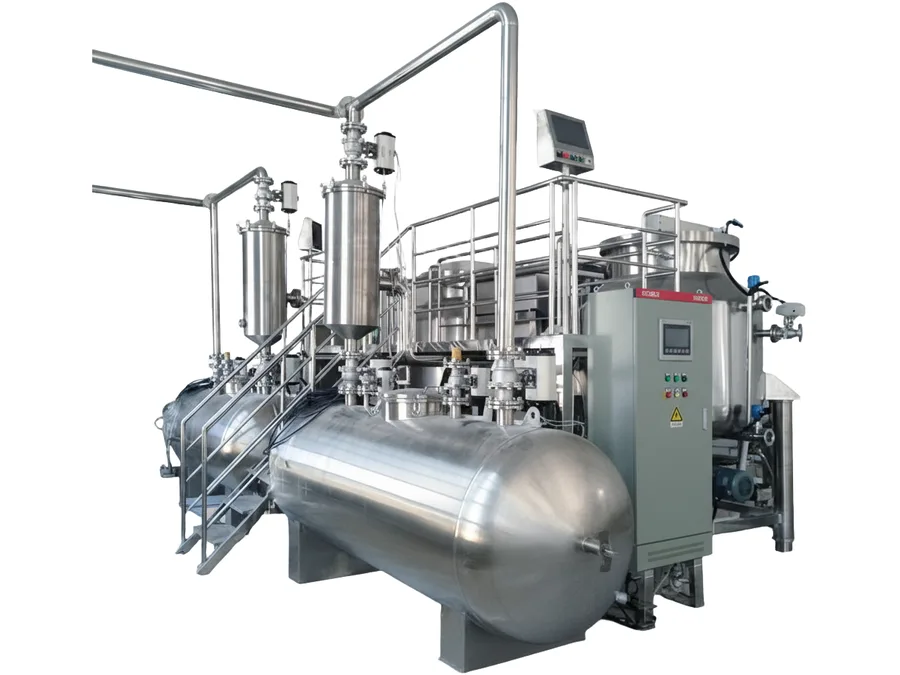
Frying oil is the largest running cost on most vacuum frying lines, after the raw material itself. Oil does not last forever: heat, oxygen, water and food particles break it down, and degraded oil makes worse snacks — darker colour, off flavours, higher oil content. Extending oil life is therefore two wins at once: lower cost and better product. We make one verified claim here: our machines extend oil life by +200% compared with unfiltered open frying practice. This guide explains the four things that make that possible, and what the claim does and does not mean.
Filtration: the single biggest lever
Food particles left in hot oil are the main reason oil degrades. They burn, they oxidise the oil around them, and they carry flavour from one product to the next. Filtering oil between batches removes them. A line with proper filtration keeps the same oil in service far longer than a line without it. Ask two questions about any fryer: is the oil filtration tank included in the quotation, and how is filtration done — continuously, between batches, or not at all? A filtration tank sold as an optional extra is a cost that should have been in the price.
Temperature: low and steady beats high and swinging
Our vacuum fryers run at 80–100 °C. That low range is already gentler on oil than open frying. But steadiness matters as much as the level: a vessel that swings in temperature overheats the oil at the top of each swing, and every overheating shortens oil life a little. A thick-walled 304 stainless vessel — ours is 6 mm — holds temperature steadily, and a Delta PLC with an MCGS touchscreen holds the set point batch after batch. Temperature control is an oil-life measure, not just a quality measure.
De-oiling: less oil out means less oil in
In-chamber centrifugal de-oiling spins oil out of the product while the chamber is still under vacuum. It is usually discussed as a quality measure — it keeps oil content under 18% — but it is also an oil-life measure: oil thrown off the product returns to the system instead of leaving the factory inside the snack. Every kilogram of oil that stays in the system is a kilogram you do not have to buy. De-oiling after the chamber opens does not recover oil the same way, because the oil has already soaked back in.
Turnover: fresh oil in, old oil out
Oil turnover is the rate at which fresh oil replaces oil lost or degraded. A line that fries every day turns its oil over naturally; a line that fries once a week does not, and the oil sitting in the vessel oxidises between runs. Plan your production so the oil is used regularly, and keep the vessel covered and the oil filtered when the line is idle. Turnover is a production planning issue as much as an equipment issue — talk about it when you plan your schedule, not after the oil has gone bad.
What the +200% claim means
"Extend oil life by +200%" is our marketing claim, measured against unfiltered open frying practice — the way most small producers still fry. It is not a guarantee for your product. Your result depends on your oil, your product and how the line is maintained. The claim is useful as a direction — filtration plus low temperature plus de-oiling extends oil life substantially — and useless as a promise. The way to verify it is to run your product through the machine and measure. We run sample batches in our factory free of charge — you pay shipping only.
Frequently asked questions
What is the fastest way to extend oil life?
Filter between batches. Removing food particles from hot oil is the single biggest lever, and it costs less than any other measure on this page.
Why does vacuum frying extend oil life at all?
Two reasons: it fries at 80–100 °C, which is gentler on oil than open frying, and it runs under vacuum, which limits the oil's contact with oxygen. Lower heat plus less oxygen means slower degradation.
Is the filtration tank included with the fryer?
Ask, and get it in writing. On our quotations the oil system is listed item by item. A filtration tank sold separately is a real cost that should be visible before you order.
Does de-oiling really save oil?
Yes. Oil spun out of the product in the chamber returns to the system instead of leaving in the snack. It is also why oil content stays under 18% — the same step serves quality and cost at once.
How do I know the claim applies to my product?
You don't, until you test it. Send us your product for a free sample batch — you pay shipping only — and measure oil condition and oil content on the result. That is the only figure worth putting in your business plan.
Supporting guides
Deeper reading from our knowledge base on this topic: