
Home / Insights / Freeze Drying vs Vacuum Frying
PILLAR GUIDE
Freeze Drying vs Vacuum Frying
Freeze drying vs vacuum frying: how the two technologies differ on cost, texture, batch size and product fit — and how to choose between them.
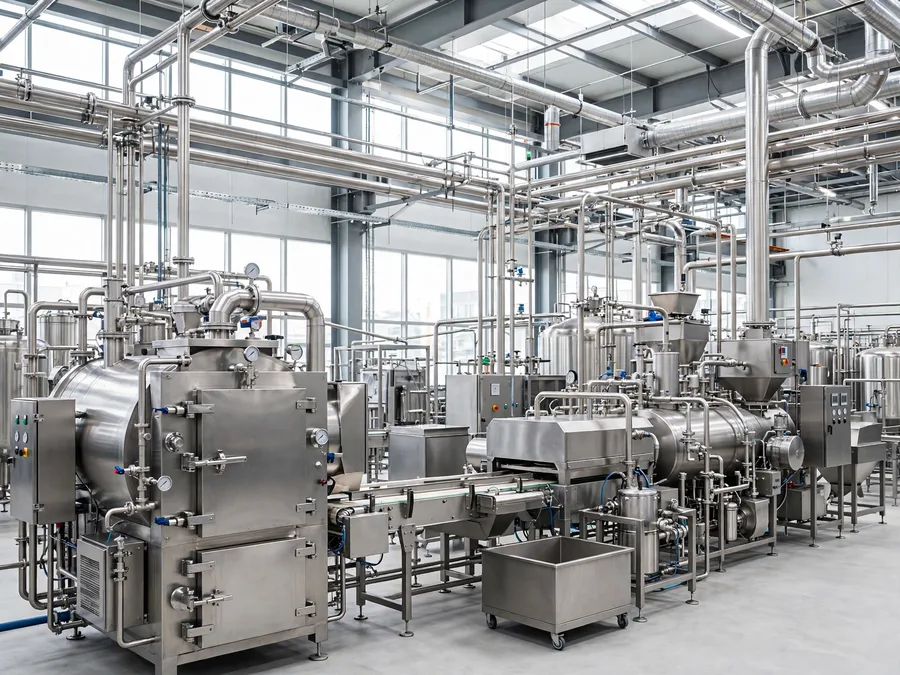
Two ways to make a shelf-stable snack
Freeze drying and vacuum frying both turn fresh food into a crisp, shelf-stable product. They do it in opposite ways. Freeze drying freezes the product and removes water by sublimation, under vacuum, without heat. Vacuum frying fries the product in oil, under vacuum, at 80–100 °C. The products look similar on a shelf. They are not the same product, and they are not made for the same buyer. This guide sets out the real differences so you can choose the right one for your product.
How each process works
Freeze drying. The product is frozen, then placed under deep vacuum. The cold trap — −60 °C on our machines, with a two-stage refrigeration system — catches the water vapour as ice leaves the product directly from solid to gas. Heating is applied gently and precisely, in four independently controlled zones accurate to ±0.1 °C up to a maximum of 80 °C, so the product stays frozen while it dries. The result keeps the shape, colour and structure of the fresh product, and rehydrates quickly.
Vacuum frying. The product is fried in oil under vacuum at 80–100 °C. Under vacuum, water boils at a lower temperature, so it leaves the product fast without the browning of open frying. After frying, the basket spins inside the chamber — in-chamber centrifugal de-oiling — throwing oil out before the chamber opens. The result is crisp, with oil content under 18% on our machines.
The honest comparison
| Freeze drying | Vacuum frying | |
|---|---|---|
| Heat applied | None during drying (product stays frozen) | 80–100 °C in oil |
| Finished texture | Light, crisp, close to fresh shape | Crisp, chip-like |
| Oil in finished product | None | Under 18% |
| Batch size (our range) | ~200 kg to ~2 tonnes raw material | 100 to 300 kg raw material |
| Machine cost | Higher (vacuum + refrigeration + heating) | Lower |
| Energy per batch | Higher (refrigeration runs throughout) | Lower |
| Best for | Fruit, yogurt bites, ready meals, pet treats, ingredients | Fruit and vegetable crisps and chips |
Neither is "better". Freeze drying preserves the product more completely and costs more to run. Vacuum frying is cheaper per batch and makes a chip; it cannot make a freeze-dried product. Choose by the product you want to sell, not by the machine you want to buy.
Cost: where the money actually goes
A freeze dryer costs more to buy and more to run. Our QS-FD-100 lists at USD 238,645 for the standard round chamber and USD 328,135 for the high-spec square chamber, and its 135 kW installed power draws about 60% of that in normal operation, because the compressors cycle. A vacuum fryer costs less to buy, uses less energy per batch, and its main running cost is oil — which in-chamber de-oiling and filtration control. Against that, freeze-dried products sell at a higher price: the same fruit that becomes a chip in a fryer becomes a premium freeze-dried snack in a dryer. Cost per batch and price per bag must be considered together. A cheaper process that earns a lower price is not necessarily the better business.
Which products fit which technology
Choose freeze drying for products where shape, colour and rehydration matter: whole berries and fruit pieces, yogurt bites, ready meals, meat and seafood, instant-food ingredients, and pet treats where the owner wants to see real food. If your customer rehydrates the product, freeze drying is the only choice.
Choose vacuum frying for products where crispness and snackability matter: fruit chips, vegetable crisps, root-vegetable chips, mushroom crisps, nut and seed snacks. If your customer eats it straight from the bag, vacuum frying is usually the right technology at the right cost.
Consider both if your range spans both. Some producers run a freeze dryer for premium lines and a vacuum fryer for everyday snacks, sharing preparation, packing and distribution. Our machines are built to work as single machines or as one engineered line, so a mixed line is a normal project for us, not a special request.
How to decide
Run samples. Send us your product and we will freeze dry one batch and vacuum fry one batch, in our factory, free of charge — you pay shipping only. Put the two results on a table, taste both, check the colour, the texture and the price you can charge for each. The decision will make itself. No brochure comparison replaces holding both products in your hand.
Frequently asked questions
Can one product be both freeze-dried and vacuum-fried?
Some can — mango is the classic example. The two results are different products with different prices, so the choice is commercial, not technical. Test both and see which your market pays for.
Is freeze drying always more expensive?
Per batch, yes: the machine costs more and energy use is higher. Per bag sold, not necessarily — freeze-dried products command premium prices. Cost the full business, not just the machine.
Which technology has the lower running cost?
Vacuum frying, for most products: less energy per batch, and oil is the main consumable. Freeze drying spends energy on refrigeration throughout the cycle. But running cost without selling price is only half the comparison.
Do I need both machines?
Only if your range needs both. Start with the technology that fits your first product, and add the second when the volume justifies it. A single well-run machine earns more than two half-used ones.
Can I test both before buying?
Yes. We run free sample tests in our factory for both technologies — you pay shipping only. Test the same product both ways and decide on evidence, not on a brochure.
Supporting guides
Deeper reading from our knowledge base on this topic: